‘Sexual depravity’ of penguins that Antarctic scientist dared not reveal

Robin McKie in The Guardian:
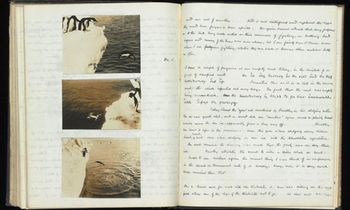
Dr-George-Murray-Levicks--008It was the sight of a young male Adélie penguin attempting to have sex with a dead female that particularly unnerved George Murray Levick, a scientist with the 1910-13 Scott Antarctic Expedition. No such observation had ever been recorded before, as far as he knew, and Levick, a typical Edwardian Englishman, was horrified. Blizzards and freezing cold were one thing. Penguin perversion was another.

Worse was to come, however. Levick spent the Antarctic summer of 1911-12 observing the colony of Adélies at Cape Adare, making him the only scientist to this day to have studied an entire breeding cycle there. During that time, he witnessed males having sex with other males and also with dead females, including several that had died the previous year. He also saw them sexually coerce females and chicks and occasionally kill them.

Levick blamed this “astonishing depravity” on “hooligan males” and wrote down his observations in Greek so that only an educated gentleman would understand the horrors he had witnessed. Back in Britain he produced a paper (in English), titled Natural History of the Adélie Penguin. However, the section about the animal's sexual proclivities was deemed to be so shocking it was removed to preserve decency. Levick then used this material as the basis for a separate short paper, Sexual Habits of the Adélie Penguin, which was privately circulated among a handful of experts.

In fact, Levick's observations turned out to be well ahead of their time.

More here.

Becoming a Legend

From The New York Times:

LillianDuring the great performance that was her life, Lillian Hellman always addressed the 20th century from center stage. While she defended many causes — justice, loyalty, American civil liberties, anti-fascism and Soviet-style Communism among them — what she represented most staunchly was herself, and what she believed in most fiercely was her own unassailability. She was first and last a dramatist, with a genius for the concise phrase and the provocative gesture. Shrewd plotting and a talent for dialogue were hallmarks of the hugely successful plays, movies and memoirs she wrote. But two crystalline expressions of her own life’s high drama are more memorable than any story she ever spun: her pithy rebuke to the House Un-American Activities Committee in 1952 (“I cannot and will not cut my conscience to fit this year’s fashions”) and the 1976 Blackglama advertisement for which she posed, enrobed in mink, her 71-year-old face alight with both amusement and confrontation. From her earliest days she sought the spotlight. Once it was on her, she basked in it until the end. Her friend Richard de Combray commented that when she died in 1984 at age 79, “she wanted to pull all the scenery down with her.”

“To read Hellman, even to read about her, is to start an argument,” one of her biographers has noted.

More here.

Tahira Syed Dreams

From The Friday Times:

Tahira-saeedTahira Syed is beautiful. She has always been beautiful. Mustafa Khar to Javed Ghamidi and Altaf Gohar to Mark Tully, all were smitten by her. She can sing as well, though most of us have not paid as much attention to that over the years. She has remarkable songs to her credit and many suspect that Pakistan Television (PTV) has used these numbers to successfully seduce at least two generations of viewers. They argue that it would be disingenuous to pretend, given her profession, that her looks haven't played a part in her career success. My father used to say that one way of experiencing the Divine Watchmaker at work on the mathematics of life was to observe Tahira Syed's hand and neck move in tandem. Before my recent trip to Pakistan, my Anglicised son called me excitedly from the TV lounge to announce that he could be persuaded to marry the singer on PTV broadcasting semi-classical songs. No prize for guessing who it was!

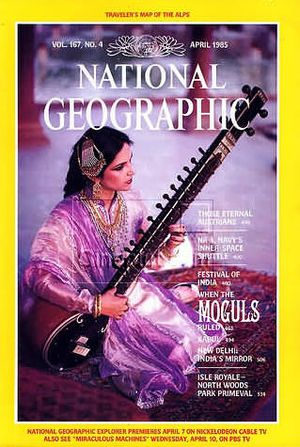
For those of us who were children in the 1970s, Tahira Syed was much more than a beauty queen. Along with Imran Khan and Benazir Bhutto, she slowly but surely emerged to become the face of Pakistan. It was perhaps a tribute to her natural beauty that she appeared on the cover of National Geographic magazine. Our tears had just about dried following the debacle of 1971. Zulfi Bhutto was running rings round his adversaries and we were starting to have stars in our eyes. When we saw her on PTV, standing tall with her handsome figure, chiseled face and bright eyes, singing '…Hum Sa Hai Tou Samnay Aayay…' we believed we had no equal out there. Life seemed beautiful and we had hope that nothing was out of reach – we could have what we wanted and the future would turn out to be all right. Watching her removed the blinds of fear from our hearts and minds and let us see the big picture – like Helen of Troy, she could launch a thousand ships for us.

More here. (Note: For dear friend Tahira…you are the stuff of dreams…with love)

Saturday Poem

Jerusalem

When I leave you I turn to stone
and when I come back I turn to stone

I name you Medusa
I name you the older sister of Sodom and Gomorrah
you baptismal basin that burned Rome

The murdered hum their poems on the hills
and the rebels reproach the tellers of their stories
while I leave the sea behind and come back
to you, come back
by this small river that flows in your despair

I hear the reciters of the Quran and the shrouders of corpses
I hear the dust of the condolers
I am not yet thirty, but you buried me, time and again
and each time, for your sake
I emerge from the earth
So let those who sing your praises go to Hell
those who sell souvenirs of your pain
all those who are standing with me now in the picture

I name you Medusa
I name you the older sister of Sodom and Gomorrah
you baptismal basin that still burns

When I leave you I turn to stone
When I come back I turn to stone

.

by Najwan Darwish
published on Poetry International, 2012
translation: Kareem James Abu-Zeid

Friday, June 8, 2012

Why We Don’t Believe In Science

From The New Yorker:

GalileoLast week, Gallup announced the results of their latest survey on Americans and evolution. The numbers were a stark blow to high-school science teachers everywhere: forty-six per cent of adults said they believed that “God created humans in their present form within the last 10,000 years.” Only fifteen per cent agreed with the statement that humans had evolved without the guidance of a divine power. What’s most remarkable about these numbers is their stability: these percentages have remained virtually unchanged since Gallup began asking the question, thirty years ago. In 1982, forty-four per cent of Americans held strictly creationist views, a statistically insignificant difference from 2012. Furthermore, the percentage of Americans that believe in biological evolution has only increased by four percentage points over the last twenty years. Such poll data begs the question: Why are some scientific ideas hard to believe in? What makes the human mind so resistant to certain kinds of facts, even when these facts are buttressed by vast amounts of evidence?

A new study in Cognition, led by Andrew Shtulman at Occidental College, helps explain the stubbornness of our ignorance. As Shtulman notes, people are not blank slates, eager to assimilate the latest experiments into their world view. Rather, we come equipped with all sorts of naïve intuitions about the world, many of which are untrue. For instance, people naturally believe that heat is a kind of substance, and that the sun revolves around the earth. And then there’s the irony of evolution: our views about our own development don’t seem to be evolving.

More here.

what is race?

Fausto_sterling_37.3_mammogram

The persistence of biological understandings owes something to an unavoidable fact: race and health are inextricably intertwined. But this doesn’t mean biology produces race. It may be that race produces biology. A newer, but still embodied, view of human difference, one in which we conceptualize how social difference and deprivation change the body’s physiology, has yet to make inroads into public discussions of race. This is a concept that Roberts nails. In Fatal Invention: How Science, Politics, and Big Business Re-Create Race in the Twenty-First Century, Roberts argues passionately and relentlessly—you can picture her making her case to a rapt jury—against the idea of race as a biological trait, which she calls, per her title, a fatal invention. Her evidence against biological causes (but not biological effects), and her insistence that believing in the biological basis of race is fatal to people of color, are compelling. Her case study of racial differences in breast cancer fatalities illustrates the point. In Chicago in 1980, black and white women died of breast cancer at the same rate. Today, despite being slightly more likely to get breast cancer, white female Chicagoans are half as likely to die from it. Could the difference in death rates be due to genetic differences between black and white women? A wealth of evidence suggests otherwise.

more from Anne Fausto-Sterling at Boston Review here.

Friday Poem

On the Pennsylvania State Road Atlas

I didn’t know where we were going
But that, I guess, was our goal.
He would say only it was time to go,
Saturday afternoons before he died.
Chambersberg. Bedford. Lockhaven.

We got in the car and drove until
It got dark, exits sounded exotic,
And a few turns found a stoplight,
A drive-through and a hotel.
Tarentum. Nazareth. Warsaw.

He knew that taking your leave
Takes practice. I remember headlights
Pulling us between two rows of pines,
The stiff smell of cleaned linens.
Shay. Freeport. Saxonberg.

But what did he tell my mother
Sundays when we came back?
“I want to wet my feet and wade
Into not being John of Swarthmore.”
Palmyra. Burbank. Spring.

I want these words to be the map, not
To steer him home but to get me back
To a town off I-80 where no one stops
Except relatives and whoever can’t go on.
Milton. Mifflinburg. Scotts Run.

I want to return to two beds, a curtain
Outside which windless rain fell,
The highway whispering with travel,
His sleeping breath, steady, certain.
Drakes Mill. Transfer. Mount Joy.

by H.L. Spelman
from Blackbird, Fall 2011

Jaipur via The Best Exotic Marigold Hotel

From Smithsonian:

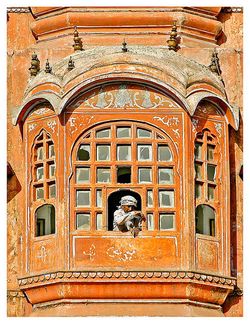
Palace-of-the-Winds-bigDid anybody else see The Best Exotic Marigold Hotel over the Memorial Day weekend? Somebody must have because the film, which opened on May 4, continues to do well at the box office, and that’s compared with a slew of big-budget blockbusters—Men in Black 3, Battleship, The Avengers—that have come along since then. Marigold’s popularity has been credited to John Madden, who also directed Shakespeare in Love, and to its 24-karat gold cast, including Judi Dench, Maggie Smith, Tom Wilkinson and Bill Nighy, all of them over 60. (The film is based on These Foolish Things, a novel by Deborah Moggach about a group of English oldsters who move to a retirement hotel in India.) But the movie’s reception is also seen as proof that there’s a market for movies about people who aren’t young and beautiful, just interesting—as are the characters in Marigold, coping with end-of-life transitions in a drastically foreign place.

And let’s not forget another major factor in Marigold’s success: India, specifically the western state of Rajasthan, long a favorite with travelers for its mighty hill forts, bedizened palaces, teeming markets and lost desert villages. The hotel in the book—Moggach called it the Dunroamin—is located in the dreamy lake city of Udaipur, though the movie was filmed in Jaipur to the north. I recognized the setting immediately because I began a tour of Rajasthan there ten years ago.

More here.

Your guide to zombie parasite journalism

Carl Zimmer in his excellent blog, The Loom:

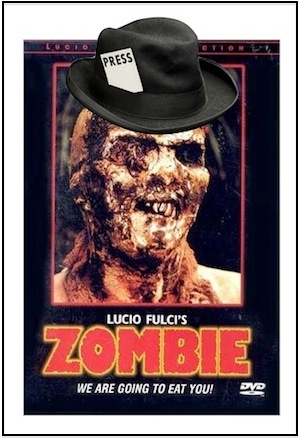
Zombie-journalist.0011In the past few weeks, there’s been a string of horrific tales of cannibalism and other zombie-esque behavior in the news. How to explain a handful of reports of people doing the unspeakable? One answer circulating around these days is that it must be parasites. And for some journalists, the question demands a call to the Centers for Disease Control to find out what they’re hiding from us!

1. Andy Campbell of the Huffington Post asked the CDC if some kind of zombie virus was to blame for the recent attacks. On June 1, he reported on HuffPo’s Politics page the following scoop:

“CDC does not know of a virus or condition that would reanimate the dead (or one that would present zombie-like symptoms),” wrote agency spokesman David Daigle in an email to The Huffington Post.

The Huffington Post entitled Campbell’s hard-hitting investigation, “Zombie Apocalypse: CDC Denies Existence Of Zombies Despite Cannibal Incidents.” That’s perhaps the finest deployment of the word despite in the history of journalism.

The story, by the way, received 65,797 likes on Facebook.

More here.

Workers of the World Divide

West-Labor-411_0

Labor unions underwrote the affluence of the American working class in the twentieth century. They ensured that manual work paid white-collar wages and gave a collective voice to workers in the political process. The story of labor’s decline is often told with an air of inevitability; unions became outmoded as American capitalism became more dynamic. In such an account, the consequences of deunionization — rising inequality, wage stagnation, and declining political participation — appear equally inevitable. But the story has not played out the same way everywhere. The turbulent economic conditions of the 1970s affected all the advanced economies. In the small, trade-dependent economies of Scandinavia, highly centralized unions were able to restrain wage growth, curb inflation, and maintain employment. In Germany, unions expanded their role in workplace governance and the training of skilled workers. Although the proportion of union members among workers did decrease in western Europe during this time, it did so far less than in the United States. And the coverage of collective-bargaining rights generally held steady. European labor unions still represent a broad constituency of workers and actively contribute to their countries’ economic success. Moreover, although some claim otherwise, unions have not made the global economic crisis there worse. Where national unions have historically had a role in macroeconomic management — in Belgium and the Netherlands, for example — negotiations over wages and working hours helped head off big increases in unemployment in the wake of the 2008 financial crisis. American unions have faced the same challenges as European ones but have struggled far more.

more from Bruce Western and Jake Rosenfeld at Foreign Affairs here.

film can be a communion

Still-from-Oslo-August-31-007

The best films scramble your brain, changing you slightly. You emerge from the dark with new, blinking eyes, adjusting to a different world. It’s why for many of us a good movie is a small miracle, worthy of devotion. So far, Norwegian director Joachim Trier has made two such small miracles, Reprise and Oslo, August 31st. Two sharp films that, when I saw them, settled down into some small part of me, changing the way I thought about youth, ambition, and the meaning of life, if only for a night. I suspect the films of Trier speak particularly to anyone with literary ambitions, anyone who knows what it’s like to be besotted by a work of art and anyone who wants to create something strong and beautiful and true. The director has an uncanny eye for the worries of sad young men afflicted with dreaminess about art and ideas, the same sort of disease written about in Walker Percy’s The Moviegoer or Richard Ford’s The Sportswriter. His exuberant, French New Wave–influenced debut, Reprise, is the story of two boyish twenty-something writers wrestling with literary ambitions and madness. Reprise is charming, formally daring, and focused on youthful folly; in Oslo, August 31st, the folly is over, and it’s time for the morning after.

more from Elisabeth Donnelly at Paris Review here.

Thursday, June 7, 2012

Is Global Finance a Ponzi Scheme?

Leonid Bershidsky at Bloomberg:

What's the difference between today's global finance system and a Ponzi scheme? This is the question that a 56-year-old veteran Russian financial scammer has been asking his victims.

Chillingly, he almost has a point.

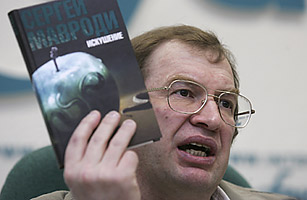
Sergei_mavrodi_0114Sergei Mavrodi is one of the most infamous names in Russia's recent history. Back in February 1994, amid the turmoil of the country's transition to a market economy, the mathematician organized a Ponzi scheme called MMM. He offered returns of 100 percent a month and advertised aggressively on national television. Before the pyramid crashed in July 1994, it attracted as many as 10 million depositors, making it more popular than the voucher privatization program that was supposed to give regular Russians a chance to take a stake in formerly state-owned enterprises.

Mavrodi managed to avoid prison for nearly a decade, in part by getting elected as a parliamentary deputy and using the status to obtain immunity from prosecution. He ultimately served out a four-and-a-half-year sentence for fraud. While in prison, Mavrodi wrote books and movie scripts, one of which — PyraMMMid — was later made into a successful film.

Now he's back with an even more audacious endeavor: the honest scam. Last year, he announced the new project, MMM-2011, by stating boldly that it would be another Ponzi scheme. “Even if you strictly follow all instructions, you can still lose,” he wrote on a website describing the project. “Your 'winnings' may be withheld without any explanation or reason whatsoever.” Depositors would be paid solely from funds invested by other depositors. There would be no attempt to generate income in any other way.

More here.

Noam Chomsky Has ‘Never Seen Anything Like This’

Chris Hedges in Truth Dig:

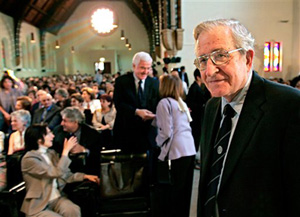
AP_noam_chomsky_has_never_seen-300Noam Chomsky is America’s greatest intellectual. His massive body of work, which includes nearly 100 books, has for decades deflated and exposed the lies of the power elite and the myths they perpetrate. Chomsky has done this despite being blacklisted by the commercial media, turned into a pariah by the academy and, by his own admission, being a pedantic and at times slightly boring speaker. He combines moral autonomy with rigorous scholarship, a remarkable grasp of detail and a searing intellect. He curtly dismisses our two-party system as a mirage orchestrated by the corporate state, excoriates the liberal intelligentsia for being fops and courtiers and describes the drivel of the commercial media as a form of “brainwashing.” And as our nation’s most prescient critic of unregulated capitalism, globalization and the poison of empire, he enters his 81st year warning us that we have little time left to save our anemic democracy.

“It is very similar to late Weimar Germany,” Chomsky told me when I called him at his office in Cambridge, Mass. “The parallels are striking. There was also tremendous disillusionment with the parliamentary system. The most striking fact about Weimar was not that the Nazis managed to destroy the Social Democrats and the Communists but that the traditional parties, the Conservative and Liberal parties, were hated and disappeared. It left a vacuum which the Nazis very cleverly and intelligently managed to take over.”

“The United States is extremely lucky that no honest, charismatic figure has arisen,” Chomsky went on. “Every charismatic figure is such an obvious crook that he destroys himself, like McCarthy or Nixon or the evangelist preachers. If somebody comes along who is charismatic and honest this country is in real trouble because of the frustration, disillusionment, the justified anger and the absence of any coherent response. What are people supposed to think if someone says ‘I have got an answer, we have an enemy’? There it was the Jews. Here it will be the illegal immigrants and the blacks. We will be told that white males are a persecuted minority.

More here.

Thursday Poem

Grammar

You can’t talk yet, and you’re not
too put out about that.
Words send you into convulsions,
especially verbs – the Imperative Mood
is the funniest thing you’ve ever heard.
Wake up. Go asleep. Do. Don’t. Be.

You have your own lingo
any fool could understand,
even a linguist, given time.
Grin. Yowl. Gurn.
Yawn. Grunt. Silence
that makes perfect
sense to everyone.

You’re behind schedule
according to doctors’ charts,
the childish child experts.
But if you learn, and I’m afraid you will,
as many words as there are rules of grammar
in the libraries of An Gúm

you won’t say a blessed thing
worth anything more
than what you’ve already learned
in the womb’s elocution room,
the punctuation of laughter back to front,
the declension of rain into tears.
.

by Louis de Paor
from Ag Greadadh Bas sa Reilig
publisher: Cló Iar-Chonnachta, Indreabhán, 2005

translation: Louis de Paor
from Clapping in the Cemetery
publisher: Cló Iar-Chonnachta, Indreabhán, 2005,

A man who won’t forget Ray Bradbury

Neil Gaiman in The Guardian:

Ray-Bradbury-008Yesterday afternoon I was in a studio recording an audiobook version of a short story I had written for Ray Bradbury's 90th birthday. It's a monologue called The Man Who Forgot Ray Bradbury, and was a way of talking about the impact that Ray Bradbury had on me as a boy, and as an adult, and, as far as I could, about what he had done to the world. And I wrote it last year as a love letter and as a thank you and as a birthday present for an author who made me dream, taught me about words and what they could accomplish, and who never let me down as a reader or as a person as I grew up. Last week, at dinner, a friend told me that when he was a boy of 11 or 12 he met Ray Bradbury. When Bradbury found out that he wanted to be a writer, he invited him to his office and spent half a day telling him the important stuff: if you want to be a writer, you have to write. Every day. Whether you feel like it or not. That you can't write one book and stop. That it's work, but the best kind of work. My friend grew up to be a writer, the kind who writes and supports himself through writing.

Ray Bradbury was the kind of person who would give half a day to a kid who wanted to be a writer when he grew up.

More here.

Fetal genome deduced from parental DNA

From Nature:

FetusHeralding a future in which a child’s entire genetic blueprint can be examined for traits and defects — noninvasively — long before birth, researchers have announced that they have reconstructed the whole genome of a fetus by using only a blood sample from its mother and a saliva sample from its father. The work was published today in Science Translational Medicine1. The feat relies on the fact that when a woman is pregnant, her blood contains DNA fragments both from her own genome and that of her unborn child. Depending on the individual woman and the stage of her pregnancy, more than 10% of the free floating DNA — called ‘cell-free DNA’ — in her blood may come from the fetus. The challenge facing those wishing to glean information from this fetal DNA is to figure out how to distinguish it from the mother's genetic signal.

Jay Shendure, a geneticist at the University of Washington in Seattle, and his coleagues isolated 5 nanograms of cell-free DNA from a maternal blood sample taken after 18.5 weeks of gestation. They performed 'deep sequencing' on the DNA, which involves sampling fragments about 78 times. The researchers also constructed the mother’s genome using her blood cells, and they worked out how her variants grouped together into blocks or haplotypes. The results from the deep sequencing were then compared to a computationally predicted ratio of haplotypes expected to come from the mother. Where the ratio of haplotypes diverged from the prediction, the researchers surmised they might be reading some of the genetic material from the fetus.

More here.

the swamy story

StoryBigImageCNGEHHFoutlier-big

TO SEE SUBRAMANIAN SWAMY in his natural habitat is emphatically not to see him thus: in the heart of a throng of Rashtriya Swayamsevak Sangh (RSS) workers, on a January morning, in the town of Dhar, in Madhya Pradesh. Mere minutes after Swamy, the president—and, frankly, the totality—of the Janata Party, hopped out of an SUV, he was swallowed by the crowd. Somewhere within its crevices, he was inserted into a massive garland, and a vivid red tilak was smeared across his forehead like an angry wound. Then he reappeared atop a jalopy that had been converted, with the judicious aid of a silvered backboard, silvered side panels and a cloth-covered bench, into a motorised chariot. The crowd disciplined itself into a column and began to trickle through the streets of Dhar. A small boy sat sideways next to the driver of the chariot and gaped unceasingly at Swamy. Even in late January, Dhar had grown decidedly hot by 10 am, and Swamy looked uncomfortable and hassled. Late the previous night, standing near a baggage carousel at the Mumbai airport, Swamy had explained to me why we were headed to Dhar. A small delegation from the town had visited him in Delhi in early 2010 to ask if he would take up the case of the absent Vagdevi Saraswati, a striking 11th-century stone idol that had been transported, just over 100 years ago, from a Dhar temple to the British Museum in London. The idol used to occupy a temple within the Bhojashala, a school built by Bhoj, king of Malwa, around the year 1034 AD. “I got so busy with the 2G case, but these guys didn’t let me forget about it,” Swamy said. “And every Basant Panchami, they have this big rally in Dhar, so that’s where we’re going. I’m kind of a chief guest there.”

more from Samanth Subramanian at The Caravan here.

ray bradbury’s first New Yorker piece

83468428

Ray Bradbury, the author of “The Martian Chronicles,” “Fahrenheit 451,” and many other classics of science fiction and fantasy, died this morning, at the age of ninety-one. Bradbury published two pieces in The New Yorker. The first, a short story titled “I See You Never,” appeared in the issue of November 8, 1947. The story is not science fiction but rather a vignette about a Mexican immigrant named Mr. Ramirez who is forced to leave the United States after he overstays his visa. Escorted by two police officers, he arrives at his landlady’s door to say goodbye. Bradbury describes the pleasures Ramirez had taken in his life in Los Angeles:

On many nights he had walked the silent streets and seen the bright clothes in the windows and bought some of them, and he had seen the jewels and bought some of them for his few lady friends. And he had gone to picture shows five nights a week for a while. Then, also, he had ridden the streetcars—all night some nights—smelling the electricity, his dark eyes moving over the advertisements, feeling the wheels rumble under him, watching the little sleeping houses and big hotels slip by.

more from Ray Bradbury in The New Yorker here.

darwin the writer

TLSDarwin_272433h

Reading Charles Darwin’s On the Origin of Species straight after publication, Friedrich Engels wrote to tell Karl Marx that it was quite splendid. Excepting, that is, its “clumsy English method”. Turning to it on his sickbed a year later, Marx responded that “although it is developed in the crude English style, this is the book which contains the natural history basis for my view”. Closer to home, Darwin’s readers were not always more enamoured of his style. Within weeks of its appearance, George Eliot wrote that she thought the book “ill-written”, and that she didn’t think it would be very popular. But few could doubt its significance, and writers were among the first to see this. Hitting the bookshops in November 1859, it sold out on the first day, Darwin’s publisher John Murray told him. Eliot said “it will have a great effect in the scientific world . . . . So the world gets on step by step towards brave clearness and honesty!”, and Thomas Hardy, who read it as a teenager, declared himself to be one of its first champions. Rereading the Origin (“slowly again for the nth time, with the view of picking out the essentials of the argument for the obituary notice”), T. H. Huxley remarked that “nothing entertains me more than to hear people call it easy reading”. “Exposition”, he insisted, “was not Darwin’s forte – and his English is sometimes wonderful.” This wonderful English, the extraordinary prose that could puzzle Darwin’s Victorian readers, is the subject of George Levine’s new book, from which Darwin emerges as an artist as well as a scientist, a master of argument, analogical reasoning, hypothesis and anecdote.

more from Angelique Richardson at the TLS here.