Money, Leisure, Death

Paula_cohen_sketchc-65x60

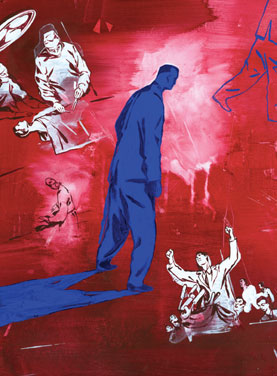
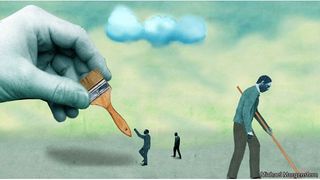
Three subjects that are fundamental to leading an examined life go unaddressed in the college curriculum: money, leisure, and death. All students should be required to take a single course that considers these subjects together. Money, you will say, is already taught in college. More students than ever enroll in business programs, and economics is among the most popular academic majors. But I am speaking about money in personal and philosophical ways that these academic subjects don’t take up. This means thinking about money in a larger context: How important is it to you, and how much of it do you need to lead the life you want? Tolstoy addresses these questions cogently in his short story “How Much Land Does a Man Need?” In it, a peasant farmer is told that he can own as much land as he can encircle in a day. The man sets his sights high, pushing himself to run around a very large space, and when he finishes, drops dead.

more from Paula Marantz Cohen at The American Scholar here.
the Female Conscience?

6947_elshtain

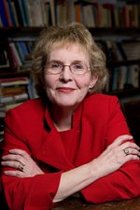
One of the most moving evocations of the female dilemma can be found in Nobel Prize winner Jane Addams’s The Long Road of Woman’s Memory. In her study of the uprootings, dislocations, and cruelties attendant upon late-nineteenth- and early-twentieth-century American life—the wave upon wave of desperate immigrants who crowded into this country’s tenements by the hundreds of thousands—Addams was led to reflect upon civilization itself. Her own life experience had convinced her that the past is always present in human cultures: In each of us, there is an ongoing echo of the entire historic movement of civilization. Addams rejected the moral dualism of a strict male-female divide: man as odious ravager, damaged goods; woman as graced with generosity, sympathy, and tenderness. It was far too simple.

more from Jean Bethke Elshtain at VQR here.

Trying to Set Legal Rules for Brutal War

Jennifer Schuessler in the New York Times:

ScreenHunter_02 Oct. 16 13.28In 1754 George Washington, then an officer in the Virginia militia, found himself hotly debating charges that he had committed what today we would call a war crime.

During a campaign against the French in the Ohio Valley, Washington was said to have stood by while his troops killed a captive ambassador, leading a French official to declare, in the outcry that followed, “There is nothing more unworthy and lower, and even blacker, than the sentiments and the way of thinking of this Washington.”

The story is the opening anecdote in “Lincoln’s Code: The Laws of War in American History,” John Fabian Witt’s sweeping history of American engagement with the idea that the brutality of war should be constrained by humanitarian rules. But if the French outrage calls to mind international reaction to the wartime behavior of a more recent president named George, Mr. Witt hardly aims to give aid and comfort to contemporary partisans.

The book is “an equal opportunity offender,” Mr. Witt, 40, said during a recent interview in his Yale office here, where he is a professor in the law school and the history department.

In “Lincoln’s Code” he argues against two competing and, in his view, equally false notions: on the left, the idea that George W. Bush’s war on terror represented a radical break with the American past; and on the right, the idea that Americans started caring about the laws of war only when pointy-headed Europeans forced them to.

But the respectful reviews that the book is already drawing from neoconservatives andhuman-rights advocates alike suggest that we may have reached, if not a truce, at least an easing of the past decade’s intense partisan wrangling over the conduct of the war on terror.

More here.

Tuesday Poem

Call to Prayer

In a city hillocked and covered
with cherry blossoms
this time of the year
the runner
carrying the message of war
has reached

before
bales of cotton

Caravans bringing sugar and rice

The elders in their white gowns
have been moved
from their perch in the mosque

A cloud of quiet departs

The women are busying themselves
with salves
with feeding the horses that will carry
their men

The next call for prayer
will be made in full armor

Arrows threading the men’s bodies
will be removed during prayer

Shadab Zeest Hashmi
from Contemporary World Poetry Journal
Spring 2011

The geometer-sculptor

From Harvard Magazine:

ImageMorton C. Bradley Jr. ’33, G ’40, had family ties, extending back to great-grandfather Theophilus Wylie, to Indiana University. But the campus community where he spent nearly all of his life was Cambridge, not Bloomington. The Harvard where he was educated had since the 1870s featured pioneering studies in experimental psychology and the physiology of perception (stemming from William James and Hugo Münsterberg) and the fine arts (Charles Eliot Norton), and in ensuing decades the flowering of logic in philosophy (in the persons of Josiah Royce and the towering figures, then still in the other Cambridge, of Alfred North Whitehead and Bertrand Russell). The strands of formalist aesthetics, of the Bauhaus at Harvard, of music and mathematics and still other influences, are teased out in the essay, “Morton Bradley: An American Formalist,” by Lynn Gamwell, who is also responsible for the volume Color and Form: The Geometric Sculptures of Morton C. Bradley Jr. (Indiana University Art Museum/Indiana University Press, $30).

More here.

Can Malala Bring Peace to Pakistan and Afghanistan?

Ahmed Rashid in The New Yorker:

MalalaThe shooting of Malala Yousafzai, a fourteen-year-old student, along with her two friends by Pakistani Taliban has created intense anger in Pakistan. Pakistanis have spent days in prayer for her life as she lay comatose in an army hospital in Rawalpindi and, Monday, was put on a plane to London, under tight security, for a brain operation (the Pakistani government will pay her expenses), and have held vigils and marches in support of her vision of education for all girls. But they are now also calling on the army to carry out its much delayed offensive in the tribal territories of North and South Waziristan to wipe out the ever growing networks of extremists, including Mullah Fazlullah, who is believed to be the mastermind of the attempted murder of Malala. I live in Lahore and, like my neighbors, have spent this time watching the news and hoping that Malala survives. This is a simple human reaction, but one affected, too, by a sense of what she means for Pakistan. Malala may become a role model not just for girls in the region but also for peace. Her story now has the potential, if fully utilized, to bring about a serious geo-political change in the region that could actually help stabilize both Pakistan and Afghanistan.

For several years, the United States and NATO forces based in Afghanistan have demanded that the army carry out just such operations, but Pakistan has declined. After the shooting of Malala, there is unprecedented domestic pressure to finally do so. Pakistanis want to make it clear that they, the majority, do not support this brand of Islamic fundamentalism. If the army refuses to act now it may find itself ostracized by the very public whose support it seeks.

More here.

Monday, October 15, 2012

Sunday, October 14, 2012

The renaissance of quantum physics

Philip Ball in Prospect:

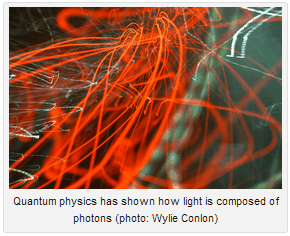
ScreenHunter_02 Oct. 15 08.23There’s never been a better time to be a quantum physicist. The foundations of quantum theory were laid a century ago, but the subject is currently enjoying a renaissance. Modern experimental techniques make it possible to probe fundamental questions that were left hanging by the subject’s originators, such as Albert Einstein, Niels Bohr, Erwin Schrödinger and Werner Heisenberg. Now, we are not only grappling with the supposed weirdness of the quantum world, but also putting its paradoxical principles to practical use.

This is reflected in the fact that three physics Nobel prizes have been awarded since 1997 in the field of quantum optics, the most recent going this week to Serge Haroche of the Collège de France and the Ecole Normale Supérieure in Paris and David Wineland of the National Institute of Standards and Technology and the University of Colorado. It’s “quantum” because the work of these two scientists is concerned with examining the way atoms and other small particles are governed by quantum rules. And it’s “optics” because they use light to do it. Indeed, light is itself explained by quantum physics, being composed (as Einstein’s Nobel-winning work of 1905 showed) of packets of energy called photons. The word “quantum” was coined by Max Planck in 1900 to describe this discrete “graininess” of the world at the scale of atoms.

More here.

Iraq records huge rise in birth defects

Sarah Morrison in The Independent:

ScreenHunter_01 Oct. 15 08.17It played unwilling host to one of the bloodiest battles of the Iraq war. Fallujah's homes and businesses were left shattered; hundreds of Iraqi civilians were killed. Its residents changed the name of their “City of Mosques” to “the polluted city” after the United States launched two massive military campaigns eight years ago. Now, one month before the World Health Organisation reveals its view on the legacy of the two battles for the town, a new study reports a “staggering rise” in birth defects among Iraqi children conceived in the aftermath of the war.

High rates of miscarriage, toxic levels of lead and mercury contamination and spiralling numbers of birth defects ranging from congenital heart defects to brain dysfunctions and malformed limbs have been recorded. Even more disturbingly, they appear to be occurring at an increasing rate in children born in Fallujah, about 40 miles west of Baghdad.

There is “compelling evidence” to link the increased numbers of defects and miscarriages to military assaults, says Mozhgan Savabieasfahani, one of the lead authors of the report and an environmental toxicologist at the University of Michigan's School of Public Health. Similar defects have been found among children born in Basra after British troops invaded, according to the new research.

More here.

On the Weightlessness of Reality

Garykemp

Richard Marshall interviews Gary Kemp in 3:AM Magazine:

Gary Kemp finds Quine and Davidson awesome and has edgy thoughts about them all the time. He thinks Frege is more Newton than Einstein and refines him. Aesthetics isn’t his primary thing but he’s always interested. He keeps reading Proust and doesn’t think Beckettis a window-dresser. He thinks Quine thinks there’s no issue about realism – which is neither a realist nor an anti-realist position. He is thus sensationally groovacious.

3:AM: What made you become a philosopher? Has it been rewarding so far?

Gary Kemp: I think like many people I became what I am before I had any real sense of choosing. At university – the University of Oregon – I was fleeing from my dad (he was an eminent astrophysicist), playing the guitar and being interested in English literature, when I had my first philosophy class, and was hooked. Or second, the first was as a freshman and I had no sense of anything at first (if ever). I don’t know if it’s been rewarding; what would I compare it with? I do feel very fortunate to have a job as an academic philosopher.

3:AM: You’ve written about Frege and his conception of truth. Before we go into details of what you argue, could you say a little about Frege for us here at 3:AM to give us the context? Frege is a hugely important figure but isn’t as well known as, say, Einstein in science, but what he achieved was arguably as important and impressive. So could you say what is at stake in Frege’s work?

GK: As many people have pointed out, Frege was the first to develop rigorously what has since been called a theory of meaning, and truth sits at the centre of his model. And why is a theory of meaning so important? Ultimately I think it isn’t so important, but in certain moods it is not hard to accept that the idea, as has been made very explicit by Michael Dummett, is more fundamental than epistemology or metaphysics. I would say that Frege is more properly compared with Newton than with Einstein, if you had to choose.

What Psychopaths Teach Us about How to Succeed

The-wisdom-of-psychopaths_2

An excerpt from Kevin Dutton's The Wisdom of Psychopaths, in Scientific American:

Traits that are common among psychopathic serial killers—a grandiose sense of self-worth, persuasiveness, superficial charm, ruthlessness, lack of remorse and the manipulation of others—are also shared by politicians and world leaders. Individuals, in other words, running not from the police. But for office. Such a profile allows those who present with these traits to do what they like when they like, completely unfazed by the social, moral or legal consequences of their actions.

If you are born under the right star, for example, and have power over the human mind as the moon over the sea, you might order the genocide of 100,000 Kurds and shuffle to the gallows with such arcane recalcitrance as to elicit, from even your harshest detractors, perverse, unspoken deference.

“Do not be afraid, doctor,” said Saddam Hussein on the scaffold, moments before his execution. “This is for men.”

If you are violent and cunning, like the real-life “Hannibal Lecter” Robert Maudsley, you might take a fellow inmate hostage, smash his skull in and sample his brains with a spoon as nonchalantly as if you were downing a soft-boiled egg. (Maudsley, by the way, has been cooped up in solitary confinement for the past 30 years, in a bulletproof cage in the basement of Wakefield Prison in England.)

75 Scientific Mysteries, Illustrated by Some of Today’s Hottest Artists

Wherewhyhow_cover

Maria Popova in Brain Pickings:

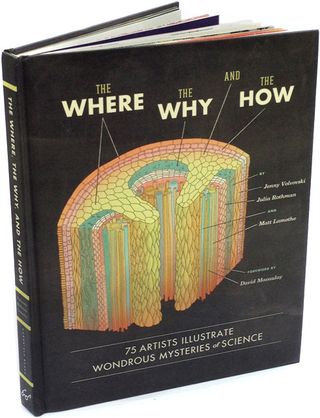
As a lover of the intersection of art andscience, I find myself more excited about The Where, the Why, and the How: 75 Artists Illustrate Wondrous Mysteries of Science(public library) than I’ve been about a book in ages. In this gem, as intellectually stimulating as it is visually stunning, creative trifecta Julia Rothman ( ), Jenny Volvovski and Matt Lamothe, better-known as Also Online, invite some of today’s most celebrated artists to create scientific illustrations and charts to accompany short essays about the most fascinating unanswered questions on the minds of contemporary scientists across biology, astrophysics, chemistry, quantum mechanics, anthropology, and more. The questions cover such mind-bending subjects as whether there are more than three dimensions, why we sleep and dream, what causes depression, how long trees live, and why humans are capable of language.

The images, which comes from a mix of well-known titans and promising up-and-comers, including favorites like Lisa Congdon, Gemma Correll, and Jon Klassen, borrow inspiration from antique medical illustrations, vintage science diagrams, and other historical ephemera from periods of explosive scientific curiosity.

Above all, the project is a testament to the idea that ignorance is what drives discovery and wonder is what propels science — a reminder to, as Rilke put it, live the questions and delight in reflecting on the mysteries themselves.

TC Boyle: ‘It’s a godless world, without hope’

From The Guardian:

Boyle-009'It's all over,” says TC Boyle. “This planet is doomed. In a very short time, we're probably not even going to have culture or art. We're going to be living like we're in Cormac McCarthy's The Road.” In 2000, Boyle published A Friend of the Earth, a novel set in 2025 in a California recently devastated by ecological collapse, where numerous animals have become extinct and rain falls heavily for the majority of the year. “Looking back,” he says, “I should have probably moved the date forward to 2015. We live in a very different world to the one that 19th-century novelists lived in. It's a godless world, without hope.”

Going right back to his astonishingly assured 1982 debut novel, Water Music, in which explorer Mungo Park travels to a pungent west Africa to find the Niger river, Boyle's work has shown a fear and respect for the power of nature. Recently, however, he has seemed more concerned with environmental issues than ever. Again and again in his fiction, man butts up against animal and environment and comes off second best. This was true of Drop City, his 2003 novel about 1970s hippies attempting to live the communal life in Alaska; of the weatherbeaten tales contained in his recent collections After the Plague, Tooth and Claw and Wild Child; and of last year's When the Killing's Done, about conflict between biologists and animal rights protesters. And it's certainly the case in his new book, San Miguel, set on one of the Pacific Channel Islands between the 1880s and 1940s.

More here.

Sunday Poem

For the man who jumped out in front of the woman with his
arm raised like a machete screaming Abomination! as she
walked the streets of San Francisco holding her lover’s hand
for the first time in public.

Sign Language

There is a woman who goes to sleep
every night wishing she had broken
your sternum reached up inside your
chest momentarily borrowing your
heart to hold before your screaming
face and with her other hand still
clutching her lover’s broke next into
her own sternum plucking next her
own heart dangling them both there
sterling silver sign language for you
tell me what is the difference.

by Nikky Finney
from The World is Round
Innerlight Publishing, 2003

Saturday, October 13, 2012

The New Swedish Model

20121013_SRD007_0

In the Economist (via Jonathan Hopkin):

SALTSJÖBADEN, A CHARMING seaside town on the outskirts of Stockholm, has an iconic place in Swedish economic history. The “Saltsjöbaden Accord”, signed there between unions and employers in 1938, ushered in the consensus system of labour relations that remains a pillar of Sweden’s economic model. Nowadays the town is famous for a different reason. It is one of Stockholm’s fanciest suburbs, and the setting for “Sunny Side”, a popular television comedy that pokes fun at the country’s new rich. In the show, Saltsjöbaden’s yuppy residents fret over how to get their babies into the best nursery. A badly behaved child is threatened with banishment to Fisksätra, a poor enclave a few train stops away, where immigrants from 100 countries cram into dilapidated blocks of flats.

The most equal country in the world is becoming less so. Sweden’s Gini coefficient for disposable income is now 0.24, still a lot lower than the rich-world average of 0.31 but around 25% higher than it was a generation ago. That rise is causing considerable angst in a nation whose self-image is staunchly egalitarian. A leftist group caused a media hubbub earlier this year by organising a “class safari” bus tour of Saltsjöbaden and Fisksätra. Opposition leaders insist that the ruling centre-right party is turning Sweden into America.

Anders Borg, the finance minister, vehemently disagrees. Sweden, he argues, has gone from being a stagnant benefit-based society to a vibrant modern economy with a remarkably small rise in inequality. Its experience, he says, shows that dynamism and egalitarianism do not need to be at odds.

Mo Yan

Mo_yan_rect-460x307

As its title suggests, breasts have a considerable role to play in Mo Yan’s saga of twentieth-century China. Not all are plain large: some are “high”, “arching”, “pert”, “delicate, lovely, perky”, and on occasion improbably mobile, “with slightly upturned nipples as nimble as the mouth of a hedgehog”. One pair is described as a couple of “happy white doves”, others are “like opium flowers or valleys of butterflies”; yet another resembles “a little red-eyed rabbit”. But in whatever unpredictable form they manifest themselves, they are everywhere, prompting, with respect to Mo Yan, the question that John Lewis, the narrator of Kingsley Amis’s novel That Uncertain Feeling, asks himself while contemplating a game of women’s tennis: “Why did I like women’s breasts so much? I was clear on why I liked them, thanks, but why did I like them so much?”.

more from Julia Lovell and other TLS writers on Mo Yan here.