Want to understand the work behind the Physics Nobel? Quantum Computing with Ions

Christopher R. Monroe and David J. Wineland (2012 Nobel in Physics) in Scientific American:

Editor’s note (10/9/2012): We are making the text of this article freely available for 30 days because the article was cited by the Nobel Committee as a further reading in the announcement of the 2012 Nobel Prize in Physics and was also written by one of the prize winners. The full article with images, which appeared in the August 2008 issue, is available for purchase here.

Over the past several decades technological advances have dramatically boosted the speed and reliability of computers. Modern computer chips pack almost a billion transistors in a mere square inch of silicon, and in the future computer elements will shrink even more, approaching the size of individual molecules. At this level and smaller, computers may begin to look fundamentally different because their workings will be governed by quantum mechanics, the physical laws that explain the behavior of atoms and subatomic particles. The great promise of quantum computers is that they may be able to perform certain crucial tasks considerably faster than conventional computers can.

Perhaps the best known of these tasks is factoring a large number that is the product of two primes. Multiplying two primes is a simple job for computers, even if the numbers are hundreds of digits long, but the reverse process—deriving the prime factors—is so extraordinarily difficult that it has become the basis for nearly all forms of data encryption in use today, from Internetcommerce to the transmission of state secrets.

More here.
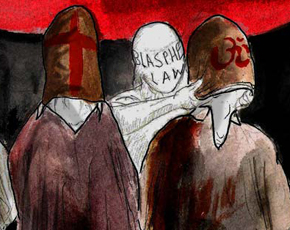
Justice for Minorities: Pipe Dream or Possibility?

290-blasphemy-law-faraz-aamer

Faiza Mirza in Dawn (via Hussein Ibish):

Amidst numerous incidents of chaos, anarchy, hatred and fundamentalism, finding solace in hope of a peaceful future is the only choice left for many people living in the country. It is during such times when great leaders like Mahatama Gandhi are truly missed, who sacrificed their lives not only for the betterment of the society at large, but also fought day in and out for human rights. He dedicated his life to peace making and recently his birth anniversary, which was declared the International Day of Non-Violence by the United Nation, became a reason for Pakistan and India to stand united by paying respect to the man who propagated the philosophy of unity and peace in the most violent of times. It surely is a day such as this which give me hope for better times — times in which human rights are mutually respected and accepted beyond borders, religions and cultures.

Unfortunately, each act of communal rioting makes the sacrifices of the likes of Mahatma Gandhi go in vain. The act of an individual should not be taken as an excuse to instigate violence against other communities. Following the riots that stranded Karachi a few days ago, a group of armed assailants vandalised a Hindu temple on the outskirts of Karachi.

The attackers allegedly, broke all the religious statues, tore a copy of the Bhagwat Gita and stole all the jewelry belonging to Hindu women, leaving the helpless and poor caretaker in tears. As expected, the miscreants were able to escape from the scene; however, a case was registered against the culprits under the blasphemy law. Yes you read correctly, if caught, they will be tried under the blasphemy law — which has previously always been used against the minorities of Pakistan and for the first time will be referred to protect the aforementioned community which comprises less than two per cent of our population.

Star Trek: The Next Generation on its 25th anniversary

TNG Picard

Brian Phillips in Grantland (via Andrew Sullivan):

It's 25 years old now, Star Trek: The Next Generation, 25 this week — the first episode premiered on September 28, 1987. Hard to believe, in all the usual ways. I recently rewatched the whole run, all 178 episodes, which was a long exercise in critical nostalgia. One of the problems in revisiting sci-fi is that, sooner or later, every voyage into the future becomes a voyage into the past. Traveling to The Next Generation's24th century sent me hurtling backward at about Warp 9. That's partly because the show is bound so strongly in my memory with those solitary misfit hours of adolescence, but also because The Next Generation itself is helplessly, and kind of movingly, of its time. You can't help but notice this, watching it now. The first sign is that, for a franchise that famously defines space as an extension of the Old West, The Next Generation very quickly dispenses with almost any sense of a frontier. Captain Kirk's Enterprise was a ship of phaser-happy explorers always pressing onward toward the next undiscovered planet on which they could stage a fistfight; in comparison, Captain Picard's Enterprise is a calm, sleek vessel of end-of-history galactic administration — a kind of faster-than-light embassy, complete with chamber music concerts. There's very little fighting; there's a great deal of personal growth and trade-pact negotiation. Many, many episodes turn on the decidedly nonstandard TV plot of something has gone wrong with a diplomat. In “Sarek,” for instance (Season 3, Episode 23), Data's performance of the Brahms string quintet makes Spock's father, a powerful ambassador, cry, which isn't supposed to happen to Vulcans; in “Loud As a Whisper” (Season 2, Episode 5), a deaf diplomat loses his telepathic interpreters and has to teach the aliens whose peace treaty he's brokering sign language. There's an only-global-superpower, world-policeman feel to most of this: The Klingons, the wild, violent others of the Kirk series, are now allies of the Federation. Everything's running smoothly. The crew's heroic quest is just to keep it that way.

So they transport medical supplies; they help overextended colonies fix their weather-control systems. Gene Roddenberry's guiding vision of the Star Trek franchise was, famously, that it would offer an optimistic vision of humanity's future. The Soviet Union collapsed a couple of years into the filming of The Next Generation, and the show's optimistic future became startlingly coterminous with the optimistic present of the George H.W. Bush administration. Where else but space could you find a thousand points of light? The grand adventure of the NCC-1701-D was no longer to spread civilization, or even defend it; it was just to keep the machinery oiled. Remember 1991, America?

The Balance of Nature, Once Again

Our own Liam Heneghan in Aeon:

Reenadinna-Yew-wood-MuckrossThe term ‘balance of nature’ raised the hackles of some scientists as early as the first decades of the 20th century. The Oxford ecologist Charles Elton forcefully claimed in his book Animal Ecology (1927) that ‘the balance of nature does not exist, and perhaps has never existed’. Nonetheless, it remained central to the highly influential systems thinking of the late and celebrated American ecologist Eugene Odum. Think of an ecosystem as something like an individual organism: the adult develops in an orderly, predictable way from the child. Similarly, Odum argued, the trajectory of natural systems was preordained too.

In the mid-20th century, Odum modernised the concept of succession, so central to early ecology. He turned it into a mechanistic account of how organisms and their environments interact to produce orderly and predictable results. He identified 24 trends that might be expected to develop as ecosystems mature, each of which was like a physiological marker of a functioning organism. One of these was ‘overall homeostasis’ — the ability to retain equilibrium in the face of change, just as our bodies keep a stable internal temperature. The ‘development’ of a mature ecosystem led to a stable whole. When severely disturbed, the system would simply rebound to balance.

More here.

Reprogrammed Cells Earn Nobel Honor

From Science:

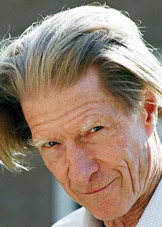
GurdonThe discovery that cellular development is not a one-way street has earned this year's Nobel Prize in physiology or medicine. John B. Gurdon, a developmental biologist at the Wellcome Trust/Cancer Research UK Gurdon Institute at the University of Cambridge in the United Kingdom, and Shinya Yamanaka, a stem cell researcher at Kyoto University in Japan and the Gladstone Institute at the University of California, San Francisco, have won the prize for their discovery that mature cells can be reprogrammed to resemble the versatile cells of a very early embryo. These so-called pluripotent cells have the ability to become any of the body's tissues. The pair's work, which bridges two eras of modern biology, “revolutionised our understanding of how cells and organisms develop,” the Nobel committee wrote in its award announcement.

…In normal development, cells mature from their pluripotent state into various, specialized cell types a neuron, muscle cell, or skin cell, for example. For many years developmental biologists thought that the cellular maturation process was irreversible. In 1962, however, John Gurdon, working at the University of Oxford, showed that under the right conditions, a mature cell nucleus could become developmentally young again. He replaced the nucleus of a frog egg with a nucleus taken from a cell in a tadpole's intestine. In a few cases, the egg cell was able to “reprogram” the DNA in the tadpole nucleus and the egg cell developed into an adult frog-the first animals cloned from mature cells*. Other researchers built on Gurdon's findings, most famously the team that cloned Dolly the sheep using a similar feat of nuclear transplantation. That breakthrough demonstrated that mammal cells could undergo the same transformation from mature to immature.

More here. (Note: Since the late 1970's when I first read the details of Gurdon's brilliant experiment, I have been waiting for him to win the Nobel Prize…and finally, I feel vindicated and extremely happy!)

Recalibrating Therapy for Our Wired World

From The New York Times:

BrainFor some, the new technology is clearly a boon. Let’s say you have the common anxiety disorder social phobia. You avoid speaking up in class or at work, fearful you’ll embarrass yourself, and the prospect of going to a party inspires dread. You will do anything to avoid social interactions. You see a therapist who sensibly recommends cognitive-behavioral therapy, which will challenge your dysfunctional thoughts about how people see you and as a result lower your social anxiety. You find that this treatment involves a fair amount of homework: You typically have to keep a written log of your thoughts and feelings to examine them. And since you see your therapist weekly, most of the work is done solo. As it turns out, there is a smartphone app that will prompt you at various times during the day to record these social interactions and your emotional response to them. You can take the record to your therapist, and you are off and running.

Struggling with major depression? Digital technology may soon have something for you, too. Depressed patients are characteristically lacking in motivation and pleasure; an app easily could lead patients through the day with chores and activities, like having a therapist in one’s pocket. Not just that, but the app might ask you to rate depressive symptoms like sleep, energy, appetite, sex drive and concentration in real time, so that when you next visit your psychiatrist, you can present a more accurate picture of your clinical status without having to worry about your recall.

More here.

The Balance of Nature

Chris Clarke in Pharyngula:

ScreenHunter_21 Oct. 09 09.42One of the things that bugs me most about some of my fellow environmentalists, aside from the patchouli, is the near-religious adherence — even among those enviros who eschew religion — to the notion that natural ecological systems have an innate and emergent self-repairing property. It’s a dangerous idea that breeds complacency, and it’s really widespread.

I’m painting with abroad brush here, I know. I’ll continue to do so for convenience’s sake, but it’s true that a number of enviro types have dropped the notion of a “balance of nature.” In my experience, wildlife biologists and people who study aridland ecosystems are especially likely to have deprecated the Gaia idea of Earth being an overarching, self-regulating system. And paleontologists.

It’s easy to understand how the notion might have come about. Ecosystems get more diverse over time, with the species in them evolving as many ways of making a living as can fit in the space available, and so disruption of an ecosystem might merely open up opportunities for organisms to grow and reproduce. Those disruptions might be truly cyclical, as with tides flooding and draining a tidepool twice a day or freezing temperatures descending on half a continent for four months every year, or they might be cyclical in the stochastic sense — forest fires, 500-year floods and droughts, the occasional exotic pathogen making its way to a new continent. If you stand back and squint, those cycles can look like stability as organisms are killed off and new ones grow to replace them. Especially if you don’t pay attention to the fact that, say, the regrown forest no longer includes American chestnuts.

More here.

Monday, October 8, 2012

Sunday, October 7, 2012

Life created from eggs made from skin cells

James Gallagher at the BBC:

_63301745_saitou2hrStem cells made from skin have become “grandparents” after generations of life were created in experiments by scientists in Japan.

The cells were used to create eggs, which were fertilised to produce baby mice. These later had their own babies.

If the technique could be adapted for people, it could help infertile couples have children and even allow women to overcome the menopause.

But experts say many scientific and ethical hurdles must be overcome.

More here.

The Dark Side of Thomas Jefferson

A new portrait of the founding father challenges the long-held perception of Thomas Jefferson as a benevolent slaveholder.

Henry Wiencek in Smithsonian Magazine:

ScreenHunter_20 Oct. 07 21.46With five simple words in the Declaration of Independence—“all men are created equal”—Thomas Jefferson undid Aristotle’s ancient formula, which had governed human affairs until 1776: “From the hour of their birth, some men are marked out for subjection, others for rule.” In his original draft of the Declaration, in soaring, damning, fiery prose, Jefferson denounced the slave trade as an “execrable commerce …this assemblage of horrors,” a “cruel war against human nature itself, violating its most sacred rights of life & liberties.” As historian John Chester Miller put it, “The inclusion of Jefferson’s strictures on slavery and the slave trade would have committed the United States to the abolition of slavery.”

That was the way it was interpreted by some of those who read it at the time as well. Massachusetts freed its slaves on the strength of the Declaration of Independence, weaving Jefferson’s language into the state constitution of 1780. The meaning of “all men” sounded equally clear, and so disturbing to the authors of the constitutions of six Southern states that they emended Jefferson’s wording. “All freemen,” they wrote in their founding documents, “are equal.” The authors of those state constitutions knew what Jefferson meant, and could not accept it. The Continental Congress ultimately struck the passage because South Carolina and Georgia, crying out for more slaves, would not abide shutting down the market.

More here.

Israeli officials “honor” settler who tortured Palestinian child

Ali Abunimah in Electronic Intifada:

ScreenHunter_19 Oct. 07 21.40Frequent and rising Israeli settler attacks on Palestinians almost always go unpunished.

Indeed, often, Israeli soldiers stand by and watch as Israeli settlers go on the rampage. The situation is so bad that a boy like Yousef Ikhlayl, 17, can be killed and there is no investigation or accountability.

So when an Israeli settler went to jail on Saturday for torturing and abusing a Palestinian child, it was quite an event, as Haaretz reported:

Prominent rabbis, public officials and a Knesset member, on Saturday, held a send off for a criminal about to enter prison after being convicted of abusing a Palestinian youth.

The event was held in the West Bank Shilo settlement in honor of Zvi Struck, who was convicted of abusing a Palestinian youth in July 2007, together with another man whose identity remains unknown. The two beat the youth up, bound him, fired their guns close to him, undressed him and threw him naked at the roadside. Three months earlier the two men had beaten up the same youth and killed a day-old kid.

The Jerusalem District Court sentenced Struck to 18th months in prison, which the Supreme Court extended after an appeal to 30 months.

According to Haaretz, “The send off was led by Bnei Akiva yeshivas head Rabbi Haim Drukman and Kiryat Arba Rabbi Dov Lior, Binyamin Council head Avi Ro’eh, his deputy Motti Yogev and MK [Knesset member] Arye Eldad.”

More here.

Reclaiming Politics: Solving Problems Washington Won’t

Gecan_37.5_build

Michael Gecan in Boston Review:

One party starts with a belief that government can’t and shouldn’t deal with real issues, except perhaps to cut checks to private contractors and return tax dollars to “job creators.” It is led by a group of relatively young men and women—figures such as Paul Ryan, Eric Cantor and Mike Mulvaney, Jim Jordan, and Michelle Bachmann—who were sons and daughters of the period that William Schneider referred to as “The Suburban Century. They and many of their colleagues have only known sprawl and expansion, growth and prosperity, new housing developments, malls, schools, corporate parks.

The other party was shaped by the political culture of big declining cities, where politicians remained in office while the places they represented gradually eroded. Chicago has been losing population for more than half a century, with a million fewer residents today than at its peaks and the empty neighborhoods they left behind. Violent crime in much of the south and west side is out of control, making the Windy City the nation’s most dangerous place for young males of color. In this culture of scarcity and violence, the political class has prospered. Superb public relations and campaigning have insulated its leaders from accountability. Their security has increased, with families from the Daleys on down handing offices off to second and third generations, while the safety and wellbeing of the majority of the city’s residents unravels. Civic progress and political success are severed. And White House leaders have taken these municipal experiences to Washington.

Neither party offers a way forward for the majority of Americans. In fact, there are really three parties, with the third party being the largest of all: the party of people who want America to work. That means “work” in the literal sense of direct employment. It also means being part of a society that renews its capacity to make steady and imperfect progress. Pragmatic political life requires accepting the partial nature of every solution and the grief that comes when some miss out. Such pragmatism can be risky for politicians, but our country’s best statesmen have managed it.

Paradoxes of Pigmentation

Zoe_Saldana

Nina Jablonski in Berfrois:

Far from the bright lights of Holly/Bolly, many people think that their own dark skin casts a shadow over their lives. They sense that people think less of them because of it, and that somehow their skin is literally a black mark against them when they seek a job or a marriage partner. Why does skin colour matter so much, and why – in light of myriad anti-colour discrimination laws now on the books around the world – does it appear to matter as much or more today than it did at the height of the civil rights and anti-apartheid movements a half century ago?

At the outset, recall that we are primates, and as such are obsessed with everything visual. We are observant, imitative and status-conscious too; and assess the appearance of others consciously and unconsciously as we decide what to do from one moment to the next. Our brains expend great cognitive effort in the interpretation of faces, and we instantaneously assess information about a person’s age, health, mood, intention and attractiveness as we scan their face. Our perceptions of attractiveness are also affected by social factors. We are inordinately influenced by our peers, especially as adolescents, because we seek acceptance and fear rejection. At the same time we also become highly conscious of social position, and seek to emulate individuals who we perceive as having higher status. Social anxiety about peer evaluation often persists through adulthood, with the tendency to imitate being more pronounced in women than in men. Looking or acting like someone with high status confers status by proxy.

Our urge to imitate people of higher social status or greater popularity has deep evolutionary roots. It has only been in the last few thousand years, however, that widely circulated and privileged images – on coins, stamps, photographs and in digital images – have given us opportunities to imitate people we have never seen. Images of “attractive” people and celebrities are electronically captured and rapidly propagated by the media, cell phone, social media and advertising. This highly dynamic and ever-growing reservoir of visual imagery affects how people translate perceptions of appearance into judgements.

Eugene D. Genovese, 1930 — 2012

Dog-GENOVESE1-obit-articleLargeLeo Ribuffo in Jacobin Magazine:

The death of a favorite teacher in his or her late old age typically evokes strong emotions from former students in their early old age. In this case the emotions are mine and the teacher is Gene Genovese, one of my professors at Rutgers when I was an undergraduate from 1962 to 1966. We remained in contact off-and-on over the decades and I saw him last in Atlanta in July 2010. This piece is not another attempt to offer an instant analysis of the “real” Genovese, an enterprise now well underway in cyberspace. Rather, I want to add something to the story from the perspective of an undergraduate he taught who subsequently entered what Gene called the “history business.”

I first heard about Gene in the fall of 1963, the first semester of my sophomore year, from my friend Ken O’Brien (who also entered the history business). Ken was taking Gene’s course in American Negro history. As a naive 18-year-old from a white working class-lower middle class New Jersey family, I was surprised to hear that this subject existed. I soon learned in detail that it did from Genovese himself. During the spring semester of 1964, the Intro US history course since the 1870s, taught in lecture by the terrifying Richard P. McCormick, allowed some students to take tutorials in small groups. Three of us were assigned to Gene. Our first assignment was to make sense of the currency issue in the late 19th century via debates in the Congressional Record. No, I’m not making this up. During the rest of the semester Gene tamped down my enthusiasm for William Jennings Bryan (a racist), delighted in my discovery that Theodore Roosevelt posed no threat to the standing order, and chided me for still liking Woodrow Wilson (the worst racist of the lot).

During my junior and senior years I took three courses from Gene, a two semester sequence on the history of the American South and a seminar on comparative slavery in which I first heard the word “hegemony.” I was attracted by Gene the professor rather than by the subject matter.

Reading ‘A Farewell to Arms’

From The Atlantic:

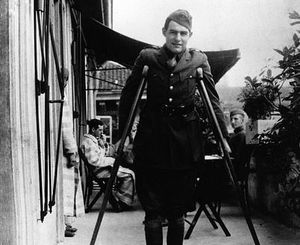
Farewell-to-arms-tmI commute every week up top for my teaching gig, mostly on the bus. It's about a four-hour ride, the upside of which is the large amount of reading I get done. I knocked out Invisible Man, which I would love to talk to you about, given our conversations around Richard Wright. Another time. Right now I'm reading A Farewell To Arms and sort of amazed at the virtuosity of the prose. It's not simply that Hemingway can write beautifully, but that he can write beautifully in many different ways. He opens up with this really lyrical, almost dreamscape-like description, and then throughout the book alternates that style a kind of hard-edged staccato. He doesn't much like to go on with long descriptions of characters, he just sort of puts them there and lets you get to know them.

I can't really speak to their power yet, as I have not finished the book. But there is a lot to be learned here about how to change gears, something I struggle with, frankly. I'll find a pretty riff and play that bad boy for 10K words without looking back. It can get boring. I think you need mountains, valleys, and fields. It can't always be the rolling hills. Perhaps it is juvenile of me but my favorite part is this:

He looked at the priest and shouted, “Every night priest five against one!”
I hate to think what happens when they teach this in high schools.
Listen to Hemingway's beautiful Nobel Prize acceptance speech here.

A poetic reading of the GOP platform

RomFrom Salon:

Right-wingers seem more than unbright,

Since when Ryan says Romney will fight

To end medicare,

Women’s rights, and clean air,

They hear, “Vote for us since we’re both white.”

Mike Moulton

Help for Mitt has been offered by — Newt!

To make debates wily and cute,

He tweets him to speak,

With brashness and cheek –

And Obama will have him en croute!

Shirley Stuart

More here.

Sunday Poem

Not Many Kingdoms Left

I write the lips of the moon upon her shoulders. In a temple
of silvery farawayness I guard her to rest.

For her bed I write a stillness over all the swans of the
world. With the morning breath of the snow leopard I cover
her against any hurt.

Using the pen of rivers and mountaintops I store her pillow
with singing.

Upon her hair I write the looking of the heavens at early
morning.

—Away from this kingdom, from this last undefiled place, I
write civilizations, governments, and all other spirit-forsaken
and soldiery institutions. O cold beautiful blossoms, the lips
of the moon moving upon her shoulders . . . Stand off! Stand
off!

by Kenneth Patchen
from Kenneth Patchen Selected Poems
New Directions Books, 1957

Saturday, October 6, 2012

Hymns to Misunderstanding

Odradek-and-other-novels

Having captured this Mathews omnibus, I didn’t begin reading immediately. How much time passed before I entered, via The Conversions, the Mathewsian orbit? (Surely my journals from the period could help me pin down the date—if only I could find the journals.) It hardly matters. The book had been waiting in the store for me; it had been waiting in its tangible form for 22 years; it has sat on my shelf, in five different homes, to be consulted again with pleasure. “Mathews’ work is virtually indescribable in brief,” the back cover stated, then went on to do so: “His is a genius of wild invention presented in a kind of meticulous deadpan narration that leaves the reader howling, amazed, and exhilarated.” It is not hyperbole. The Conversions begins with an impenetrable ideogram, a circular maze sealed off completely, no way in or out. From the start, the prose exudes an eerie and compelling calmness. In quick order, the narrator relates a racing competition of Rousselian strangeness (an intricate affair combining woodwinds and worms) and then meets a novelist who provides a summary of his book The Sores, in which three early music enthusiasts try to survive a polar plane crash.

more from Ed Park at The Quarterly Conversation here.