learning about mormons

1021BEAM-articleInline

For a young religion, Mormonism seems to have more history than it knows what to do with. The church’s founding fathers were outsize, operatic characters: the prophet Joseph Smith, who believers claim received and translated “The Book of Mormon,” and his successor, Brigham Young, who “preserved a church and created a people,” according to this new biography by John G. Turner, an assistant professor of religious studies at George Mason University. But until he met Joseph Smith, Brigham — the Mormons, or Latter-day Saints, call both Smith and Young by their first names — was a 29-year-old transient nobody in upstate New York who “lived on the economic margins of his society,” and wasn’t particularly religious. He relished the sense of community he found among the Mormons and was much moved by his early encounters with Smith (“He took heaven . . . and brought it down to earth,” Young recalled).

more from Alex Beam at the NY Times here.

Shut Up About the Jews Already…

Eric Alterman in The Nation:

Star-of-davidFew issues are as crucial to the future of the human race as the dynamics of the Israeli-Palestinian conflict, and few are as misunderstood in American politics. The reasons, naturally, are complex; so too, God knows, is the conflict itself. But much of the confusion arises from the combined ability of professional Jewish organizations, right-wing think tanks and media-based neoconservative pundits to misrepresent both the views and the influence of American Jews and to enforce their misrepresentations on the mainstream media via political intimidation.

To unravel the confusion, one first has to get a few facts straight. Self-identifying American Jews constitute just 1.7 percent of the voting population, according to the Pew Forum on Religion & Public Life. This compares with 51.3 percent Protestant, 23.9 percent Roman Catholic and 16.1 percent “no religion.” Of the tiny percentage of American voters who are Jewish, roughly 7 percent put Israel at the top of their list of political concerns. So, overall, 7 percent of 1.7 percent—or pretty close to 0 percent—say they vote on the basis of policies related to Israel. And of this minuscule percentage, many are hawkish, but many others are dovish, and still others are in between or change their minds depending on the situation. Jews, you may have heard, have been known on occasion to disagree with one another, and even with themselves. But more than 80 percent of Jews polled share the view that the United States should play “an active role in helping the parties to resolve the Arab-Israeli conflict”—roughly the same number who agree that a “two-state solution is necessary to strengthen Israeli security.”

And yet it’s nearly impossible to find a story in a mainstream media outlet that reflects this reality. Almost without exception, one reads of the danger to Obama of losing Jewish voters, with the reason being their alleged unhappiness with his (equally alleged) lack of sympathy for Israel. But Obama is not losing Jewish voters to Mitt Romney: they continue to support him, in every significant poll, at the rate of approximately 70 percent. And if they didn’t, it wouldn’t be because of Israel, and it wouldn’t matter anyway. The numbers are just too tiny.

More here.

ABORTION, FREE SPEECH, AND THE LEFT

Kenan Malik in Pandaemonium:

Pregnant-e1346337452907Mehdi Hasan, political director of the Huffington Post UK, has an essay in the current issue of the New Statesman, of which he was until recently the political editor, arguing that the progressive stance on abortion is to oppose it. The article inevitably created a storm on Twitter and elsewhere on the web, a storm at which Hasan took umbrage. ‘Time to add abortion to the list of issues – Islam, Iran’s nuclear programme etc – that can’t be discussed on Twitter’, he tweeted. Headded that he was ‘v disappointed that lefties have confirmed every rightwing prejudice today: we close down debate, we enforce orthodoxies etc’. I will return later to the response to Hasan’s argument, but first a few words on his pro-life argument:

Abortion is one of those rare political issues on which left and right seem to have swapped ideologies: right-wingers talk of equality, human rights and “defending the innocent”, while left-wingers fetishise “choice”, selfishness and unbridled individualism.

To pose the issues in this fashion is, as Mehdi Hasan must know, to distort the debate almost to meaninglessness. Yes, pro-abortionists talk about ‘choice’, but in slating ‘selfishness and unbridled individualism’ Hasan is willfully confusing the promotion of consumer choice and free market policies with the (collective) struggles that women have had to wage to win the right to make basic decisions about their own bodies. And yes, the right often talks of ‘equality’ and ‘human rights’ but it is striking that such equality and rights seemingly apply in this case only to the fetus and not to the woman.

More here.

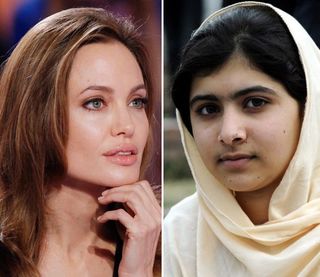
Angelina Jolie: We All Are Malala

Angelina Jolie in The Daily Beast:

1350412311904.cachedOn Wednesday morning, as we readied the kids for school amidst a few of the usual complaints about not wanting to go, I saw a headline on the cover of The New York Times: Taliban Gun Down a Girl Who Spoke Up for Rights. The Taliban claimed that 14-year-old Malala Yousafzai “ignored their warnings, and she left them no choice.” They approached her school bus, asking for her by name, and shot her in the head for promoting girls’ education.

After reading the article, I felt compelled to share Malala’s story with my children. It was difficult for them to comprehend a world where men would try to kill a child whose only “crime” was the desire that she and others like her be allowed to go to school.

Malala’s story stayed with them throughout the day, and that night they were full of questions. We learned about Malala together, watching her interviews and reading her diaries. Malala was just 11 years old when she began blogging for the BBC. She wrote of life under the Taliban, of trading in her school uniform for colorless plain clothes, of hiding books under her shawl, and eventually having to stop going to school entirely.

Our 8-year-old suggested that the world build a statue for Malala, and fittingly create a reading nook near it.

More here.

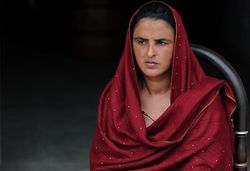
Mukhtar Mai

From New Statesman:

MaiMukhtar Mai is a woman from a village in the Muzaffagarh district of Pakistan. In 2002, she was gang-raped on the orders of a tribal council as part of a so-called “honour” revenge. While tradition dictates that a woman should commit suicide after such an act, Mukhtar defied convention and fought the case. Her rapists were never convicted, but the story was picked up by domestic and international media, and she has become an iconic advocate of women’s rights, despite constant threats to her life. She has opened a girls’ school and women’s crisis centre in Muzaffagarh. I spoke to her earlier this week as part of research for an upcoming NS feature on Malala Yousafzai, the 14 year old schoolgirl activist shot by the Taliban, and the wider issues of politics, women and extremism in Pakistan. As always, just a small part of the interview could go into the feature, so here is a transcript.

There has been a huge public response in Pakistan to the shooting of Malala Yousafzai. What do you make of it?

I feel so good about the response to Malala. She’s a young girl, a child, and yet she’s fought for a nation, not just for her school. Malala is a beacon. Her light has been shone on all corners of the country, in the heart of the nation. When they shot her, it was not just Malala who fielded the bullet, thousands of Malalas were wounded. Today it was her turn for the bullet; tomorrow it could be some other. It could be me. I pray for her. May the poor child be completely healed.

Do you think Malala’s quest is similar to yours?

Yes, but look, the start of my journey was different. It was a very painful path. My wound is one that can never heal – it injured me beyond the body. Thankfully, Malala’s wound, though very serious, is physical. God willing, hers will heal.

More here.

Inside the Box

From The New York Times:

The most despairing image in Chris Ware’s magnificent new graphic novel, “Building Stories” — and there are plenty of candidates — depicts a dumpy middle-aged couple, naked in their bedroom. She’s just dropped her clothes to the floor; he’s lying on the bed, oblivious to her, his face and chest illuminated by the iPad propped on his belly. You will never be able to read “Building Stories” on a digital tablet, by design. It is a physical object, printed on wood pulp, darn it. It’s a big, sturdy box, containing 14 different “easily misplaced elements” — a hard-bound volume or two, pamphlets and leaflets of various dimensions, a monstrously huge tabloid à la century-old Sunday newspaper comics sections and a folded board of the sort that might once have come with a fancy game. In which order should one read them? Whatever, Ware shrugs, uncharacteristically relinquishing his customary absolute control. In the world of “Building Stories,” linearity leads only to decay and death.

Arguably, the box’s central nugget of story is a sequence Ware serialized in The New York Times Magazine in the mid-2000s, which appears here in something that approximates the dimensions and binding of a Little Golden Book. The chief protagonist of “Building Stories,” a sad, lonely florist with a prosthetic leg (Ware never gives her a name), lives on the third story of a 98-year-old building in Chicago. She’s a former art student who eventually gave up on creating anything: as she explains in a pseudo-gag cartoon on the edge of the box (!), she was “just art curious.”

More here.

Friday, October 19, 2012

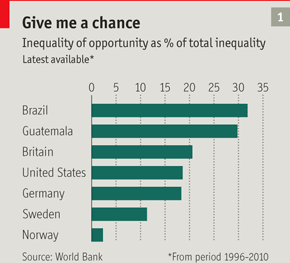
Measuring Inequality of Opportunity

From The Economist:

20121013_SRC872Such an “Inequality of Opportunity Index” was pioneered by Francisco Ferreira of the World Bank and now exists for 40 countries. At one extreme lies Norway, where only 2% of the—already low—inequality can be explained by accidents of birth. At the other extreme, in Brazil a third of the high income inequality is due to people’s background. America is closer to Brazil than to Norway (see chart 1).

Economists also gauge equality of opportunity by measuring disparities in children’s access to basic services that will influence their prospects, such as education or running water. The World Bank is developing indices which adjust overall access to such services by a measure of the inequality in that access. South Africa, for instance, has the same overall rate of access to sanitation as Nicaragua. But once you adjust for race disparities, its “Human Opportunity Index” for sanitation is much lower.

More here.

How Things Fell Apart

In an excerpt from his long-awaited memoir, the inventor of the post-colonial African novel in English discusses his origins as a writer and the seeds of revolt against the British Empire.

Chinua Achebe in Guernica:

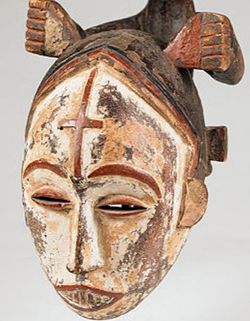
ScreenHunter_05 Oct. 20 13.01On November 16, 1930, in Nnobi, near my hometown of Ogidi, providence ushered me into a world at a cultural crossroads. By then, a longstanding clash of Western and African civilizations had generated deep conversations and struggles between their respective languages, religions, and cultures.

Crossroads possess a certain dangerous potency. Anyone born there must wrestle with their multiheaded spirits and return to his or her people with the boon of prophetic vision; or accept, as I have, life’s interminable mysteries.

My initiation into the complicated world of Ndi Igbo was at the hands of my mother and my older sister, Zinobia, who furnished me with a number of wonderful stories from our ancient Igbo tradition. The tales were steeped in intrigue, spiced with oral acrobatics and song, but always resolute in their moral message. My favorite stories starred the tortoise mbe, and celebrated his mischievous escapades. As a child, sitting quietly, mesmerized, story time took on a whole new world of meaning and importance. I realize, reminiscing about these events, that it is little wonder I decided to become a storyteller. Later in my literary career I traveled back to the magic of the storytelling of my youth to write my children’s books: How the Leopard Got His Claws, Chike and the River, The Drum, and The Flute: A Children’s Story (Tortoise books).

When I think about my mother the first thing that comes to my mind is how clearly the description “the strong, silent type” fit her.

More here.

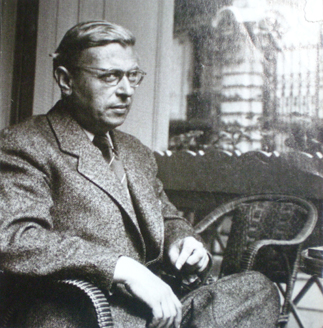
LE BLOG DE JEAN-PAUL SARTRE

Bill Barol in The New Yorker:

Jean-Paul_Sartre_323Saturday, 11 July, 1959: 2:07 A.M.

I am awake and alone at 2 A.M.

There must be a God. There cannot be a God.

I will start a blog.

Sunday, 12 July, 1959: 9:55 A.M.

An angry crow mocked me this morning. I couldn’t finish my croissant, and fled the café in despair.

The crow descended on the croissant, squawking fiercely. Perhaps this was its plan.

Perhaps there is no plan.

More here.

Why Iran Should Get the Bomb

Kenneth N. Waltz in Foreign Affairs:

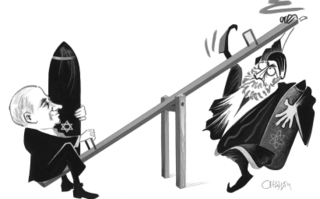
Waltz_411_0The past several months have witnessed a heated debate over the best way for the United States and Israel to respond to Iran's nuclear activities. As the argument has raged, the United States has tightened its already robust sanctions regime against the Islamic Republic, and the European Union announced in January that it will begin an embargo on Iranian oil on July 1. Although the United States, the EU, and Iran have recently returned to the negotiating table, a palpable sense of crisis still looms.

It should not. Most U.S., European, and Israeli commentators and policymakers warn that a nuclear-armed Iran would be the worst possible outcome of the current standoff. In fact, it would probably be the best possible result: the one most likely to restore stability to the Middle East.

More here.

the great Pokémon debate

Pokemon

“Much like animals in the real world,” read PETA’s statement, “Pokémon are treated as unfeeling objects and used for such things as human entertainment and as subjects in experiments. The way that Pokémon are stuffed into pokéballs is similar to how circuses chain elephants inside railroad cars and let them out only to perform confusing and often painful tricks that were taught using sharp steel-tipped bullhooks and electric shock prods … If PETA existed in [the game world of] Unova, our motto would be: Pokémon are not ours to use or abuse. They exist for their own reasons. We believe that this is the message that should be sent to children.” It is tempting, and not too difficult, to dismiss PETA’s effort as nothing more than a publicity stunt, and most of those who have covered the campaign have suggested, not altogether unwisely, that PETA focus on corporeal beasts rather than fantastic ones. But PETA has a point.

more from Liel Leibovitz at TNR here.

babel

Hendrick-van-Cleef

If you want to see how myths arise from misunderstandings, the Tower of Babel provides a textbook example. In ancient Assyrian babilu means ‘door of God’ and thus correctly describes the Babylonian ziggurat erected to the god Marduk by Nebuchadnezzar II and later seen in ruins by Herodotus. But in Hebrew the word bâlal means ‘to confuse’, hence the confusingly different account in Genesis. In this version, men come together in the cradle of civilisation to build ‘a tower, whose top may reach unto heaven’ as a monument for posterity, lest they be ‘scattered abroad upon the face of the whole earth’ — and God, sensing that ‘this is only the beginning of what they will do’, sends down a software bug to corrupt their communal language and scatter them before they finish the job. It’s from this muddle that Babel emerges as the ultimate symbol of architectural hubris, a subject first represented in Flemish art in the 16th century.

more from Laura Gascoigne at The Spectator here.

kerouac the man

Kerouac2

Kerouac the writer is of course inseparable from the life of Kerouac the man. In brief form it goes like this: he was born in Lowell, Massachusetts of French-Canadian parents in 1922, moved 11 times before he was 17, was addicted to books and imaginary play, stayed up all night in high school talking about poetry and ideas with one group of friends, stayed up drinking with a different group, learned to love night and rain, longed to marry a local girl whose father promised to get him a brakeman’s job on the Boston and Maine Railroad, parlayed a talent for football into a scholarship to Columbia, dropped out of college after ten minutes, made a couple of Atlantic crossings as a merchant seaman at the onset of the Second World War, returned to college for a further ten minutes, and thereafter divided his time for a number of years between a quietly disciplined writing life at home in Queens with his widowed mother and occasional forays into Manhattan for too much drink and talk with a circle of brilliant, reckless and variously talented friends who provide a couple of hundred pages of frantically complex narrative in any complete Life of Kerouac the writer and man.

more from Thomas Powers at the LRB here.

Lascaux’s Picassos

From Slate:

CaveSince at least the 1970s, the question of when we first acquired our humanness has been tangled up in discoveries about when we began making art. Richard Klein at Stanford used carvings such as the 30,000-year-old Lion Man of Hohlenstein Stadel to substantiate his theory that a genetic mutation caused a sudden mental flowering in our ancestors 40,000 years ago. (Homo sapiens have been around for 200,000 years, but apparently they spent much of that time twiddling their opposable thumbs.) Yet in 1991, the excavation of 77,000-year-old beads and engraved shards of red ochre in South Africa upended Klein’s hypothesis. It suggested that symbolic thinking had emerged much earlier than anyone had thought—maybe even at the same time that our modern bodies evolved. The notion of a game-changing genetic mutation fell out of fashion as older and older artifacts were uncovered. By 2012, Curtis Marean, a paleoanthropologist at Arizona State University, was voicing conventional wisdom when he told Smithsonian’s Erin Wayman: “It always made sense that the origins of modern human behavior, the full assembly of modern uniqueness, had to occur at the origin point of the lineage.”

It seems likely that our brains have been equipped for abstraction for as long as we have been human. But how does prehistoric art help us understand this capacity—which today asserts itself everywhere from the walls of MoMA to the icons on our smartphones? The images in the Lascaux, Nerja, and Chauvet caverns look far from hyperrealistic. One simple explanation holds that our ancestors didn’t have the time or skill to render horses and cattle exactly as they appeared. Yet researchers in neuroaesthetics are beginning to wonder whether the abstraction in Paleolithic art actually mirrors the way our minds process the world.

More here.

Poetry in motion: Rare polar ring galaxy captured in new image

From PhysOrg:

PoetryinmotiWhen the lamp is shattered,
The light in the dust lies dead.
When the cloud is scattered,
The rainbow's glory is shed.

These words, which open Shelley's poem “When the Lamp is Shattered,” employ visions of nature to symbolize life in decay and rebirth. It's as if he had somehow foreseen the creation of this new Gemini Legacy image, and penned a caption for it. What Gemini has captured is nothing short of poetry in motion: the colorful and dramatic tale of a life-and-death struggle between two galaxies interacting. All the action appears in a single frame, with the stunning polar-ring galaxy NGC 660 as the focus of attention. Polar-ring galaxies are peculiar objects. Astronomers have found only a handful of them, so not much is known about their origins. Most have an early-type spiral system, called a lenticular galaxy, as the central showpiece. But NGC 660, which lies about 40 million light-years distant toward the direction of Pisces the Fishes, is the only polar-ring galaxy known with what is called a late-type lenticular galaxy as its host. All, however, display a ring of stars, dust, and gas that extends tens of thousands of light-years across space along an orbit nearly perpendicular to the main disk.

More here.

Thursday, October 18, 2012

Remember Us With Forbearance: The Unrepentant Eric Hobsbawm, An Obituary

HobsbawmDonald Sassoon in Berfrois:

Eric Hobsbawm outlived his short twentieth century (1917-1991) by more than twenty years. And right to the end he was still the object of scandal for having been far too long a communist. ‘You see’, he might have said, (‘you see’ was one of his habitual linguistic tics) ‘there have been many communists among major historians, but they left. Some stayed on the left (E.P. Thompson), some moved right (Annie Kriegel, François Furet). I stayed until the end, the bitter end.’

Since even the popular media agree that Hobsbawm was a remarkable historian, a great historian, and some even say that he was the greatest living historian (something which he found rather unconvincing and a little embarrassing), it begs the question: how can an impenitent communist be a great historian? Indeed, whenever Hobsbawm was interviewed, especially in Britain or the United States, sooner or later, the utterly predictable questions would pop up. And why did you support the USSR? And why did you stay so long in the communist party? (the sub-text here being ‘the producer insisted I should ask you this because it would look odd if I didn’t’). The interviewer would offer a challenge: Here is the opportunity to denounce your past, to repent, to say sorry. Take the chance. Admit it: you were wrong!

Although he has consistently refused to abjure, he freely admitted mistakes, erroneous interpretations, his belated realization of the gravity of Stalin’s crimes (Khrushchev’s speech was to him a revelation). However, on the substance: ‘are you sorry to have been a communist?’ he always remained unrepentant.

What kind of communist was he? He belonged, he explained in his autobiography, Interesting Times, to the generation for whom the hope of a world revolution was so strong that to abandon the communist party was like giving in to despair. But he must have been tempted. After the Soviet invasion of Hungary a letter was sent to the Daily Worker, then the party daily. It was signed by Hobsbawm as well as other party intellectuals such as Christopher Hill, E.P Thompson, Ronald Meek, Rodney Hilton, Doris Lessing, and the remarkable Scottish poet Hugh MacDiarmid (who, in a somewhat eccentric way, is supposed to have rejoined the party over Hungary on the grounds that one does not desert friends in need). The letter declared that, ‘We feel that the uncritical support given by the Executive Committee of the Communist Party to the Soviet action in Hungary is the undesirable culmination of years of distortion of fact, and failure of the British communists to think our political problems for themselves…The exposure of grave crimes and abuses in the USSR and the recent revolt of workers and intellectuals against the pseudo-Communist bureaucracies and police systems of Poland and Hungary, have shown that for the past twelve years we have based our political analyses on the false presentation of the facts….’.

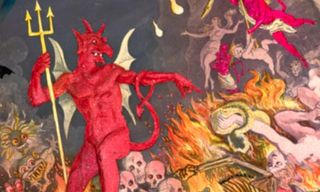
Evil, Part One: How Can We Think About Evil?

Satan-Ruling-Victims-of-H-010

Clare Carlisle in The Guardian:

“Evil” is a strong word, and a provocative one. Nowadays it tends to be reserved for acts of exceptional cruelty: the Moors murders, organised child abuse, genocide. It is not just the extreme nastiness of such acts – and their perpetrators – that makes people describe them as evil. There is something unfathomable about evil: it appears to be a deep, impenetrable darkness that resists the light of reason. To say that a murderer has killed because she or he is evil is really to point to an absence of motive. Far from the usual muddle of human motivation, evil has a cold, horrifying purity. Phrases like “unthinkable evil” or “unspeakable evil” highlight the way the word is used to say the unsayable, to explain the inexplicable.

So how can we think about evil? Perhaps we can't, or shouldn't. Ludwig Wittgenstein famously wrote that we should remain silent about “that whereof we cannot speak” – a quotation beloved of lesser philosophers seeking a convenient way to end an academic paper. On a more practical level, most victims of evil will find that simply coping takes all their energy – and in the midst of their suffering, it may be difficult to disentangle the questions “why?” and “why me?” But the very familiarity of these questions suggests that there is something about evil that calls for thinking. And Wittgenstein's remark about remaining silent can be countered by Martin Heidegger's suggestion that the proper subject matter for philosophical thinking is precisely what is “unthought” and even unthinkable.

The Christian tradition offers huge resources for our thinking about the nature, origin and meaning of evil. This is partly because the history of western philosophy is intimately bound up with Christianity, so that supposedly secular debates on morality and human nature usually involve theological ideas even if these remain implicit. But more specifically, the Christian doctrine of creation makes the question of evil particularly pressing. If the world was designed and brought into being by a perfectly good, just and all-powerful creator, why does it contain evil at all? If God did not create evil, where did it come from? And why would God make human beings capable of extreme cruelty?