biafra on the mind

37123698-797f-44ff-a1f4-dc7b26750aeb

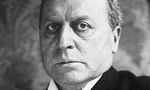
It has been a dozen years since Nigeria’s greatest novelist last published a major work and 29 since he captured so poignantly his country’s oil-fuelled decline into mediocrity and decadence in The Trouble with Nigeria. Now, at the age of 81, Chinua Achebe has broken his silence on the 1967-70 civil war with a first-hand account of the events that brought the post-independence aspirations of elite Nigerians crashing down. Coming as it does when fault lines in Africa’s most populous nation are painfully evident, There Was a Country ought to be essential reading. A new, dynamic generation is bursting from the shackles of the past in what looks like the start of a renaissance for business, politics and the arts. Yet some of the same religious, ethnic and regional tensions that combined to create the conditions for the Biafran war are tearing again at the fabric of the Nigerian federation.

more from William Wallis at the FT here.

styron writes to mailer

Styron_1-102512_jpg_470x657_q85

My mornings (12 noon +) are agony, and the daily Angst is hell. I look forward each day with the same hopeless ardor that a monk must envision paradise to the time when I’m free of this thing that constricts me, to the time when I’m “liberated” enough to be able to sit down and write 25 consecutive words without fear and trembling. It must be my liver, though it might be the heat—which has been terrible—and withal, no doubt, booze is heavily to blame. Anyway, it can’t last too much longer, for I’ll simply have to throw it all up and become a druggist or something. One thing, Rose is going to have a baby (I hope it’s a baby) next March and that might have the quality of snapping me out of my neurotic antics. It is strange, too, how on the weekends, when we go to see people in L.I. or in Conn., a sheer euphoria takes hold of me. I’m self-analytical enough to realize that my murderous anxiety mornings here in the city is because I’m faced with the ridiculous responsibility of creating a masterpiece, whereas the weekends have me gaily unburdened.

more from Styron and Mailer the NYRB here.

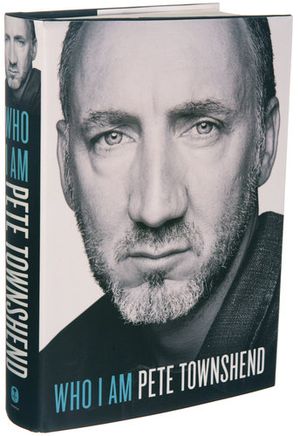
Review of “Who I Am: A Memoir”, by Pete Townshend

Michiko Kakutani in the New York Times:

BOOK-popup“Who I Am” is an earnest, tortured, searching book — by turns eloquent and long-winded, revealing and oddly elliptical. In it Mr. Townshend, the guitarist and songwriter for the Who, gives an account of his life as intimate and as painful as a therapy session, while chronicling the history of the band as it took shape in the Mod scene in 1960s London and became the very embodiment of adolescent rebellion and loud, anarchic rock ’n’ roll.

Mr. Townshend’s self-portrait is raw and unsparing. He tells us about being abused as a child and lasting feelings of shame, anger and anxiety. He tells us about his drug use and struggles with alcohol. And he tells us about being arrested on suspicion of possessing images taken from a child-pornography Web site.

(He says he was trying to come to terms with being abused as a child himself, and was helping to “set up a research program for a new support system for survivors of childhood abuse.” And while he was given a formal police caution, he was cleared of the possession charge.)

Mr. Townshend’s many internal conflicts are exhaustively mapped.

More here.

The Uncanny Art Of Studio Photography’s Heyday

Jacob Mikanowski in The Awl:
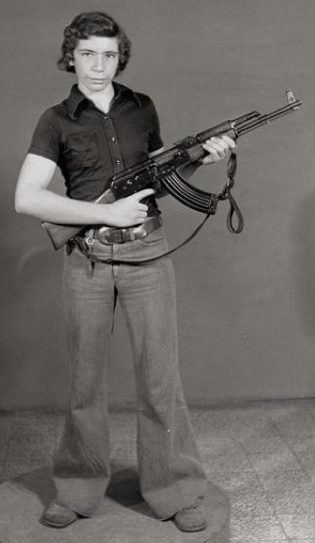
ScreenHunter_03 Oct. 13 13.32Before Facebook, there was the photo studio: a room, a camera, and a photographer. Once upon a time, studio portraiture was an essential part of the visual vernacular. Like most vernaculars, studio photography was at once ubiquitous and invisible. Along with mug shots, crime scene photographs, aerial surveys and family snapshots, it belonged to the teeming undergrowth of photography, the network of practices and forms that sometimes predate and often anticipate its emergence as a recognized art form. In the hands of its greatest practitioners, it's without question an art in its own right. But great portraits can also be the result of bureaucratic procedure, automatic gesture, or blind luck.

Studio photography is always at risk of seeming banal, and indeed, most of the photographs produced in portraiture's heyday seem today either rote or bland. But a few of these photographers made work that remains indelible, and one of these was Hashem El Madani. For fifty years, beginning in 1949, Madani worked as a photographer in Sidon, a city in southern Lebanon. He began as an apprentice for a Jewish photographer in Haifa. After the events of 1948, he moved to Lebanon. At first he took pictures of his friends and family members. A few years later, he opened his own studio, called the Studio Scheherazade, above a cinema of the same name. With time, he became Sidon’s leading photographer. By his own estimate he photographed ninety percent of the people in town, amassing an archive of some five hundred thousand images.

Madani was a craftsman, providing a vital service for the people of his adopted city, taking photographs for ID cards, passports, weddings and christenings. But he was also an artist of rare power. His portraits preserve their subjects’ individuality. Unlike the work of artists like Richard Avedon or Diane Arbus, these photos don’t attempt to unmask or expose their subjects. Madani’s work is intimate without being intrusive. His photographs are often masterful, but they can also be rote or workmanlike, and their full impact only becomes clear when they are viewed in aggregate.

More here.

Innocence of Muslims

Husain Haqqani in Newsweek Pakistan:

Innocence-of-muslims-1Thousands of cellphone subscribers in Pakistan received an anonymous text message recently announcing a miracle: an earthquake on Tuesday, Sept. 18, had destroyed the Washington, D.C. movie theater that was exhibiting Innocence of Muslims, the controversial film that has triggered violent protests in several Muslim countries. An email version of the text message even included a picture of a mangled structure. Allah, the texter claimed, had shown His anger against the movie’s insult to Islam and Islam’s Prophet, and with Him on their side the faithful should not be afraid to vent their anger against the West, which belittles Islam and abuses the Prophet. There was, of course, no earthquake in Washington, and no movie theater had been destroyed. In fact, the movie has never made its way beyond YouTube. But for several days, the fabricated text message and email made the rounds, forwarded and reforwarded around Pakistan and in some cases to Pakistanis living in the diaspora. It was part of a campaign to arouse Muslim passions by what author Salman Rushdie has termed “the outrage industry.” Similar false mass messaging convinced millions after 9/11 that Jews had been warned to stay away from the Twin Towers, implying a conspiracy that many still believe without a shred of evidence. Last year, after U.S. special forces killed Osama bin Laden, anonymous messages suggested that the raid in Abbottabad was a staged event and bin Laden had been killed months earlier.
Such well-organized manipulation of sentiment belies the notion that orchestrated protests are spontaneous expressions of Muslim rage. Like followers of any other religion, Muslims do not like insults to their faith or to their Prophet. But the protests that make the headlines are the function of politics, not religion. Hoping to avoid being accused of siding with blasphemers, the Pakistani government tried to align itself with the protesters’ cause by declaring a public holiday and calling it “Love of the Prophet Day.” Although 95 percent of Pakistan’s 190 million people are Muslim, only an estimated 45,000 actually took part in that Friday’s demonstrations around the country against Innocence of Muslims. The protests mattered largely because of their violence: as many as 25 people were killed and scores injured.
More here.

Proof of Heaven? No.

Steven Novella in Neurologica:

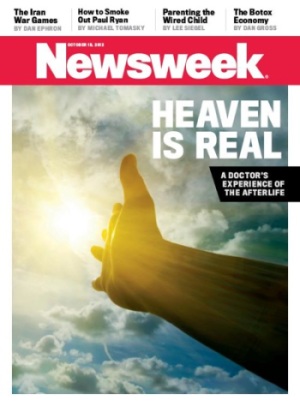
Newsweek_Heaven_Is_RealIn an article for Newsweek, neurosurgeon Eben Alexander recounts his near death experience during a coma from bacterial meningitis. This is sure to become a staple of the NDE/afterlife community, as Alexander recounts in articulate and breathless terms his profound experience. His book is called, Proof of Heaven – a bold claim for someone who insists he is and remains a scientist.

Alexander claims:

There is no scientific explanation for the fact that while my body lay in coma, my mind—my conscious, inner self—was alive and well. While the neurons of my cortex were stunned to complete inactivity by the bacteria that had attacked them, my brain-free consciousness journeyed to another, larger dimension of the universe: a dimension I’d never dreamed existed and which the old, pre-coma me would have been more than happy to explain was a simple impossibility.

While his experience is certainly interesting, his entire premise is flimsily based on a single word in the above paragraph – “while.” He assumes that the experiences he remembers after waking from the coma occurred while his cortex was completely inactive. He does not even seem aware of the fact that he is making that assumption or that it is the central premise of his claim, as he does not address it in his article.

More here.

Birthday Letter: Sylvia Plath and “Daddy”

From The Paris Review:

Every morning, when my sleeping pill wears off, I am up about five, in my study with coffee, writing like mad—have managed a poem a day before breakfast. All book poems. Terrific stuff, as though domesticity had choked me.

—Sylvia Plath, letter to her mother, October 12, 1962

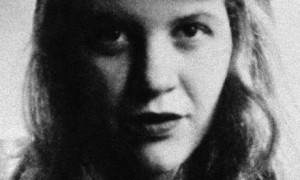
Plath-300x180They were “dawn poems in blood,” those lines stormed onto paper while the children slept; several of them were written through fevers, and the heat seared onto the pages, those old memorandum sheets marked Smith College, or the back of a manuscript marked The Calm. That had been a radio play, drafted by Ted Hughes in their flat in London early the previous year; now Sylvia Plath was in the Devon farmhouse they’d bought soon afterward, and Hughes was back in London, banished, their marriage over. It was late 1962, and in the space of eight weeks, it brought Plath forty of what would become her Ariel poems. They were, she wrote to the poet Ruth Fainlight, “free stuff I had locked in me for years,” and now they were out. And they were astonishing. Only pain could have released them, only fury and outrage and jealousy and panic of the sort into which Plath’s daily universe had plunged. “I kept telling myself I was the sort that could only write when peaceful at heart,” she told Fainright, “but that is not so, the muse has come to live here, now Ted is gone.”

All of these poems would be in the black binder found in Plath’s London flat following her suicide just three months later, on February 11.

More here.

Friday, October 12, 2012

The CIA Burglar Who Went Rogue

David Wise in Smithsonian Magazine:

ScreenHunter_02 Oct. 12 20.16The six CIA officers were sweating. It was almost noon on a June day in the Middle Eastern capital, already in the 90s outside and even hotter inside the black sedan where the five men and one woman sat jammed in together. Sat and waited.

They had flown in two days earlier for this mission: to break into the embassy of a South Asian country, steal that country’s secret codes and get out without leaving a trace. During months of planning, they had been assured by the local CIA station that the building would be empty at this hour except for one person—a member of the embassy’s diplomatic staff working secretly for the agency.

But suddenly the driver’s hand-held radio crackled with a voice-encrypted warning: “Maintain position. Do not approach target.” It was the local CIA station, relaying a warning from the agency’s spy inside: a cleaning lady had arrived.

From the back seat Douglas Groat swore under his breath. A tall, muscular man of 43, he was the leader of the break-in team, at this point—1990—a seven-year veteran of this risky work. “We were white faces in a car in daytime,” Groat recalls, too noticeable for comfort. Still they waited, for an hour, he says, before the radio crackled again: “OK to proceed to target.” The cleaning lady had left.

Groat and the others were out of the car within seconds. The embassy staffer let them in the back door. Groat picked the lock on the code room—a small, windowless space secured for secret communications, a standard feature of most embassies—and the team swept inside. Groat opened the safe within 15 minutes, having practiced on a similar model back in the States. The woman and two other officers were trained in photography and what the CIA calls “flaps and seals”; they carefully opened and photographed the code books and one-time pads, or booklets of random numbers used to create almost unbreakable codes, and then resealed each document and replaced it in the safe exactly as it had been before. Two hours after entering the embassy, they were gone.

More here.

Are Conservatives More Moral?

George Scialabba in Boston Review:

Scialabba_37.5_stackIf you’ve ever argued about politics with someone holding very different views, you surely know that Hume was right: “Reason is, and ought only to be the slave of the passions, and can never pretend to any other office than to serve and obey them.”

In his fascinating, important, and exasperating new book, The Righteous Mind: Why Good People Are Divided by Politics and Religion, Jonathan Haidt explores the root of those passions. A social psychologist at the University of Virginia and once a professed liberal Democrat, Haidt is dismayed by the rightward shift of the country’s political center of gravity over the last 30 years. Seeking to understand it, he looks for answers in the different characters of liberals and conservatives and proposes a new, or at any rate newly formulated, theory of our moral and political judgments, which he calls moral foundations theory.

As we all know and often forget, humans are not purely rational. Or, to put it another way, there’s more to rationality than is dreamed of in our everyday philosophies. We have a long, complex evolutionary history, which has left us with a tangled, multilayered psyche and many more motives than we are usually conscious of. With the help of research by a couple of generations of psychologists, anthropologists, and behavioral economists, Haidt has excavated these psychic structures. But before entering on a detailed description, Haidt pauses to emphasize the first principle of any adequate moral psychology: “Intuitions come first, strategic reasoning second.”

Experiments repeatedly show—to oversimplify only a little—that we all believe what we want, regardless of reasons. Changing one’s views in response to an opponent’s arguments is about as rare as an honest member of Congress. (Cases of both are known, but only a few.) Arguments are largely instrumental; they are meant for attack or defense. Most of the time, we argue like lawyers rather than philosophers.

More here.

Look No More Backward: George Eliot and Atheism

Rohan Maitzen in the Los Angeles Review of Books:

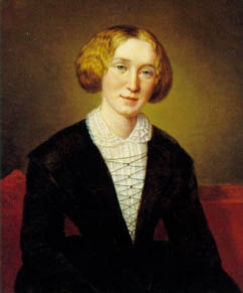
1349430657IN THE OLD DAYS there were angels who came and took men by the hand and led them away from the city of destruction. We see no white-winged angels now. But yet men are led away from threatening destruction: a hand is put into theirs, which leads them forth gently towards a calm and bright land, so that they look no more backward; and the hand may be a little child’s.

George Eliot, Silas Marner

A recent sociological study found that atheists are America’s least trusted minority. Americans, the researchers concluded, “construct the atheist as the symbolic representation of one who rejects the basis for moral solidarity.” Most Americans, that is, apparently think of atheists not just as people who don’t share their specific beliefs about the existence of a divine being, but as ethical recusants who cannot be trusted.

This is not an expert view, only a popular one: no preponderance of evidence supports it, and philosophers can readily explain how it is possible to be good without God (some have even argued it is impossible to be good with God). But prejudices are difficult to dislodge, and science and reason often, paradoxically, prove ineffective tools. Even those of us who tend to agree with “New Atheists” like Richard Dawkins, Sam Harris, and the late Christopher Hitchens can find their hectoring tone wearying. Perhaps what is needed to help move people past the differences they believe divide them — or, more precisely, past the different beliefs that do divide them — is neither a leap of faith nor a rule of logic, but an exercise of the imagination, a new construction of the atheist that would transform mistrust into sympathy, hostility into fellowship. One of our best allies in such a project is Marian Evans, who by her more familiar name of ‘George Eliot’ was (as noted by one of her contemporaries) “the first great godless writer of fiction.”

More here.

Mo Yan interviewed by John Freeman

From Granta:

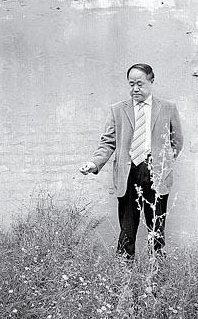
ScreenHunter_01 Oct. 12 19.07Mo Yan [who just won the Nobel for literature yesterday] is one of China’s most celebrated and widely translated writers. Born in the Shandong province in 1955 into a family of farmers, he enlisted in the People’s Liberation Army at the age of twenty and began writing stories at the same time. Since then he has written several novels and story collections, including Red Sorghum, Big Breasts & Wide Hips, Life and Death Are Wearing Me Out and most recently, Frog. This week he spoke toGranta editor John Freeman at the London Book Fair, about writing strong women, retaining idioms and puns even in translation and avoiding censorship.

JF: Many of your novels are located in a half-fictionalized town based on your Gaomi hometown, in a way similar to, say, Faulker’s American South. What is it that makes you return to this half-imagined community and does having a global readership alter the focus at all?

MY: When I first started writing the environment was there and very real and the story was my personal experience. But with an increasing volume of my work being published, my day-to-day experience is running out and so I need to add a little bit of imagination, sometimes even some fantasy, in there.

JF: Some of your writing recalls the work of Günter Grass, William Faulkner and Gabriel García Marquez. Were these writers available to you in China when you were growing up? Can you tell us a little about your influences?

MY: When I first started writing it was the year of 1981, so I didn’t read any books by García Marquez or Faulkner. It was 1984 when I first read their works and undoubtedly those two writers have great influence on my creations. I found that my life experience is quite similar to theirs, but I only discovered this later on. If I had read their works sooner I would have already accomplished a masterpiece like they did.

More here.

What does spirituality mean in America today?

54262670_00a28a19a7_z-300x229

Social scientists frequently juxtapose spirituality to religion and identify the former by way of what it lacks in comparison to the latter. In particular, spirituality would appear to lack institutions, authority structures, community, and even history—all of which are considered integral to religion, such as it is widely understood today. Congregational identity, membership, and attendance are key markers for studies of Americans’ religious convictions, and the congregation, therefore, is taken to be an especially important, if not the definitive, site for the political and social mobilization of religious Americans. Against this backdrop, the rising number of “religious nones” (as well as shifts in congregational styles [see Chaves 2009]) emerge not only as new empirical facts but, insofar as their presence is measured against a norm of voluntary participation, also appear to engender a certain anxiety on the part of the scholars who study them (e.g., Olson 2010; Putnam and Campbell 2010). Though “religious nones” may be believers, they appear to lack the kinds of social connectivity that are recognizable to scholars, and that the latter have deemed essential to voluntary political participation. Insofar as spirituality emerges as a term associated with such individuals—and one that seems to sound the alarms about the problems of individualism—it appears as either the weak cousin or the crazy uncle of the norm that continues (or that should continue) to endure (see, e.g., Bellah et al. 1985), or as the spark of regeneration and the movement toward a “new” social order (e.g., York 1995).

more from Courtney Bender and Omar M. McRoberts at The Immanent Frame here.

Kunkel v Žižek

Rexfeatures_558622a

In The Year of Dreaming Dangerously, even the “direct exchange of activities” has vanished. Here Žižek counsels refusing capitalism from the point of view of “a communism absconditus” without worldly instantiation or conceptual content. He defends this featureless vision by warning, with compact incoherence, against “the temptation of determinist planning”: determinism refers to inevitability, while planning implies voluntarism. Yet it requires no creed of either historical predestination or revolutionary infallibility to hazard an idea, presumably subject to revision both before and after the rupture with capitalism, of a better society. Whether such a hypothesis is called communist is a secondary question; as the poet (and revolutionary) John Milton put it in another context: “The meaning, not the name I call.” At the moment, Žižek’s communism is a heavy name very light on meaning.

more from Benjamin Kunkel at The New Statesman here.

wood on goodwood

Henry-James-006

Aspiring writers are usually dissuaded from the kind of gauche proscenium overture in which characters sit around discussing the protagonist, only to discover that the protagonist is conveniently at hand. And the coy titivations and velvet evasions (‘A momentary silence marked perhaps on the part of his auditors a sense of the magnanimity of this speech’) might properly alienate readers only slightly attracted to the lure of the Master. But the self-consciousness is here calculated. Isabel is a heroine in triplicate. She has just walked into a novel; she thinks of herself in heroic terms; and a group of gazers – or readers – watchful as a Greek chorus but endowed with greater agency, seems to have begun to plot this heroine’s destiny. We understand that the three men have effectively spent the first chapter in a long whine: ‘We’re so bored; give us a heroine to make things interesting!’ And here she is. But The Portrait of a Lady gets stranger before it gets more conventional. Instead of putting his heroine through her narrative paces, James slows down, and writes a kind of essay-portrait, almost a paternal introduction, on the subject of Isabel. Over the next forty or so pages, he serves up a mess of propositions, often contradictory.

more from James Wood at the LRB here.

Smokin’ Joe Delights Democrats and Shows Up the Boss

John Cassidy in The New Yorker:

Biden-ryan-cassidyThe reason I think Biden got the best of things is straightforward. For the first hour, at least, he dominated the debate, pushing Ryan onto the defensive. Many of the points he made were telling and substantive ones—not merely bluster. Identifying a key weakness in the Republican platform, he repeatedly challenged Ryan to explain how he and Romney could pass a five-trillion-dollar income-tax cut without raising the deficit or increasing other types of taxes on middle-income Americans. “It’s mathematically impossible,” he thundered. Ryan didn’t have a convincing answer because there isn’t one. He cited six “studies” that he said had concluded that the Romney math adds up, but, as Justin Wolfers, of the University of Pennsylvania, quickly pointed out, these weren’t exactly all peer-reviewed analyses: four of them were blog posts or op-eds. Eventually, Ryan fell back on the largely discredited supply-side argument that the tax cuts would unleash growth and generate more revenues, saying that Ronald Reagan and John Kennedy had proved it could be done. To which a dismissive Biden replied. “Oh, now you’re Jack Kennedy?”

More here.

Are Humans Monogamous or Polygamous?

From Slate:

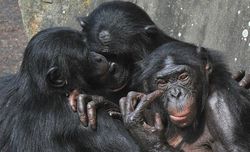
MonkSince we like to think that how we mate defines us, the sex lives of ancient hominids have for many years been examined in computer simulations, by measuring the circumferences of ancient bones, and by applying the rules of evolution and economics. But to understand the contentious field of paleo-sexology, one must first address the question of how we mate today, and how we’ve mated in the recent past. According to anthropologists, only 1 in 6 societies enforces monogamy as a rule. There's evidence of one-man-one-woman institutions as far back as Hammurabi's Code; it seems the practice was further codified in ancient Greece and Rome. But even then, the human commitment to fidelity had its limits: Formal concubines were frowned upon, but slaves of either sex were fair game for extramarital affairs. The historian Walter Scheidel describes this Greco-Roman practice as polygynous monogamy—a kind of halfsy moral stance on promiscuity. Today's Judeo-Christian culture has not shed this propensity to cheat. (If there weren't any hanky-panky, we wouldn't need the seventh commandment.)

In The Myth of Monogamy, evolutionary psychologists David P. Barash and Judith Eve Lipton say we're not the only pair-bonding species that likes to sleep around. Even among the animals that have long been known as faithful types—nesting birds, etc.—not too many stay exclusive. Most dally. “There are a few species that are monogamous,” says Barash. “The fat-tailed dwarf lemur. The Malagasy giant jumping rat. You've got to look in the nooks and crannies to find them, though.” Like so many other animals, human beings aren't really that monogamous. Better to say, we're monogamish.

More here.

Thursday, October 11, 2012

how to write about poverty

Nussbaum_paper_299070h

Suppose you want to wake people up to the human cost of poverty and to energize them with some urgency towards productive social action. And suppose you are a skilled writer. Your public, though well intentioned, is ignorant and more than a little obtuse, inclined to think of the lives of the poor (especially, perhaps, the distant or foreign poor) as not equally real. How do you write, if you want to inform their perceptions and inspire useful choices? You could, of course, present your audience with a lot of data; but data don’t easily reach the part of our minds with which we see others as fully human. (It is said of Louisa Gradgrind in Dickens’s Hard Times that she had learned of the poor of Coketown as if they were so many ants and beetles, “passing to and from their nests”). It is plausible to think what Dickens clearly thought: that you can’t really change the heart without telling a story. What Dickens knew intuitively has now been confirmed experimentally. C. Daniel Batson’s magisterial work on empathy and altruism shows that a particularized narrative of suffering has unique power to produce motives for constructive action.

more from Martha Nussbaum at the TLS here.

grand mal

1349777537725

Minutes later, barrelling down Monument Avenue in my pickup truck, I began to experience the mental flashes neurologists call auras. At the time, I didn’t know them by that name, or by any name. They’d been happening since I was an adolescent – maybe every few months, always at times of high stress – and they were so bizarre and difficult to convey that I’d never tried to describe them to anyone. Here’s my best shot: Imagine your mind is tripping through a litany of memories. One memory in particular stands out because it’s simultaneously both familiar and foreign. (In my case, this is always an aural memory – something someone once said to me, or something I heard in a movie, or something I may have listened to over and over again on a storybook record when I was a child.) What is that sound/voice/musical phrase? Where is it from? You try to place it but are unsuccessful, and then – you can’t help yourself, it’s like running downhill and picking up speed – you become obsessed with placing it, and it’s this effort that starts a hot wave pulsing inside you, stemming from somewhere in the vicinity of your stomach and eventually climbing up your neck and welling into your head: wa-wa-wa.

more from Patrick Ryan at Granta here.