God and Woman in Iran

2f52aeaa20e04aa022a7057576cd94ef.portrait.jpg

Peter Singer in Project Syndicate:

My grandmother was one of the first women to study mathematics and physics at the University of Vienna. When she graduated, in 1905, the university nominated her for its highest distinction, an award marked by the presentation of a ring engraved with the initials of the emperor. But no woman had previously been nominated for such an honor, and Emperor Franz Joseph refused to bestow the award upon one.

More than a century later, one might have thought that by now we would have overcome the belief that women are not suited to the highest levels of education, in any area of study. So it is disturbing news that more than 30 Iranian universities have banned women from more than 70 courses, ranging from engineering, nuclear physics, and computer science to English literature, archaeology, and business. According to Shirin Ebadi, the Iranian lawyer, human-rights activist, and winner of the Nobel Peace Prize, the restrictions are part of a government policy to limit women’s opportunities outside the home.

The bans are especially ironic, given that, according to UNESCO, Iran has the highest rate of female to male undergraduates in the world. Last year, women made up 60% of all students passing university exams, and women have done well in traditionally male-dominated disciplines like engineering.

It may well be female students’ very success – and the role of educated women in opposing Iran’s theocracy – that led the government to seek to reverse the trend. Now, women like Noushin, a student from Esfahan who told the BBC that she wanted to be a mechanical engineer, are unable to achieve their ambitions, despite getting high scores on their entrance exams.

Some claim that the ideal of sexual equality represents a particular cultural viewpoint, and that we Westerners should not seek to impose our values on other cultures. It is true that Islamic texts assert in various ways the superiority of men to women. But the same can be said of Jewish and Christian texts; and the right to education, without discrimination, is guaranteed in several international declarations and covenants, such as the Universal Declaration of Human Rights, to which almost all countries, including Iran, have agreed.

Samson Agonistes: suicide bomber

P5_Forsyth_paper_300566h

“Post-secular” is a rather nebulous term, as Mohamed admits. It is supposed to cover recent theoretical turns towards taking faith seriously, whether through theological movements such as Radical Orthodoxy or Derrida’s “messianicity without messianism”. Alain Badiou in particular, an avowed atheist, allows us to “glimpse” what Mohamed (himself a Muslim atheist) calls, in his convoluted way, “the possibility of an unreligious turn away from a secular view of belief”. This appears to mean that we must now consider faith in romantic love, or Cubism, say, as equivalents for what used to be associated with the divinity (so perhaps “I saw her face; now I’m a believer”?). Milton gets into the act in strained ways because he provides a “pre-secular” parallel to the post-secular present, and each illuminates the other. An ambitious intellectual leap brings the plain style of God or Abdiel in Paradise Lost – where grace, for example, “Comes unprevented, unimplor’d, unsought” – into a supposedly productive dialogue with modern Messianism, the appeal to a faithful few, and then, oddly enough, with the plainer still style of the internet – the medium through which both jihadists and supporters of Barack Obama communicate.

more from Neil Forsyth at the TLS here.

the wish that we might be boundless and uncontrolled

220px-TheMaster2012Poster

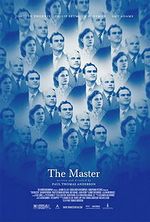
Now that this tremendous whatzit has had a few weeks to pound and roar through the theaters, and maybe wash away some of the prerelease publicity, I hope that people have become more interested in what The Master puts on the screen, and less in the question of whether it’s a history of Scientology with the names disguised. The so-called Master of the title, a character known to the legal authorities as Lancaster Dodd, is a peddler of psychotherapeutic claptrap and pseudoscientific mythology in post–World War II America—so, yes, he has a lot in common with L. Ron Hubbard. Dodd, too, has a fat book to sell (it’s called The Cause, rather than Dianetics) and travels with a wife named Peggy (Hubbard’s first wife was named Polly), with whose aid and incitement he teaches that we must awaken to our true nature as billion-year-old spirits.

more from Stuart Klawans at The Nation here.

“Sometimes he is very evil, I love him.”

250px-Hegel_portrait_by_Schlesinger_1831

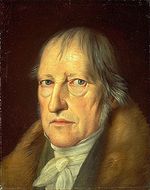
The Hegel that Zizek loves is not the not the good patriot, not the philosopher brought to Berlin by Frederick William III to reconcile democrats to absolute rule, not the consoling thinker who showed how the apparent contingency of events concealed the inner logic of history. The Good Hegel is, to paraphrase Isaiah Berlin, a kind of hedgehog—a stubborn dialectician for whom every event, no matter how momentous or accidental, can be reduced to the cosmic three-step dance of thesis, antithesis, synthesis: “The Hegelian dialectic is like a processing machine which indifferently swallows up and processes all possible contents, from nature to history, from politics to art, delivering them packaged in the same triadic form.” The Hegel that Zizek loves is much like Zizek himself: a relentless iconoclast, a restless wordsmith, an inventive thinker with a hatred of received wisdom, an underminer of conventionally acknowledged truths. Zizek’s Hegel is a kind of cosmic prankster.

more from Adam Jasper at Bookforum here.

Unequal citizens of Pakistan

From Herald:

Transgenders-575-by-300“It took the government over 60 years to accept us as humans and that too only after the Supreme Court (SC) passed the order that we should be registered as khwaja siras,” says Bindiya Rana, the president of the Gender Interactive Alliance, a non-government organisation working for the rights and uplift of the transgender community. She is happy with the SC order but says more needs to be done. “At least the judiciary is listening and doing its bit, but we have yet to see the government come forward without the SC nudging it,” she tells the Herald. “So far, only directions are being issued.” Khwaja siras, as they are now called in the official parlance (see Identity Crisis), have long been one of the most marginalised communities in South Asia. Although there is no specific data about their numbers, estimates suggest that Pakistan has a population of around 800,000 transgender people. “You might say that it is an overestimate but many members of our community have been registered as male or female in the national identity database. Now that the SC has issued a directive for us to be registered as khwaja siras, a better picture will emerge,” Rana explains.

The SC’s directive was issued after a 2009 petition filed by advocate Dr Mohammad Aslam Khaki and this after an incident in Taxila where policemen maltreated and sexually abused transgender persons returning from a wedding. “The Taxila incident motivated me to speak for transgender people. They are as human as us and, according to the Constitution, the state has a duty to protect its citizens regardless of their gender,” says Khaki. The SC agrees. A judgement issued on March 22, 2011 states, “Their rights, obligations including right to life and dignity are equally protected … The government functionaries both at federal and provincial levels are bound to provide them protection of life and property and secure their dignity as well, as is done in case of other citizens.” In addition to ordering the National Database and Registration Authority (Nadra) to register transgenders as the third sex, the court has asked provincial social welfare departments to work for the community’s support and development.

More here.

Future Jobs Depend on a Science-Based Economy

From Scientific American:

JobThe 2012 presidential election will be won by the candidate who can convince voters that he has the vision to lift the nation out of the economic doldrums. The economy is the right topic, but the discussion neglects the true driver of the country's prosperity: scientific and technological enterprise. Half of the U.S. economic growth since World War II has come from advances in science and technology. To neglect that power—and the government's role in priming the pump—would be foolish. The auto industry is a case in point. President Barack Obama makes much out of having rescued Detroit's carmakers from bankruptcy. This achievement won't hold up, however, unless the thousands of small auto-parts manufacturers down the supply chain stay globally competitive. One way to help them would be to foster initiatives like the National Digital Engineering and Manufacturing Consortium, which is providing independent manufacturers potent information technology at Purdue University and the Ohio Supercomputer Center. By harnessing this science and technology strength, we can generate a competitive advantage for small businesses.

President Obama and Governor Mitt Romney ought to be talking about how to use programs like this to bring about the kind of success that Germany has achieved. The German government encourages a close partnership between technical universities and industrial manufacturers; it supports centers where scientists and engineers pursue fundamental research in close proximity to industrial colleagues investigating more applied technologies. German battery makers, for instance, work with technical universities on nanotechnology, while textile makers contribute to research in carbon fibers for composite fabrics. Could there be a grander vision for harnessing U.S. research talent in this way? On this, both candidates have been silent.

More here.

Thursday Poem

Springtime in the Rockies, Lichen

All these years I overlooked them in the
racket of the rest, this
symbiotic splash of plant and fungus feeding
on rock, on sun, a little moisture, air —
tiny acid-factories dissolving
salt from living rocks and
eating them.
Here they are, blooming!
Trail rock, talus and scree, all dusted with it:
rust, ivory, brilliant yellow-green, and
cliffs like murals!
Huge panels streaked and patched, quietly
with shooting-stars and lupine at the base.
Closer, with the glass, a city of cups!
Clumps of mushrooms and where do the
plants begin? Why are they doing this?
In this big sky and all around me peaks &
the melting glaciers, why am I made to
kneel and peer at Tiny?
These are the stamps of the final envelope.
How can the poisons reach them?
In such thin air, how can they care for the
loss of a million breaths?
What, possibly, could make their ground more bare?
Let it all die.
The hushed globe will wait and wait for
what is now so small and slow to
open it again.
As now, indeed, it opens it again, this
scentless velvet,
crumbler-of-the-rocks,
this Lichen!
by Lew Welch
from Ring of Bone: Collected Poems of Lew Welch
City Light Books

Two Fires

C. M. Naim in The South Asian Idea:

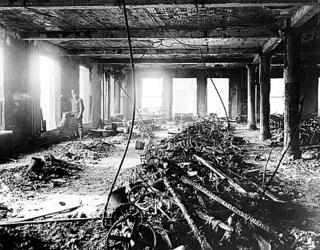
Ac38On Tuesday, September 11, 2012, a horrific fire in a garment factory in the BaldiaTownship in Karachi killed at least 259 persons, male and female. As I read about it on subsequent days I was reminded of another fire that occurred a century earlier—to be exact, on Saturday, November 25, 1911—in New York City. It too was in a garment factory, and took 146 lives, mostly young females. Named after the shirtwaist factory where it occurred, it is known in American history as the Triangle Fire. To refresh my memory I took to the books and soon realized that the Triangle Fire had a few lessons for the present day Pakistan.*

The Triangle Waist Factory (TWF) was situated on the top three floors of a ten-story building in the Washington Square area in Manhattan. The neighborhood was far from being a slum; though it had a several buildings with similar factories, it also had a few mansions of the rich, and some buildings of the New York University. TWF was owned by two Jewish men, Max Blanck and Isaac Harris, who were related to each other through marriage. They had immigrated to the United States only a couple of decades earlier, and through hard work as well as exploitation of immigrant labor in the garment industry—most of them were women, and a large number also Jewish—the two, by 1911, had become millionaires. Their success had come in particular from the popularity of a new female garment called “shirtwaist,” i.e. a shirt or bodice that reached only to the waist and was could be worn with any tailored skirt. It allowed more choice and freedom to its wearer, while adding a modish flair to otherwise more sober costumes. Shirtwaists were mostly made of sheer cotton fabrics. Unfortunately, the latter were also highly combustible.

More here.

Wednesday, October 17, 2012

20th Century Man

ID_IC_MEIS_HOBSB_AP_001

Morgan Meis on Eric Hobsbawm, in The Smart Set:

I studied briefly with Eric Hobsbawm, the English Marxist historian who died October 1st at the age of 94. I studied with him in the early 1990s at The New School for Social Research in New York City. Hobsbawm was just completing his book The Age of Extremes, the third in a trilogy that included The Age of Capital and The Age of Empire. Hobsbawm was not an inspiring teacher. He would shuffle into the classroom in his baggy suit and sit down at a table at the head of the class. Then he would open up a folder and begin to read us chapters from the book he was trying to finish. That was it. Hobsbawm didn't read very well. A strange-looking man, his mouth was always screwed up to the right. He mumbled out of the side of his face. The great German philosopher Jürgen Habermas would sometimes show up for a lecture or a conference at The New School during those days as well. Due to Habermas' severe lisp, you could barely understand him either. I suspect a generation of grad students formed the opinion that academic greatness and the inability to speak were somehow related. I recently read a passage from one of Hobsbawm's books where he reflects on his love of jazz. The book is called Interesting Times: A Twentieth Century Life. In it, Hobsbawm wrote:

Like the Czech writer Josef Skvorecky, who has written better about it than most, I experienced this musical revelation at the age of first love, 16 or 17. But in my case it virtually replaced first love, for, ashamed of my looks and therefore convinced of being physically unattractive, I deliberately repressed my physical sensuality and sexual impulses. Jazz brought the dimension of wordless, unquestioning physical emotion into a life otherwise almost monopolised by words and the exercises of the intellect.

Thinking back to the man in his early 70s reading to his students from his then soon-to-be-published book, it occurs to me that Hobsbawm was still that 16- or 17-year-old kid. I ran into him once at the A&P supermarket on Union Square. He had a few items in his shopping cart and was wandering around in the aisles. When I spoke to him he looked at me shyly from under his brow. I asked him a few questions about the Third International. He looked relieved. Yes, let us speak of the Third International. Why is it that I will forever associate Eric Hobsbawm with the feeling of embarrassment?

Women in Philosophy

Hipparchia_of_Maroneia_Villa_Farnesina

Jennifer Saul in The Philosophers' Magazine:

In the UK, women are 46% of undergraduate students in philosophy, but only 24% of permanent staff. Women are approximately 21% of professional philosophers in the US, but only 17% of those employed full-time. These figures are very unlike those for most fields of the humanities, in which women tend to be near or above parity with men. Indeed, they more closely resemble mathematics and physical sciences (biological sciences are much closer to parity). One recent study by Kieran Healy showed philosophy to bemore male than mathematics, with only computer science, physics and engineering showing lower percentages of women.

What’s the explanation for this? It used to be thought that women were simply unsuited to philosophy. As Hegel puts it: “Women can, of course, be educated, but their minds are not adapted to the higher sciences, philosophy, or certain of the arts …. The difference between man and woman is the same as between animal and plant.”

This view is, for obvious reasons, less popular now. However, quite a few people, both feminist philosophers and philosophers of psychology, have drawn on the importantly distinct idea that women approach things differently, and that philosophy is the poorer for not fitting well with women’s ways of thinking. One version of this idea can be found in Carol Gilligan and another in very recent work by Wesley Buckwalter and Steve Stich. These claims of women’s difference, however, have never held up well empirically, as Louise Antony argues eloquently in her “Different Voices or Perfect Storm”.

Another commonly floated explanation is that women’s family commitments make it more difficult for them to progress professionally. This may well be true (studies do show that women continue to do the majority of housework and childcare). But it fails to explain why philosophy should show such a different profile than other fields of the arts and humanities, which have achieved (or surpassed) parity. If anything, one would expect it to be easier to thrive as a mother and philosopher than as a mother and scholar of French literature, who is far more likely to need to travel to archives and the like.

Online Dating

Okcupid-logo

Emily Witt in the LRB:

This service is called OK Cupid Locals. An OK Cupid Locals invitation has to start with the word ‘Let’s’:

Let’s smoke a joint and hang out ☺

Let’s grab a brunch, lunch, beer or some such for some friendly Saturday revelry.

Let’s get a drink after Koyaanisqatsi at the Castro.

Let’s meet and tickle.

Let’s enjoy a cookie.

Let’s become friends and explore somewhere.

‘Let’s go now you and I’ always comes into my mind, but I’ve never broadcast an OK Cupid chat signal, I just respond. That night I scrolled until I found a handsome man who had written a benign invitation: ‘Let’s get a drink.’ I looked at his profile. He was Brazilian. I speak Portuguese. He played the drums. ‘Tattoos are a big part of my friends’ and family’s life,’ he wrote. Every era has its own utopian possibilities: ours is the chance to make our lives more bearable through technology.

The man generally held responsible for internet dating as we know it today is a native of Illinois called Gary Kremen, but Kremen was out of the internet dating business altogether by 1997, just around the time people were signing up for the internet en masse. Today he runs a solar energy financing company, is an elected official in Los Altos Hills, California and is better known for his protracted legal battle over the ownership of the pornography website sex.com than he is for inventing internet dating.

The Ugly Game

Steaua_468w

Valeriu Nicolae in Eurozine:

On 24 September this year, over 30,000 people in the Romanian National Arena, joined by millions more on TV, watched the football match between Steaua and Rapid Bucharest. During the game, over 20,000 people repeatedly chanted, “We have always hated and will always hate the Gypsies.” Calls of “die Gypsies” could also be heard throughout the game.

Before the game, the owner of Steaua, Gigi Becali, a member of the European Parliament, had stated that he was not afraid the other team would win since it was a well-known fact that “they drown just before reaching the shore”.

The phrase derives from a punishment visited on Roma/Gypsies during the many hundreds of years Roma were slaves of the Romanian aristocrats and the Romanian Orthodox Church. Roma were covered in tar, rolled in feathers and then thrown into a river. Romanian aristocrats would watch them drown while trying to reach the shore. It may also relate to incidents during the Holocaust when Romanian officers shot at boats transporting Roma over the river to Transnistria – many Roma drowned before reaching the shore. Many more died of starvation.

The justification for the lack of official response to these racist chants in past years is that the fans of Rapid are nicknamed “the Gypsies”.

However, on this occasion, among the racist banners displayed was one with the text “Respect Eugen Grigore”. Grigore was a mass murderer who killed 24 Roma in 1970. In addition, during and at the end of the game, Steaua officials incited the fans to racism and even joined them in their chants.

Throughout September, a number of incidents across Europe demonstrated yet again the appalling levels of anti-Gypsyism prevalent within the European Union. The Policy Centre for Roma and Minorities in Bucharest reported the Romanian incident to the European Commission, the Council of Europe, the Fundamental Rights Agency, the OSCE and all intergovernmental bodies that have significant budgets dedicated to addressing Roma issues. We have reported similar or worst incidents in the past.

We also reported it to UEFA, the governing body of European football, and to the Romanian Football Federation (RFF), where we talked to people at the highest level. As soon as they received our report they called us to discuss the next steps. Two days later, the President of the RFF condemned anti-Roma racism in Romanian football in the strongest declaration of its kind ever issued by an influential institution in Romania.

florence is baghdad

Nakkas-Osman-1580s-Sultan-Selim-II-receiving-Seyyid-Lokman-in-the-Çorlu-Palace-in-Edirne-WikimediaCommonsPD-242x300

It is hard to do justice to the brilliance and complexity of this book, which provides no less than a complete re-evaluation of the origins of perspective in Western art. Hans Belting, an internationally recognised authority on the theory of art from Hieronymus Bosch to Marcel Duchamp, argues that the scientific and artistic genesis of linear perspective did not come out of the Florence of Giotto and Brunelleschi as we are usually told by art historians, but instead first emerged in eleventh-century Baghdad in the work of Ibn al-Haytham (965-1040), a mathematician born in Basra who became known in the West as Alhazen, ‘the Arab Archimedes’. Educated in Baghdad, Alhazen spent most of his life in Cairo, where he invented the camera obscura and wrote his Kit?b al-Man?zir, or Book of Optics, begun in 1028. The book circulated under the title Perspectivae before it was printed in Latin in 1572, and exerted an enormous influence on Western science, from the work on optics by Roger Bacon (1214-94) to the rediscovery of the camera obscura by Johannes Kepler (1571-1630).

more from Jerry Brotton at Berlin Review of Books here.

how things fell apart

QueenofWomanMask-BMA_575px1

On November 16, 1930, in Nnobi, near my hometown of Ogidi, providence ushered me into a world at a cultural crossroads. By then, a longstanding clash of Western and African civilizations had generated deep conversations and struggles between their respective languages, religions, and cultures. Crossroads possess a certain dangerous potency. Anyone born there must wrestle with their multiheaded spirits and return to his or her people with the boon of prophetic vision; or accept, as I have, life’s interminable mysteries. My initiation into the complicated world of Ndi Igbo was at the hands of my mother and my older sister, Zinobia, who furnished me with a number of wonderful stories from our ancient Igbo tradition. The tales were steeped in intrigue, spiced with oral acrobatics and song, but always resolute in their moral message. My favorite stories starred the tortoise mbe, and celebrated his mischievous escapades.

more from Chinua Achebe at Guernica here.

dolly city

15647100303390L

One need not know Hebrew to get a sense of how revolutionary Dolly City is. The prose pummels the reader. Dolly, by turns apathetic and enraged, is articulate and perhaps overly perceptive. “Madness is a predator,” she observes. “Its food is the soul. It takes over the soul as rapidly as our forces occupied Judea, Samaria, and the Gaza Strip in 1967. [. . .] And if a state like the State of Israel can’t control the Arabs in the territories, how can anybody expect me, a private individual, to control the occupied territories inside myself?” (95–96). She explicitly relates the chaos within her to the political mayhem that plagues her environment. Violence reigns in her city. And a strange city it is: dystopic, fantastic, phantasmagoric, nightmarish—Dolly City is unlike any other setting in Hebrew literature. At once Tel Aviv and every other city in the world, Dolly City recalls the alienating metropolis that is by now a familiar setting of modernist writing, at the same time adding terrifying new features to this landscape.

more from Karen Grumberg at Context here.

THE CLOTHESLINE PARADOX

Tim O Reilly in Edge:

ParadoxI've been thinking a lot lately about a piece I read in Stuart Brand's, CoEvolution Quarterly back in 1975. It's called the “Clothesline Paradox.” The author, Steve Baer, was talking about alternative energy. The thesis is simple: You put your clothes in the dryer, and the energy you use gets measured and counted. You hang your clothes on the clothesline, and it “disappears” from the economy. It struck me that there are a lot of things that we're dealing with on the Internet that are subject to the Clothesline Paradox. Value is created, but it's not measured and counted. It's captured somewhere else in the economy. I started thinking about this first in the area of open-source software, or for that matter, the Web. You think about how much value Tim Berners-Lee created and how he didn't actually capture very much of it. It was captured by companies like Google, Apple, Twitter, and Facebook. You also think about the other extreme, where companies like Goldman Sachs managed to extract a great deal of value from the economy, but as the 2008 financial crisis demonstrated, they did so while actually destroying value for the overall economy. So that got me thinking about how value creation and value capture are not the same thing. Our economics tends to measure value capture. If we're going to get 21st century economic policy right, or even just correctly model what's working and why, we have to start moving to a model that measures value creation rather than value capture.

One really great example of the distinction between value creation and value capture comes from open-source software. A few months ago, I had a conversation with Hari Ravichandran, the founder and CEO of Endurance International Group, the largest web hosting firm in the US. They include brands like Bluehost. Hari said, “Our business is built on open-source software, and I'd like to give something back.” In the course of our conversation I realized that most people don't even think of the Web-hosting industry or ISPs as being dependent on open-source software. But when you think about it, of course Web domain hosting is a simple business model wrapped around the open source internet domain system. They're essentially offering the DNS, Apache, MySQL, and WordPress to their customers. Hari said something that really struck me, which is that there was a McKinsey study that showed that small businesses that have a Web presence have ten percent greater productivity than those without.

More here.

Smiles based on feelings of status and power

From PhysOrg:

A study conducted to learn more about mimicry of facial features has found that people tend to mimic smiles directed at them by other people based on their own feelings of status and power. The team, led by Evan Carr of the University of California presented its findings at this year's Society for Neuroscience conference in New Orleans.

…In analyzing the results, the researchers found that those people who were feeling more powerful tended to smile in response to smiles on the faces of people that were deemed less powerful or lower in status, but didn't smile back when smiled at by someone that was deemed more powerful. Those that were feeling less powerful on the other hand tended to smile back at anyone that smiled at them. Carr suggested in his presentation that the results of the study show that people smile back at those that they feel are less powerful than them as a means of displaying their own status. And when they are feeling powerful, they hold back on smiling at others perceived as more powerful to avoid showing deference. When people are feeling low power they smile back at everyone as a sign of submission. The researchers also found that people tend to frown back when someone they view as having more power frowns at them no matter how powerful they themselves are feeling.

More here.

Wednesday Poems

Another Night in the Ruins -7

How many nights must it take
one such as me to learn
that we aren't, after all, made
from that bird that flies out of its ashes,
that for us
as we go up in flames, our one work
is
to open ourselves, to be
the flames?

by Galway Kinnell

~~

Ring of Bone

I saw myself
a ring of bone
in the clear stream
of all of it

and vowed
always to be open to it
that all of it
might flow through

and then heard
“ring of bone” where
ring is what a

bell does

Lew Welch
from Ring of Bone

Tuesday, October 16, 2012

Michael Brutsch, ViolentAcrez, and Online Pseudonyms

Photo_4940

Lindsay Beyerstein in In These Times:

No sooner had Brutsch [a.k.a. Violentacrez, Reddit's top troll] been outed than fanboys started bleating about how it was unfair to expose him because what he was doing was perfectly legal. Which it largely was. The law, as they say, is a blunt instrument. It's easy to forget because it's so pervasive, but most antisocial behavior is held in check by social, rather than legal sanctions. Jerks don't get asked back. Liars and promise-breakers are shunned. The tactless get dirty looks. The indiscreet get elbowed.

In practice, our legal freedom to speak our minds is constrained by our accountability to the people around us. They know who we are, they know where we live, they will kick us under the table when we get out of line. In real life, we only have one body connected to one name, and we've got to weigh the satisfaction of speaking our minds against the long term effects on our reputations and relationships.

This is a pretty elegant system, albeit an imperfect one. It puts the “society” in “free society.” In real life, we have the legal right to say pretty much whatever we want, but we are enmeshed in a network of social checks and balances that keep us accountable for our speech. Nobody can force us to shut up, but lots of people can make their displeasure known to us. It's a good balance that allows people to share ideas freely without rending the fabric of the community.

Pseudonymity is great because it allows people to speak without the usual constraints, but it can also be terrible for the same reason. As ViolentAcrez, Michael Brutsch opted out of all social controls on his speech and ran amok. He could say things he would never have said under his real name because they're rightly regarded as horrifying. Until recently, he didn't have to live as that Hitler/Misogyny/Creepshot Guy (all subreddits he started). He didn't have to endure his neighbors crossing the street to avoid him.

Zakaria for sale

Zakaria_37.5_screen

This past March, Zakaria penned a Post column on how American energy security may benefit from shale gas—natural gas trapped within shale rock formations. Shale gas is abundant in many U.S. states and can be extracted through the application of highly pressurized fluids. This process, known as hydraulic fracturing or “fracking,” is controversial for its alleged environmental hazards. It uses a lot of water and nasty chemicals; releases methane, a potent global-warming gas; generates residues that can leech into groundwater and poison wells; and may, some seismologists worry, cause earthquakes. Despite such concerns, Zakaria’s piece offers a strikingly optimistic endorsement, especially of shale gas’s implications for our energy security and for international politics. Since the United States has shale deposits in abundance, the threat of rising oil prices to our domestic economy, due in part to instability in the Middle East, can be reduced. And since shale gas deposits are widely dispersed globally, they provide the world leverage against menacing oil-producing nations such as Russia and Iran.

more from David V. Johnson at Boston Review here.