The common problems of America, Chad, and Pakistan

Nicholas D. Kristof in the New York Times:

The National Climatic Data Center has just reported that October was the 332nd month in a row of above-average global temperatures. As the environmental Web site Grist reported, that means that nobody younger than 27 has lived for a single month with colder-than-average global temperatures, yet climate change wasn’t even much of an issue in the 2012 campaign. Likewise, the World Economic Forum ranks American infrastructure 25th in the world, down from 8th in 2003-4, yet infrastructure is barely mentioned by politicians.

So time and again, we see the decline of public services accompanied by the rise of private workarounds for the wealthy.

Is crime a problem? Well, rather than pay for better policing, move to a gated community with private security guards!

Are public schools failing? Well, superb private schools have spaces for a mere $40,000 per child per year.

Public libraries closing branches and cutting hours? Well, buy your own books and magazines!

Are public parks — even our awesome national parks, dubbed “America’s best idea” and the quintessential “public good” — suffering from budget cuts? Don’t whine. Just buy a weekend home in the country!

Public playgrounds and tennis courts decrepit? Never mind — just join a private tennis club!

I’m used to seeing this mind-set in developing countries like Chad or Pakistan, where the feudal rich make do behind high walls topped with shards of glass; increasingly, I see it in our country. The disregard for public goods was epitomized by Mitt Romney’s call to end financing of public broadcasting.

More here.
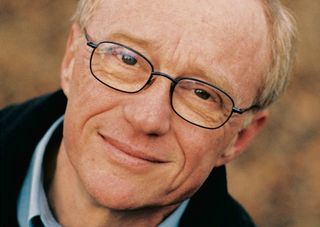
Sam Kerbel interviews David Grossman

In a candid interview, the Israeli author on Netanyahu’s impotence, how his son’s death affected his latest novel, and Israel’s need to embrace Palestinians with humanity.

From Guernica:

Guernica You began writing To the End of the Land six months before your son Uri joined the Israeli army. In the afterward, you mention that you started this book as a way to protect him, just as Ora’s expedition through the Galilee was meant to keep her son, Ofer, alive. Is Ora a doppelgänger?

Grossman-575David Grossman: I think all characters are in my books. Even if I didn’t know it in the beginning, they become [doppelgängers]—not only from the point of view of what happened later in my life, but usually when I write about the character in the beginning I do not really understand what the connection is between me and this character, and why I am so driven to write her or him. Gradually, I find out that this character is really relevant for me and meaningful for me. Ora is not myself; we are very different from each other. But after having written her, I think I became her.

Guernica: In the note at the end you say that the book was largely completed before your son Uri’s death. Can you take me back to the day when you picked up work on the novel again after this tragedy? Can you explain the thoughts you had at the time and whether the tone or resolution of the novel changed, if at all?

David Grossman: The story line did not change. I thought that I should remain loyal to the story, that the story is not about the death of a son but rather about the anxiety from death. The book is not about death at all—it’s about life, and fear of death, which is a very typical combination for every Israeli family and for Israel as an idea, as a state.

More here.

debating affect

Images

Let me begin by posing a simple question: Why are so many scholars today in the humanities and social sciences fascinated by the idea of affect? In an obvious sense an answer is not difficult to find; one has only to attend to what those scholars say. “In this paper I want to think about affect in cities and about affective cities,” geographer Nigel Thrift explains, “and, above all, about what the political consequences of thinking more explicitly about these topics might be– once it is accepted that the `political decision is itself produced by a series of inhuman or pre-subjective forces and intensities.'” Similarly, cultural critic Eric Shouse states that “the importance of affect rests upon the fact that in many cases the message consciously received may be of less import to the receiver of that message than his or her nonconscious affective resonances with the source of the message.” He adds that the power of many forms of media lies “not so much in their ideological effects, but in their ability to create affective resonances independent of content or meaning.” In the same spirit, political philosopher and social theorist Brian Massumi, one of the most influential affect theorists in the humanities and social sciences today, attributes Ronald Reagan’s success as a politician to his ability to “produce ideological effects by nonideological means. . . . His means were affective.”

more from Ruth Leys with responses at Critical Inquiry here.

How can I be content when there is still that odor in the world?

Louise_Gluck_working_ftr

Though intensity has been a characteristic feature of Glück’s work from the beginning of what is now a long career, the poems have inspired a wide range of epithets. Often they are said to be “chilling,” “supremely reticent,” “distant,” “scrupulous,” “on guard.” And yet the early poems, with their mainly short lines and controlled air of violence and disparagement, seemed to me at first, and now again, to be anything but reticent or aloof. It’s comical, actually, to think of Glück, at any point in her career, as being “on guard” or “distant.” The early poems seethe with opening lines like “Sometimes at night I think of how we did/ It, me nailed in her like steel,” or “Time and again, time and again I tie/ My heart to that headboard/ While my quilted cries/ Harden against his hand.” That a standard, largely misguided line about a major poet should harden into dogma and be repeated, over and over again, is bizarre, as in a 2009 New York Times review featuring the assertion that “All these years…Glück has been writing her stark, emaciated verse,” as if the poet-critic responsible for that observation didn’t know the difference between emaciation and a disciplined refusal of mere ornament, and hadn’t noticed the obvious marks of fullness and feeling in poems frequently anthologized.

more from Robert Boyers at The Nation here.

memory traps

PAR133205-1_jpg_470x950_q85

It doesn’t take much. A deserted street at dusk, with the summer sunlight lingering on the upper floors of a row of buildings and the sidewalks down below already deep in shadow, may get some old movie in our heads rolling again. Since we are ordinarily better at forgetting than remembering, it is often a mystery why some such sight has stamped itself on our memory, when countless others that ought to have far greater meaning can hardly be said to exist for us anymore. It makes me suspect that a richer and less predictable account of our lives would eschew chronology and any attempt to fit a lifetime into a coherent narrative and instead be made up of a series of fragments, spur-of-the-moment reminiscences occasioned by whatever gets our imagination working. For instance, just recently in New York, I walked past a store selling cheap jewelry where fifty years ago, I realized, there had been an Italian restaurant. To my surprise I recalled what happened to me there one evening.

more from Charles Simic at the NYRB here.

Friday Poem

A note to all “self-made” men; to the “job-creators” and “makers”
—You didn't build that.

Freedom’s Plow

When a man starts out with nothing,
When a man starts out with his hands
Empty, but clean,
When a man starts to build a world,
He starts first with himself
And the faith that is in his heart-
The strength there,
The will there to build.

First in the heart is the dream-
Then the mind starts seeking a way.
His eyes look out on the world,
On the great wooded world,
On the rich soil of the world,
On the rivers of the world.

The eyes see there materials for building,
See the difficulties, too, and the obstacles.
The mind seeks a way to overcome these obstacles.
The hand seeks tools to cut the wood,
To till the soil, and harness the power of the waters.
Then the hand seeks other hands to help,
A community of hands to help-
Thus the dream becomes not one man’s dream alone,
But a community dream.
Not my dream alone, but our dream.
Not my world alone,
But your world and my world,
Belonging to all the hands who build.

Read more »

The Art of Friendship

From The Paris Review:

Esherick-264x300Philia, the root of Philadelphia, roughly translates to “friendship” in Aristotle’s Nicomachean Ethics, an enduring source for understanding the ethics of friendship. Aristotle identifies three essential bases for friendship: utility, pleasure, and virtue. Friendships of virtue, Aristotle believes, are ideal because only they are based on recognition. When I was thirty, I moved back to Philadelphia. I had only been gone a few years, and though I knew better, I had half expected it to be just as I’d left it. It was not: most of my friends had left the city altogether or moved, married, to the edges of town. Occasionally, I would run into people I had once known, encounters that produced deep and surprising embarrassment in me; unexplained life choices digested in fast, always alienating, appraisal. The more unsettling thing was that my close friendships were changing, too.

Friendship has never seemed both more important and less relevant than it does now. The concept surfaces primarily when we worry over whether our networked lives impair the quality of our connections, our community. On a nontheoretical level, adult friendship is its own puzzle. The friendships we have as adults are the intentional kind, if only because time is short. During this period, I began to consider the subject. What is essential in friendship? Why do we tolerate difference and distance? What is the appropriate amount to give? And around this same time, I discovered the curious, decades-long friendship between the writers Sherwood Anderson, Theodore Dreiser, and the sculptor Wharton Esherick. Their relationship seemed to me model in some ways; they were friends for over twenty years, mostly living in different cities. Each man was dedicated to pursuing his own line of work, and the insecurities and single-mindedness of ambition seemed analogous too to the ways that adulthood can separate us from our friends.

More here.

The benefits of mammograms under fire

From Nature:

MammThe routine use of mammography to screen healthy women for breast cancer is leading to the widespread detection and treatment of tumours that would never have caused symptoms, a study in the New England Journal of Medicine asserts today1. The results inject yet another dose of controversy into an area that is already hotly debated. The study examined the effects of mammography screens on breast-cancer incidence between 1976 and 2008 in US women over 40. The authors conclude that more than one million women diagnosed with the disease would never have developed symptoms. In 2008 alone, they estimate, more than 70,000 women had such breast tumours diagnosed, accounting for 31% of all breast cancers diagnosed in women 40 and older. “Our study raises serious questions about the value of screening mammography,” the paper concludes. “The harm of overdiagnosis [is] probably larger than has been previously recognized.” The diagnosed women, the authors add, have undergone treatments involving surgery, radiation, hormones and chemotherapy “for abnormalities that otherwise would not have caused illness”.

…The study authors — oncologist Archie Bleyer of the St Charles Regional Cancer Center in Bend, Oregon, and H. Gilbert Welch, a professor of medicine at Dartmouth College’s Geisel School of Medicine in Hanover, New Hampshire — examined the change in incidence of early-stage and late-stage breast cancer after large numbers of women began to have screening mammograms in the mid-1980s. As expected with the advent of a widespread screening programme, they found that diagnoses of early-stage disease more than doubled during the three decades, with an increase of 122 cases for every 100,000 women. The authors argue that if the screening was working as intended and stopping those cancers from progressing to a more harmful disease, then one would expect to see a roughly equivalent decrease in late diagnoses. Instead, they found that, assuming a steady underlying rate of breast cancer incidence, the number of late-diagnosed cancers decreased by only 8 cases per 100,000 women. Their inference: many of the early cases being detected through screening would not have gone on to cause symptomatic disease. They also conclude that mammography’s contribution to the sharp decline in breast-cancer mortality rates during the same period must therefore be small.

More here.

Thursday, November 22, 2012

Cézanne: A Life by Alex Danchev

Hilary Spurling in The Telegraph:

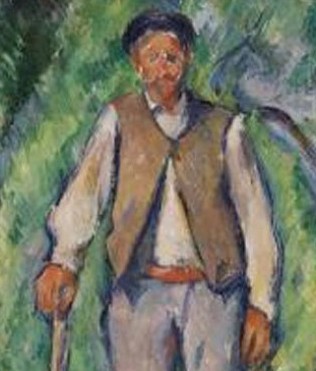
ScreenHunter_45 Nov. 22 22.53When the young John Maynard Keynes bought a tiny painting of apples by Paul Cézanne at the Degas collection sale in Paris 1918, his friend the art critic Roger Fry was outraged. “He was like a bee on a sunflower,” wrote Virginia Woolf. Keynes had bought for himself what the National Gallery’s director refused to spend a penny of public funds on. That tiny painting became the first Cézanne in any British private collection. Fry was not amused. “Roger nearly lost his senses,” wrote Woolf.

Outrage was for years the default reaction to Cézanne’s clashing colours, coarse brush strokes, and a construction so ugly that “he could paint bad breath”, according to a critic in 1907. Rilke said you had to go on looking: “For a long time nothing, and suddenly one has the right eyes.” It was the evenness of Cézanne’s vision as much as its intentness – his rejection of conventional hierarchies of subject and style – that shook both factions, for and against. Rilke saw in Cézanne’s self-portraits “the unquestioning, matter-of-fact interest of a dog who sees himself in a mirror and thinks: there’s another dog”. Or, as Heidegger put it: “If only one could think as directly as Cézanne painted.”

It would be virtually impossible for anyone now to get back behind the wrong eyes, and the great strength of Alex Danchev’s book is that it doesn’t try. This is a biography for an age that takes Cézanne’s supreme clarity, balance and pictorial logic for granted.

More here.

Giving thanks for Gauge Symmetry

Sean Carroll in Cosmic Variance:

This year we give thanks for an idea that is central to our modern understanding of the forces of nature: gauge symmetry. (We’ve previously given thanks for the Standard Model Lagrangian, Hubble’s Law, the Spin-Statistics Theorem, conservation of momentum, effective field theory, andthe error bar.)

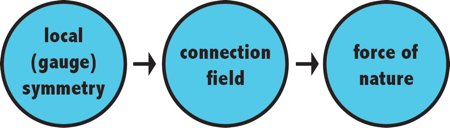
When you write a popular book, some of the biggest decisions you are faced with involve choosing which interesting but difficult concepts to tackle, and which to simply put aside. In The Particle at the End of the Universe, I faced this question when it came to the concept of gauge symmetries, and in particular their relationship to the forces of nature. It’s a simple relationship to summarize: the standard four “forces of nature” all arise directly from gauge symmetries. And the Higgs field is interesting because it serves to hide some of those symmetries from us. So in the end, recognizing that it’s a subtle topic and the discussion might prove unsatisfying, I bit the bullet and tried my best to explain why this kind of symmetry leads directly to what we think of as a force. Part of that involved explaining what a “connection” is in this context, which I’m not sure anyone has ever tried before in a popular book. And likely nobody ever will try again! (Corrections welcome in comments.)

Gauge
Physicists and mathematicians define a “symmetry” as “a transformation we can do to a system that leaves its essential features unchanged.” A circle has a lot of symmetry, as we can rotate it around the middle by any angle, and after the rotation it remains the same circle. We can also reflect it around an axis down the middle. A square, by contrast, has some symmetry, but less — we can reflect it around the middle, or rotate by some number of 90-degree angles, but if we rotated it by an angle that wasn’t a multiple of 90 degrees we wouldn’t get the same square back. A random scribble doesn’t have any symmetry at all; anything we do to it will change its appearance.

More here.

Antifragile: How to Live in a World We Don’t Understand

David Runciman reviews Nassim Nicholas Talib's new book in The Guardian:

ScreenHunter_44 Nov. 22 19.09The core idea behind this book is simple and quite enticing. Nassim Nicholas Taleb divides the world and all that's in it (people, things, institutions, ways of life) into three categories: the fragile, the robust and the antifragile. You are fragile if you avoid disorder and disruption for fear of the mess they might make of your life: you think you are keeping safe, but really you are making yourself vulnerable to the shock that will tear everything apart. You are robust if you can stand up to shocks without flinching and without changing who you are. But you are antifragile if shocks and disruptions make you stronger and more creative, better able to adapt to each new challenge you face. Taleb thinks we should all try to be antifragile.

If the idea is nice and neat, however, the book that houses it is just the opposite. It is a big, baggy, sprawling mess. Taleb seems to have decided not just to explain his idea but also to try to exemplify it. One of his bugbears is the fragility of most of what passes for “knowledge” – especially the kind produced by academics – which he thinks is so hung up on order and completeness that it falls apart at the first breath of disruption. So he has gone for deliberate disorder: Antifragile jumps around from aphorism to anecdote to technical analysis, interspersed with a certain amount of hectoring encouragement to the reader to keep up. The aim, apparently, is to show how much more interesting an argument can be if it resists being pinned down.

There are two problems with this.

More here.

How Not to Talk about Gaza

Colin Dayan in the Boston Review:

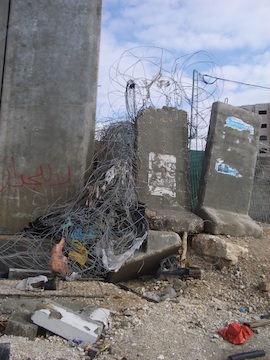
Dayan_37.6_debrisTalking about Gaza is like talking about God. We face the ineffable. We cannot talk about what we see. Or if we do, we are accused of lacking common sense, failing to take a realistic approach to an unmanageable problem.

What is that problem? Palestinians are the problem. Like so many others in our world today, Palestinians are labeled as “terrorists” by the powerful, so that lethal force is the rule and extreme violence—or exemplary disregard—may be directed indiscriminately against civilians and non-civilians alike. The problem is not a simple one. If we pretend it is, then we risk validating those who hold Israel to an unfair standard, or worse, who question its right to exist. And in protesting Israeli government policy, expressing horror at its brutal excesses, we risk being condemned as “anti-Semitic” or worse, as “self-hating Jews.”

The tired debates about the history of Zionism and the threat of the Palestinian national movement—or, put more bluntly, about the end of Israel and what Jonathan S. Tobin calls “a war with Palestinian Islamists that has no end in sight”—ignore what is specific about more than four decades of Israeli domination in the Occupied Territories. Especially masked in these debates are the unique and various forms of violence used to control the West Bank and Gaza Strip since the eruption of the second Palestinian intifada in September 2000. In the name of “security,” Israel has implemented something like a permanent state of emergency. Brute force coexists with, to a sometimes-calamitous degree, a systematic practice of discrimination, surveillance, and disappearance. Behind the barriers—and they are everywhere—live the confined, sealed off from the zone of inclusion, the Israeli state.

More here.

all hail the tofucken

TM_TH_TOFURK_AP_001

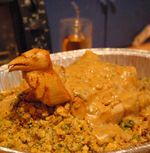
Bawdy, exorbitant, unethical. In the most mythic banquets, everything is permitted, nothing impossible. Mile-high desserts carved to resemble palaces, grapes served upon platters of young boys, vomit buckets. But aside from the slaves, drunkenness, and orgies, it is perhaps the dining upon outrageously prepared animals — much like the stuffed camel Bohumil Hrabel describes in I Served the King of England — that is most…indelible. Heliogabalus enjoyed ostrich brains and eels fattened with Christians. The Emperor Vitellius once served a dish including flamingo tongues and lamprey milt in the name of Minerva. Hampton Court under Henry VIII was often the stage for feasts of whale, peacock beaks, and the ever-popular flaming boar’s head. No organ was left unturned. The home version of this is the Turducken, the infamous carnival of carnage that involves three unfortunate birds (chicken, duck, turkey) stuffed into each other.

more from Stefany Anne Golberg at Table Matters here.

Thanksgiving Guilt Trip: How Warlike Were Native Americans Before Europeans Arrived?

John Horgan in Scientific American:

The approach of Thanksgiving, that quintessential American holiday, has me brooding over recent scientific portrayals of Native Americans as bellicose brutes. When I was in grade school, my classmates and I wore paper Indian headdresses and Pilgrim hats and reenacted the “first Thanksgiving,” in which supposedly friendly Native Americans joined Pilgrims for a fall feast of turkey, venison, squash and corn. This episode seemed to support the view—often (apparently erroneously) attributed to the 18th-century philosopher Jean-Jacques Rousseau—of Native Americans and other pre-state people as peaceful “noble savages.”

Many prominent scientists now deride depictions of pre-state people as peaceful. In his 2011 book The Better Angels of Our Nature (which I reviewed last fall), Harvard psychologist Steven Pinker mocked the idea that “war is a recent invention, and that fighting among native peoples was ritualistic and harmless until they encountered European colonialists.” According to Pinker, pre-state societies were on average far more violent than even the most brutal modern states. Native Americans definitely waged war long before Europeans showed up. The evidence is especially strong in the American Southwest, where archaeologists have found numerous skeletons with projectile points embedded in them and other marks of violence; war seems to have surged during periods of drought. But scientists such as Pinker, Keeley and LeBlanc have replaced the myth of the noble savage with the myth of the savage savage.

More here.

The Science of Cooking a Turkey, and Other Thanksgiving Dishes

From Smithsonian:

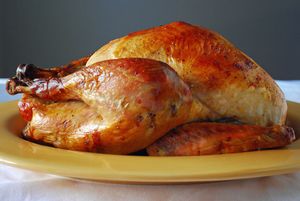
Roasted-turkeyChristopher Kimball, the bow-tied host of America’s Test Kitchen and founder of Cook’s Illustrated magazine, knows the difference between good cooks and great cooks. Great cooks—and he has built his empire on this premise—understand the scientific principles involved in their techniques. They are fluent in the different modes of heat transfer: radiant heat, convection and conduction. They can explain how diffusion and osmosis maintain equilibrium in their recipes. And, perhaps most impressively, they harness this scientific knowledge to defy gravity—when making soufflés and other baked goods rise.

In a recent presentation at the National Museum of American History, Kimball flashed a photograph of Albert Einstein. “Einstein was so smart not to get involved,” he said. “The science of cooking is actually much more complicated than particle physics.” Luckily, Kimball and his crew of editors, test cooks and food scientists at the actual test kitchen, a 2,500-square-foot culinary laboratory just outside of Boston, unpack the science and serve it to us in bites we can chew on. I’ve found that the team’s latest book, The Science of Good Cooking, offers helpful tips in explaining the science behind some Thanksgiving favorites.

More here.

Thursday Poem

The Heart and the Mind

I love him with all my heart
But that is where the whole problem lies,
My mind warns me.
that the man I love
Is a man with four young children.
My heart says I will love him
As well as his four or one hundred children!
But my mind sighs and says:
What will happen if his children do not accept you?

I love him with all my heart,
And I will love him to the end of the world.
He has more wealth than we both need.
Again my mind interferes with my love:
Wealth is morning dew,
Let the sun reach the noon of its life,
The dew – the wealth of the morning
Will be nowhere to be seen.
Do I need to embarrass you with the question?

But I cannot help falling in love with such a handsome man.
So young, he will stride into the future with me.
And my mind looks desperate:
Why are you so fascinated with perishables?
Do you know of any one with perpetual youth?
Ever heard of someone who died of good health?
All men grow old and weak with time.
No one has ever leaped into the future.
Is it going to start with your handsome man?

by Paul Chidyausiku
Publisher: PIW, 2007

Wednesday, November 21, 2012

philosopher photos

Jerry_Fodor

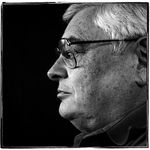
“After a certain age, every man has the face he deserves,” claims Jean-Baptiste Clamence, the self-proclaimed ‘judge-penitent’ in Albert Camus’ final novel, The Fall. A century earlier, Abraham Lincoln had decided that the all-important age was forty years, reportedly refusing to appoint someone to a post in his government because he didn’t like his appearance. Aged forty-six and on his deathbed, George Orwell more prudently proclaimed that it was at fifty that “every man has the face he deserves.” None of them seemed to have a view about women. Nor did any of them consider the altogether more plausible suggestion that it is our parents, partners, employers and government who have the most to answer for when it comes to our faces, and that, by the same token, we might ourselves be held a little accountable for the faces of those we share our lives with.

more from Constantine Sandis at Philosophy Now here.