
Category: Recommended Reading
My ideal bookshelf
From The Guardian:
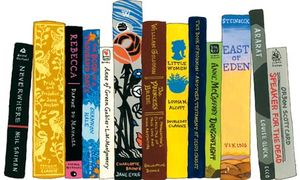
Stephenie Meyer
I was the reader. That was my identity in my family: I was that girl who was always in a corner reading; I read my whole life away. I skipped children's books. My dad would read to us at night, and I first began to read on my own by reading ahead in those books. I was seven when I read Little Women for the first time, and it became nearly as real to me as the rest of my life. I always identified with Jo; I was the tomboy. My big sister was Meg, the pretty one, the sweet one. We didn't have a Beth, but my younger sister was definitely Amy, the frivolous one who liked nice things. I was like Jo in every way except for her passion for writing; I was perfectly content just to read. It wasn't until much later, after I had published three books, that I went back to Little Women and realised that I had become even more like Jo. Now I was a writer, too. Of all the heroines I was invested in throughout my childhood, Jane Eyre was the one I most identified with, despite my having a happy and supportive family. I liked heroines who weren't perfectly beautiful. I liked that everyone wasn't swept away and captivated by her. Jane Eyre has this huge stubborn streak, which I have, too. I have my ideals, and I really don't diverge from them – it's probably off-putting to a lot of people. Jane is like that, too; she sticks to things even when she's uncomfortable and unhappy and making other people feel the same way. Of course, she's pushed to deeper extremes than I've ever been forced to go to, but I always felt we would see eye to eye.
More here.
Chemical “soup” clouds connection between toxins and poor health
From Nature:
From plastics to flame retardants, the ubiquitous chemicals of our daily lives have raised public health concerns like never before. Inside the Beltway, however, data-crunching scientists are often no match for industry lobbyists and corporate lawyers. The exception, no doubt, is Linda Birnbaum, the toxicologist who leads, two little-known scientific agencies, the National Institute of Environmental Health Services (NIEHS) and the National Toxicology Program (NTP).
Scientific American sat down with Birnbaum in Washington, D.C., to learn more about environmental health, toxic chemistry and the politics of chemical regulation.
How much of human disease is due to environmental exposures?
The estimates vary, and it depends on how you define environment. People often say it's about 30 percent. I think that's defining environment fairly narrowly, considering only environmental chemical exposures, but your environment includes the food you eat, the drugs you take, the psychosocial stress you're exposed to and so forth. After all, what's the difference between a drug and an environmental chemical? One you intentionally take and the other one you don't. Considering all that, I would say then the environment is much more than 30 percent. We also know—especially from studies of identical versus fraternal twins—that for many different diseases, genetics is not the whole story. Actually, I think it's time to stop asking, “Is this caused by genes or is this caused by the environment?” because in almost all cases, it's going to be both.
Why has it been so difficult to link environmental exposures to specific health consequences?
Nobody is exposed to one chemical at a time, right? I mean we live in a soup of chemicals and we live in a soup of exposures. Here, I'm having a lemonade. Well, it's not only lemon in here. I'm sure there's some sugar. There might be a preservative or something. I don't know what's in this. So think of all those things interacting, but when we test chemicals in the lab we tend to test them one at a time.
More here.
A Meta Modeling Meditation
Paul Krugman over at his blog:
I’m still thinking about the whole “America could only give workers decent living standards when it didn’t face competition” discussion. For one thing, this is an old favorite discussion of mine; the “growth and trade” literature goes back more than 60 years, but there aren’t, I think, many prominent economists working today who know much about that tradition, so I may be the last of the Mohicans or something. For another, this subject is a perfect illustration of the important of actually having a model – I’ll explain in a minute what I mean by that. And one more point: what we learn from this story is that a model may be created to answer one question, or defend a particular position, but if it’s a good model it can be used in multiple settings, and sometimes may even end up supporting a different side in the political debate.
So, on the first point: the origins of this literature go back to the immediate postwar years, when it was common to argue that US technological superiority made it impossible for Europe to compete. Yet basic trade theory says that trade depends on comparative advantage, not absolute advantage – you can gain from trade even if you’re less productive across the board, simply by concentrating on the areas in which your productivity lags least. Did the “dollar shortage” argument make any sense in that framework?
Enter John Hicks, who rephrased it not as a question about gains from trade but as a question about the effects of technological progress in your trading partners. And he laid out a rudimentary model to address that question.
Sunday Poem
Variations on the Word Love
This is a word we use to plug
holes with. It’s the right size for those warm
blanks in speech, for those red heart-
shaped vacancies on the page that look nothing
like real hearts. Add lace
and you can sell
it. We insert it also in the one empty
space on the printed form
that comes with no instructions. There are whole
magazines with not much in them
but the word love you can
rub it all over your body and you
can cook with it too. How do we know
it isn’t what goes on at the cool
debaucheries of slugs under damp
pieces of cardboard? As for the weed-
seedlings nosing their tough snouts up
among the lettuces, they shout it.
Love! Love! sing the soldiers, raising
their glittering knives in salute.
Then there’s the two
of us. This word
is far too short for us, it has only
four letters, too sparse
to fill those deep bare
vacuums between the stars
that press on us with their deafness.
It’s not love we don’t wish
to fall into, but that fear.
this word is not enough but it will
have to do. It’s a single
vowel in this metallic
silence, a mouth that says
O again and again in wonder
and pain, a breath, a finger
grip on a cliffside. You can
hold on or let go.
.
by Margaret Atwood
Why Israel Didn’t Win

Adam Shatz in the LRB:
The ceasefire agreed by Israel and Hamas in Cairo after eight days of fighting is merely a pause in the Israel-Palestine conflict. It promises to ease movement at all border crossings with the Gaza Strip, but will not lift the blockade. It requires Israel to end its assault on the Strip, and Palestinian militants to stop firing rockets at southern Israel, but it leaves Gaza as miserable as ever: according to a recent UN report, the Strip will be ‘uninhabitable’ by 2020. And this is to speak only of Gaza. How easily one is made to forget that Gaza is only a part – a very brutalised part – of the ‘future Palestinian state’ that once seemed inevitable, and which now seems to exist mainly in the lullabies of Western peace processors. None of the core issues of the Israel-Palestine conflict – the Occupation, borders, water rights, repatriation and compensation of refugees – is addressed by this agreement.
The fighting will erupt again, because Hamas will come under continued pressure from its members and from other militant factions, and because Israel has never needed much pretext to go to war. In 1982, it broke its ceasefire with Arafat’s PLO and invaded Lebanon, citing the attempted assassination of its ambassador to London, even though the attack was the work of Arafat’s sworn enemy, the Iraqi agent Abu Nidal. In 1996, during a period of relative calm, it assassinated Hamas’s bomb-maker Yahya Ayyash, the ‘Engineer’, leading Hamas to strike back with a wave of suicide attacks in Israeli cities. When, a year later, Hamas proposed a thirty-year hudna, or truce, Binyamin Netanyahu dispatched a team of Mossad agents to poison the Hamas leader Khaled Meshaal in Amman; under pressure from Jordan and the US, Israel was forced to provide the antidote, and Meshaal is now the head of Hamas’s political bureau – and an ally of Egypt’s new president, Mohamed Morsi.
Operation Pillar of Defence, Israel’s latest war, began just as Hamas was cobbling together an agreement for a long-term ceasefire. Its military commander, Ahmed al-Jabari, was assassinated only hours after he reviewed the draft proposal. Netanyahu and his defence minister, Ehud Barak, could have had a ceasefire – probably on more favourable terms – without the deaths of more than 160 Palestinians and five Israelis, but then they would have missed a chance to test their new missile defence shield, Iron Dome, whose performance was Israel’s main success in the war. They would also have missed a chance to remind the people of Gaza of their weakness in the face of Israeli military might. The destruction in Gaza was less extensive than it had been in Operation Cast Lead, but on this occasion too the aim, as Gilad Sharon, Ariel’s son, put it in theJerusalem Post, was to send out ‘a Tarzan-like cry that lets the entire jungle know in no uncertain terms just who won, and just who was defeated’.
Victory in war is not measured solely in terms of body counts, however.
Saturday, November 24, 2012
My Idea of Nature

Justin E. H. Smith over at his blog:
For most of my adult life, beginning, really, in the rebellious years of adolescence, I have been against nature. This phrase, against nature, is the standard title for the English translation of J.-K. Huysmans' splendid 1884 novel, À rebours, but when I use it here, I don't mean generally perverted or out-of-whack. I mean I have cultivated a consummately urban existence, and have insisted that people who rush off to commune with the great outdoors are wasting their time. Part of this is based in a concern –about whose legitimacy I have not begun to doubt– that modern urbanites who speak of how in tune with nature they are are simply deluding themselves, that they no more succeed in bridging the nature/culture divide when they go off camping for a weekend than I do when I stay home in the city and blog. I've often suspected that typically a philosopher's idea of 'nature' consists in little more than a memory of a trip to R.E.I., or the thought of the picture of themselves kayaking that they selected for their department website. I've wanted none of that, and so have shut it out entirely.
Have I been wrong to do so? Back East, where I've always felt culturally at home but, with respect to nature, utterly against the grain (the other standard title for Huysmans' novel), I don't spend much time thinking about this question. The meteorology of the East Coast is schizophrenic and malign; and the wildlife, as Buffon already understood, is degenerate. The closest thing to mountains over there are the final fading bumps of an ancient range. The only animals are pests. Even when it's not hot it's too hot.
Dershowitz versus Gaza
Belen Fernandez close reads Alan Dershowitz, in Al Jazeera [via Doug Henwood]:
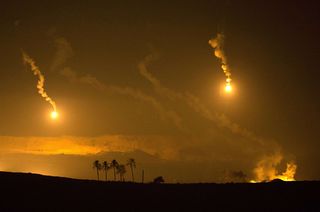
During the Israeli assault on Lebanon in the summer of 2006, a 34-day affair that resulted in 1,200 deaths – primarily civilian – in the targeted country, Dershowitz used his legal expertise to exonerate the Jewish state for its seemingly immoral behaviour.
In a July 2006 dispatch for the Los Angeles Times, Dershowitz offered a handy conceptual tool called the “continuum of civilianality” to explain why it was that so many purported “civilians” were perishing.
The answer, quite simply, was that some civilians just aren't that civilian-like.
Declaring the very term civilian to be “increasingly meaningless”, Dershowitz posits a far more precise taxonomy according to which two-year-olds fall on the “more innocent” side of the continuum, while south Lebanese residents who remain in south Lebanon in defiance of Israeli orders to evacuate are “complicit”.
Dershowitz's cautionary addendum – “Nor can women and children always be counted as civilians, as some organisations do” – is perhaps useful in explaining such events as the elimination in south Lebanon of 23 persons, most of them children, whose efforts to comply with evacuation orders were thwarted by the Israeli Apache helicopter that fired on their pickup truck at close range.
Whatever the Weather

Gillian Tett reviews Nassim Nicholas Taleb's Antifragile: How to Live in a World We Don’t Understand, in the FT:
So what advice can Taleb offer? His central argument is encapsulated in the title. Until now, Taleb says, modern society has generally assumed that people, systems or institutions fell into two camps: either they were fragile (and likely to break when shocks occur) or robust (and thus able to resist shocks without being impacted at all). Taleb insists there is a third category of people, institutions and systems that are resilient in a way we have been unable to articulate: they survive shocks not because they are immovable but precisely because they do change, bending in the face of stress; adapting and learning. This is the quality that he describes as “antifragile”. (In the US the book is being published with the rather more explicit subtitle “Things that Gain from Disorder”.)
Taleb goes on to explain how this works: while nation-states tend to be fragile (because they are highly dependent on one vision of the nation), city-states tend to be antifragile (because they can adapt and learn from history). Careers that are based on one large employer can be fragile but careers that are flexible and entrepreneurial are antifragile, because they can move with changing times. Similarly, the banking system is fragile, while Silicon Valley is antifragile; governments that are highly indebted are fragile, while those (such as Sweden) which have learnt from past mistakes and refuse to assume too much debt are antifragile. And Switzerland is presented as one of the most antifragile places of all, partly because its decentralised structure allows for plenty of experimentation.
Expressed like this, Taleb’s argument about the merits of resilience – and change – might seem almost laughably simple. However, the book develops the theme on multiple levels. Some of his arguments are highly technical: he uses mathematical techniques to prove how the antifragile concept can be measured, and to demonstrate why popular statistical measures of probability are wrong.
Speaking of resilience, this piece by Ashwin Parameswaran in interesting, perhaps a bit technical.
The Noble and the Base: Poland and the Holocaust
John Connelly in The Nation:
Earlier this year, while conferring a posthumous Presidential Medal of Freedom on the Polish hero Jan Karski, Barack Obama inadvertently touched off the greatest crisis in US-Polish relations in recent memory. The man he honored had served as a courier for the Polish resistance against Hitler, and in 1942 Karski traveled across occupied Europe to tell Western leaders about the Nazi war crimes being committed in Poland, including the Holocaust. Karski had been sent on this secret mission, Obama explained, after fellow underground fighters had told him that “Jews were being murdered on a massive scale and smuggled him into the Warsaw Ghetto and a Polish death camp to see for himself.” It was late evening in Warsaw when Obama spoke, but within minutes Polish officials were demanding an apology for his use of the phrase “Polish death camp,” which they thought scandalous.
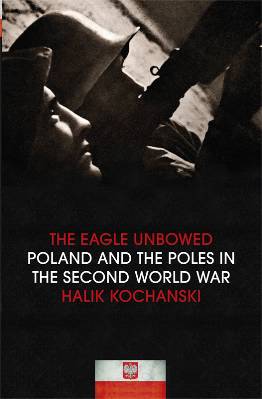
Even those well-versed in European history must wonder why. After all, the media routinely speak of “French camps” from which Jews were sent to their deaths, and the phrase doesn’t draw similar ire from the French government. On the contrary, in July the French president himself, François Hollande, began a widely covered speech on the seventieth anniversary of the roundup of Jews at Vélodrome d’Hiver by stating, “We’ve gathered this morning to remember the horror of a crime, express the sorrow of those who experienced the tragedy…and therefore France’s responsibility.” Why are Poles so sensitive on the matter of Polish camps? Readers of Halik Kochanski’s new book, The Eagle Unbowed, will ask the opposite question: How could a famously well-educated person such as Barack Obama be so insensitive regarding the simple facts about Poland, the first country to stand up to Hitler?
Here’s one undisputed, essential fact: after the Nazis and their Soviet allies overran Poland in September 1939, they did not permit the Poles to form a new national government. The Soviets made the eastern Polish territories into western Soviet republics; the Germans annexed the western Polish territories into the Reich and made central Poland a “General Government” that they ruled directly. This arrangement was radically different from those in Nazi-occupied France, Denmark or Slovakia, which were ruled by collaborationist regimes. The French camps, then, really were French—that is, operated by French collaborators (a fact stressed by Hollande in his July speech). In Poland the death camps were German, like most other institutions.
a free man
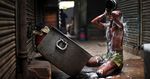
Ashraf’s obsession with azadi has a flip side, akelapan — loneliness. Friendships are treacherous in Delhi, and he longs for his childhood friends in Patna, “a group that woke up together, skipped class together” and felt hungry, happy, depressed in “perfect synchronicity.” But on a good day, he can frame his isolation as a blessing. “Today I can be in Delhi,” Ashraf says. “Tomorrow I could well be in a train halfway across the country; the day after, I can return. This is a freedom that comes only from solitude.” Ashraf isn’t meant to represent an entire people. And he isn’t drawn to shame the reader into sympathy, either. His contradictions and three-dimensionality are hallmarks of honest reporting on the marginalized. Ashraf is not a poor man; he’s a man who happens to be poor. This distinction gives his character nuance and his world complexity.
more from Sonia Faleiro at the NY Times here.
titian

This is a long book about a long life, a large volume about a large talent. Titian, its titular subject, was the most celebrated painter of his time. He died in his beloved Venice, Italy, on Aug. 27, 1576. The death certificate listed the cause of his demise as fever and age as 103. Like so much else about the artist, however, the date of his birth remains uncertain; it’s more likely he died in his late 80s. Even his name is subject to variation. He signed documents and paintings with “various spellings of his Christian name: Titian, Ticiano, or the Latinized Ticianus or Titianus.” The name by which many scholars know him, Tiziano Vecellio, signals the village close to Venice where he was born (most likely between 1488 and 1490). As his biographer reports, “Venice in 1500 was the wealthiest, most glamorous, most sophisticated, most cosmopolitan, most admired — and most hated — metropolis in Europe, centre of the only empire since ancient Rome to be named after a city rather than a dynasty.”
more from Nicholas Delbanco at the LA Times here.
the book of kells
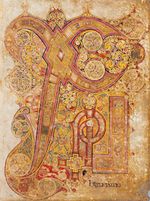
One of the endearing features of this version of the Gospels is that it is not particularly accurate. “While the scripts of the Book of Kells have a unique verve and beauty,” Meehan writes, “its text is erratic, with many errors resulting from eyeskip (where the scribe’s eye has jumped from a word to its next appearance, omitting the intervening text or letter).” This calls down a rare but stern professorial rebuke: “There is considerable carelessness in transcription.” Reading this, one’s deplorably feckless imagination wanders back through the smoke of the centuries to that frail little isle afloat in the wild Atlantic, where in a stone beehive hut a lonely scribe, hunched with quill in hand over his sheet of vellum, halts suddenly as he spots a mistranscription, claps a hand to his brow and utters whatever might have been the monastic equivalent of “Oh, shit!” Those poor scribes – there were four of them, “prosaically termed A, B, C and D”, as Meehan sympathetically remarks – had their work cut out for them. The Book of Kells was made from 180 calf skins – an indication, by the way, of the comparative wealth of the monastic community, for in those days cows were money – and of the complete work, 680 pages remain, some folios as well as the original binding having been lost or destroyed.
more from John Banville at the FT here.
The Book of Imaginary Beings
From The Guardian:

Falling between these two is The Book of Imaginary Beings, a compendium of brief, almost stark descriptions and stories about fantastic animals from many older texts and sources, including the bestiaries of medieval Europe and their classical antecedents, Chinese and Indian myth, folk tales, the legends of indigenous peoples, and the minds of writers such as Kafka and Poe. First published in 1957, at the very time when (as Borges later explained) the vision that had gradually been failing him since birth had deteriorated to the point where he could no longer read or see what he was writing, this cryptozoological chiaroscuro is one of Borges's great creations. In the preface, Borges warns that Imaginary Beings is not meant to be read straight through: “Rather, we should like the reader to dip into these pages at random, just as one plays with the shifting patterns of a kaleidoscope.”
More here.
Coming Into Their Own
Julie Meyerson in The New York Times:
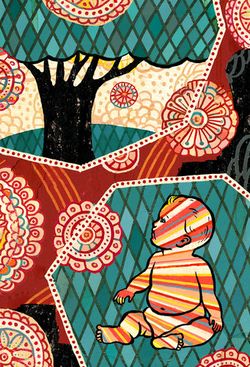
“Parenting is no sport for perfectionists,” Andrew Solomon rather gloriously understates toward the end of “Far From the Tree,” a generous, humane and — in complex and unexpected ways — compassionate book about what it means to be a parent. A lecturer in psychiatry at Cornell and the author of “The Noonday Demon,” a National Book Award-winning memoir about his journey through depression, Solomon spent 10 years interviewing more than 300 families with “exceptional” children. That is, children with “horizontal identities,” a term he uses to encompass all the “recessive genes, random mutations, prenatal influences or values and preferences that a child does not share with his progenitors.” He developed what seem to be genuine relationships (entailing multiple visits, unsparing communication and significant follow-up over a number of years) with families of individuals affected by a spectrum of cognitive, physical or psychological differences: “They are deaf or dwarfs; they have Down syndrome, autism, schizophrenia or multiple severe disabilities; they are prodigies; they are people conceived in rape or who commit crimes; they are transgender.” His interviews yielded nearly 40,000 transcript pages and his “anti-Tolstoyan” conclusion that “the unhappy families who reject their variant children have much in common, while the happy ones who strive to accept them are happy in a multitude of ways.”
More here.
Barbarism in Cultured Soil: Rushdie’s Great Pakistani Novel
Shehryar Fazli in the Los Angeles Review of Books:
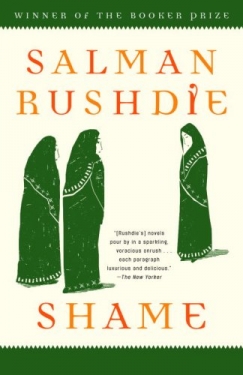
Shame’s narrator argues, “It is possible to see the subsequent history of Pakistan as a duel between two layers of time, the obscured world forcing its way back through what-had-been-imposed.” This duel forms the novel’s locus. Throughout, the censored and stifled rise to the surface, whether in the real-life secession of East Pakistan and insurgency in Balochistan against a brutal state, or in the gruesomely murderous acts of Sufiya Zinobia, General Hyder’s underdeveloped and repressed daughter. And then there is the deposed Iskander Harrapa, refusing to be quiet even after his execution: “O unceasing monologue of a hanged man!” Hyder wails as he starts hearing the dead prime minister, head still in the noose, taunting his executioner, “Never fear, old boy, it’s pretty difficult to get rid of me.
More here.
More Notes on Humans and Animals
Justin E. H. Smith in his own blog:
We have an extremely peculiar ontology, from which we suppose our moral commitments flow. It is unlike anything in human experience prior to the rise of the modern West. In all other places and times, since the appearance of the human species, there has been a presumption of some sort of shared socio-natural community that extends well beyond the boundaries of the species. This sounds like an exaggeration, and it attributes to many groups of people views they have left no explicit record of having supported. But from the explicit record, anyway, there is not a shred of evidence of any culture ever supposing, prior to our own, that moral community is defined by the boundaries of our species.
More here.
How to Hold Your Breath for 20 Minutes
Saudi Arabia implements electronic tracking system for women
From The Raw Story:

Since last week, Saudi women’s male guardians began receiving text messages on their phones informing them when women under their custody leave the country, even if they are travelling together.
Manal al-Sherif, who became the symbol of a campaign launched last year urging Saudi women to defy a driving ban, began spreading the information on Twitter, after she was alerted by a couple.
The husband, who was travelling with his wife, received a text message from the immigration authorities informing him that his wife had left the international airport in Riyadh.
“The authorities are using technology to monitor women,” said columnist Badriya al-Bishr, who criticised the “state of slavery under which women are held” in the ultra-conservative kingdom.
More here.
Friday, November 23, 2012
The Beatles’ audition tape famously rejected by a record executive in 1962 has finally been uncovered after 50 years
From The Telegraph:

The decision by a Decca Records executive proved to be one of the worst made in music history.
Within months John, Paul, George and original drummer Pete Best had signed with EMI and went on to become the greatest band of all time.
Now the original safety master tape, a 10-track demo the group recorded at Decca's London studios on New Year's Day 1962, has come to public light for the first time.
It is thought the Beatles' manager Brian Epstein held on to the tape he had paid to make and later gave it to an executive associated with EMI.
He sold it in 2002 to a prolific buyer of music memorabilia. He is now selling it at auction with a pre-sale estimate of 30,000 pounds.
The recording has never been officially released and the sound quality on it is said to be pristine.
More here. [For Aps and Ga, of course.]