Questions Concerning the Murder of Benazir Bhutto

Owen Bennett-Jones in the London Review of Books:
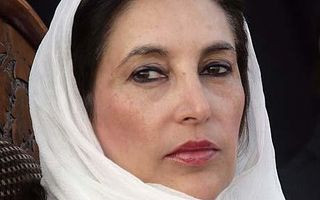
Benazir_bhutto_1448641cIn her posthumously published book, Reconciliation, Benazir Bhutto named a man whom she believed had tried to procure bombs for an unsuccessful attempt on her life in Karachi in October 2007:

I was informed of a meeting that had taken place in Lahore where the bomb blasts were planned … a bomb maker was needed for the bombs. Enter Qari Saifullah Akhtar, a wanted terrorist who had tried to overthrow my second government. He had been extradited by the United Arab Emirates and was languishing in the Karachi central jail … The officials in Lahore had turned to Akhtar for help. His liaison with elements in the government was a radical who was asked to make the bombs and he himself asked for a fatwa making it legitimate to oblige. He got one.

Akhtar’s story reveals much about modern Pakistan. Born in 1959, he spent two years of his boyhood learning the Quran by heart and left home at the age of 18, moving to the radical Jamia Binoria madrassah in Karachi. In 1980, he went on jihad, fighting first the Soviets in Afghanistan and later the Indians in Kashmir. In both conflicts he came into contact with Pakistani intelligence agents, who were there trying to find out what was going on and to influence events. Helped by the high attrition rate among jihadis, he rose through the ranks and by the mid-1990s, after an intense power struggle with a rival commander, emerged as the leader of Harkat ul Jihad al Islami or HUJI, once described by a liberal Pakistan weekly as ‘the biggest jihadi outfit we know nothing about’.

In 1995, Akhtar committed a crime that in many countries would have earned him a death sentence: he procured a cache of weapons to be used in a coup. Putsches in Pakistan generally take the form of the army chief moving against an elected government. This one was an attempt by disaffected Islamist officers to overthrow not only Bhutto’s government but also the army leadership.

The plot’s leader was Major General Zahir ul Islam Abbasi. In 1988, as Pakistan’s military attaché in Delhi, he acquired some sensitive security documents from an Indian contact. When the Indians found out, they beat him up and expelled him. He returned to Pakistan a national hero. Seven years later, disenchanted by the secularist tendencies of both Bhutto and the army leadership, he devised a plot to storm the GHQ and impose sharia. Akhtar’s role was to supply the weapons.

More here.
Why the Art World Is So Loathsome: Eight theories

Simon Doonan in Slate:

134733125.jpg.CROP.rectangle3-large1. Art Basel Miami.

It’s baaa-ack, and I, for one, will not be attending. The overblown art fair in Miami—an offshoot of the original, held in Basel, Switzerland—has become a promo-party cheese-fest. All that craven socializing and trendy posing epitomize the worst aspects of today’s scene, provoking in me a strong desire to start a Thomas Kinkade collection. Whenever some hapless individual innocently asks me if I will be attending Art Basel—even though the shenanigans don’t start for another two weeks, I am already getting e-vites for pre-Basel parties—I invariably respond in Tourette’s mode:

“No. In fact, I would rather jump in a river of boiling snot, which is ironic since that could very well be the title of a faux-conceptual installation one might expect to see at Art Basel. Have you seen Svetlana’s new piece? It’s a river of boiling snot. No, I’m not kidding. And, guess what, Charles Saatchi wants to buy it and is duking it out with some Russian One Percent-er.”

More here.

The Brain: The Charlie Brown Effect

Carl Zimmer in Discover:

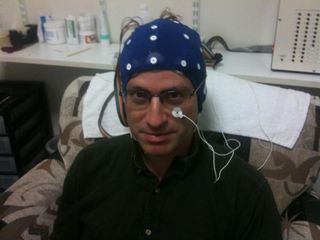
67669_10151114579187541_1187092319_nI am sitting in a darkened, closet-size lab at Tufts University, my scalp covered by a blue cloth cap studded with electrodes that detect electric signals from my brain. Data flow from the electrodes down rainbow-colored wires to an electroencephalography (eeg) machine, which records the activity so a scientist can study it later on.

Wearing this elaborate setup, I gaze at a television in front of me, focusing on a tiny cross at the center of the screen. The cross disappears, and a still image appears of Snoopy chasing a leaf. Then Charlie Brown takes Snoopy’s place, pitching a baseball. Lucy, Linus, and Woodstock visit as well. For the next half hour I stare at Peanuts comic strips, one frame at a time. The panels are without words, and while sometimes the action makes sense from frame to frame, at other times the Peanuts gang seems to be engaging in a series of unconnected shenanigans.

At the same time, a freshly minted Ph.D. named Neil Cohn is watching the readout from my brain, an exercise he has repeated with some 100 subjects to date. Many people would consider tracking Peanuts or Calvin and Hobbes comic strips unworthy of scientific inquiry, but Cohn begs to differ. His evidence suggests that we use the same cognitive process to make sense of comics as we do to read a sentence. They seem to tap the deepest recesses of our minds, where we bring meaning to the world.

More here.

stella

1202-Bogdanovich-thumbStandard

She was always concerned about the question of integrity, and would bring it up whenever we saw each other. It was, she pointed out, the central theme of “Golden Boy”: Odets “wrote it after he got back to New York from a scriptwriting job in Hollywood, when a lot of his friends on the left were criticizing him for ‘selling out.’ I think he was torn between the Hollywood movie scene and the New York theater scene in the same way Joe” — the lead in “Golden Boy” — “is torn between boxing for big money and becoming a great violinist.” Stella always grilled me to make sure I hadn’t lost my integrity; she considered this a major problem for the American artist. I wonder what she would have said about the almost total materialism of our current era? Stella Adler was a grande dame of the theater. I never met anyone remotely like her. With her mid-Atlantic accent, she was once mistaken by a London shopkeeper for English. “No,” she replied, “just affected.” And at a New York cocktail party, she once made a sweeping entrance that brought a hush to the room. A little girl turned to her mother and asked in an awed whisper, “Mommy, is that God?” I understand how the little girl felt. All Stella’s students would.

more from Peter Bogdanovitch at the NY Times here.

eagleton reads the derrida bio

Jacques-Derrida-in-His-Li-010

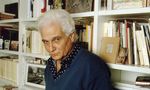
I suspect that one reason Derrida enjoyed travelling the world so much was because it allowed him some respite from the bitchy, sectarian, backstabbing, backscratching climate of Parisian intellectual life, which this superb biography faithfully records. What the book fails to underline quite as heavily is how waspish the maitre himself could be. Two dramatic moments stand out in Derrida’s subsequent career. Traveling to communist Prague in 1981 to address a secretly organised philosophy seminar, he was arrested and charged with drug smuggling. It seems the authorities saw the dismantling of binary oppositions as a threat to the state. The police officer who had planted the drugs in Derrida’s suitcase was himself later arrested for drug trafficking.

more from Terry Eagleton at The Guardian here.

At heart is the mystery of the universe

600

“The Higgs particle arises from a field pervading space, known as the Higgs field,” explains Caltech physicist Sean Carroll in “The Particle at the End of the Universe: How the Hunt for the Higgs Boson Leads Us to the Edge of a New World.” “Everything in the known universe, as it travels through space, moves through the Higgs field; it’s always there lurking invisibly in the background.” As to why this matters, Carroll points out that “without the Higgs, electrons and quarks would be massless, just like photons, the particles of light. They would move at the speed of light themselves, and it would be impossible to form atoms and molecules much less life as we know it…. Without it, the world would be an utterly different place.”

more from David L. Ulin at the LA Times here.

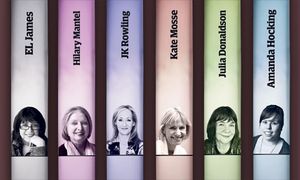
The women who dominated publishing in 2012

From The Guardian:

EL James

AbooksFour years ago a dissatisfied TV executive was inspired by Stephenie Meyer's Twilight novels to start writing steamy online fan fiction about the leading characters in which sparkly-skinned vampire Edward and bold virgin Bella were made over as an entrepreneur and a college graduate. If the narrative of the first Twilight books was powered by heavy-breathing abstinence and the revelation that good vampires wait until marriage, online forums were where readers could let rip. There were thousands of similarly sexed-up Twilight stories on the web, but in May 2011 – after some name changes and minor tweaks – a tiny Australian publisher, Writer's Coffee Shop, “talked James into” publishing her BDSM fantasies as an ebook, which was then picked up by Random House in the US. Rumours about copies being exchanged with blushes on the school run or borrowed from hairdressers snowballed into reports of New York hardware shops running out of rope as the book climbed the New York Times bestseller lists. The trilogy was rushed into print in the UK this April and by August, Fifty Shades of Grey, the story of damaged billionaire Christian Grey and eager college student Anastasia Steele, a love affair-cum-therapy session-cum-shopping spree played out against their erotic relationship, was the bestselling book in British history.

Like Harry Potter and The Da Vinci Code, it burst the banks of the publishing world; people were buying it who didn't otherwise buy books, if only to find out what the fuss was about. It single-handedly re-ignited the women's erotica market, which had withered when Black Lace covers began to look dated, as well as tapping a whole new readership who didn't know or care that – as those in the know sniffily pointed out – you could find much better erotica, for free, on the web. Thus it was a victory for the paperback, as well as for ebooks and self-publishing. The Kindle has been credited with removing the embarrassment from reading dirty books, but what Fifty Shades revealed is that erotica isn't shameful any more so long as enough people are reading it already, and it's got a tasteful jacket (James wanted restrained covers, having herself squirmed over reading lurid-looking romances on the tube).

In literary terms, the books are atrocious: whole blogs have been dedicated to pulling them apart sentence by sentence.

More here.

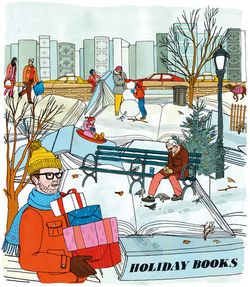
100 Notable Books of 2012

From The New York Times:

BooksFICTION & POETRY

ALIF THE UNSEEN. By G. Willow Wilson. (Grove, $25.) A young hacker on the run in the Mideast is the protagonist of this imaginative first novel.

ALMOST NEVER. By Daniel Sada. Translated by Katherine Silver. (Graywolf, paper, $16.) In this glorious satire of machismo, a Mexican agronomist simultaneously pursues a prostitute and an upright woman.

AN AMERICAN SPY. By Olen Steinhauer. (Minotaur, $25.99.) In a novel vividly evoking the multilayered world of espionage, Steinhauer’s hero fights back when his C.I.A. unit is nearly destroyed.

ARCADIA. By Lauren Groff. (Voice/Hyperion, $25.99.) Groff’s lush and visual second novel begins at a rural commune, and links that utopian past to a dystopian, post-global-warming future.

…NONFICTION

ALL WE KNOW: Three Lives. By Lisa Cohen. (Farrar, Straus & Giroux, $30.) The vanished world of midcentury upper-class lesbians is portrayed as beguiling, its inhabitants members of a stylish club.

AMERICAN TAPESTRY: The Story of the Black, White, and Multiracial Ancestors of Michelle Obama. By Rachel L. Swarns. (Amistad/HarperCollins, $27.99.) A Times reporter’s deeply researched chronicle of several generations of Mrs. Obama’s family.

AMERICAN TRIUMVIRATE: Sam Snead, Byron Nelson, Ben Hogan, and the Modern Age of Golf. By James Dodson. (Knopf, $28.95.) The author evokes an era when the game was more vivid and less corporate than it seems now.

More here.

Friday, November 30, 2012

Egypt’s New Constitution

01egypt-articleLarge

Amnesty International issues a press release warning of dangers to freedoms of worship and women:

A draft constitution approved by Egypt’s Constituent Assembly falls well short of protecting human rights and, in particular, ignores the rights of women, restricts freedom of expression in the name of protecting religion, and allows for the military trial of civilians, Amnesty International said.

“This document, and the manner in which it has been adopted, will come as an enormous disappointment to many of the Egyptians who took to the streets to oust Hosni Mubarak and demand their rights,” said Hassiba Hadj Sahraoui, Deputy Director for the Middle East and North Africa at Amnesty International.

Freedom of religion is limited to Islam, Christianity and Judaism, potentially excluding the right to worship to other religious minorities such as Baha’is and Shi’a Muslims.

The constitution fails to provide for the supremacy of international law over national law, raising concerns about Egypt’s commitment to human rights treaties to which it is a state party.

Furthermore, the document fails to fully guarantee economic, social and cultural rights, such as protection against forced evictions – it also tolerates child labour.

You can read the draft (as of now) yourself here.

Also the NYT reports on protests around the draft.

The Salman Rushdie Case

Heller_1-122012_jpg_470x634_q85

Zoë Heller reviews Salman Rushdie's Joseph Anton: A Memoir, in the NYRB:

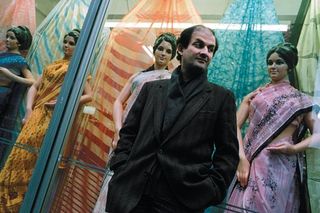
When Anis Rushdie read his son’s novel Midnight’s Children for the first time in 1980, he became convinced that Ahmed Sinai, the drunken father in the book, was a satirical portrait of himself. A family row ensued. Rushdie fils did not deny that Sinai was based on his father—“In my young, pissed-off way,” he would later tellThe Paris Review, “I responded that I’d left all the nasty stuff out”—but he objected to his father’s wounded reaction and thought it revealed a crude understanding of how novels worked. “My father had studied literature at Cambridge so I expected him to have a sophisticated response to the book, but the person who did was my mother…. She understood it at once as fiction.”

The position that Rushdie took during this literary-domestic spat uncannily prefigured the position he would take nine years later, when confronted by the wrath of another, more punishing patriarch. On February 15, 1989, a day after the Ayatollah Khomeini had issued a fatwa condemning him to death for his authorship of The Satanic Verses, Rushdie appeared on British television and announced that he wished his book had been “more critical” of Islam. As he reports in Joseph Anton—a memoir he has chosen to write in a de Gaulle–like third person—his principal emotion at the time was one of bafflement:

When he was first accused of being offensive, he was genuinely perplexed. He thought he had made an artistic engagement with the phenomenon of revelation; an engagement from the point of view of an unbeliever, certainly, but a proper one nonetheless. How could that be thought offensive? The thin-skinned years of rage- defined identity politics that followed taught him, and everyone else, the answer to that question.

Given how often Rushdie has been accused of writing The Satanic Verses with the express purpose of making trouble, it is understandable that he should wish to highlight the unexpected—the unprecedented—nature of the events that followed the novel’s publication. Even so, his retrospective account of himself as a bookish innocent, bewildered by the world’s coarse intrusion into the literary sphere, seems a little over-egged. By this point in his career, Rushdie, who had already been sued by Indira Gandhi for libelous statements in Midnight’s Children and had already seen his third novel banned in Pakistan, was better qualified than most to appreciate literature’s capacity for eliciting hostile, nonliterary responses.

A Pair of MIT Scientists Try to Transform Nuclear Power

Richard Martin in Forbes:

Transatomic-1Leslie Dewan and Mark Massie are Ph.D. students in nuclear engineering at MIT. For most of their peers, the options upon graduating are pretty simple: teach, or work for one of the national labs. Dewan and Massie, though, decided on an unconventional path: like a couple of Stanford grads, they’ve formed a start-up. Incorporated in 2011, it’s called Transatomic Power, and its mission is to transform the nuclear power industry.

Transatomic’s product is called a “Waste Annihilating Molten Salt Reactor.” If you’ve read my book, SuperFuel, you’ll recognize it as an update on an old reactor technology that was pioneered at Oak Ridge National Laboratory, in the 1950s and 60s. SuperFuel focused on another type of molten salt reactor, a Liquid Fluoride Thorium Reactor, or LFTR. Dewan and Massie’s design is fuel-agnostic in the sense that it can run on either uranium or thorium; as the name implies, its signal feature is that it can consume spent fuel from conventional light-water reactors. Transatomic joins a growing list of start-ups, including Flibe Energy, that are trying to revolutionize nuclear power by bringing back alternative fuels, including thorium, and alternative reactor designs.

More here. [Thanks to James Edward Kolb.]

Why U.S., Israel should welcome Palestinian move at U.N.

Rabbi Michael Lerner at CNN:

121121051433-clinton-abbas-story-topIsrael's security can only be assured when its neighbors believe that it is no longer oppressing the Palestinian people but instead living in peace and harmony with them.

The de facto strategy of past and present Israeli governments of seeking security through domination and by pushing Palestinians out of their homes, or allowing right-wing religious fanatics to create settlements throughout the West Bank to ensure that no Palestinian state could have contiguous parts, has not and cannot work to provide safety for Israel.

Israel's fate and its well-being are intrinsically linked to the well-being of the Palestinian people. It's time for the powerful to show generosity to the relatively powerless.

So those in the U.S. and Israel who want Israel to be secure should welcome the Palestinian Authority's decision to seek observer status as a nonmember state in the United Nations. The authority has agreed to return to negotiations with Israel without conditions once that status has been granted. The goal is creation of a state living in peace with Israel in borders roughly approximating those of the before than 1967 war, with minor border changes mutually agreeable through negotiations.

So who opposes this? Hamas, Israel and the U.S.

More here.

Twilight People: Subways Are for Sleeping

Joe Kloc in the Paris Review:

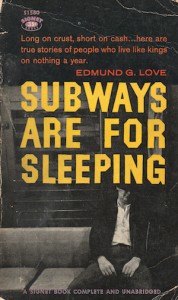
SubwaysCover-PR-178x300Every now and then I come across someone on the subway who defies easy categorization. I remember, for instance, a man who boarded the 3 train in Brooklyn a few years ago wearing military fatigues and a bandolier packed with little glass bottles of liquids. “Who is man enough to buy my fragrances?” he shouted. (When one rider replied that he wasn’t sure, the man responded, “Are you man enough to kill a hooker in Moscow with a crowbar?”) More recently, there was a man on the uptown 6 wearing a pair of oversized New Year’s glasses—the ones where the 0’s serve as eyeholes—who played atonal jazz on his saxophone and asked for no monetary compensation in return. I could keep going, but no doubt anyone who has lived in a city for any length of time has their own mental list of these self-styled subterranean eccentrics, grouped together not so much by any particular characteristic other than the fact that they seem only to exist underground.

Over the years I’ve made casual study of this joyful band of accidental philosophers as they’ve decorated my dreary morning commutes with their Bedazzler guns of mischief. A few months ago I had the good fortune of getting to know one of them on the R train. I was reading Joseph Mitchell’s Up in the Old Hotel when a man whom I’ll call Z. (because he asked me not to use his name) approached me and said, “That’s a great fucking book.”

More here.

Friday Poem

Mushrooms

“Overnight, very
Whitely, discreetly,
Very quietly

Our toes, our noses
Take hold on the loam,
Acquire the air.

Nobody sees us,
Stops us, betrays us;
The small grains make room.

Soft fists insist on
Heaving the needles,
The leafy bedding,

Even the paving.
Our hammers, our rams,
Earless and eyeless,

Perfectly voiceless,
Widen the crannies,
Shoulder through holes. We

Diet on water,
On crumbs of shadow,
Bland-mannered, asking

Little or nothing.
So many of us!
So many of us!

We are shelves, we are
Tables, we are meek,
We are edible,

Nudgers and shovers
In spite of ourselves.
Our kind multiplies:

We shall by morning
Inherit the earth.
Our foot’s in the door.”

by Sylvia Plath

And the award for savage wit goes to …

From The Independent:

MaxTomorrow night, the winner of the Polari Prize for lesbian, gay, bisexual and transgender (LGBT) debut authors will be announced at London's South Bank Centre. Tomorrow also marks the fifth birthday of the monthly literary salon that gave the prize its name. The prize is the brainchild of Paul Burston, the editor of the gay section of Time Out magazine and the flamboyant MC of the salon. As a novelist himself, the author of The Gay Divorcee, Star People and other books examining and satirising contemporary gay life, Burston is acutely conscious of the difficulties facing LGBT authors in a tough commercial climate.

…If there's one sweeping generalisation to be made about queer writing (I've been a judge for two years running), it is that it's often savagely funny. Judge a mainstream literary prize and you'll be overwhelmed by dark themes and sombre writing. This year's Polari shortlistees are North Morgan, a bitterly funny satirist in his London club novel Exit Through the Wound (Limehouse Books); the music producer Terry Ronald's Becoming Nancy (Transworld), a deliciously camp rites of passage novel; and Vicky Ryder's rollicking Ey Up and Away (Wandering Star Press), a series of almost poem-like vignettes about growing up in Nuneaton. But perhaps even more surprising is the discovery of two strong poetic voices in John McCullough (Frost Fairs, published by Salt) and Max Wallis (Modern Love, published by Flap). The elfin Wallis has an unusual day job for a poet: when I caught up with him, he had just got back from a modelling assignment in Paris. He's also unusual in his choice of inspiration: the Victorian poet George Meredith who also penned a poem sequence called Modern Love. (Also something of a model, Meredith posed for the famous Pre-Raphaelite painting The Death of Chatterton.)

…Modern Love by Max Wallis:

Flap £4

“… A final glance. Sigh as the door slams a wooden tongue. Do not look back as dawn carries her torch across the sky; he will stay. Tarmac claps footsteps toward day and then, within, something out loud to the world that he will never hear; 'I am sorry, you know'.”

More here.

Scientists build with DNA bricks

From MSNBC:

BrickResearchers at Harvard's Wyss Institute have coaxed single strands of DNA to fit together like Lego bricks and form scores of complex three-dimensional shapes, including a teeny-tiny space shuttle. The technique, described in this week's issue of the journal Science, adds a new dimension to molecular construction and should help open the way for nanoscale medical and electronic devices. “This is a simple, versatile and robust method,” the study's senior author, Peng Yin, said in a news release. The method starts with synthetic strands of DNA that take in just 32 nucleotides, or molecular bits of genetic code. These individual “bricks” are coded in a way that they fit together like Lego pegs and holes to form larger shapes of a specific design. A cube built up from 1,000 such bricks (10 by 10 by 10) measures just 25 nanometers in width. That's thousands of times smaller than the diameter of a single human hair.

The latest research builds upon work that the Wyss researchers detailed in May, which involved piecing together DNA strands to create two-dimensional tiles (including cute smiley faces). This time around, the strands were twisted in such a way that they could be interlocked, Lego-style. As any visitor to Legoland knows, such structures can get incredibly complex in the hands of a skilled builder. Yin and his colleagues are still learning their building techniques. Fortunately, the bricks could be programmed to build themselves, with the aid of 3-D modeling software. Once the designs were set, the researchers synthesized strands with the right combinations of nucleotides — adenosine, thymine, cytosine and guanine — so that when they were mixed together in a solution, at least some of the bricks would form the desired design. To demonstrate the method, 102 different 3-D shapes were created using a 1,000-brick template.

More here.

Thursday, November 29, 2012

Steven Spielberg’s White Men of Democracy

MV5BMTQzNzczMDUyNV5BMl5BanBnXkFtZTcwNjM2ODEzOA@@._V1._SY317_CR0,0,214,317_

Corey Robin over at his blog:

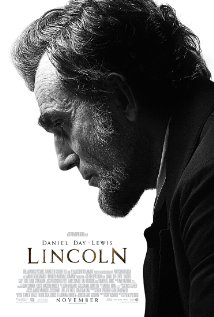
Two weeks ago I wrote, “When Steven Spielberg makes a movie about the Holocaust, he focuses on a German. When he makes a movie about abolition, he focuses on a white man. Say what you will, he’s consistent.”

My comment was inspired by historian Kate Masur’s excellent New York Timesop-ed, which argued that Spielberg’s film Lincoln had essentially left African Americans offstage or in the gallery. In Spielberg’s hands, blacks see themselves get rescued by a savior who belongs to the very group that has ravaged and ruined them. Just as Jews do in Schindler’s List. The difference is that in the case of emancipation, blacks—both free and slave—were actually far more central to the process of their own deliverance.

Thanks in part to documents from the National Archives that historians began to rigorously amass and organize in 1976—resulting in the multi-volume Freedom: A Documentary History of Emancipation, 1861-1867—students and scholars have come to a completely different view of how emancipation happened. As three of the historians who were involved in that project wrote in the path-breaking Slaves No More:

The Destruction of Slavery [the first essay in the book] explicates the process by which slavery collapsed under the pressure of federal arms and the slaves’ determination to place their own liberty on the wartime agenda. In documenting the transformation of a war for the Union into a war against slavery, it shifts the focus from the halls of power in Washington and Richmond to the plantations, farms, and battlefields of the South and demonstrates how slaves accomplished their own liberation and shaped the destiny of a nation.

Not in the Mood

Derrida-A-Biography

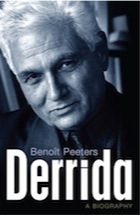
Adam Shatz reviews Benoît Peeters' Derrida: A Biography, in the LRB:

Derrida’s early work was written in the shadow of decolonisation. His first book, a translation of Husserl’s 43-page Origin of Geometry preceded by a 170-page introduction, was published in 1962, but it wasn’t until 1967 that he made his mark. That year he published three books of astonishing audacity which, taken together, amounted to a declaration of war on structuralism, then all the rage in France: Speech and Phenomena, another study of Husserl; Writing and Difference, a collection of essays originally published in journals like Tel Quel and Critique; and his masterwork,Of Grammatology. Few read the formidably dense Of Grammatology from cover to cover, but it acquired tremendous cachet; a year later, its cover made an appearance in Godard’s Le Gai Savoir. What was Of Grammatology about? When Madeleine, the heroine of Jeffrey Eugenides’s campus novel The Marriage Plot, asks a young theory-head this question, she is immediately set straight: ‘If it was “about” anything, then it was about the need to stop thinking of books as being about things.’

That’s not so far off. In all three books, Derrida’s argument was that Western thought from Plato to Rousseau to Lévi-Strauss had been hopelessly entangled in the illusion that language might provide us with access to a reality beyond language, beyond metaphor: an unmediated experience of truth and being which he called ‘presence’. Even Heidegger, a radical critic of metaphysics, had failed to escape its snares. This illusion, according to Derrida, was the corollary of a long history of ‘logocentrism’: a privileging of the spoken word as the repository of ‘presence’, at the expense of writing, which had been denigrated as a ‘dangerous supplement’, alienated from the voice, secondary, parasitic, even deceitful.

Derrida wanted not only to liberate writing from the ‘repression’ of speech, but to demonstrate that speech itself was a form of writing, a way of referring to things that aren’t there. If logocentrism was a ‘metaphysics of presence’, what he proposed was a poetics of absence – a philosophical echo of Mallarmé’s remark that what defines ‘rose’ as a word is ‘l’absence de toute rose’.