Giant leaps for mankind: Most of our beliefs are unwarranted, even absurd

John Gray in New Statesman:

LockeToleration is out of fashion. We tolerate what we judge to be bad or false and, for many, this is a stance that involves a kind of disrespect. It has become part of the ideal of equality to accept that everyone has a right not only to speak but also to be heard, and regarding anyone as not worth listening to seems to go against this ethos. Yet it is hard to see how we can do without the practice of toleration. It is said that we can reject or condemn mistaken beliefs while respecting those who hold them but the distinction breaks down when the beliefs are not just mistaken but detestable and pernicious. Apologists for Stalinism deserve ridicule and disdain, while Holocaust deniers merit nothing but contempt. If we are ready to tolerate the expression of such views, it is not because their exponents are worthy of respect but for the sake of the greater good of freedom. Protecting the freedom of people we rightly despise is hard. Since those we tolerate may not reciprocate, it can also be dangerous. However, putting up with disgusting views and the people who express them is a part of what freedom means – one that is as important as any panoply of rights. The contemporary cult of rights has encouraged us to think that freedom and human rights are practically coextensive. Yet no freedom of any importance can be secured by a rights-based legal system alone. America’s grandiose constitutional paraphernalia did not protect the country from the frenzy of McCarthyism, any more than the legal right to choice in abortion has prevented doctors who perform abortions there being threatened with violence and in some cases even murdered. Nor did American legalism prevent the authorisation of torture by the Bush administration. A legal structure that is supposed to secure basic freedoms will count for nothing if it is not supported by a larger culture of liberty in which the practice of toleration is central and fundamental.

By putting toleration at the heart of his inquiry, Brian Leiter has done a service to political thought. Focusing on whether religious practitioners can be given special exemption from generally applicable laws on grounds of conscience, he aims to formulate a universal principle of toleration. “A practice of toleration is one thing,” he writes, “a principled reason for toleration another.” As Leiter sees it, Thomas Hobbes’s view of toleration as a means to peaceful coexistence was “nothing more than pragmatic” and even John Locke – author of A Letter Concerning Toleration (1689) – argued only that government was ill-suited to effect changes in belief. Instead Leiter is looking for a “pure” form of toleration, one based on principles having to do with the nature of human knowledge and the good life, and finds versions of this sort of toleration defended in the writings of John Rawls and John Stuart Mill.

More here.

Saturday, December 8, 2012

The Great Chinese Famine

1209MIRSKY-articleLarge

Chinese statistics are always overwhelming, so Yang helps us to conceptualize what 36 million deaths actually means. It is, he writes, “450 times the number of people killed by the atomic bomb dropped on Nagasaki” and “greater than the number of people killed in World War I.” It also, he insists, “outstripped the ravages of World War II.” While 40 to 50 million died in that war, it stretched over seven or eight years, while most deaths in the great Chinese famine, he notes, were “concentrated in a six-month period.” The famine occurred neither during a war nor in a period of natural calamity. When mentioned in China, which is rarely, bad weather or Russian treachery are usually blamed for this disaster, and both are knowledgeably dismissed by Yang. The most staggering and detailed chapter in Yang’s narrative relates what happened in Xinyang Prefecture, in Henan Province.

more from Jonathan Mirsky at The NY Times here.

the book situation

F1053a48-0f11-4fe4-a44b-dbba29cc569b

The physical book seems like a fitting reward for the labour of writing a book. It is flattering that third parties – typesetters, printers, designers – are roped in on your behalf. A physical book represents closure, whereas ebook publication means becoming part of the eternal, energy-sapping flux of the internet. You have to do all your own marketing: blogging or tweeting about how great you are in defiance of all those childhood injunctions to be modest; and there are people out there who aspire to pick your work apart electronically, “remix” it in the name of some democratic hippyish ideal. If you become involved in that sort of interactivity, then you might have to spend a long time defending your vision or just lying awake and worrying about the assaults made upon it by people who, surely, ought to be making their own stuff up. Fortunately we writers, being writers, can write about this. Whereas I don’t believe I have read a single work by a milkman lamenting that most people now buy their milk from a shop instead of having it delivered, books fretting over the death of print form one of the genres of the moment.

more from Andrew Martin at the FT here.

a walkable city

600

If you grew up, as I did, in a pedestrian city, much of Jeff Speck’s “Walkable City: How Downtown Can Save America, One Step at a Time” falls into the category of no-brainer. Of course, a walking culture is better than an automotive one, better for our bodies and our souls. And of course, street life has to develop organically, from the proper urban conditions — “a citywide commitment to creating an environment that people want to live in,” Speck notes, quoting Adam Baacke, assistant city manager for planning and development in Lowell, Mass. Of course, bikes and mass transit are a key part of the mix, as is a human sense of scale. “It is often surprising to measure some of America’s favorite and most successful public spaces — New York’s Rockefeller Center, San Antonio’s River Walk, San Francisco’s Ghirardelli Square — and discover how small they actually are,” Speck tells us.

more from David L. Ulin at the LA Times here.

Pardis Sabeti, the Rollerblading Rock Star Scientist

From Smithsonian:

Ingenuity-Awards-Pardis-Sabeti-631Pardis Sabeti pulls a BMW SUV into the breezeway at Harvard’s Northwest Laboratory, an airy, minimalist structure of smooth concrete, tropical hardwood, and lots and lots of glass. The 36-year-old hyperkinetic physician and geneticist renowned for her computational approach to studying evolution and public health directs a 22-member laboratory that occupies prestigious top-floor space in this citadel of science. On this Sunday afternoon in October, she is meeting two of her graduate students to work on, of all things, a holiday greeting card. (The tradition began in 2008 when she bought everyone cheesy holiday sweaters from Kmart for a group photo; last year’s card featured a full-blown re-enactment of Raphael’s famous Vatican fresco The School of Athens, depicting the accumulation of knowledge through reason.) Daniel Park, 33, is already in the passenger seat of Sabeti’s car when Dustin Griesemer, a 24-year-old MD-PhD candidate, climbs into the back. Sabeti, wearing modishly rectangular eye­glasses and brown knee-high boots, starts the five-mile drive to Sky Zone, an indoor trampoline park. Twenty minutes later, Sabeti, Park and Griesemer are snaking between packs of grade-schoolers to check out a pit called the Foam Zone. They sit down at a metal table near the snack bar and Griesemer explains why this year’s card should play off the viral music video “Gangnam Style.” Sabeti takes out her phone and watches on YouTube as an impeccably dressed South Korean rapper named Psy dances in horse stables, saunas, buses, motorboats and subways. The group is in agreement: A “Gangnam Style” homage will be impressive even if lab members aren’t hurtling through the air. The trampoline park will have to wait for another time.

With that settled, they head back to Harvard Square, and the conversation in the car segues to music, as it often does with Sabeti. Besides being an award-winning scientist, she’s the lead singer and bass player in the indie rock band Thousand Days, which has released four albums. “I have no innate sense of flux or flow or spatial cadence,” she says, explaining why the melodies in Thousand Days songs “go all over the place.” (Still, the band, which can sound like a spikier, more energetic version of 10,000 Maniacs, received an honorable mention in a Billboard World Song Competition.) “I have no sense of structure.” What she unquestionably does have is a fierce determination to succeed. Her single-mindedness has led to a groundbreaking tool to determine whether a specific variation of a given gene is widespread in a population as a result of having been favored by natural selection. And her recent work to understand the genetic factors that influence individual human responses to diseases like malaria, as well as her genetic analyses of pathogens to pinpoint potential weaknesses, could potentially lead to new approaches to treating, and perhaps eradicating, deadly scourges. Beyond that, Sabeti says she wants to show the world that the best way to produce top-flight scientific work is to nurture researchers’ humanity and empathy—and have fun.

More here.

Bad Feminist

Gay-1

Roxane Gay in the Virginia Quarterly Review (via Siva Vaidhyanathan):

My favorite definition of a feminist is one offered by Su, an Australian woman who, when interviewed for Kathy Bail’s 1996 anthology DIY Feminism, described them simply as “women who don’t want to be treated like shit.” This definition is pointed and succinct, but I run into trouble when I try to expand it. I fall short as a feminist. I feel like I am not as committed as I need to be, that I am not living up to feminist ideals because of who and how I choose to be. I feel this tension constantly. As Judith Butler writes in her 1988 essay, “Performative Acts and Gender Constitution”: “Performing one’s gender wrong initiates a set of punishments both obvious and indirect, and performing it well provides the reassurance that there is an essentialism of gender identity after all.” This tension—the idea that there is a right way to be a woman, a right way to be the most essential woman—is ongoing and pervasive.

We see this tension in socially dictated beauty standards—the right way to be a woman is to be thin, to wear make up, to wear the right kind of clothes (not too slutty, not too prude, show a little leg, ladies), and so on. Good women are charming, polite, and unobtrusive. Good women work but are content to earn 77 percent of what men earn. Depending on whom you ask, good women bear children and stay home to raise them without complaint. Good women are modest, chaste, pious, submissive. Women who don’t adhere to these standards are the fallen, the undesirable. They are bad women.

Butler’s thesis could also apply to feminism. There is an essential feminism, the notion that there are right and wrong ways to be a feminist, and there are consequences for doing feminism wrong.

Essential feminism suggests anger, humorlessness, militancy, unwavering principles, and a prescribed set of rules for how to be a proper feminist woman, or at least a proper white, heterosexual, feminist woman—hate pornography, unilaterally decry the objectification of women, don’t cater to the male gaze, hate men, hate sex, focus on career, don’t shave. I kid, mostly, with that last one. This is nowhere near an accurate description of feminism, but the movement has been warped by misperception for so long that even people who should know better have bought into this essential image of feminism.

Gangnam Nationalism: Why Psy’s Anti-American Rap Shouldn’t Surprise You

71538068

Max Fisher in the Washington Post's WorldViews blog [h/t: Linta Varghese]:

In 2002, Psy walked onto the stage at a massive performance meant to protest the large U.S. military presence in South Korea. He wore an outlandish, glittered red costume and gold face paint. As the crowd cheered him on, Psy lifted a large model of a U.S. tank and, to cheers and applause, smashed it against the stage.

Two years later, Psy joined several other performers in a concert, this one also protesting the United States and its military. He rapped a song titled “Dear American.” The song is not his – the original is by South Korean metal band N.EX.T – but here are the lyrics, in English and in Korean, in case any readers would like to suggest a better translation:

싸이 rap : 이라크 포로를 고문해 댄 씨발양년놈들과
고문 하라고 시킨 개 씨발 양년놈들에
딸래미 애미 며느리 애비 코쟁이 모두 죽여
아주 천천히 죽여 고통스럽게 죽여

Kill those —— Yankees who have been torturing Iraqi captives
Kill those —— Yankees who ordered them to torture
Kill their daughters, mothers, daughters-in-law, and fathers
Kill them all slowly and painfully

Americans don’t hear much about these anti-American protests in South Korea. It’s a strong American ally, after all; a liberal free market democracy; home to tens of thousands of American troops; and a partner, ever since so many Americans fought and died in the Korean War, in containing North Korea’s threat to the world. Shouldn’t they love us?

This is all true, but the Korean-American alliance can sometimes look a bit different from the other end of the Pacific. Some crucial events inform – though do not, on their own, fully explain – why Psy and other Korean performers would show such animosity toward the United States.

On June 13, 2002, one of the many U.S. military vehicles in South Korea struck and killed two 14-year-old girls walking along the side of a road outside Seoul. Because of the terms of the U.S.-South Korean treaty that allows for America’s military presence there, the incident was considered a “military operation” and thus outside of Korea’s jurisdiction. A U.S. court martial acquitted the driver and his commander.

Furious at the acquittal, Koreans protested for months, some seeing echoes of the foreign empires that had dominated their country for centuries. Universities became hotbeds of anti-American rage.

Remembering John Ono Lennon MBE (9 October 1940 – 8 December 1980)

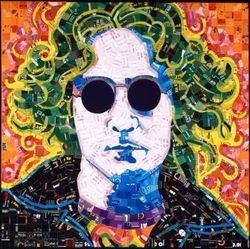
John Ono Lennon MBE, born John Winston Lennon (9 October 1940 – 8 December 1980) was an English musician and singer-songwriter who rose to worldwide fame as a founder member of the Beatles, one of the most commercially successful and critically acclaimed acts in the history of popular music. Together with Paul McCartney, he formed one of the most celebrated songwriting partnerships of the 20th century.

John-lennon-schimmel-art…In September 1980, Lennon commented about his family and his rebellious nature:

Part of me would like to be accepted by all facets of society and not be this loudmouthed lunatic poet/musician. But I cannot be what I am not … I was the one who all the other boys' parents—including Paul's father—would say, 'Keep away from him' … The parents instinctively recognised I was a troublemaker, meaning I did not conform and I would influence their children, which I did. I did my best to disrupt every friend's home … Partly out of envy that I didn't have this so-called home … but I did … There were five women that were my family. Five strong, intelligent, beautiful women, five sisters. One happened to be my mother. [She] just couldn't deal with life. She was the youngest and she had a husband who ran away to sea and the war was on and she couldn't cope with me, and I ended up living with her elder sister. Now those women were fantastic … And that was my first feminist education … I would infiltrate the other boys minds. I could say, “Parents are not gods because I don't live with mine and, therefore, I know.'

More here.

Friday, December 7, 2012

the poet as namer

8656286112172126200.jpeg___1_500_1_500_cb94de6a_

“The elements into which all poesy is divided are two…metaphor and meter.” Thus writes Snorri Sturluson in the Prose Edda, a handbook compiled by Snorri for the aid of the Icelandic skalds. Of “skaldic metaphor,” he writes, there are three types: “first, calling everything by its name; the second type is that which is called ‘substitution;’ the third type of metaphor is that which is called ‘periphrasis.’” Offering an example of this last, Snorri writes: “Suppose I take Odin, or Thor, or any of the Aesir or Elves, and to any of them whom I mention, I add the name of a property of some other of the Aesir, or I record certain works of his. Thereupon he becomes owner of the name…just as when we speak of Victory-Tyr, or Tyr of the Hanged…that then becomes Odin’s name, and we call these periphrastic names.” So it becomes evident that for Snorri, metaphor, in all of its varieties, is simply a matter of giving the right names to things, and this task of naming he calls one of the two elemental tasks of the poet. There is a remarkable similarity here between Snorri and Aristotle, for one finds that in the Poetics, metaphor is said to “consist in giving the thing a name that belongs to something else,” and to be a master of metaphor, Aristotle claims, is “the greatest thing by far.”

more from Mark Signorelli at Anamnesis here.

American Freethought

Ingersoll_loc

The golden age of freethought, which stretched roughly from 1875 until the beginning of the First World War, divided Americans in much the same fashion, and over many of the same issues, as have the culture wars of the past three decades. The argument over the proper role of religion in civil government was (and is) only a subsidiary of the larger question of whether the claims of supposedly revealed religion deserve any particular respect or deference in a pluralistic society. The other cultural issues that divided Americans in Ingersoll’s time are equally familiar and include evolution, race, immigration, women’s rights, sexual behavior, freedom of artistic expression, and vast disparities in wealth. In the 19th century, however, the issues were newer, as was the science bolstering the secular side of the arguments, and the forces of religious orthodoxy were stronger.

more from Susan Jacoby at The American Scholar here.

Better enjoy the war—the peace will be terrible

Post-ww2-expulsion-of-germans

The so-called “wild” or spontaneous expulsions in Czechoslovakia began almost immediately after liberation, in May to June of 1945. But there was nothing “wild” about this first wave of what Czech officials referred to as národní ocista (“national cleansing”). These expulsions, which resulted in the removal of up to 2 million Germans from Eastern Europe, were planned and executed by troops, police and militia, under orders from the highest authorities, with the full knowledge and consent of the Allies. Eastern European and Allied observers alike remarked on the utter passivity of the victims, the majority of whom were women, children and the elderly (most German men had been drafted during the war and either killed or interned in POW camps). But the “wild expulsions” were justified as self-defense on the basis of exaggerated or invented reports of ongoing resistance activity by Nazi “Werewolf” units. One of the most infamous postwar pogroms was sparked by the accidental explosion of an ammunition dump in Ústí nad Labem in northwestern Bohemia in July 1945. Most of the victims of the explosion were themselves German, but local workers, Czechoslovak Army units and Soviet troops wasted no time blaming Werewolf sabotage and taking revenge. Germans were beaten, shot and thrown into the Elbe River; many observers recall a baby carriage being thrown into the river with a baby inside. The massacre resulted in at least 100 deaths.

more from Tara Zahra at The Nation here.

Tibet’s Man on Fire

From National Geographic:

More than 80 Tibetans have self-immolated to protest China's policies in their homeland. This is one man’s story.

TibetAt the time he decided to set fire to himself, Jamphel Yeshi was living in the Tibetan refugee colony of Majnu ka Tilla, on the northern outskirts of Delhi. The colony was first settled in 1963, four years after the Dalai Lama escaped to India from advancing Chinese forces. The early residents built thatched huts and made a living brewing and selling chang, a traditional Tibetan barley-and-wheat alcohol. As refugees from the roof of the world, they were unaccustomed to the heat and humidity of the low-lying plain. They had no idea how long they'd be staying but imagined they'd return home soon.

Today, about 4,000 people live in the colony, which has been overtaken by the city: A busy thoroughfare runs alongside it, and Indian neighborhoods have grown up nearby. New construction in the colony is illegal, yet ragged workers continue to dig foundations, carrying rubble and dirt in handwoven baskets balanced on their heads and dumping their contents on the nearby banks of the Yamuna River. They navigate a warren of multistory buildings, a shambolic jumble of several hundred homes with colored prayer flags fluttering from the rooftops. The alleyways, many just wide enough for two pedestrians to pass, are populated by crimson-robed monks and nuns, mangy dogs and barefoot kids, activists and drifters, petty merchants, and beggars with missing or mangled limbs who offer a broad smile and warm thanks for receiving the equivalent of 20 cents. A Tibetan far from home can enjoy familiar scents and tastes here: salty butter tea, steamed dumplings, Tibetan bread and biscuits. (Learn about Tibetan traditions under Chinese Rule.) Jamphel Yeshi—Jashi to his friends—lived with four other Tibetan men in a one-room, windowless apartment they rented for the equivalent of $90 a month. The entrance to the room is through a tiny kitchen area, which is separated from the sleeping quarters by a threadbare curtain in a Mickey Mouse and Donald Duck motif. Jashi's mattress still lies on the floor in a corner, below posters of the Dalai Lama and other senior lamas. His mattress and four others form a U-shape around the perimeter of the room, which is illuminated by three fluorescent tubes. A thin cabinet still holds many of Jashi's books, including several well-thumbed collections on Buddhism, Tibetan politics, and history. During the day, the men would store their personal belongings in two tiny alcoves. Jashi's small nylon suitcase remains where it was when he was alive, holding most of what he owned, including three ID cards, two plastic pens, two rosaries, four cotton sweaters, four pairs of pants, a vest, a scarf, a green and a red string, and a small Tibetan flag. (Related: “Buddha Rising, Buddhism in the West.”)

On the night before he set himself on fire, Jashi was in a cheerful mood.

More here.

Friday Poem

The Fish-Wife

I’ll take a bath when it snows,
when I can look out the window up high
and see the sky all pale
and blank like a fish’s eye.
And I know the boats won’t go out tonight,
the fishermen drinking whiskey, locked
in a bar-dream, the music rocking them deeper.
It doesn’t snow enough here,
though some would say otherwise,
fearing accidents. But the paper boy, skidding
uphill on his bike in light snow, knows better,
making S-tracks when his wheels slide sideways.
We really needed this snow, the old men will say,
putting to bed the surface roots of trees,
putting to bed the too-travelled streets.
When everything is covered
the earth has a light of its own;
the snow falls down from the moon
as everyone knows, and brings that light
back to us. I needed this light.
All day I kept by the window, watching the sky,
a prisoner in my clothes, the wind felt dry
and mean. Starlings stalked the yard with evil eyes
—I hated them, and hated, too, my neighbor’s house
where sparks from the chimney fell back in a stinking
cloud—black ashes bringing no blessing.
When the roads are covered,
when the water is black and snow falls
into the waves, the birds’ hunger swirls
the air, dark lovely shapes. All hungers
are equal now. I'll give them bread and seeds.
I have no money; the whiskey is gone,
and I must bathe in water. Fishermen, please
do not go out in your flimsy boats tonight
to chase after the cod and mackerel,
to hook the giant eels. Go safe,
go free. Let your feet leave trails
through streets and yards, wandering
home, your crooked voyages to bed.

by Cynthia Huntington
from from The Fish-Wife

The new philosopher scientists

Thomas Wright in The Telegraph:

Wright_main1_2419950bRelations between scientists and humanities students weren’t friendly when I was at university back in the Nineties. I remember several boozy arguments between the two factions which began with provocative questions and ended almost with the throwing of punches and pints. Our debates were minor skirmishes in the so-called “science wars” of the time, between the scientific “realists”, who believed that if nature could talk it would spout equations and atomic numbers, and the “postmodernist” humanities students who held that nothing existed outside language and their own minds. “We’ll believe it when we see it” was the scientists’ motto; “we’ll see it when we believe it” the slogan of the opposing camp.

Without knowing it, we were merely dressing up a number of celebrated 19th-century arguments in new, and rather garish, costumes. We were also restaging many of the scraps that followed C P Snow’s Fifties lecture on the division between the “two cultures”. Alas, our rowdy symposia served only to illustrate, and reinforce, the great divide; it was rare that an enlightened soul would bridge the gulf between the boffins and the bohemians. Yet that very mission has been taken up, in the past decade or so, by a number of intrepid English biographers. At the end of The Age of Wonder, a group portrait of scientists from the Romantic period, Richard Holmes appealed for “a more enlarged and imaginative” approach to writing science lives that would “explore” science “in a new way” and so overcome “the perennially cited difficulties with ‘the two cultures’”.

More here.

Thursday, December 6, 2012

who was keats, really…

P3_Bate_paper_310607m

We are approaching the fiftieth anniversary of the annus mirabilis in Keats biography: 1963 saw the publication of both John Keats by Walter Jackson Bate and John Keats: The making of a poet by Aileen Ward. Rereading them after working through the latest clutch of biographies, I am amazed at how well they have stood the test of time. Fifty years on, we have a few more facts and some telling new emphases, but no one has surpassed Bate (no relation) and Ward in the answering of those key questions about personality and development. Bate remains pre-eminent on poetic technique, Ward for psychological acuity. It was in the Romantic period that two roads diverged in the wood of literary Life-writing. Boswell’s Life of Johnson (1791) had no truck with the idea that biography has a duty to be comprehensive. Boswell only knew Johnson for the last twenty-one years of the great man’s long life, so on the principle that one writes best about what one knows well, his Life was heavily skewed to the later years.

more from Jonathan Bate at the TLS here.

hoaxes of dreams

Don_Quixote_61

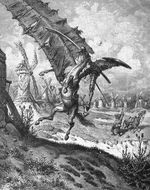
Popularly known as the father of modern philosophy, René Descartes won that title ostensibly by rejecting traditional modes of intellectual inquiry largely associated with commentary on prior texts, and replacing them with the first attempt at a kind of radical phenomenology. The drama of this attempt is conveyed autobiographically in the first of his six Meditations, in which he describes the strenuous process of sloughing off received ideas and subjecting everything he thinks he knows to doubt. He finds it tough going, and repeatedly realizes that he has fallen back on some “long standing opinions” that “take advantage of his credulity.” His last ditch effort to subject all possible knowledge to doubt comes in the form of a figure he calls an evil genius or demon, in Latin a genius malignus, “supremely powerful and clever, who has directed his entire effort at deceiving me. I will regard the heavens, the air, the earth, colors, shapes, sounds, and all external things as nothing but the bedeviling hoaxes of my dreams, with which he lays snares for my credulity.”

more from William Egginton at Berfrois here.

make me a fake

Fakerichter121203_198

I want to own art like this, but I’m not rich, and I also think it’s a conflict of interest for a critic to own work that he or she may write about. (Reviews can affect market value.) So, last winter, I put out a call on Facebook. I’d pay anyone $155 plus the cost of materials to make me a perfect fake by Richter, Ryman, Flavin, Fontana, Du­champ, Hirst, Guyton, or Agnes Martin. (Why $155? It’s enough money to me that the painting had to be worth it, and 55 is a funnier number than 50.) You can’t just call up a guy and order an ersatz Hirst or Richter—unless you are seeking a flat-out forger, but those folks don’t work for $155 and their numbers aren’t listed. Besides, in the art world, noncriminal fakes aren’t news. We don’t even call them “fakes.” We prefer the term “appropriation,” whereby a new artwork incorporates or reproduces another. Copyists lie on a continuum: At one end, you have extremely original artists (Richard Prince, Elaine Sturtevant) who use the old to make something new.

more from Jerry Saltz at New York Magazine here.

Nico Muhly interviews David Lang

Nico Muhly in Bomb Magazine:

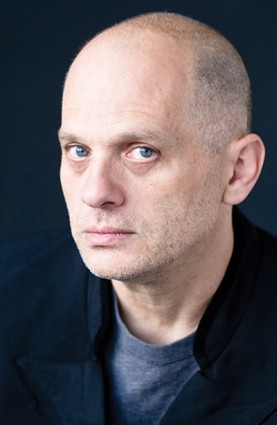
ScreenHunter_63 Dec. 06 14.25David Lang is one of the most thoughtful composers working today. His music is consistently probing, emotionally urgent, strange, and beautiful. It is also getting simpler as the years roll on—a sign that the mind behind it is undergoing a kind of ritualistic purification. I’ve been obsessed with David’s music since I bought a recording by mail order of his piece cheating lying stealing when I was in high school, and I have written a piano piece called David Lang Needs a Hug.

Nico Muhly So you’re going to San Francisco?

David Lang Yes, I’m doing one of these Iron Man things where I’m leaving at five in the morning, going to rehearsals of music that I wrote for a new production of Sophocles’s Elektra, and then taking the red-eye back.

NM Oh, Jesus.

DL Otherwise I just don’t have time to do anything. I’m trying to live your life, you know.

NM There you go! I had something awful happen to me yesterday. I met with my publishers, and they showed me something I’ve never seen: a list of everything I’ve written. It’s really scary.

DL Because it’s so long?

NM Yeah! Have you ever seen these things?

DL I like them, actually. You’re littering the world—

NM —with your shit. (laughter) Do you have physical copies of your list? I don’t.

DL I don’t either. I don’t even have hard copies of my music; they’re on my computer.

NM I remember when I first saw that giant wall at Philip [Glass’s] house, his shelves full of work, and went, Maybe some day! My idea was maybe someday I’d have a wall that big.

DL I bet you’ll figure out something better to fill it with than music.

NM So what is the piece with So Percussion called?

DL It’s called man made.

NM And what happens in it?

DL It’s a kind of concerto for four solo percussionists, four orchestral percussionists, and a large orchestra commissioned by a bunch of great international orchestras. It premiers with the BBC Symphony next May. I wanted a role for the percussionists in the orchestra along with So Percussion, so that it’s not like a concerto for people coming in from out of town. Actually, I was thinking about Phil’s Concerto Fantasy for Two Timpanists and Orchestra. Do you know what a brilliant idea it is to bring somebody from the outside and not insult the local guy? It honors the person who’s already there.

More here.