Thursday Poem

To Marina Tsvetaeva

The cold
of a lump of sugar
on the tongue of a cup of tea
of a loaf of bread that leaps
in bloody slices.
The dishwasher’s trade
the genuflections
and hands that are still
being submerged with certain good sense.
The reds
the whites
the skinheads
and Cossacks
might kick down my door
or there may appear a rope
for securing a trunk and hang me
without me shuddering a centimeter

Damaris Calderón
translation: Julie Flanagan

from Poetry International Web

Read more »

Gandhi’s master biographer uncovers an unlikely friendship with an English couple

Ramachandra Guha in The Independent:

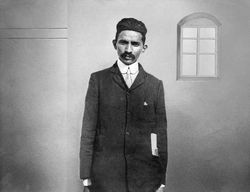
GandhiLargely forgotten now are Gandhi's closest friends in South Africa, who were an English couple named Henry and Millie Polak. Henry was a radical Jew, Millie a Christian feminist. They had fallen in love in London, whereupon Henry's family sent him away to South Africa. He met Gandhi in a vegetarian restaurant in Johannesburg, and was immediately attracted to the Indian lawyer and his cause. Gandhi, on his part, took it upon himself to have Henry reunited with Millie. When Polak's father claimed that the girl was not robust enough for marriage, Gandhi wrote that if she was indeed fragile, “in South Africa, amidst loving care, a beautiful climate and a simple life, she could gain the physical strength she evidently needed”.

The appeal was successful. Millie arrived in Johannesburg in the last week of December 1905. The next day, Henry and Millie went with Gandhi to be married by the Registrar of European Marriages. The Hindu hoped to bear witness to this union of Jew and Christian; the Registrar thought this was not permitted by law. He asked them to come back the next working day. But the next day was Sunday, and the day after that, New Year's Day. And Millie and Henry had waited long enough already. So Gandhi went across to the office of the Chief Magistrate, to whom the Registrar reported. He convinced him that nothing in the law debarred a brown man from witnessing a European marriage. The Magistrate, remembered Gandhi, merely “laughed and gave me a note to the Registrar and the marriage was duly registered”. The deed done, the couple moved into the lawyer's home on Albermarle Street, where Gandhi lived with his wife, Kasturba, and their four sons. Millie began teaching the boys English grammar and composition, while helping Kasturba in the kitchen. The two women became friends, with the newcomer's buoyant nature overcoming the matriarch's natural reserve and her lack of familiarity with the English language.

More here.

Science’s rightful place is in service of society

Daniel Sarewitz in Nature:

DanielsarewitzAmid the mess of US politics — a pointless government shut-down, across-the-board cuts, endless partisan squabbling — now is a good moment to take stock of the fate of publicly funded science. After all, five years ago next week Barack Obama was first elected president, promising that he would “restore science to its rightful place” in US society. How has he done? Pretty well — and the ongoing budget crisis might be the most important reason. When there is no new money to throw at science, the only way to improve its social value is to tighten how the old money is spent. And science policies under Obama are beginning to add up to a strategy to correct the greatest weakness of the US research enterprise: the isolation of the conduct of science from its use in society.

In biomedicine, the doubling of the US National Institutes of Health (NIH) budget between 1998 and 2003 did not reduce the stunningly high failure rates and costs of drug development. To confront this problem, the Obama administration created the National Center for Advancing Translational Sciences (NCATS), which was approved by Congress in December 2011. Central to NCATS’ vision, says NIH director Francis Collins, are partnerships between “government, academia, philanthropy, patient advocates, and biotechnology and pharmaceutical companies to overcome translational roadblocks and offer solutions to detect, treat and prevent disease”. Despite forecasts of doom, basic science in the United States stands preeminent, as shown by the ongoing harvest of Nobel prizes. But where is the pay-off for the rest of society? The bankruptcy of Detroit in Michigan, once the world auto-industry capital, underscores the need for new science-based technology sectors to create jobs for millions of people, yet it also makes apparent the lack of connection between scientific excellence and economic well-being. To help close this gap, the Obama administration last year created the National Additive Manufacturing Institute. Focused on three-dimensional printing, it is located in the ‘rust belt’ city of Youngstown, Ohio, and was launched with a US$30-million government contribution matched by corporate funds. In May, the president announced three more manufacturing institutes, each to be “a regional hub designed to bridge the gap between basic research and product development, bringing together companies, universities and community colleges, and federal agencies to co-invest in technology areas”.

More here.

Wednesday, October 30, 2013

Kirill Medvedev: it’s no good

UrlKeith Gessen at n+1:

In fact I think Medvedev is Russia’s first genuinely post-Soviet writer. And I’m happy to report that he has returned, in his way, to the Russian literary world—but on his own terms. The Free Marxist Press has expanded—its first full-length book, Terry Eagleton’s Marxism and Literary Criticism, translated by Medvedev, came out in 2010, and since then the press has published writings by Žižek, Badiou, the French sociologist and philosopher Michael Löwy, as well as Russian writers on revolutionary history, protest, and the Soviet dissident movement. It has grown in seriousness, prestige, and import, becoming, in effect, post-Soviet Russia’s first independent left-wing publisher, putting out the works of its own people and those sympathetic to it, just as Medvedev calls for in “My Fascism.” In late 2011 it published as a separate book a long, rhyming poem by Medvedev about interviewing Claude Lanzmann, the friend of Sartre and director of Shoah, on a visit he made to Moscow. In 2009 Medvedev founded a rock band, Arkady Kots—named after a Russian poet and socialist who translated the Internationale into Russian—which now plays with more regularity in Moscow and other cities, usually performing the poems of the art-terrorist Alexander Brener set to guitar and drums.

more here.

STRIKING GOLD: Six good books

Maggie Fergusson in More Intelligent Life:

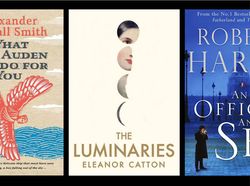
Books%20for%20web%201The Luminaries by Eleanor Catton, Granta, hardback, out now. Winter 1866, and a Scot newly arrived in the New Zealand goldfields stumbles on a motley conclave—opium dealer, card-sharp, cleric—debating recent happenings. One man's dead, another's disappeared, and the local whore has apparently attempted suicide. So opens this 832-page masterpiece, daunting to pick up, impossible to put down. Tale is laid upon tale, and everyone is forced to confront his own darkness. Like a juggler, Catton throws hundreds of balls in the air, and somehow catches them all. Shades of Wilkie Collins and Sarah Waters, but her style is distinct and vigorous. She doesn't so much tell her story as inhabit it, amused by her characters' foibles, yet able to reflect on the human condition with a wisdom normally associated with great age. Eleanor Catton is 28.

An Officer and a Spy by Robert Harris, Hutchinson, hardback, out now. Robert Harris is unrivalled when it comes to turning complex history into thriller fiction. Here, in a novel faithful to historical fact, he unravels one of the most notorious miscarriages of justice ever known: the conviction of a Jewish army officer, Captain Alfred Dreyfus, for spying, and his condemnation in 1895 to a “death worse than death” on Devil’s Island. Told in the first person by Colonel Georges Picquard, who eventually established Dreyfus's innocence and revealed corruption running like rot through the French army, it perfectly captures fin-de-siècle Paris: seedy, febrile and rabidly anti-Semitic. In an eerie foreshadowing of the future Dreyfus travels into exile in a cattle truck. The son of the man who framed him, Charles du Paty de Clam, became head of Jewish affairs in the Vichy government.

More here.

How the Singer Sewing Machine Clothed the Nation

Martha Stewart in Smithsonian:

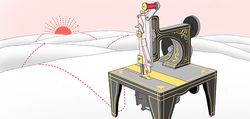
SingerIsaac Merritt Singer’s Patent No. 8,294 was a vast improvement upon earlier versions, capable of 900 stitches a minute—at a time when the most nimble seamstress could sew about 40. Though the machine was originally designed for manufacturing, Singer saw its domestic potential and created a lighter weight version, which he hauled to country fairs, circuses and social gatherings, dazzling the womenfolk. The $50 price tag was steep, but Singer sold thousands on the installment plan. His machine revolutionized manufacturing and industry, transforming the lives of millions and making Singer a very rich man—a classic American story.

My mother inherited a Singer machine from her mother, and she was constantly sewing—her own clothes, clothes for her three daughters, Halloween costumes for all six of her children, and gifts for friends and family. She kept the machine in a corner of our kitchen in Nutley, New Jersey. My sisters and I started out with small projects like aprons and dishtowels, but we were mostly interested in clothes. I took sewing courses in the Nutley public schools and learned to make a blouse with set-in sleeves and a yoke and collar; a pair of cuffed shorts with a zippered-fly front; and a circle skirt. Mother taught me tailoring, interfacing, bias cutting and how to make bound and handmade buttonholes. These were early lessons in diligence, attention to detail and self-reliance. I kept sewing throughout my college years and made all my fancy clothes from designer patterns I got from my friend’s glamorous aunt, who owned a dress shop called Chez Ninon. I made Balenciaga and Dior and Givenchy and fell in love with couture. I even sewed my own wedding dress with the help of my mother, who assisted with the extensive tailoring.

More here.

Wednesday Poem

36 Reasons Why I Want to Grow a Garden

Because I want to plunge my hands into dark rich soil
Because I want to sweat as I labour over the fork
I want to taste the salt as I sweat
I want to smell hard work on my body
I want my muscles to ache
and then be soothed by soft rain
Because I want the open canvas of tilled land
I want the beauty of level earth, prepared
I want honest calluses on my hands
Because I want to feel the rough sleeping seeds
tumble through my fingers into the ground
I want to smooth them over with a blanket of soft loam
I want to watch the birth of green shoots
as they push themselves towards the sun
Because I want to lie next to the garden listening to the plants grow
I want to smell the earth after rain and after sun
I want to nurture the seedlings into plants
support them with poles and trellises
I want to talk them through their adolescence
Because I want to watch flowers pollinated by bees and butterflies
I want to see the first fruit
smell the sun warmth of a fresh tomato
Because I want to crush aromatic basil plants in my arms
I want to feel the heavy stalks of corn against my body
I want to see my hands stained by the chlorophyll of their existence
I want to watch the plants shine in rising vermilion sun
and glow in the silver of a full moon
Because I want to listen to their chatter as they decide their destiny
I want to harvest the fruit of my labour
I want to relish each individual vegetable shape in my hands
drink their beauty with my eyes
Because I want to feel their unique presence in the world
I want to press them against my face to feel their textures
I want know that when I cook them they will be minutes old
clean of pesticides and pollution
and when I serve them
ripe, brilliant and ready on white china
I want to know that you'll be there

by Jill Battson
from Canadian Poetry Online

James van Sweden wasn’t just a landscaper; he was a landscaping artist

Stefany Anne Golberg at The Smart Set:

James van Sweden wanted his gardens to be a holistic experience, something to stand in the middle of, be enveloped by, residing somewhere between art and wilderness. Van Sweden wanted to design gardens that had the boldness of a wild landscape, lush and full and free, gardens that moved even when the wind wasn’t blowing, with dramatic contrasts of texture and height and color. Van Sweden thought a garden ought to have a powerful smell and include plants that you could stroke, like the velvety Stachys byzantine, which feels like the ears of a lamb. Touch was even more important to van Sweden than color, for human beings are tactile creatures. Time’s effect on the garden was paramount and each plant was carefully chosen in its relationship to the seasons. Some people thought Oehme and van Sweden’s gardens most beautiful in the winter. “Time is the gardener’s friend and foe,” wrote van Sweden, “always working its relentless changes. Gardening teaches us patience… But gardens can also teach us to live more in the moment — to listen, to watch, to touch, and to dream as the garden works its peaceful magic.” Van Sweden thought a garden could be experienced like a poem or a story. There was meaning in every lichen-covered stone, every changing leaf, and that meaning could emerge from the same mystery contained in wild nature. “Out of vast, unknowable nature comes the freedom to form new thoughts, or to notice some tiny wonder for the first time… It is not necessary that meaning be written in the garden, only that you discover personal meaning and be transformed.” Even a tiny garden plot on a tenement balcony could achieve the romance of a meadow, if given the right attention. Sometimes Oehme and van Sweden’s New American Garden style was also called New Romantic.

more here.

Tuesday, October 29, 2013

Kindred Spirits

140367921Barbara J King in Aeon:

Most animals for whom we have data treat their kin differently from non-kin. When food resources are scarce, or a hungry predator appears in the midst of an animal group, it’s often relatives who help each other out. This makes good evolutionary sense: when one animal aids another who shares its genes, it boosts the chances that its own genes will be long-lived.

Nowadays, however, as I study and write about the expression of emotion in a variety of mammals, I have come to realise that this perspective is too limiting. If we make the biology of kinship the primary motivator for an animal’s behaviour, we might be slow to explore the nature of its other social relationships. Indeed, some scientists have begun to describe the close bonds between non-kin relatives as ‘friendships’, in species ranging from chimpanzees and elephants to domestic and farm animals. This is an encouraging trend. I think we can go further, especially by borrowing a new concept from anthropology that Marshall Sahlins calls mutuality of being.

Mutuality of being refers to a special type of relationship, one that overlaps with friendship but has its own distinct qualities. To qualify as friends, two animals must engage in positive social interactions beyond the context of mating and reproduction. In her pioneering field study Sex and Friendship in Baboons (1985), Barbara Smuts used grooming and proximity to decide which male and female baboons were friends. More broadly, the anthropologists Robert Seyfarth and Dorothy Cheney, professors at the University of Pennsylvania, define friendships as close, enduring social bonds, including those that form between males and between females.

More here.

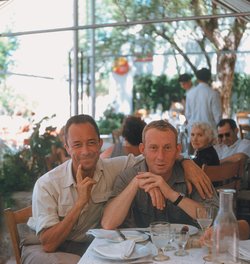
Camus & Algeria: The Moral Question

Messud_1_110713_jpg_250x993_q85

Claire Messud review Albert Camus's Algerian Chronicles, in the NYRB:

My father, like Camus, attended the Lycée Bugeaud, where Jacques Derrida was his classmate (“I always did better than him in philosophy,” my father said), and the Faculté, where he studied law. In 1952, he departed for the United States on a Fulbright Scholarship—the list of French recipients that year shows him to be the lone student from Algeria—and thereafter he would always live in exile, in France, Australia, or North America. But surely he left home without appreciating that it would prove impossible to return.

My grandfather, just eight years older than Camus, hailed from still more modest origins in Blida, southwest of Algiers. His mother, an elementary school teacher and the daughter of an illiterate garçon de café, raised four children alone. The youngest, my grandfather, was, like Camus, a beneficiary of the meritocratic French education system of the period, and made his way from remote poverty to the prestigious École Polytechnique in Paris, after which he entered the navy as a career officer. A devout Catholic and passionate French patriot, he also adored his native Algeria: letters between my grandparents wax as lyrical about their beloved landscapes as they do about each other.

Nobody in my family ever spoke about the Algerian War. They told many stories about the 1930s and 1940s, when my father and aunt were children; but of what happened later, they were silent. In 1955, my grandfather took a position in Rabat, Morocco, and my grandparents did not live in Algeria again. In the late 1950s, when the war in Algeria was at its most fevered and vicious, my father was doing graduate work on Turkey at the Center for Middle Eastern Studies at Harvard: after his death, among his papers from that period, I found files of clippings on political upheavals in Egypt, Lebanon, Syria, Pakistan, India, Morocco, Libya, in addition to Turkey—but not one word about his homeland. My father’s lonely tears twenty-five years ago were, as far as I know, his only expression of emotion about what happened.

More here.

How Has Twitter Changed the Role of the Literary Critic?

Bookends-Anna-Holmes-articleInline

Adam Kirsch and Anna Holmes on social media’s effect on criticism, in the NYT's Bookends:

[Adam Kirsch] At first glance, it seems that critics, in particular, should relish a tool like Twitter. Criticism is a kind of argument, and Twitter is excellent for arguing back and forth in public. Criticism is also a kind of reportage, and Twitter is an ideal way of breaking news. With many major events, from presidential debates to the Oscars, it is more informative and entertaining to follow them in real time on Twitter than it is to actually watch them. For all these reasons, journalists have been especially avid users of Twitter.

Critics, however, have been surprisingly reluctant to embrace the tweet. Many of the most prominent are not on Twitter at all. Those who are tend to use their feeds for updates on their daily lives, or to share links, or at most to recommend articles or books — that is, they use Twitter in the way everyone else does. What is hard to find on Twitter is any real practice of criticism, anything that resembles the sort of discourse that takes place in an essay or a review.

This absence, like the dog that didn’t bark in Sherlock Holmes, may be an important clue to the true nature of criticism. Never in history has it been easier than it is today to register one’s approval or disapproval of anything. The emblem of our age is the thumbs-up of the “like” button. If criticism is nothing more than a drawn-out version of a thumbs-up or a thumbs-down, there’s no reason it shouldn’t be made obsolete by the retweet or the five-star Amazon review. Cut to the chase, the Internet demands, of critics and everyone else: Should we buy this thing or not?

More here.

The lady who conquered Napoleon

Virginia Rounding in The Telegraph:

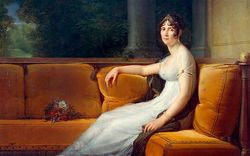
Empress-J_2712940bIn this new biography of the Empress Josephine, first wife of Napoleon Bonaparte, Kate Williams (whose previous biographical subjects have included Emma Hamilton and the young Queen Victoria) embarks on a whirlwind tour of French history. She covers the conditions of slaves in Martinique, the turmoil of the Revolution and subsequent Terror, and the rise, apotheosis and downfall of Napoleon, in just over 300 pages. If the breathless pace of the writing does not entirely lend itself to in-depth analysis, it does suit the heroine of the tale. For Josephine, like Napoleon, leaves one somewhat breathless. As Williams summarises her existence, she was “a mistress, a courtesan, a Revolutionary heroine, a collector, a patron and an Empress… in the words of one of her friends, 'an actor, who could play all roles’.” For all the tempestuousness of the relationship between Napoleon and Josephine, they were a supremely well-matched couple – not only physically (it was sexual love that really bound them together) but also in their daring, their self-invention, their attainment of dazzling success out of humble beginnings. Williams has made extensive use of the voluminous correspondence of both of these larger-than-life characters, from which it is clear that part of their mutual fascination was indeed this similarity of character.

Born Marie Josèphe Rose (it was Napoleon who later chose to call her Josephine) in 1763, into the sugar-plantation-owning Tascher de la Pagerie family, Josephine was no natural beauty nor endowed with any obvious talents. Her education was desultory, and she appeared destined to stay on Martinique and marry another plantation-owner. But Josephine had other ideas, and opportunity presented itself in the shape of a young man three years her senior, Alexandre de Beauharnais, the son of her aunt’s lover.

More here.

Maybe Heaven Can Wait, but a Customer Can’t

Phyllis Korkki in The New York Times:

Wait“Patience is a virtue,” we are taught. And when you think about it, much of our life is spent waiting for something rather than experiencing it, so that waiting becomes an experience in itself, filled with anticipation, annoyance, boredom or fear. Waiting is a ripe subject for business researchers, it turns out. One effect of waiting is that people place more value on what they are waiting for, says Ayelet Fishbach, a professor of behavioral science and marketing at the University of Chicago. “If you give people exactly what they want at the moment they want it, they might want it less,” she says.

…In E.R.’s, people are seen based on the severity of their medical condition. If you are otherwise going to die in the next half-hour, you get to jump to the front of the line. But fellow patients may not realize this, and seeing someone who only just arrived go first can upset people’s sense of fairness. Some may leave the waiting room because they feel cheated, Professor Terwiesch says. Typically, hospitals don’t tell patients how long they may have to wait, and patients waiting in the E.R. have no idea when they will be called: “Every time the door opens, your adrenaline goes up.” He found that people in E.R.’s are constantly seeking visual clues as to who might be treated next. But these clues can mislead. At peak hours, an E.R. at full capacity may be able to handle 10 people quickly, yet it may not initially look that way to the 10th person in the waiting room. Professor Terwiesch recommends that hospitals create multiple waiting rooms so that patients don’t try to monitor one another this way.

More here.

Raoul Wallenberg: heroism and the long silence

Wallenberg4Cynthia Haven at The Book Haven:

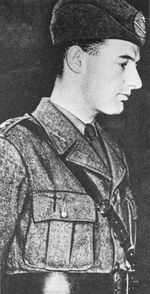
Jangfeldt’s research revealed a startling fact: Wallenberg had at least 15 kilograms of gold and jewelry in his car when the Red Army arrested him in 1945. Again, why? Jangfeldt suggests that this was the amassed fortune of many of the Jewish victims Wallenberg had helped, who had left their valuables with him for safekeeping. He wished to return them at the war’s end to help them rebuild their lives. It seems like a reckless risk, but perhaps he had gotten away with so much, so often, that he had begun to feel invulnerable. In any case, the decision may have been the fatal one.

In April 1945, Averell Harriman, acting on behalf of the U.S. State Department, offered the Swedish government American help in making inquiries about Wallenberg’s fate. His offer was declined. Jangfeldt called this “a symbol of Swedish passivity.” The Swedes persuaded themselves that Wallenberg had been killed in Hungary – “the assumption that he had been killed in Budapest was very cynical,” Jangfeldt said. We now know he was taken to the Soviet Union’s notorious prisons, Lefortovo and later the Lubyanka.

The Soviet foreign service reassured the Swedes that they had conducted an investigation, and that they knew of no one named Wallenberg in the Soviet prison system.

more here.

the US-Mexican border: where the American past chokes on itself

Grandin_historyssinkhole_img_0Greg Grandin at The Nation:

Exhausted migrants crawl into caves and die, their remains never recovered or their bones, picked clean by carrion birds and other animals, disappearing into the sand. A Texas rancher recently told a reporter that only one out of every four bodies is found, which would put the death toll at well over 20,000. Patrick Ball, a statistician who works with human rights groups to count the victims of mass atrocities—93,000 in Syria, 69,000 in Peru, 18,000 in Timor-Leste—says that in order to arrive at an accurate ratio of total dead migrants to known remains, one would need “several independent enumerations of people you can identify as having died in the way you’re studying.” Each list would have to survey roughly the same area of the desert and include the name of the victim and the approximate location and date of death.

But migrants often don’t travel with identification, and the reliable data that do exist are spread out over California, Arizona, New Mexico and Texas, fragmented among morgues, hospitals, police departments and the Border Patrol. Some of those who perish during the trek don’t do so until they are well into the United States or have staggered back into Mexico.

more here.

The assassination of J.F.K., fifty years later

131104_r24201_p465Adam Gopnik at The New Yorker:

The nation really did get turned inside out when Kennedy was killed, as nations do at the death of kings. But what altered? In many ways, it was a time more past than present. Though it’s said that the event marked the decisive move from page to screen, newspaper to television, all the crucial information was channelled through the wire-service reporters, who, riding six cars back from the President’s, were the first to get and send the news of the shots, and were still thought of as the authoritative source. Walter Cronkite’s two most famous moments—breaking into “As the World Turns” to announce, “In Dallas, Texas, three shots were fired”; and his later, holding-back-tears “From Dallas, Texas, the flash, apparently official: President Kennedy died at 1 p.m. Central Standard Time”—were in both cases simply read from the wire-service copy. You can see the assistants ripping the copy from the teleprinter and rushing it to the anchorman.

Yet an imbalance between the flood of information and the uncertainty of our understanding—the sense that we know so much and grasp so little, and that reality becomes an image passing—does seem to have begun then: the postmodern suspicion that the more we see, the less we know. A compulsive “hyperperspicacity,” in the term of one assassination researcher—the tendency to look harder for pattern than the thing looked at will ever provide—became the motif of the time.

more here.

Monday, October 28, 2013

perceptions

Rashid-Rana_Red-Carpet-1-fu

Rashid Rana. Red Carpet 1, 2007.

Edition 1/5; C-print + DIASEC. H. 95 x W. 135 in. (241.3 x 317.5 cm). Collection of Pallak Seth. Image courtesy of Gallery Chemould and Chattertjee & Lal Mumbai.

Red Carpet 1 when looked at from a distance is a beautiful deep red carpet. Upon closer inspection, it is revealed that the carpet is made up of images taken in a slaughterhouse. The work reflects the duel existence of Pakistan as a purveyor of beauty and violence.

More here and here.

Sunday, October 27, 2013