Fatima Bhutto on Malala Yousafzai’s fearless and still-controversial memoir

Fatima Bhutto in The Guardian:

MalalaThough feted around the globe for her eloquence, intelligence and bravery, Malala is much maligned in Pakistan. The haters and conspiracy theorists would do well to read this book. Malala is certainly an ardent critic of the Taliban, but she also speaks passionately against America's drone warfare, the CIA's policy of funding jihadi movements, the violence and abductions carried out by the Pakistani military, feudalism, the barbarous Hudood laws, and even Raymond Davis, the CIA contractor who caused a diplomatic meltdown between America and Pakistan when he killed two Pakistanis in broad daylight in Lahore – “Even we schoolchildren know that ordinary diplomats don't drive around in unmarked cars carrying Glock pistols.” I Am Malala is as much Malala's father's story as it is his daughter's, and is a touching tribute to his quest to be educated and to build a model school. Malala writes of her father sitting late into the night, cooking and bagging popcorn to sell so that he would have extra income for his project. She quotes him on all matters – from the ban on The Satanic Verses to the environmental problems facing the Swat Valley – and teases him for his long-winded speeches.

Yet, even as Malala says she does not hate the man who shot her, here in Pakistan anger towards this ambitious young campaigner is as strong as ever. Amid the bile, there is a genuine concern that this extraordinary girl's courageous and articulate message will be colonised by one power or other for its own insidious agendas. She is young and the forces around her are strong and often sinister when it comes to their designs on the global south. There is a reason we know Malala's story but not that of Noor Aziz, eight years old when killed by a drone strike in Pakistan; Zayda Ali Mohammed Nasser, dead at seven from a drone strike in Yemen; or Abeer Qassim Hamza al Janabi, the 14-year-old girl raped and set on fire by US troops in Mahmudiyah, Iraq. “I wasn't thinking these people were humans,” one of the soldiers involved, Steven Green, said of his Iraqi victims. It will always be more convenient for the west to paint itself as more righteous, more civilised, than the people they occupy and kill. But now, Malala's fight should be ours too – more inclusion of women, remembrance of the many voiceless and unsung Malalas, and education for all.

More here.
Brain Gain

Walter Isaacson in The New York Times:

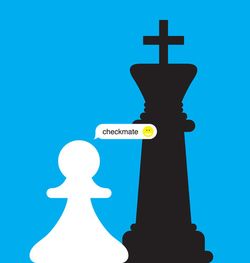
ChessWhen the world chess champion Garry Kasparov was beaten in 1997 by Deep Blue, an I.B.M. supercomputer, it was considered to be a major milestone in the march toward artificial intelligence. It probably shouldn’t have been. As complex as chess is, it’s easy to see that its rules can be translated into algorithms so that computers, when they eventually got enough processing power, could crunch through billions of possible moves and past games. Deep Blue’s calculations were a fundamentally different process, most people would say, from the “real” thinking and intuition a human player would use. Clive Thompson, a Brooklyn-based technology journalist, uses this tale to open “Smarter Than You Think,” his judicious and insightful book on human and machine intelligence. But he takes it to a more interesting level. The year after his defeat by Deep Blue, Kasparov set out to see what would happen if he paired a machine and a human chess player in a collaboration. Like a centaur, the hybrid would have the strength of each of its components: the processing power of a large logic circuit and the intuition of a human brain’s wetware. The result: human-machine teams, even when they didn’t include the best grandmasters or most powerful computers, consistently beat teams composed solely of human grandmasters or superfast machines.

Thompson’s point is that “artificial intelligence” — defined as machines that can think on their own just like or better than humans — is not yet (and may never be) as powerful as “intelligence amplification,” the symbiotic smarts that occur when human cognition is augmented by a close interaction with computers. When he played in collaboration with a computer, Kasparov said, it freed him to focus on the “creative texture” of the game. In the future, Thompson writes, we should not fear being beaten in chess by Deep Blue or in “Jeopardy!” by Watson. Instead, humans will find themselves working in partnership with the progeny of these supercomputers to diagnose diseases, solve crimes, write poetry and become (as the clever double meaning of the book’s title puts it) smarter than we think.

More here.

Saturday Poem

Realization

I am a different man
One who died
and was reborn
A boy man
Haunted by childhood
A survivor
A wiry man
Full of rage
One with little choice
Wrestling demons
Welded to irony
A kid minus a father
A guy without dreams
A hermit
A hobbit
A hungry man
Cornered, imprisoned, beaten
A fearful man
A lost soul
Plagued by personalities
A living blank
Humiliated but stubborn
A disregarded man
A walker, a dancer, a runner
An impatient man
A merciless victim
A religious man
A singer of the heart
An indignant man labeled man
Buried alive
A Neanderthal
An android
A metaphorical man
A disabled man
A violent man
A dictator at war with wisdom
A man condemned to victory
.

by Robert Boates
from The Afterlife
Toronto, Seraphim Editions. 1998.

the therapeutic approach to art

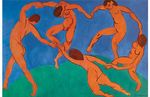
Mm-ve-matisse04Alain de Botton at The Wall Street Journal:

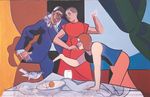
When Henri Matisse shows us an ideal image of women linking hands in solidarity and joy in “The Dance,” he doesn't wish to deny the troubles of the planet. He wants to encourage our optimism, knowing that it is hard to nurture and maintain.

A beautiful, though partial, vision can be all the more precious to us because we are so aware of how rarely life goes as we would like it to. We should be able to enjoy Matisse's dancers without fear that we are thereby complicit in a dangerous delusion. If the world were a kinder place, perhaps we would be less impressed by, and in need of, pretty works of art.

One of the strangest features of experiencing art is its power, occasionally, to move us to tears, not when we are presented with a harrowing or terrifying image, but when we see a work of particular grace and loveliness. Matisse's dancers might do this to us.

more here.

the kennedy assassination and the paranoid style

La-la-ca-1018-jfk-new-books-075-jpg-20131023David L. Ulin at The Los Angeles Times:

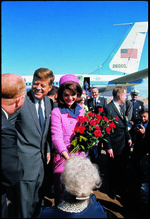
The assassination was never, for me, about history as much as it was about a way to see the world. It was impossible to imagine a lone gunman not because the evidence didn't match up (magic bullet theory, anyone?) but because I needed a bigger explanation for the killing to make sense.

As it turns out, I was not alone; even before the Warren report was released in September 1964, critics had started lining up. They claimed the commission had moved too fast and drew conclusions without sufficient cause.

In his 1965 book “The Unanswered Questions AboutPresident Kennedy's Assassination,” New York World-Telegram & Sun city editor Sylvan Fox lays out the case for conspiracy. For one thing, he writes, “[t]here is considerable doubt about the number of shots fired and the direction of at least one of the shots”; for another, “[Jack] Ruby managed to enter tightly guarded Dallas Police Headquarters building unseen and to shoot [Lee Harvey] Oswald in the presence of more than 70 policemen.”

more here.

Hope and peril on Mexico’s border

F2382de0-8faa-4ee2-8b9c-fe40ea5589eeJohn Paul Rathbone at the Financial Times:

Borders are evocative and often dangerous places, and few more so than the US-Mexico border. At almost 2,000 miles, it is not the longest in the world – that record goes to its northern sister, the US-Canada international boundary. But it is among the busiest – $500bn of goods and more than 60m vehicles cross every year – and certainly one of the most heavily policed.

Most of the US border patrol’s 21,000 agents are deployed there; 10 predator drones watch from the skies while infrared cameras and ground sensors monitor movement on land. The border itself, a third of it fenced, has in places become a near-impregnable fortress that is supposed to stop drugs, violence and migrants heading north, and US arms and narco-dollars heading south. No wonder that President Barack Obama has described the US-Mexico relationship as “like no other in the world”.

Of course, how you feel about the border depends in large part on which side you stand.

more here.

Friday, November 1, 2013

Why Kate Millet Still Matters

Kate-millettKatie Ryder at Bookforum:

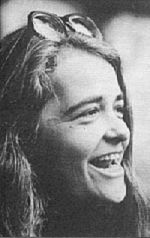
“So deeply embedded is patriarchy,” Millett wrote, “that the character structure it creates in both sexes is perhaps even more a habit of mind and a way of life than a political system.” Thus she saw the First Wave’s failure to sufficiently challenge social-sexual identity as a main cause of its dissipation. With sexual “temperament” and “role” still in tact, “more insidious ‘soft line’” approaches—the “glorification of ‘femininity’” alongside chivalry, “the family, female submission, and above all, motherhood”—worked to reaffirm the woman’s place. As the rule of religion was waning, the “soft line” found robust support in literary culture and the claims of the new social sciences: psychology, anthropology, and sociology. Even when women were not explicitly deemed inferior, they were still declared “different”: no less damning a sentence of circumscription.

Millett wrote during the rising Second Wave, a time in which feminists and their allies—driven in part by the Civil Rights and anti-war movements, and spurred by the sexism of the New Left—built upon the legal successes of the First Wave, and, critically, sought to dismantle accepted psycho-sexual identities. To this end, Sexual Politics dissected the beliefs, the cultural language, that supported sexual hierarchy.

more here.

The Untold Story of Che in Bolivia

Sweeney_11_13John Sweeney at Literary Review:

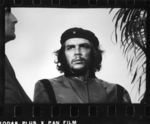
The tribulations of Che Guevara, the T-shirt Christ, still continue to fascinate, almost half a century after he was executed in the Bolivian jungle; so, too, continues the hunt for the Judas who betrayed him. A prime suspect has long been the artist Ciro Bustos, who, caught by the CIA-backed Bolivian crack squad sent to track down the Argentinian revolutionary, was accused of providing sketches of his old comrades. A few weeks later, Che was captured and gunned down in cold blood. After a silence over four decades long, Bustos has produced his defence. It makes for a fascinating read, a beautifully written and melancholy tribute to the energy and madness that drove Che to help Castro to overthrow Batista in Cuba and led to his death in Bolivia.

Bustos does something else, too: he writes with real passion about what it was to be a child of the revolution in South America – the excitement, the glamour, the allure of trying to bring down capitalism – in that time as red in tooth and claw as can be.

more here.

Economics as a Moral Science

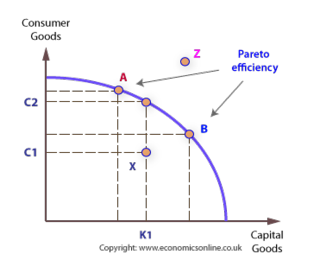
Pareto

Ingrid Robeyns in Crooked Timber:

For a while I have been working on a paper on democracy, expert knowledge, and economics as a moral science. [The financial crisis plays a role in the motivation of the paper, but the arguments I’m advancing turn out to be only contingently related to the crisis]. One thing I argue is that, given its direct and indirect influence on policy making and for reasons of democratic accountability, economics should become much more aware of the values it (implicitly or explicitly) endorses. Those values are embedded in some of the basis concepts used but also in some of the assumptions in the theory-building.

The textbook example in the philosophy of economics literature to illustrate the insufficiently acknowledged value-ladenness of economics is the notion of Pareto efficiency, also known as ‘the Pareto criterion’. Yet time and time again (for me most recently two days ago at a seminar in Oxford) I encounter economists (scholars or students) who fail to see why endorsing Pareto efficiency is not value-neutral, or why there are good reasons why one would not endorse the Pareto-criterion. Here’s an example in print of a very influential economist: Gregory Mankiw.

In his infamous paperDefending the One Percent’ Mankiw writes (p. 22):

“Discussion of inequality necessarily involves our social and political values, but if inequality also entails inefficiency, those normative judgements are more easily agreed upon. The Pareto-criterion is the clearest case: if we can make some people better off without making anyone worse off, who could possibly object?”

Yet the Pareto-criterion is not as uncontroversial as Mankiw believes. The Pareto-criterion compares two social states, A and B, and makes a claim about whether the act/policy/social change that brings us from A to B is desirable or not. If in B all individuals have at least the same welfare/utility/wellbeing than in A, and at least one of them has a higher level, then moving from A to B is a Pareto-improvement, and the Pareto-criterion recommends the move from A to B on grounds of efficiency.

More here.

China U.

Sahlins_chinau_img_0

Marshall Sahlins in The Nation:

We were sitting in his office, Ted Foss and I, on the third floor of Judd Hall at the University of Chicago. Foss is the associate director of the Center for East Asian Studies, a classic area studies program that gathers under its roof specialists in various disciplines who work on China, Korea and Japan. Above us, on the fourth floor, were the offices and seminar room of the university’s Confucius Institute, which opened its doors in 2010. A Confucius Institute is an academic unit that provides accredited instruction in Chinese language and culture and sponsors a variety of extracurricular activities, including art exhibitions, lectures, conferences, film screenings and celebrations of Chinese festivals; at Chicago and a number of other schools, it also funds the research projects of local faculty members on Chinese subjects. I asked Foss if Chicago’s CI had ever organized lectures or conferences on issues controversial in China, such as Tibetan independence or the political status of Taiwan. Gesturing to a far wall, he said, “I can put up a picture of the Dalai Lama in this office. But on the fourth floor, we wouldn’t do that.”

The reason is that the Confucius Institutes at the University of Chicago and elsewhere are subsidized and supervised by the government of the People’s Republic of China. The CI program was launched by the PRC in 2004, and there are now some 400 institutes worldwide as well as an outreach program consisting of nearly 600 “Confucius classrooms” in secondary and elementary schools. In some respects, such a government-funded educational and cultural initiative is nothing new. For more than sixty years, Germany has relied on the Goethe-Institut to foster the teaching of German around the globe. But whereas the Goethe-Institut, like the British Council and the Alliance Française, is a stand-alone institution situated outside university precincts, a Confucius Institute exists as a virtually autonomous unit within the regular curriculum of the host school—for example, providing accredited courses in Chinese language in the Department of East Asian Languages and Civilizations at the University of Chicago.

There’s another big difference: CIs are managed by a foreign government, and accordingly are responsive to its politics.

More here.

Patterns in cancer’s chaos illuminate tumor evolution

Stephanie Dutchen in Harvard News:

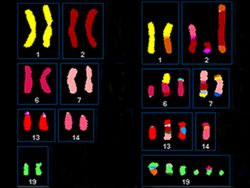
ChromoFor decades since the “oncogene revolution,” cancer research has focused on mutations—changes in the DNA code that abnormally activate genes that promote cancer, called oncogenes, or deactivate genes that suppress cancer. The role of aneuploidy—in which entire chromosomes or chromosome arms are added or deleted—has remained largely unstudied. Elledge and his team, including research fellow and first author Teresa Davoli, suspected that aneuploidy has a significant role to play in cancer because missing or extra chromosomes likely affect genes involved in tumor-related processes such as cell division and DNA repair.

To test their hypothesis, the researchers developed a computer program called TUSON (Tumor Suppressor and Oncogene) Explorer together with Wei Xu and Peter Park at HMS and Brigham and Women's. The program analyzed genome sequence data from more than 8,200 pairs of cancerous and normal tissue samples in three preexisting databases. They generated a list of suspected oncogenes and tumor suppressor genes based on their mutation patterns—and found many more potential cancer drivers than anticipated. Then they ranked the suspects by how powerful an effect their deletion or duplication was likely to have on cancer development. Next, the team looked at where the suspects normally appear in chromosomes. They discovered that the number of tumor suppressor genes or oncogenes in a chromosome correlated with how often the whole chromosome or part of the chromosome was deleted or duplicated in cancers. Where there were concentrations of tumor suppressor genes alongside fewer oncogenes and fewer genes essential to survival, there was more chromosome deletion. Conversely, concentrations of oncogenes and fewer tumor suppressors coincided with more chromosome duplication. When the team factored in gene potency, the correlations got even stronger. A cluster of highly potent tumor suppressors was more likely to mean chromosome deletion than a cluster of weak suppressors.

More here. (Note: Thanks to Ga)

W.H. Auden and Ecopoetics

Archambeau-Auden-web

Robert Archambeau in Boston Review:

W.H. Auden is a Greek poet, at least when it comes to nature. No, I don’t mean that he is all about olive trees and white sand beaches: I mean there is something fundamentally classical in his attitude toward the natural world, something that puts him at odds with the two dominant modes of nature poetry of our time—something that, indeed, casts light on the outlines of those norms.

The two most common attitudes toward non-human nature in contemporary poetry are the Romantic (or sentimental—if we can use that word without condescension) and the ecopoetic. The first of these dates back more than two centuries, and receives its most powerful theoretical articulation in Friedrich Schiller’s great essay of 1795, “On Simple and Sentimental Poetry.” Here, Schiller begins by describing the longing for the realm of nature among self-conscious and sophisticated people:

There are moments in our life, when we dedicate a kind of love and touching respect to nature in its plants, minerals, animals, landscapes . . . not because it is pleasing to our senses, not even because it satisfies our understanding or taste . . . but rather merelybecause it is nature. Every fine man, who does not altogether lack feeling, experiences this, when he walks in the open, when he lives upon the land . . . in short, when he is surprised in artificial relations and situations with the sight of simple nature.

The important thing here is how an encounter with the natural world catches us off-guard, and makes us feel the artificiality of our selves and our ways of going about things. We see how our will and our nature are out of sync, how our social relations and ambitions cause us to do things at odds with our inner nature. When we see the simplicity of a stone simply being a stone, or of water flowing downwards to the sea in accordance with its nature, it has a strong effect on us. We are drawn toward it.

More here.

Singularity or Bust

Ben Goertzel in KurzweilAI:

In 2009, filmmaker and former AI programmer Raj Dye spent his summer following futurist AI researchers Ben Goertzel and Hugo de Garis around Hong Kong and Xiamen, documenting their doings and gathering their perspectives. The result, after some work by crack film editor Alex MacKenzie, was the 45 minute documentary Singularity or Bust — a uniquely edgy, experimental Singularitarian road movie, featuring perhaps the most philosophical three-foot-tall humanoid robot ever, a glance at the fast-growing Chinese research scene in the late aughts, and even a bit of a real-life love story. The film was screened in theaters around the world, and won the Best Documentary award at the 2013 LA Cinema Festival of Hollywood and the LA Lift Off Festival. And now it is online, free of charge, for your delectation.

More here.

Friday Poem

Nine Steps To The Shed

Most every morning
it’s out the back door to step,
mug in one hand, curiosity in the other,
down to the first of nine
off-round uneven Caithness slabs
roughly the size and shape of mammoth’s footprints
that stomp across uneven, soggy grass
dividing house from shed,

And it’s true I feel myself following in the bulk
of something vast, patient, fissured —
the deep past, say, or the world yet undeclared —
on this short transition from one dwelling to another.

What’s down there today? A fresh splatter
from passing gull, faint stains of last week’s nosebleed,
the snail lurched sideways in its crunched house,
and something between an image and a phrase that earlier
fell on my bowed head in the shower:
plenty to be going on with!

These stones are split
from the bed of Lake Orcady
that swelled and shrank over these plains,
fresh water, salt, dried up, fresh again, salt,
this happened many times and the stony shades
of shell-fish and minnows now lurk among
the delicate flout of fronds and weeds, squashed
with utter delicacy and irresistible power
by the swaying weight of stars passing overhead
(tiny crunch of that snail in the dark last night),
as the few memories from the vanished
lake of a life are left distorted, flattened,
set in stone as we pause on the way
to the place of reckoning —

So small a place to contain
the vast gone pachyderm, the fossils and the lake,
the trail of stones that led you here
to pause with one hand on the door.
Take a last look at the world you are in,
small fry with time pressing on your neck
even as you bent under the shower’s benediction;
look back at the stepping stones, this staggering line
between one dwelling and the next,
then step into the gloom, the different light.

by Andrew Greig
publisher: First published on PIW, 2008

Thursday, October 31, 2013

turning to ganesh

Prose-1Francine Prose at the Virginia Quarterly Review:

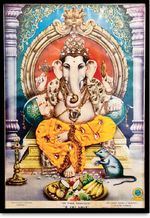
It’s been almost forty years since I bought an image of Sri Ganesh, the elephant-​headed Hindu god, from a street vendor in the Chor Bazaar—​the Thieves’ Market—​in Mumbai, which at that time was still Bombay. I’ve had the picture, surrounded by a simple black frame and protected by a durable pane of glass, on my writing desk ever since.

When I say desk, I mean desks. I carried the Ganesh with me through the moves and dislocations of my peripatetic late twenties. And later, when I traveled with my husband and two sons to take a succession of visiting-​writer jobs at various colleges and universities, Ganesh’s portrait was among the first things I packed to bring along, the first things I unpacked when I came home. One way to know what you value is to see what you can’t stand to leave behind.

Of course, there’s no “scientific” evidence to prove that I would stop writing completely and forever if I tried to work without the calming, steady gaze of the half-​human, half-​elephant deity presiding over my efforts. But I’m by nature a believer in many garden-​variety superstitions (no open umbrellas indoors, please!) as well as some that are purely of my own invention. I’ve always had a sense about the Ganesh, a feeling that I’ve never been able to shake and never wanted to put to the test.

more here.

letter from cairo

1383221373837Wiam El-Tamami at Granta:

Cairo moved on, as it does, settling into July. I went to stay with my sister. Between my travels and her own and various distances of other kinds, we hadn’t spent much time together in years. As hard as it was to be, it was better to be there, staying up all night, drifting around each other in the rooms; to not have to speak or say or come out of ourselves, to know there is no explanation for now. To just be there, quiet and with her, the wanass of her – a wisp of a word meaning something like this, the consolation of company.

I can’t tell you much about that haze of days, where each one went before sliding thickly into the next. Hours were spent staring into computer screens, eyes like bowls. I suppose we slept, but sleep was something cobbled together from stray hours, after dawn or afternoon, and it didn’t much resemble rest. Things seeped into our dreams.

My sister continued to work; hers was a direct battle against the ugliness. I moved untethered around the house, not knowing what to do with myself, trying to write, to wrangle out some words at a time when I wished above all for silence.

more here.

a new exhibit on post-war american art

Bell_figure_group_with_bird_1991_625Jed Perl at The New Republic:

A truly expansive account of postwar American art forces us to see everything in a new light. What has been described as a return to reality in the work of some artists in this show was in fact a continuation of concerns that preoccupied key figures among the Abstract Expressionists, including Hans Hofmann and Willem de Kooning; at the end of his life Hofmann spoke of once again painting from nature, and de Kooning upset many admirers of his abstract paintings of the late 1940s by switching to figure painting for a time in the early 1950s. A great show about this period would be extraordinarily moving, revealing a heterodox New York School that is hardly even whispered about, except in writings on websites like Painters’ Table, The Silo, and artcritical. The School of New York always delighted in reimagining reality after the experience of abstraction—and vice versa. The clearest expressions of this emboldened double vision included in “See It Loud” are Leland Bell’s daringly simplified, ecstatically colored canvases of two figures in a bedroom, which would be unimaginable without the geometries of Mondrian and Arp, abstract artists revered by many in New York in the 1940s and 1950s. (By the way, I suspect that the later—and greater—of the two Bell bedroom scenes in the show is misdated by as much as a decade. So much for scholarship.)

more here.

the relation between writing and translating

P22_Costa_380627hMargaret Jull Costa at the Times Literary Supplement:

The Cahiers Series is a collection of beautifully produced booklets (twenty-two have been published so far), around forty pages in length, all illustrated with images, which are sometimes apposite, sometimes not, but always interesting. The declared goal of the series is “to make available new explorations in writing, in translating, and in the areas linking these two activities”. Some editions have a fairly tenuous connection to translation: in Shades of the Other Shore, two Americans, a poet and an artist respectively, are “translated” from the United States to rural France, with Jeffrey Greene’s short prose pieces and poems exploring “imagined correspondences between personal and historical ghosts tied to the seasons”, and Ralph Petty’s watercolours recording a journey to the source of a local river; in Józef Czapski: A life in translation, the novelist and translator Keith Botsford writes an imaginary autobiography of the Polish author and critic; inIn the Thick of Things, the French architect Vincen Cornu attempts “to ‘translate’ architectural sensation into words and images”. Then there are the cahiers written by translators or by poets who also translate, as well as translations of stories or plays followed by a brief translator’s note.

more here.

In Delville Wood

Asch01a3521_01Neal Acherson at the London Review of Books:

All cults, in the Bronze Age or today, change emphasis and practice over time. In the later monuments, the early language of ‘supreme sacrifice’ or ‘they died that we might live’ falls away. The delayed wave of war memoirs, poetry and fiction which appeared after about 1928 (Remarque, Sassoon, Edmund Blunden among many others) may have sobered the memorial designers. God also retreats several paces from the iconography, although the graves of the unidentified dead are still marked ‘Known to God’ and the families still write: ‘May God protect you: One of the Best.’

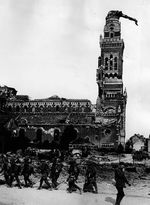
Change has also come to the huge South African shrine at Delville Wood, much of it completed in the apartheid years. There is a new flag, new tablets remembering the Africans who died in Pretoria’s service. More than three thousand white soldiers went into this wood in 1916, and a few days later just over six hundred were still alive and on their feet. The wood, smashed to black spikes, was replanted but its floor is still a crazy pattern of shell-holes.

A Jan Smuts quotation is set in bronze. ‘I do sincerely believe that we are struggling for the preservation, against terrible odds, of what is most precious in our civilisation.’ Few of the women bringing poppy crosses, or the young teachers trying to explain the Thiepval monument to their teenagers, would swallow that, or even understand it. All the same, opinion about the Great War hasn’t moved in a straight line.

more here.

A Conversation With: Jazz Pianist Vijay Iyer

31-jazz-player-IndiaInk-blog480

Visi Talik in India Ink:

Q. When did you get into jazz?

A. I skipped grades to graduate high school at 16. At this time I started exploring jazz. I was listening to a lot of John Coltrane and others, and I was also listening to a lot of Indian classical music that I grew up with. I was composing my own music at this point, and getting ready for college as well.
Q. Where was college, and what happened there?
A. I got a B.S. in mathematics and physics from Yale College, and a masters in physics and an interdisciplinary Ph.D from the University of California in Berkeley. When I enrolled in the Ph.D program to study math and physics, I was already performing jazz piano. I was being presented in music festivals and invited to perform at prestigious clubs and concerts.

In 1995, I was coming out with my first solo album, I was a band leader putting together some great music, I decided to switch from a Ph.D in math and physics to one in the cognitive science of music from the University of California at Berkeley. I took the leap.

Q. In an essay, “New York Stories,” you wrote, “We don’t play “in a genre”; we play in the context of others, and we find ways to play with each other.” Can you describe how you have broken out of your “genre”?
A. It’s exactly that mentality. All the choices I make as an artist are inspired by the history of this music and this musical community that I’m a part of. And if you look at that history you see that it was always very smooth in terms of stylistic attributes and what was common was this collaborative orientation and a community orientation. It was something that contained a lot of experimentation and a lot of discipline, a lot of knowledge, and it sort of formed at the intersection of a lot of different extremes of knowledge.

People think of it as a genre but for the community of artists there’s really no such a thing. That’s sort of been my experience working with elders from that heritage and from that history. But it’s always been a space for collaboration and creation that is irrespective of marketplace notions of genre.

More here.