The Moral Responsibility of Volunteer Soldiers: Should they say no to fighting in an unjust war?

Jeff McMahan and others discuss at the Boston Review:

ScreenHunter_390 Nov. 07 18.50The military services in the United States have been organized on a volunteer basis since 1973, when President Richard Nixon abolished the draft. The end of conscription came as a relief to most people—to young men, their parents, and eventually the leaders of the military services, which had been plagued by internal dissent and a lack of professionalism, partly as a result of having so many unwilling members.

Though isolated voices have always challenged the shift to a volunteer military, their criticisms have recently become more widespread and more vocal. The main objections come from two quite different directions.

Some critics argue that the reliance on an all-volunteer, professional army has led to diminished public concern and vigilance with respect to the wars the government decides to fight. Limiting the burdens of military service to volunteers has, according to these critics, weakened inhibitions against the use of military force. When the Iraq War was debated in 2002–3, most citizens were not concerned that they or their children would be required to fight. This eliminated a powerful constraint against the resort to war. According to these critics, the reintroduction of some form of conscription is necessary to reestablish greater democratic control over the practice of war.

Other critics come from the ranks of just war theorists. Their concern is not with diminished public vigilance but with individual moral responsibility.

More here.

On Pedagogy and Intellectual Community

BISR-edited

Abby Kluchin and Ajay Singh Chaudhary in Social Text:

At present there is a broad and sustained assault upon forms of critical education and scholarship. As a result, wide swaths of the humanities, social sciences and even the theoretical sciences are in danger of becoming the rarefied pursuits of a tiny, economically privileged elite or vanishing altogether. This is not due to lack of interest or to the transformation or exhaustion of these disciplines. Students and faculty alike are encouraged to pursue “practical” or “applied” fields at the expense of a liberal arts education in the humanities and social sciences, or even some of the theoretical areas within the highly touted “STEM” fields. This shift accompanies the growing trend towards the internalization of diffuse corporate ideologies within universities, in the “re-engineering” of the labor force as well as the increasingly prevalent view of students as “consumers” in the market of higher education. 1

We understand this phenomenon within the context of broader economic trends. The transformation of many formerly stable sectors of economic life into modes of precarious labor is by no means confined to academia. But American higher education represents a fairly dramatic example of this trend. In 1975, nearly 60% of faculty at American colleges and universities had full-time, stable employment. 2 Today, approximately 76% of the academic workforce is made up of contingent, undercompensated, and part-time workers who lack job security. 3 This transformation is not only disastrous for the livelihood and well-being of this workforce, but also has significant repercussions for the state of the academy, as it drastically constrains possibilities for research and writing and adversely affects the quality of students’ education.

These phenomena are unfolding within a political and administrative climate that is antagonistic to critical education and research. The past decade provides copious examples. In 2011, Florida Governor Rick Scott threatened the elimination of all state funding for anthropology. At the national level, the Senate recently adopted new rules limiting National Science Foundation funding and support in political science to projects that demonstrably promote “the national security or the economic interests of the United States.” The American Political Science Association aptly summarized the new rules: “While political science research is most immediately affected, at risk is any and all research in any and all disciplines funded by the NSF. The amendment makes all scientific research vulnerable to the whims of political pressure.”

More here.

when Swedenborg came to Swansea

P13_WalfordDavies_S_382425hDamian Walford Davies at the Times Literary Supplement:

Emanuel Swedenborg (1688–1772) – neuroscientist avant la lettre, philosopher, mystic and interlocutor of spirits from whom William Blake dramatically swerved in The Marriage of Heaven and Hell(“And lo! Swedenborg is the Angel sitting at the tomb; his writings are the linen clothes folded up”) – never visited Swansea. At least, not while alive. His post-mortem movements, however, lead precisely to that unlikely place. They also lead, in the late 1950s, to a veiled elegy for that town’s most famous literary son – Dylan Thomas – by the writer unprepossessingly dubbed “Swansea’s other poet”: Vernon Watkins (1906–67). Watkins’s poetic necrology is a recension of the remarkable story of Swedenborg’s skull – a case of “cranioklepty” (a term coined by Colin Dickey in a recent study of cranial larceny or “skullduggery”) that stretches from 1790 to 1959, and beyond.

Dickey is the most recent writer to chronicle Swedenborg’s unquiet cranium. The skull had an eventful afterlife, accruing cultural capital in an age of phrenological obsession, cabinet curiosities and general disrespect for the disjecta ossa of men of presumed “genius”.

more here.

something about lou reed

ManfredMannClosuoNicholas Rombes at Berfrois:

1960

The writer Delmore Schwartz was Reed’s professor at Syracuse University, where Reed, who majored in English, graduated in 1964. In 2012, Reed published a tribute to Schwartz that read, in part:

You told us to break into ______’s estate where your wife was being held
prisoner. Your wrists broken by those who were your enemies. The pills
jumbling your fine mind. I met you in the bar where you had just ordered five
drinks. You said they were so slow that by the time you had the fifth you
should have ordered again. Our scotch classes. Vermouth. The jukebox you
hated — the lyrics so pathetic.

Schwartz’s poem from 1960, “All Night, All Night,” is an impossible, reverse wind-up chronicle of the desperate, aloof preoccupations of Reed’s lyrics and sound. In another universe, closely aligned with ours, this could be the song that the Velvet Underground almost recorded:

All Night, All Night

“I have been one acquainted with the night” – Robert Frost

Rode in the train all night, in the sick light. A bird
Flew parallel with a singular will. In daydream’s moods and
attitudes
The other passengers slumped, dozed, slept, read,
Waiting, and waiting for place to be displaced
On the exact track of safety or the rack of accident.

more here.

Tom Bissell on the best worst movie ever made

The-roomlargeHope Resse's interview with Tom Bissell at Paris Review:

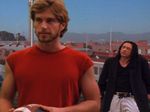
I’d just moved to Portland. I was sitting in an empty apartment on an air mattress waiting for my girlfriend and all my stuff to arrive in a U-Haul. I spent the day looking on the Internet for something to occupy myself. I stumbled across clips of The Room and watched them in various states of amazement. It’s unlike any movie I’ve ever seen. Through a stroke of coincidence I’ll never understand, it turned out that the movie was premiering in Portland that night at a theater five blocks from the apartment I’d rented. What’s really funny is that someone was recording an audience-reaction documentary there that night, so on YouTube there’s a clip of me being interviewed before I saw it for the first time. I felt so exhilarated by the movie, by its combination of complete incompetence and utter confidence. It swept me up, and my aesthetic life has never been the same since. I’m obsessed with it. I love it. Whether you want to call it outsider art or bananas art or disaster art, the movie has something that movies made with infinitesimally more precision and expertise will never have. It has a big beating heart.

more here.

How science is telling us all to revolt

Naomi Klein in New Statesman:

ClimateIn December 2012, a pink-haired complex systems researcher named Brad Werner made his way through the throng of 24,000 earth and space scientists at the Fall Meeting of the American Geophysical Union, held annually in San Francisco. This year’s conference had some big-name participants, from Ed Stone of Nasa’s Voyager project, explaining a new milestone on the path to interstellar space, to the film-maker James Cameron, discussing his adventures in deep-sea submersibles. But it was Werner’s own session that was attracting much of the buzz. It was titled “Is Earth F**ked?” (full title: “Is Earth F**ked? Dynamical Futility of Global Environmental Management and Possibilities for Sustainability via Direct Action Activism”). Standing at the front of the conference room, the geophysicist from the University of California, San Diego walked the crowd through the advanced computer model he was using to answer that question. He talked about system boundaries, perturbations, dissipation, attractors, bifurcations and a whole bunch of other stuff largely incomprehensible to those of us uninitiated in complex systems theory. But the bottom line was clear enough: global capitalism has made the depletion of resources so rapid, convenient and barrier-free that “earth-human systems” are becoming dangerously unstable in response. When pressed by a journalist for a clear answer on the “are we f**ked” question, Werner set the jargon aside and replied, “More or less.”

There was one dynamic in the model, however, that offered some hope. Werner termed it “resistance” – movements of “people or groups of people” who “adopt a certain set of dynamics that does not fit within the capitalist culture”. According to the abstract for his presentation, this includes “environmental direct action, resistance taken from outside the dominant culture, as in protests, blockades and sabotage by indigenous peoples, workers, anarchists and other activist groups”.

More here.

Humans of New York

Julie Bosman in The New York Times:

BabeHere’s how Brandon Stanton spends several hours each day: He walks up to total strangers in New York City, requests permission to take their pictures and then asks questions so personal they might make Oprah Winfrey blush. “What was the saddest moment of your life?” Mr. Stanton asked Jonathan Cummings, a 29-year-old from Queens who was loading crates of beer into a restaurant in the East Village on Tuesday. Mr. Cummings, who had just agreed to be photographed and seemed charmed by Mr. Stanton, didn’t hesitate before giving an answer. (It involved an arrest after a brawl in Las Vegas.) With a combination of disarming folksiness and passable — though admittedly inexpert — photography skills, Mr. Stanton has achieved one of the most unlikely success stories in a city filled with them. After posting pictures and quotations on his Facebook page, Tumblr blog and website, HumansOfNewYork.com, he has amassed more than one million fans in three years. Now, hundreds of those pictures and interviews have been compiled into a book, “Humans of New York,” which has become an instant publishing phenomenon. After its first week on sale last month, the book landed in the No. 1 spot on the New York Times hardcover nonfiction best-seller list, catapulting past Bill O’Reilly’s “Killing Jesus.” During an event at the Barnes & Noble in Union Square, Mr. Stanton attracted such a crowd that the store ran out of his books. Mr. Stanton — a hybrid of interviewer, photographer and eager chronicler of street life — said this week that he was still stunned by the runaway success of his book, which has more than 145,000 copies in print. “It seemed like a stupid idea, just taking pictures of people on the street,” he said. “But there’s a comfort, an affirmation, a validation in being exposed to people with similar problems.”

Mr. Stanton is a 29-year-old Georgia native with no training as a journalist. He has owned two cameras in his life and admits he has never learned the technically correct way to use them. When he moved to New York in 2010, he was friendless, nearly broke and recently relieved of his job as a bond trader in Chicago. In the three years since, he has transformed himself into a recognizable face (who is approached by fans several times a day) with a healthy income unusual for a young, inexperienced photographer.

Picture: “We ordered her those pants, and as soon as they arrived, she cut off the bottoms and made a pair of gloves.”

More here.

Thursday Poem

Porpoise
.

Every year, when we're fly fishing for tarpon
off Key West, Guy insists that porpoises
are good luck. But it's not so banal
as catching more fish or having a fashion
model fall out of the sky lightly on your head,
or at your feet depending on certain
preferences. It's what porpoises do to the ocean.
You see a school making love off Boca Grande,
the baby with his question mark staring
at us a few feet from the boat.
Porpoises dance for as long as they live.
You can do nothing for them.
They alter the universe.
.

by Jim Harrison
from The Shape of the Journey
Copper Canyon Press, 1998

Wednesday, November 6, 2013

Tens of billions of potentially habitable, Earth-size planets in our galaxy

From KurzweilAI:

Habitable-zoneOne in five stars in our galaxy like the Sun have planets about the size of Earth and a surface temperature conducive to life, astronomers at UC Berkeley and University of Hawaii, Manoa now estimate.

The estimate was based on a statistical analysis of all the Kepler observations of NASA’s Kepler space telescope of the 200 billion stars in our galaxy. Given that about 20 percent of stars are Sun-like, the researchers say, that amounts to several tens of billions of potentially habitable, Earth-size planets in the Milky Way Galaxy. “When you look up at the thousands of stars in the night sky, the nearest Sun-like star with an Earth-size planet in its habitable zone is probably only 12 light years away and can be seen with the naked eye. That is amazing,” said UC Berkeley graduate student Erik Petigura, who led the analysis of the Kepler data.

More here.

Penelope Fitzgerald: A Life

Bostridge_11_13Mark Bostridge at Literary Review:

Television coverage of the Booker Prize has rarely been distinguished or insightful. In fact, more often than not, it's been marked by embarrassing behaviour of some kind or other by a gauche, misinformed presenter or a tired and emotional agent or publisher. Nonetheless, the TV presentation of 1979's proceedings must rate as an all-time low. That year a heavyweight win for V S Naipaul'sA Bend in the River had been widely predicted, but in the event the prize was awarded to Penelope Fitzgerald for her third novel, Offshore.

The subsequent discussion on the Book Programme was, as Hermione Lee says in her life of Fitzgerald, 'breathtakingly condescending', as the interviewer, Robert Robinson, together with his assorted guests, competed to pour scorn on the winner as she sat in the studio alongside them, looking like she'd been hit hard over the head. Full of self-congratulatory candour, Susan Hill launched in at the start by admitting that although it was an appalling thing to say – and she stressed that she didn't want 'to discomfort' Fitzgerald – she wouldn't have chosen her book as the winner. Off air, as Fitzgerald later wrote to the novelist Francis King, Robinson was in a bad temper and complaining to his producer, 'who are these people, you promised me they were going to be the losers.'

By that time, in her early sixties, Penelope Fitzgerald was long accustomed to humiliation and, far worse, to catastrophe.

more here.

a new translation of Boccaccio

131111_r24228_p233Joan Acocella at The New Yorker:

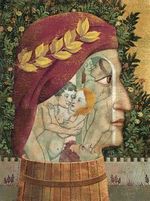
Boccaccio was not a noble; he was one of the nuova gente, the mercantile middle class, whose steady rise since the twelfth century the nobles feared and deplored. Boccaccio’s father, Boccaccino di Chellino, was a merchant, and he expected Giovanni to join the trade. Giovanni was born illegitimate, but Boccaccino acknowledged him. When the boy was thirteen, Boccaccino moved from Florence to Naples to work for an important counting house, and he took his son with him, to learn the business: receive clients, oversee inventory, and the like. Boccaccio did not enjoy this work, and so his indulgent father paid for him to go to university, to study canon law. Boccaccio didn’t like that, either, but during this time he read widely. (The Decameron is, unostentatiously, a very learned book.) He also began to write: romances in verse and prose, mostly. With those literary credits, plus his father’s contacts, he gained entry to Naples’s Angevin court, whose refinements seeped into his work. He later said that he had never wanted to be anything but a poet. In Naples, he became one, of the late-medieval stripe. These were the happiest years of his life.

more here.

a new law in the west bank

Guernica1China Miéville at Guernica:

“In the occupied West Bank, “Undesirable life is ended, and unauthorized death is banned.”

So we should ask Mohammed Al-Durra. He isn’t dead again.

Recall his face. Even from a government one of the chief exports of which is images of screaming children, his was particularly choice, tucked behind his desperate father, pinned by fire. Until Israeli bullets visit them and they both go limp. He for good. Pour encourager les autres.

Now, though, thirteen years after he was shot on camera—one year more than he lived—he has been brought back to life. But wait before you celebrate: there are no very clear protocols for this strange paper resurrection. Mohammed Al-Durra is a bureaucratic Lazarus. After a long official investigation, by the power vested in it, the Israeli government has declared him not dead. He did not die.

There was another boy at the hospital, there were no injuries, it was a trick. A blood libel to suggest he was killed by Israelis, the same day as were Nizar Aida and Khaled al-Bazyan, one day before Muhammad al-Abasi and Sara Hasan and Samer Tubanja and Sami al-Taramsi and Hussam Bakhit and Iyad al-Khashishi, two before Wael Qatawi and Aseel Asleh, three before Hussam al-Hamshari and Amr al-Rifai, but stop because listing killed children takes a long time. Keep his name out of that file.

more here.

Wednesday Poem

The Wedding Poem

This day
Let no one claim
That love is false. Let no one
Tell a tale of love's dilution,
Cross his lips with doubt,
Or discuss the up and down and up
Of love chained to a balance beam –
Laundry and who takes out the trash.

Instead, let us make a pact:
To stop for this short time
The radio in our heads, the voices
Of discontent that drive us mad –
The committee of shoulds and oughts
And might have beens. The old harangue
Of never never never.
To forsake, for these next minutes
(Not for this couple but for ourselves),
All the symptoms of our days.

Then, together, let us swear,
That this sun, this sky, these vows,
This bubble balanced on the point
of a knife is all there is –
For we have pushed aside the walls
That close us in
To come to this shared space. And see –
We have filled the space with flowers,
Where love, like some bright bird
Too swift to hold,
May light for us a while and sing.

by Alice Friman
from Proposing on the Brooklyn Bridge
Poetworks / Grayson Books, 2003

Tuesday, November 5, 2013

Why Pakistan Chose Coal: Ethics in an Energy Crisis

Debra Satz, Mark Budolfson, Blake Francis, and Hyunseop Kim over at the Boston Review:

Ethics are important. The economic divide between the developed and developing world highlights the ethical dimensions of energy access in a climate-constrained world. Is it fair to hinder economic growth in developing countries because the wealthiest nations have changed the composition of the atmosphere and changed the climate of the planet? To what extent do the developed nations bear responsibility for not only remedying the problem, but also for compensating those people who are now suffering because of climate climate, or who could face tight emissions restrictions? As the economic balance of the world changes, what role should rapidly developing nations share in the responsibility to address these issues?

Here, we examine these issues through the lens of one country, Pakistan, which is struggling with a severe energy crisis that is holding back economic development and exacerbating political instability.

More here.

A PUBLIC ART CONTEST IN EVANSVILLE, INDIANA, BECOMES A DEBATE OVER CLASS, RACE, AND GOOD TASTE

Melman_11Mark Lane at The Believer:

“It was like an apparition,” Hilary Braysmith, the art historian who directed Sculpt EVV, said of Melman’s contest entry. “The universe just opened up and left this door. It picked up the light and changed colors. It was a different experience at different times of day.” Braysmith compared Best of All Possible Worlds to the Vietnam War Memorial and The Dinner Party, Judy Chicago’s iconic feminist revision of The Last Supper, saying that it has changed her idea of what public art can accomplish.

People were drawn to Melman’s sculpture in a way they weren’t to the work of the other eleven finalists, according to Braysmith. She mentioned, as did other local artists and residents I talked to, the fact that Melman took the neighbors’ concerns seriously and got to know them. Braysmith also remarked on how uncannily appropriate, in architectural terms, Melman’s sculpture was. Whether due to chance or standardization in the early-twentieth-century American construction industry—Melman bought his original doors, including the one he used as a mold for the Evansville sculpture, at an apartment-salvage place near his studio in Gowanus, Brooklyn—the sculpture matched the front door of Rena Meriweather’s house, right next door.

more here.

the Geoengineering debate

51wp+k9do6LRose Cairns at the Berlin Review of Books:

Given that geoengineering represents an attempt to address the symptoms of a problem (climate change) without any effort to address the causes of that problem (unsustainable development patterns), and therefore does not require any of the more fundamental shifts that climate campaigners have long called for, it is unsurprising that these ideas have found enthusiastic advocates among certain free market ideologues. Indeed, Hamilton argues that ‘geoengineering is an essentially conservative technology’ (p. 120), appealing to those to whom any infringement of economic freedoms is anathema. Perhaps the most interesting chapter of this book is Hamilton’s exploration of the personal and institutional linkages that constitute the core of this contested field, outlining the involvement of such right-wing think-tanks as the American Enterprise Institute, the Heartland Institute and the Hoover Institution, as well as influential entrepreneurs such as Bill Gates and Richard Branson. While the limited number of players has been widely commented upon – the term ‘geoclique’ introduced by Eli Kintisch in 2010 to describe this small group of highly influential individuals, has been widely cited – Hamilton draws attention to the potential importance not just of individuals, but of ways of thinking, and institutional cultures. For example, he highlights the fact that a surprising number of prominent geoengineering researchers and advocates have, at some time, worked at the Lawrence Livermore National Laboratory in California. Influential in nuclear weapons research during the cold war, it has developed a particular intellectual culture, characterised by the belief that ‘understanding and exercising control of the technologies was sufficient to render them safe, as if mastery in the technical sphere carried over in to the political sphere’ (p. 123). These ideas, Hamilton maintains, are already showing signs of being formative in the emerging debates around geoengineering.

more here.

publishing lolita

LolitaTim Groenland at the Dublin Review of Books:

Lolita’s form and plot – a long confessional monologue by Humbert Humbert, a killer, abductor and rapist (the accuracy of this last term is still argued over by critics) describing his crimes in detail – made it not only risqué but, as the reader above noted, potentially ruinous to anyone involved in its production. Nabokov seems to have been well aware of this, and to have expected little in the way of commercial success from the novel. He knew that The New Yorker, which had published extracts from several of his works (and to which he was obliged to show it first) would never touch it, and he was not only prepared to accept a relatively low royalty rate for any edition but even hoped to publish the book anonymously (an idea he gave up when advised that it was unlikely to work). Boyd describes how, when leaving Cornell for his 1954 summer holidays, he locked the typescripts in a box, hid the key in another locked box, and then locked the office itself. All of the major publishers and several friends who initially viewed it kept their distance: Simon and Schuster’s editors described the book as “sheer pornography” while even sympathetic friends at New Directions felt that it was too big a gamble. Nabokov was soon searching abroad for a publisher, and the book ended up in the hands of the Olympia Press.

more here.

DAVID BYRNE: “WE DID OKAY”

From The Talks:

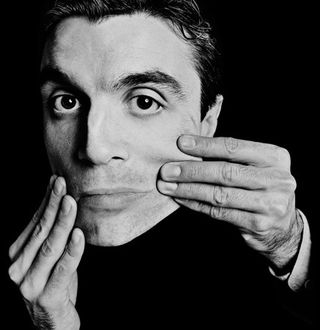
ScreenHunter_387 Nov. 05 13.33Mr. Byrne, do you write songs differently now than you did 30 years ago?

I couldn’t write the same kind of songs now that I wrote then. I am not the same person and you don’t have the same anxieties and passions as you do when you’re in your twenties. But I find other ways of writing. I found that I can write from another person’s point of view or I can even use someone else’s words and make a song out of that. And that is liberating for me because it allows me to express emotions through another person that I would never ever express on my own.

I imagine the Talking Heads’ song “Psycho Killer” falls into that category…

It was not autobiographical. (Laughs) That was the first song that I wrote, so it was the way of discovering if I could write a song. And after that one I knew that I understood the form and then I knew I can write something more personal. Everything after that became more personal.

I love your performance of that song at the opening of Stop Making Sense.

Thank you. That was the show that we were doing on tour back then. The film just makes it a little bit shorter so you get the narrative a little bit faster.

More here.

Ayatollah Khamenei and the Destruction of Israel

Akbar Ganji in the Boston Review:

ScreenHunter_386 Nov. 05 13.28In repeatedly claiming that Iranian leaders wish to destroy Israel and kill the Jewish people, Israeli Prime Minister Benjamin Netanyahu is spreading Iranophobia and helping to impose the most crippling economic sanctions in history on Iran. Netanyahu is belligerent in his claims: in his speech at the United Nations General Assembly on Tuesday, October 1, Netanyahu mentioned Iran seventy times and “Rouhani”—not Mr. or President Rouhani—twenty-five times. He has also threatened that if necessary, Israel will attack Iran on its own, and claimed that Iran wants to “wipe Israel off the map.” He does not recognize Iran’s right to peaceful use of nuclear technology and energy—a right that Iran has as a signatory of the Nuclear Non-Proliferation Treaty—and has also claimed that Iran “is preparing for another Holocaust.”

How truthful are these claims? In the past, it is true Ayatollah Sayyed Ali Khamenei has spoken of destroying Israel, and Article 110 of the Islamic Republic of Iran stipulates that the Supreme Leader sets the general policies of the country. In practice, this means he decides whether to negotiate with the United States, and sets Iran’s policy vis-à-vis Israel. But there are major differences between the Ayatollah Ruhollah Khomeini and Khamenei eras, and Khamenei’s thinking on Israel has changed over time. (The recent diplomatic initiative by President Rouhani, indeed, would not be possible if Khamenei had not given him “full authority.”)

With the end to the Iran-Iraq War in 1988, and the revolution in communications over the past two decades, respect for human rights and democracy has become so universal that even dictators can no longer ignore them.

More here.