Glenn Greenwald, How I Met Edward Snowden

Glenn Greenwald on TomDispatch:
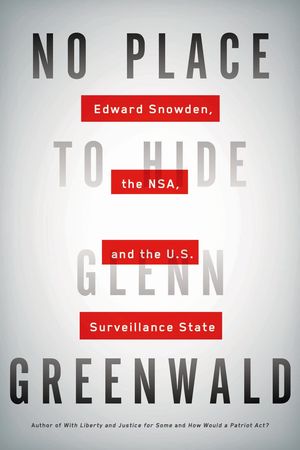
71QopTNqZmLOn December 1, 2012, I received my first communication from Edward Snowden, although I had no idea at the time that it was from him.

The contact came in the form of an email from someone calling himself Cincinnatus, a reference to Lucius Quinctius Cincinnatus, the Roman farmer who, in the fifth century BC, was appointed dictator of Rome to defend the city against attack. He is most remembered for what he did after vanquishing Rome’s enemies: he immediately and voluntarily gave up political power and returned to farming life. Hailed as a “model of civic virtue,” Cincinnatus has become a symbol of the use of political power in the public interest and the worth of limiting or even relinquishing individual power for the greater good.

The email began: “The security of people’s communications is very important to me,” and its stated purpose was to urge me to begin using PGP encryption so that “Cincinnatus” could communicate things in which, he said, he was certain I would be interested. Invented in 1991, PGP stands for “pretty good privacy.” It has been developed into a sophisticated tool to shield email and other forms of online communications from surveillance and hacking…

Despite my intentions, I did nothing, consumed as I was at the time with other stories, and still unconvinced that C. had anything worthwhile to say.

In the face of my inaction, C. stepped up his efforts. He produced a 10-minute video entitled PGP for Journalists.

It was at that point that C., as he later told me, became frustrated. “Here am I,” he thought, “ready to risk my liberty, perhaps even my life, to hand this guy thousands of Top Secret documents from the nation’s most secretive agency — a leak that will produce dozens if not hundreds of huge journalistic scoops. And he can’t even be bothered to install an encryption program.”

That’s how close I came to blowing off one of the largest and most consequential national security leaks in U.S. history.

Read the rest of the shortened and adapted version of Chapter 1 of Glenn Greenwald’s new book, No Place to Hide: Edward Snowden, the NSA, and the U.S. Security State, here.


Age of Ignorance

Charles Simic in the New York Review of Books:

ScreenHunter_627 May. 16 08.48Widespread ignorance bordering on idiocy is our new national goal. It’s no use pretending otherwise and telling us, as Thomas Friedman did in the Times a few days ago, that educated people are the nation’s most valuable resources. Sure, they are, but do we still want them? It doesn’t look to me as if we do. The ideal citizen of a politically corrupt state, such as the one we now have, is a gullible dolt unable to tell truth from bullshit.

An educated, well-informed population, the kind that a functioning democracy requires, would be difficult to lie to, and could not be led by the nose by the various vested interests running amok in this country. Most of our politicians and their political advisers and lobbyists would find themselves unemployed, and so would the gasbags who pass themselves off as our opinion makers. Luckily for them, nothing so catastrophic, even though perfectly well-deserved and widely-welcome, has a remote chance of occurring any time soon. For starters, there’s more money to be made from the ignorant than the enlightened, and deceiving Americans is one of the few growing home industries we still have in this country. A truly educated populace would be bad, both for politicians and for business.

More here.

The demise of the Asian houbara bustard in Pakistan

Eleni Panagiotarakou in the Jerusalem Post:

HB 4 Fuert 11 Feb 10_990This past April, Dawn, the oldest and most widely- read English-language newspaper in Pakistan, covered a report entitled “Visit of Prince Fahd bin Sultan bin Abdul Aziz Al Saud regarding hunting of houbara bustard.” The report was written by Jaffar Baloch, a divisional forest officer of the Balochistan forest in Pakistan, and it detailed the hunting activities of Prince Fahd of the House of Al Saud and his hunting party. This included the number, date and place of endangered Asian bustards killed. The staggering tally was 2,100 birds. The fact that these birds were killed for their purported aphrodisiac qualities grabbed the attention of the international media.

The moral obscenity of this act touched me deeply, as did the trophy photograph; hundreds of dead birds, their lifeless bodies laid out in geometrical rows across the soft desert sand, with their wings spread out. In a moment of ethical compulsion I began a petition at Change.org, the world’s largest petition platform. The petition’s title reads: “Donate lifetime supply of Viagra to the Saudi Prince Fahd bin Sultan bin Abdul Aziz Al Saud” and it is addressed to Ian C. Read, the president of the pharmaceutical corporation and manufacturer of Viagra Pfizer.

The petition’s goal is for 2,100 signatures – the number of bustards killed. Within minutes the petition began attracting media attention and hundreds of signatures from around the world. In the comments section the majority of the responses were split evenly between animal rights advocates, conservation enthusiasts and Pakistanis angered at their government’s lack of national sovereignty. The remainder of the responses were an eclectic mix ranging in scope from a Saudi woman chiding Prince Fahd for his intemperance and calling him a disgrace to the Royal House of Al Saud, to a Pakistani woman castigating all Saudi sheiks for treating Pakistan as their playground.

More here.

Woman’s cancer killed by measles virus in unprecedented trial

Lindsey Bever in the Washington Post:

167095303-188x300Her name is Stacy Erholtz. For years, the 50-year-old mom from Pequot Lakes, Minn., battled myeloma, a blood cancer that affects bone marrow. She had few options left.

She had been through chemotherapy treatments and two stem cell transplants. But it wasn’t enough. Soon, scans showed she had tumors growing all over her body.

One grew on her forehead, destroying a bone in her skull and pushing on her brain. Her children named it Evan, her doctor said. Cancer had infiltrated her bone marrow.

So, as part of a two-patient clinical trial, doctors at theMayo Clinic injected Erholtz with 100 billion units of the measles virus – enough to inoculate 10 million people.

Her doctor said they were entering the unknown.

Five minutes into the hour-long process, Erholtz got a terrible headache. Two hours later, she started shaking and vomiting. Her temperature hit 105 degrees, Stephen Russell, the lead researcher on the case, told The Washington Post early Thursday morning.

“Thirty-six hours after the virus infusion was finished, she told me, ‘Evan has started shrinking,’” Russell said. Over the next several weeks, the tumor on her forehead disappeared completely and, over time, the other tumors in her body did, too.

More here.

Thursday, May 15, 2014

ADVENTURES IN THE CANOPY

Su Blackwell in More Intelligent Life:

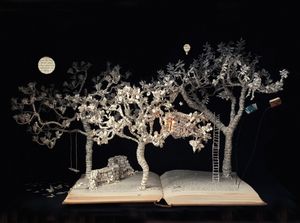
BaronTreesIt begins with a family argument at the dinner table. The year is 1767, and in a mansion in Liguria a small boy is taking a stand. Cosimo, our 12-year-old hero, refuses to eat the dish of snails that has been set before him. His father, the Baron Arminio Piovasco di Rondò, whose horsehair wig flaps over his ears, is in no mood for dissent. But Cosimo pushes away his plate, rises from the table, picks up his tricorn and rapier, runs out into the garden and climbs the great holm oak whose branches spread beyond the windows of the dining room. “I’ll never come down again!” he cries. And he never does. From the holm oak, Cosimo clambers into a nearby elm tree; from the elm to a carob, from the carob to a mulberry, from the mulberry to a magnolia—and then he is beyond the curtilage of his father’s property, and into the immense forests of late-18th-century Europe. Up in that continent-wide canopy, Cos­imo learns how to sleep, eat and wash at altitude, and how to fish and farm without setting foot on the earth. His legend as a levitator spreads; followers join him, and he founds an informal republic of the trees. For 53 years he haunts the branches, “Il Barone rampante”, looking down as Europe is wracked by revolution.

Imagine it. Imagine taking to the trees and staying there. It speaks to two dreams grained deep into many of us. The dream of escape to a forest Utopia (Robin Hood, Francois Truffaut’s “Enfant Sauvage”), and the dream of the wildwood—an impossibly vast forest as yet unruptured by roads and unschismed by settlements, through which you might travel for days in any direction.

More here.

Clive James on Robert Lowell and Elizabeth Bishop

P14_James_web_1068339hClive James at the Times Literary Supplement:

The business of poetry is now much more equally distributed between the sexes than it was even in the period after the Second World War, when women seemed to be taking up poetry as if it were a new kind of swing shift, the equivalent of putting the wiring into silver bombers. There had always been women poets, from Sappho onwards, and a few, such as Juana Inés de la Cruz, defined their place and time; but in English poetry, a small eighteenth-century triumph like Anne, Countess of Winchelsea’s poem “The Soldier’s Death” did little to remind the literary men of the immediate future that there could be such a thing as a poet in skirts. They might remember the poem, but they didn’t remember her. True equality really began in the nineteenth century: Christina Rossetti, for example, wrote poems of an accomplishment that no sensitive male critic could ignore, no matter how prejudiced he was. (There were insensitive male critics who ignored it, and patronized her as a cot-case: but the tin-eared reviewer is an eternal type.) Elizabeth Barrett Browning was spoken of in the same breath as her husband. He might have been the greater, but nobody except devout misogynists doubted that she was in the same game.

In the twentieth century, Marianne Moore achieved the same sort of unarguable status: she was acknowledged to be weighty even by those who thought she was fey. Back in the late 1950s, I would listen to an all-poetry LP that included Moore reciting “Distrust of Merits” and come away convinced that she had the strength to make seriousness sound the way it should. When she said “The world’s an orphans’ home” I thought hers was the woman’s voice that took the measure of the war in which the men had just been fighting to the death.

more here.

New headway in battle against neurodegenerative diseases

From Phys.Org:

NewheadwayinConditions which may accelerate the spread of Parkinson's disease, and a potential means of enhancing naturally-occurring defences against neurodegenerative disorders, have been identified in two new studies. Two significant breakthroughs which could inform future treatments for neurodegenerative diseases such as Alzheimer's and Parkinson's, have been announced by scientists.

The research, published in two separate studies this week, advances understanding of the early development of such disorders and how they might be prevented – in particular by identifying the biological areas and processes that could be pinpointed by future drugs. Both sets of results have emerged from collaborations between the research groups led by Chris Dobson, Tuomas Knowles and Michele Vendruscolo at the University of Cambridge, who focus on understanding protein “misfolding” diseases. These include Alzheimer's and Parkinson's diseases, as well as numerous others. The first study provides evidence that the early spread of the protein aggregates associated with Parkinson's appears to happen at an accelerated rate in mildly acidic conditions. This suggests that particular compartments within brain cells, which are slightly more acidic than others, may turn out to be appropriate targets for future treatments fighting the disease. Meanwhile, researchers behind the second study appear to have identified a way in which the effectiveness of so-called molecular “chaperones”, responsible for limiting the damage caused by misfolded proteins, can be significantly enhanced.

More here.

Thursday Poem

Where the apricot tree
stood still then
I stand still now.

Between the gladioli
I know the spot
where she stood then:
she threw me the apricot −
then. Now,

as memory does with itself
what it will, we begin
biting once more, almost
in unison, between

the maize plants: she her
apricot, I my apricot;

while the little foxes still prowl
through the vineyard, and the sea,
whispering: she is not with me;
no, you will not find it here;
she is not in me.

by Erven Hans Faverey
from Gedichten 1962-1990
publisher: De Bezige Bij, Amsterdam, 2010
translation: 1994, 2004, Francis R. Jones

Read more »

Is This Man the Zodiac Killer? His Son Says Yes

Joe Coscarelli in New York Magazine:

14-zodiac-killer.w1058.h704The Zodiac Killer, whose serial murders terrorized northern California in the late ’60s, was a man named Earl Van Best Jr., according to a new book by Gary L. Stewart, who happens to be his biological son. Stewart’s The Most Dangerous Animal of All, as we reported Monday, is for sale now from HarperCollins after a top-secret rollout. “I’m really hoping this will bring some closure to the families of my father’s victims,” Stewart tells People.

Although many others have claimed to know the killer’s identity over the years, Stewart’s publisher calls his book’s case “legally sound” — here’s some of the evidence within.

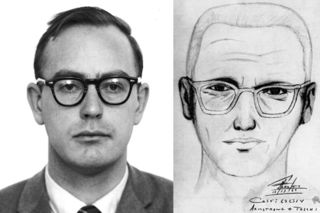
“If you look at Gary’s photo next to the sketch of the Zodiac next to his father’s mug shot, you can see that there is very clearly more than just a passing resemblance,” a HarperCollins spokesperson told Elon Green. “They look alike.”

Best, a now-deceased antique book seller, had been arrested for fraud and the rape of a minor after he tried to elope with Stewart’s mother, who was 13 at the time. After Best left her, she gave the child up for adoption, and it was Stewart’s search for his biological father that led him to supposedly crack the unsolved case.

More here.

The Strange, Secret History of Isaac Newton’s Papers

Adam Mann in Wired:

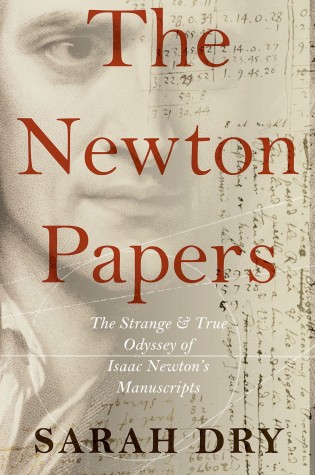
Newtonpapers-315x475When Sir Isaac Newton died in 1727, he left behind no will and an enormous stack of papers. His surviving correspondences, notes, and manuscripts contain an estimated 10 million words, enough to fill up roughly 150 novel-length books. There are pages upon pages of scientific and mathematical brilliance. But there are also pages that reveal another side of Newton, a side his descendants tried to keep hidden from the public.

Even in his lifetime, Newton was hailed as an eminent scientist and mathematician of unparalleled genius. But Newton also studied alchemy and religion. He wrote a forensic analysis of the Bible in an effort to decode divine prophecies. He held unorthodox religious views, rejecting the doctrine of the Holy Trinity. After his death, Newton’s heir, John Conduitt, the husband of his half-niece Catherine Barton, feared that one of the fathers of the Enlightenment would be revealed as an obsessive heretic. And so for hundreds of years few people saw his work. It was only in the 1960s that some of Newton’s papers were widely published.

The story of Newton’s writing and how it has survived to the modern day is the subject of a new book, The Newton Papers: The Strange and True Odyssey of Isaac Newton’s Manuscripts. Author Sarah Dry traces their mysterious and precarious history and reveals both the lucky twists and purposeful turns that kept the papers safe.

More here.

Hungary and the End of Politics

How Victor Orbán launched a constitutional coup and created a one-party state.

Kim Lane Scheppele in The Nation:

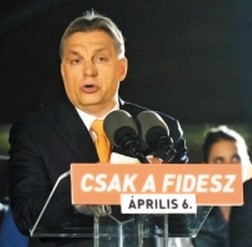
ScreenHunter_625 May. 15 11.01What is clear is that with his re-election, Orbán has consolidated a well-orchestrated constitutional coup that has rattled the European Union’s complacency about being a club of well-behaved democracies. Since 2010, Fidesz has rewritten the Constitution without engaging any opposition parties and has granted overwhelming and unchecked power to its party leader, who in turn wasted little time in wresting control of every state institution from opposition hands, entrenching his political allies everywhere, bringing the judiciary to heel and radically centralizing political authority. The Fidesz constitutional “reform” has spawned a Frankenstate, a form of government created by stitching together perfectly normal rules from the laws of various EU members into a monstrous new whole. The component pieces of the Hungarian Frankenstate might have operated perfectly well in their original contexts, but combined in a new constitutional system, these once-normal rules produce abnormal results. As government spokespeople have said every time there is criticism of a particular aspect of the new constitutional order: that rule exists in Greece. Or Germany. Or the United Kingdom. It’s normal. End of story. But nowhere do all those rules exist together, except in the Hungarian Frankenstate.

More here.

Preventing the Next Genocide

Burmamedic1

Sir Geoggrey Nice and Francis Wade in Foreign Policy (photo Andre Malerba/Getty Images):

In conflicts that have potential to produce the worst of human atrocities, states and international actors must take action to identify the precursors of mass killing and stop it from ever happening. That's precisely what is needed now in western Burma, where the Rohingya minority faces attacks so violent that state crime experts fear a full-on genocide is in the making. The Muslim minority, numbering around 1 million, shares the state with Rakhine Buddhists, who consider them to be illegal Bengali immigrants. The Burmese government, which shares this view, denies them citizenship as well as limiting their access to education and healthcare. Organized mob violence in late March, which wrecked the entire aid infrastructure serving 140,000 displaced Rohingya, was only the latest in a series of incidents in recent months that qualify as one of five commonly accepted indicators of a genocide.

The Burmese government's apparent reluctance to intervene in the situation — it took the state three weeks and persistent warnings to allow some aid groups to return — should be of pressing international concern. It signals a disregard for the lives of hundreds of thousands of people that can only be influenced by strong global condemnation.

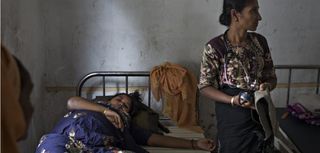
The violence of late March was clearly planned, as were the resultant effects: The mobs effectively cut off access to life-saving medicine, destroyed warehouses storing food donations, and dismantled boats and vehicles used to transport those donations to Rohingya camps. The attackers clearly intended to sever the assistance on which displaced Rohingya rely. In the aftermath, aid workers have reported dozens of preventable deaths just three weeks after the attack, showing that victims of persecution can be made to suffer as effectively by indirect assaults on the support systems as by direct physical attack. (The photo above shows an injured Rohingya woman whose doctor is unable to help her due to a lack of medicine and medical equipment.)

For the Rohingya, deprivation of food and aid, rendered more powerful by isolation, has received little domestic sympathy. But this attack marks the start of a dangerous process: Those Rakhine complicit in the violence have signaled that Rohingya aren't worthy of the essential support mechanisms that a highly vulnerable population requires for its survival.

More here.

How some of India’s brightest minds have bought into the Modi myth

Hologram

Salil Tripathi in Caravan:

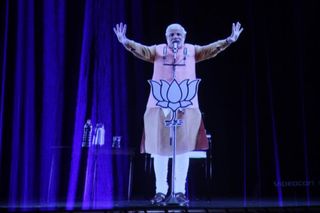
Modi’s relentless campaign projects him as the Indian equivalent of bapak pembangunan, or the Father of Development, as Suharto was called during his 32-year-rule of Indonesia. Indeed, Modi may potentially become India’s first leader in the East Asian, and not South Asian, mould. Those seeing a Reagan in Modi are, like Christopher Columbus, mistaken about the direction they are looking in. Modi’s approach and governance style are closer to China’s Deng Xiaoping or Indonesia’s Suharto. Deng and Suharto both bore the burden of massacres (as does Modi)—in Suharto’s case several, with Deng it was Tiananmen Square, 25 years ago this June. Both put in place economic policies that delivered sustained economic growth, lifted millions out of absolute poverty, and improved health and education indicators. But they ruled as stern authoritarians, and jailed writers, human rights activists, artists, union leaders and dissidents, sometime for years. A crucial difference: if Modi becomes India’s prime minister, he would have been elected in a free and fair election, unlike Deng (who never faced an election) or Suharto (whose elections were sham).

But how valid are the claims about Gujarat’s growth and Modi’s role in enabling it? The evidence is mixed. Other states, large and small, have also grown rapidly, and sometimes from a weaker base. Gujarat was hardly an industrial or economic laggard before Modi became chief minister, and the growth is not a post-2001 phenomenon. From motels in American towns without tourists to shops in cashless African villages, under Communist-ruled Kolkata or entrepreneurial Mumbai, Gujarati businesses have succeeded without Modi’s leadership. In fact, despite Modi’s claims of leading a booming economy, fresh investments dipped soon after the 2002 massacres and new capital remained shy of Gujarat for a few years. Further, the 2002 massacres were not an aberration, and the state has not always been at peace since then. Troops had to be called in 2006 and there have been other communal incidents after. (In contrast, while there have been terror attacks in Mumbai and Delhi regularly, neither has seen mass communal violence or massacres since 1993 and 1984, respectively.)

More here.

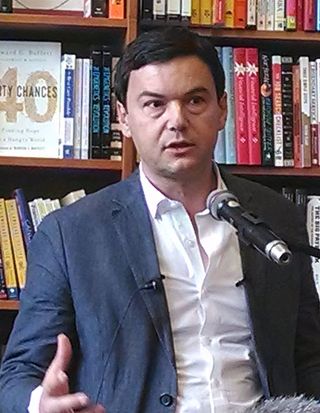
Thomas Piketty on Capital, Labour, Growth and Inequality

Piketty_in_Cambridge_3_crop

Over at Juncture (image from Wikimedia Commons):

Nick Pearce: Your book has received a huge amount of attention. Can we start with some of the central critiques of your core arguments? To begin with, there are those on the left who say that your treatment of the category of capital is a fairly orthodox one. It essentially puts together assets and their relative prices, instead of treating capital conceptually as constituted through relations of production and other structures of power, as it would be in Marxian and other heterodox traditions.

Thomas Piketty: I have read that. I think that it is a bit unfair in the sense that I really try hard in the book to do justice to the multi-dimensionality of capital. The history of real estate is not the history of land, it is not the history of financial assets or business assets, or the public debt; all these different assets come with different power relationships, and with different social compromises to determine their rate of return, and the labour return that is used together with these assets.

At some point in the book I also take the sum of all of these assets, and use the market prices of these different assets to compute the total capital stock of the economy. But I try to make clear in the book that while this may be fine for some purposes – this addition of different kinds of capital, in computing the capital stock – one always needs to keep in mind that this is a pretty abstract operation. I certainly don’t claim that you can summarise the multi-dimensionality of capital, and the inequality and power relationships that go with it, by making this gigantic operation of adding all of these categories together. In fact, in the book I have long parts in different chapters where I try to tell the story of the public debt, the story of real estate bubbles, the story of ‘slave capital’, which of course is a very particular kind of wealth, and of the power relationships that go along with it, and this all plays a role in the book. So, I find that this critique – although I can hear it – is not really justified in the sense that I do perfectly agree that capital is a multi-dimensional concept.

In particular, the market value of assets may not always coincide with their social values, so this does not mean that it is the only way to measure the value of capital. For instance, I have a long discussion about the value of German manufacturing companies and the fact that their market value may not be as large as British, American or French corporations, but apparently that does not prevent them from producing good cars. The market does a number of things well, but there are also a number of things that the market does not do so well, and putting a price on assets is always a complicated business.

More here.

Wednesday, May 14, 2014

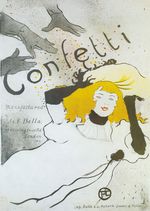
deep thoughts on confetti

Confetti_Toulouse-Lautrec_WEBD. Graham Burnett at Cabinet:

Throwing confetti is not an exact science, and neither is philology. But the latter comes closer. Confetti hails from the Latin past participle of conficere, meaning “to prepare or make ready.” Passed through Old French, the root word took on the sense of “preserving”—hence the French confit andconfiture, meaning, respectively, “preserved meat” and “preserved fruit,” i.e., jam. In the wake of the discovery of the New World and the intensive cultivation of sugar cane on slave plantations in the tropical Americas, the dominant meaning of confit and its pan-European cognates came to becandying—cooking in sugar. Confetti, in eighteenth-century Italian, thus meant “little sweets,” the kind of thing an Englishman might call a “sugarplum,” which is to say, small balls of confect-ionary. Sometimes these consisted of a mince of candied fruit (often encased in a sugar shell—powdered, granulated, panned), and sometimes they were built like a jawbreaker around a kernel of seed (anise, coriander, etc.) or a nut (like what we now call a “Jordan almond”). These were things that could be thrown.

more here.

Ailourophilia

Article00_homethumbbMuriel Spark at Bookforum:

There exists a long, passionate, and somewhat batty tradition of writerly appreciation for feline ways, its entries cropping up among the serious work of many otherwise serious people. In The Informed Air (New Directions, 2014), a new collection of Muriel Spark's criticism and occasional prose, Spark joins the chorus with a paean to her own cat, Bluebell. Spark is known for her novels, not her nonfiction. Yet in this volume's frequently short and sometimes oddball selections, drawn from the full arc of her career, Spark's precision and wit are much on display. “Ailourophilia,” too, is funny—but not only that. The love of a cat, it turns out, is itself a serious subject.

If I were not a Christian I would worship the Cat. The ancient Egyptians did so with much success. But at least it seems evident to me that the domestic cat is the aristocrat of the animal kingdom, occupying a place of quality in the Great Chain of Being second only to our aspiring, agitated and ever-evolving selves.

The dog is known to possess a higher degree of intelligence than the cat. Cat addicts are inclined to challenge this fact. But I think the higher intelligence, as we commonly mean it, must be conceded to the dog, and the highest to ourselves.

more here.

ukraine, putin, and the west

Putin-woos-ukraine-as-eu-and-us-increase-pressureThe Editors at n+1:

THERE’S A REASON Ukraine is at the heart of the most significant geopolitical crisis yet to appear in the post-Soviet space. There is no post-Soviet state like it. Unlike the Baltic states, it does not have a recent (interwar) memory of statehood. Nor, unlike every other post-Soviet state aside from Belarus, does the majority population have a radically different language and culture from the Russians. In many cases, for these countries, the traditional language suggests a natural political ally—Finland for the Estonians, Turkey for the Azeris, Romania for the Moldovans. These linguistic and cultural affinities are not without their difficulties, but they do give a long-term geopolitical orientation to these countries.

Ukraine has this to some extent in its western part, formerly known as Galicia, which has cultural and linguistic affinities with Poland. But the country’s capital, Kyiv, has much stronger ties to Russia: Russians consider Kievan Rus, which lasted from the 9th to the 13th century (when it was sacked and burned by the Mongols), to be the first Russian civilization. Russian Orthodoxy was first proclaimed there. Most people in Kyiv speak Russian, rather than Ukrainian, and in any case the languages are quite close (about as close as Spanish and Portuguese). On television, it is typical for any live broadcast—whether it’s news, sports, or a reality-TV show—to go back and forth seamlessly between Russian and Ukrainian, with the understanding that most people know both.

more here.

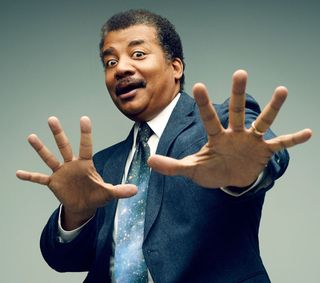
Neil deGrasse Tyson and the value of philosophy

Massimo Pigliucci in Scientia Salon:

ScreenHunter_624 May. 14 16.41It seems like my friend Neil deGrasse Tyson [1] has done it again: he has dismissed philosophy as a useless enterprise, and actually advised bright students to stay away from it. It is not the first time Neil has done this sort of thing, and he is far from being the only scientist to do so. But in his case the offense is particularly egregious, for two reasons: first, because he is a highly visible science communicator; second, because I told him not to, several times.

Let’s start with the latest episode, work our way back to a few others of the same kind (to establish that this is a pattern, not an unfortunate fluke), and then carefully tackle exactly where Neil and a number of his colleagues go wrong. But before any of that, let me try to halt the obvious objection to this entire essay in its tracks: no, this isn’t about defending “my” turf, for the simple reason that both philosophy and science are my turf [2]. I have practiced both disciplines as a scholar/researcher, I have taught introductory and graduate level classes in both fields, and I have written books about them both. So, while what follows inevitably will unfold as a defense of philosophy (yet again! [3]), it is a principled defense, not a petty one, and it most certainly doesn’t come from any kind of science envy.

More here.