Kenneth Roth to Judge 5th Annual 3QD Politics & Social Science Prize

Update 23 Mar: Winners announced here.

Update 13 Mar: Voting round now closed, semifinalists announced here, finalists here.

Update 6 Mar: Voting round now open, will close on 11 Mar 11:59 pm EST. Go here to vote.

Dear Readers, Writers, Bloggers,

We are very honored and pleased to announce that Kenneth Roth has agreed to be the final judge for our 5th annual prize for the best blog and online-only writing in the category of politics and social science. Details of the previous four politics (and other) prizes can be seen on our prize page.
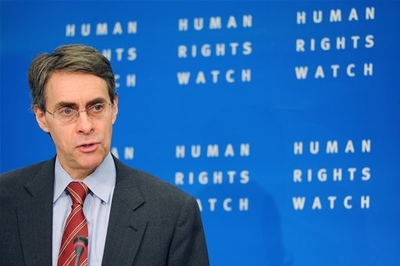
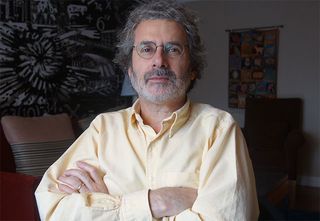
Screen-Shot-2012-12-10-at-3.56.25-PMKenneth Roth is the executive director of Human Rights Watch, one of the world’s leading international human rights organizations. Under Roth’s leadership, Human Rights Watch has grown eight-fold in size and vastly expanded its reach. It now operates in more than 90 countries, among them some of the most dangerous and oppressed places on Earth. Prior to joining Human Rights Watch in 1987, Roth served as a federal prosecutor in New York and for the Iran-Contra investigation in Washington. A graduate of Yale Law School and Brown University, Roth has conducted numerous human rights investigations and missions around the world. He has written extensively on a wide range of human rights abuses, devoting special attention to issues of international justice, counterterrorism, the foreign policies of the major powers, and the work of the United Nations.

As usual, this is the way it will work: the nominating period is now open. There will then be a round of voting by our readers which will narrow down the entries to the top twenty semi-finalists. After this, we will take these top twenty voted-for nominees, and the editors of 3 Quarks Daily will select six finalists from these, plus they may also add up to three wildcard entries of their own choosing. The three winners will be chosen from these by Ken Roth.

The first place award, called the “Top Quark,” will include a cash prize of 500 dollars; the second place prize, the “Strange Quark,” will include a cash prize of 200 dollars; and the third place winner will get the honor of winning the “Charm Quark,” along with a 100 dollar prize.

(Welcome to those coming here for the first time. Learn more about who we are and what we do here, and do check out the full site here. Bookmark us and come back regularly, or sign up for the RSS Feed.)

The schedule and rules:

February 16, 2015:

  • The nominations are opened. Please nominate your favorite blog entry by placing the URL for the blog post (the permalink) in the comments section of this post. You may also add a brief comment describing the entry and saying why you think it should win. Do NOT nominate a whole blog, just one individual blog post.
  • Blog posts longer than 4,000 words are strongly discouraged, but we might make an exception if there is something truly extraordinary.
  • Each person can only nominate one blog post.
  • Entries must be in English.
  • The editors of 3QD reserve the right to reject entries that we feel are not appropriate.
  • The blog entry may not be more than a year old. In other words, it must have been first published after February 15, 2014.
  • You may also nominate your own entry from your own or a group blog (and we encourage you to).
  • Guest columnists at 3 Quarks Daily are also eligible to be nominated, and may also nominate themselves if they wish.
  • Nominations are limited to the first 100 entries.
  • Prize money must be claimed within a month of the announcement of winners.

March 4, 2015

  • The public voting will be opened.

March 11, 2015

  • Public voting ends at 11:59 PM (NYC time).

March 13, 2015

  • The finalists are announced.

March 23, 2015

  • The winners are announced.

One Final and Important Request

If you have a blog or website, please help us spread the word about our prizes by linking to this post. Otherwise, post a link on your Facebook profile, Tweet it, or just email your friends and tell them about it! I really look forward to reading some very good material and think this should be a lot of fun for all of us.

Best of luck and thanks for your attention!

Yours,

Abbas
Sunday, February 15, 2015

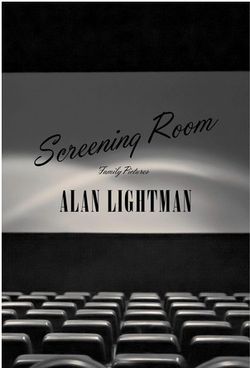
Book review: ‘Screening Room: Family Pictures,’ by Alan Lightman

Jack Hitt in the Washington Post:

ScreenHunter_1007 Feb. 16 10.49Back when NASA ruled the Earth, Alan Lightman was a 13-year-old kid, and in his Memphis back yard he built the coolest rocket. He concocted his own fuel mixture and ignited the thing with a flashbulb from a Brownie camera. There was a tiny astronaut’s capsule, of course, which held a garden lizard. He’d need to get the lizard back down to Earth, NASA-style, so he packed in a parachute and devised a way to separate the capsule from the rocket at its peak.

A small explosive was connected by a vial of mercury which, upright, offered no contact. When the rocket hit its apogee and naturally shifted into a horizontal position, the mercury flowed across the vial and connected the wires. The capsule blew free and clear, as planned, and floated successfully back down — except that the final discharge burned off the lizard’s tail.

Ingenious, really, but the way Lightman tells it in his insightful memoir, “Screening Room,” it was like that old Scottish joke: “Do they call me MacGregor the shipbuilder? Nay!” Instead, the boy with the sly workarounds is still hounded by friends to tell the one about the “friggin’ lizard.”

In any other memoir, this story might be presented as some crucial life turn that drove Lightman into the world where he wound up: theoretical physics. But “Screening Room” — the latest book from the author of “Einstein’s Dreams”— violates most of the tedious conventions of the memoir genre.

More here.

Austerity Is “Complete Horsesh*t”

Elias Esquith in AlterNet:

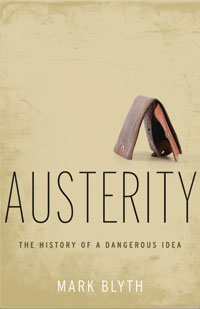
AusterityAs devoted readers of Paul Krugman know well, there’s plenty of evidence from the last six years indicating that austerity, the idea that the government can best boost the economy by engaging in significant tax cuts as well as spending cuts, simply doesn’t work — at least not in today’s economic conditions. With the U.S. going through a period of significant GDP growth, a decrease in the unemployment rate and a falling deficit, it’s a lesson that holds less salience today than it did in years past. But in the eurozone economy, the application of “expansionary austerity” has been vigorous — and rather unsuccessful.

But with the victory of the anti-austerity party Syriza in Greece’s recent election, the state-of-play in Europe has changed dramatically. After years of economic pain and dislocation, Greek citizens now have a reason — however small — to hope that political pressure may force the leaders of the eurozone (German Chancellor Angela Merkel, first and foremost) to reevaluate their approach. Still, years of failure have not loosened austerity’s grip on much of the West; the appeal of the economic philosophy to its proponents seems to operate beyond the level of simple reason.

And this is why Brown University professor Mark Blyth’s book “Austerity: The History of a Dangerous Idea,” released in paperback last month, remains such necessary reading. Simultaneously functioning as an economics explainer, a merciless polemic, and a penetrating history, Blyth’s book offers a clear insight into austerity’s lineage, its theories, its champions and its failures.

More here.

Digital Reality

Gershenfeld640

A Conversation with Neil Gershenfeld at Edge.org:

Digital is one of the most widely misunderstood concepts. In computing there's a notion of a sign bit error, where you calculate something and you get one bit wrong, so the sign is the opposite of what it should be, which means everything you calculate is the opposite of what it's supposed to be. There's a sense in which that's happening right now in maybe three different areas.

Claude Shannon wrote the best master's thesis ever when he was at MIT, inventing digital. He went on to Bell Labs and did two core things. The one that's most interesting for me is he proved the first threshold theorem. What that means is I could send my voice to you today as a wave, or I could send it to you as a symbol. What he showed is if I send it to you as a symbol, for a linear increase in the resource used to represent the symbol, there is an exponential reduction in the error of you getting the symbol correctly as long as the noise is below a threshold. If the noise is above the threshold, you're doomed. If it's below a threshold, a linear increase in the symbol gives you an exponential reduction in error. There are very few exponentials in engineering. That's the big one

What he showed is you can communicate reliably even though the communication medium is unreliable; that's what digital means. That's the essence of digital. It wasn't obvious, Claude Shannon got that. When I was at Bell Labs, Bob Lucky was still around there and could tell me stories. Claude Shannon had this idea that we should communicate digitally. There was a real battle between analog communication and digital communication.

The sobering lesson from Bob Lucky is the resolution of the battle was death. The analog managers died and a new generation of digital managers took over. Then we had digital communication, and now the Internet. But the meaning of digital is this threshold property, this exponential scaling.

More here.

The Great American Shooter

Cooper_Sniper_jpg_600x720_q85

J. Hoberman in The New York Review of Books blog (image Warner Bros. Pictures):

While American Sniper has drawn a large and diverse audience there is no consensus as to what the movie means. Rush Limbaugh hailed it as “an extension of the November elections” in which the Republicans captured the Senate, although the war in Iraq was hardly an issue. Jane Fonda saw it as a movie about the psychic cost of war and compared it to her 1978 film Coming Home, in which she embarked upon a therapeutic love affair with Jon Voight’s seriously wounded Vietnam veteran. The American-Arab Anti-Discrimination Committee has reported a spike in anti-Arab threats. A French journalist contacted me in early January to see if I thought the movie’s unexpected popularity was a response to the Charlie Hebdo massacre. (I told him that, on the contrary, the success struck me as symptomatic of American self-absorption.) Eastwood, who, not surprisingly, has described American Sniper as an anti-war movie, has acknowledged the influence of Sgt. York, which he saw as an eleven-year-old in the company of his father.

Sgt. York was criticized in Congress and elsewhere as pro-war and didn’t win the 1941 Oscar for Best Picture (the award, given in late February 1942, went to John Ford’s How Green Was My Valley). American Sniper, a far better movie, is unlikely to win either—no more than Ava DuVernay’s Selma, the film that, as a myth about a different kind of American heroism and a meditation on another aspect of the national past, has naturally been seen as American Sniper’s political antipode, celebrating non-violence from the inherently underdog perspective of a disenfranchised minority. Both movies are docudramas, a term first used to describe the televised historical fictions of the mid-1970s, and both have been criticized for their historical inaccuracies.

While these distortions are hardly without interest, holding films to rigorous standards of truth is itself highly unrealistic. With origins in photography, the motion picture medium encourages us to expect that, unlike plays or novels, films depicting historical episodes should be truthful. But even for documentaries, fictionalizing elements—including editing, camera placement, and imposed chronology—are almost inescapable.

More here.

Sunday Poem

How to Catch a Baby Elephant

You will need:

1 Jungle
1 Family of elephants, with calf
4-8 Men
Guns
Spears

Pay off the local officials. Enter the jungle like a prowl of cats. Circle the elephants at their favorite mud hole, where the calf will roll in the ocher water with a turtle-lipped smile, and his mother and aunties will brush, with their trunks, his face and chin in affection. Taking care not to harm the calf, shoot the mother. Shoot the aunties. Take the calf to a camp and enclose him in a cage slightly smaller than his body. Ignore his bleating mourning cries. Begin training. Jab his young skin with spears. Do this while he is in his cage, and he will think he is small and weak. If you are successful, he will believe this forever. Like any animal, any child. If you are not successful, he will eventually break his chains, eat the crops of a nearby farm and be shot. When this occurs, reenter the jungle and capture
.

by Jen Ashburn
from Anomalous 13
Anomalous Press

At the Karachi literature festival, books really are a matter of life and death

Alex Preston in The Guardian:

BooksIn Britain, where every two-horse village has a book festival and authors have become stumbling, portly simulacrums of their rock-star cousins, forever touring their greatest hits, we’ve grown to take our literary get-togethers for granted. It’s hard to imagine that a festival might be revolutionary, politically divisive, that attending could be a matter of taking your life in your hands. The Karachi literature festival (KLF) is now in its sixth year, and welcomed more than 100,000 people through its security scanners last weekend. The festival ended with a lavish British Council-hosted dinner, where the only clue that we were anywhere out of the ordinary was the throb of police boats circling the dark waters of Chinna Creek nearby.

…In my talk the next morning, alongside the writer Mohammed Hanif and Malayalam author Benyamin (whose excellent Goat Days is translated into English), I speak about Chimamanda Ngozi Adichie’s idea of the danger of a single story, the way that humans tend to form a single, exclusive narrative to capture their experience of the world. My idea of Karachi, of Pakistan as a whole, has been fed to me by media reports of bomb blasts and terror attacks, of a country where a significant proportion of the population was illiterate, where those that did read turned to journalism rather than novels to inform their view of the world. Yet here I am in a hall where there is standing room only, speaking to a crowd of enthusiastic, urbane readers, rather to my surprise, very safe amid so many kindred spirits.

More here.

Jane Bolin: First Black Woman to Serve as U.S. Judge

From BlackHistory:

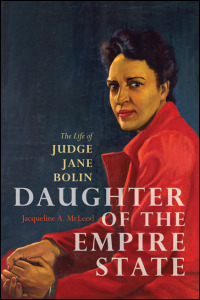
JaneShe was born, Jane Matilda Bolin on April 11, 1908. She was the youngest of four children. Her father was Gaius Charles Bolin.

…Jane’s decision about the discipline of law, in which she would later engage, was shaped by her exposure to the plight of black people in America during those times. Having led a previously sheltered lifestyle, that exposure came through her father’s committed involvement in the NAACP. Jane faithfully read every edition of The Crisis, the NAACP’s bi-monthly magazine (founded in 1910 by W.E.B. Du Bois), from cover to cover. It was within those pages, which regularly published photos of lynching victims from across the country, that Jane’s sheltered life was shaken. The violent racism and hatred directed at black people was a world away from the microcosm that she grew up in, where her father was respected and admired by both black and white, and she was generally protected from the prejudice that divided the country. She dedicated herself, and her passion for law, to helping others. After graduation from Poughkeepsie High school in 1924, at only 15 years of age, the brilliant Jane would follow in her father’s footsteps. She enrolled in a prestigious Massachusetts undergraduate college, with the intent to major in law. She attended Wellesley College, a liberal arts college for women near Boston, and was one of only two black students there. Both immediately ostracized and ridiculed by the entire student body, they decided right away to live off campus, and become roommates. This was Jane’s first taste of blatant racism. Jane later recalled that the majority of her days at Wellesley were “sad and lonely.” “There were a few sincere friendships developed in that beautiful, idyllic setting of the college,” Jane remembered, “but on the whole, I was ignored outside the classroom.“

Despite a lack of encouragement and respect from most of her professors, Jane graduated as one of the top 20 students of her class in 1928, and was officially designated a “Wellesley Scholar.” Jane knew that the treatment she had received from faculty throughout her matriculation, would only continue during the obligatory meeting with Wellesley’s career advisor for graduating seniors. As expected, the advisor told Jane that she should not pursue a legal career, as there would be no work for a black woman as an attorney. When she made it clear that she would not only pursue a career in law, but intended to apply to Yale Law School to continue her studies, she was mocked and told that she should aim lower… as she would never be accepted at such a prestigious institution. Even Jane’s father tried to dissuade her from applying to Yale, only seeking to shield her from further prejudice, as he had once been able to do when she was a child. He made the case that the law profession revealed the worst in human nature. He preferred that Jane instead become a teacher- where she could help instruct, encourage, and inspire black students to pursue an advanced education and make great advances for the black community. Jane felt that she would be an even greater inspiration, by doing those things herself, as a pioneer in her chosen field. Little did G. Charles know at the time that he was making his case, that Jane had already been accepted at Yale. When her father learned this, he relented, and gave Jane his full support.

Emboldened and unintimidated through her experience at Wellesley, Jane enrolled at Yale Law School that same year- as the only black woman, and only one of three women in total, matriculating there.

More here. (Note: One post throughout February will be dedicated to Black History Month.)

Saturday, February 14, 2015

Amiri Baraka’s ‘S O S’

15rankine-articleLargeClaudia Rankine at The New York Times:

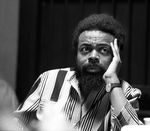
Amiri Baraka eulogized James Baldwin on Dec. 8, 1987, by saying: “He was all the way live, all the way conscious, turned all the way up, receiving and broadcasting. . . . He always made us know we were dangerously intelligent and as courageous as the will to be free.”

This eulogy can aptly be turned back on Baraka himself, as “S O S: Poems 1961-2013” arrives a year after his own death. The sweeping collection, selected by Paul Vangelisti, begins with poems from Baraka’s first collection, “Preface to a Twenty Volume Suicide Note” (1961), and ends with unpublished work written up to 2013.

Baraka began his career in the company of the Black Mountain School (Charles Olson, Robert Duncan), the Beats (Allen Ginsberg) and the New York School (Frank O’Hara), among others. He published “Preface to a Twenty Volume Suicide Note” as LeRoi Jones, a downtown hipster dad of two daughters, married to the white and Jewish Hettie Jones. Many of his early poems are meditative lyrics in conversation with Ginsberg, Duncan, Gary Snyder and Olson, to name a few. The assassination of Malcolm X in 1965 brought Jones’s life as he knew it to a sudden close. He would leave his wife, children and poetic community; move uptown to Harlem; and eventually across the Hudson River back home to Newark, where he was born in 1934.

more here.

“THE WALLS OF DELHI” BY UDAY PRAKASH

The_Walls_of_Delhi_cover_291e0b8a-e85e-4b72-9c04-6f46a64f9538María Helga Guðmundsdóttir at The Quarterly Conversation:

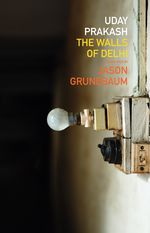
For all their political fervor, the stories in The Walls of Delhi are concerned with human beings and their most quotidian preoccupations. Some of the collection’s most lyrical and intimate moments pivot on food or sex. In one scene, an erotic encounter between husband and wife on a riverbank seems to echo the play of the god Krishna with the gopis or cowherd girls, evoking a mythical space of eternal bliss amidst backbreaking toil. And the blushing giggle of a young man with a messy head of hair, his mouth full of food, is transformative to the woman who feeds him:

It was like the end of a lifesaving rope that dangled in front of the black hole of her hellish life. She decided to grab it and run away, not knowing whether it was out of love or from an intense desire to be free.

Prakash has a keen eye for the ridiculous and can find humor in the most unlikely of situations. Far from romanticizing his downtrodden protagonists, he has a wry appreciation for their human foibles as well as their oppressors’. The opening story centers on Ramnivas, a young man who works as a sweeper to provide for his wife and kids and keeps a teenage girlfriend on the side. After stumbling on a massive cache of black money hidden in the walls of an upscale gym, his family’s fortunes are transformed and his philandering revitalized; his newfound solvency secures everyone’s tacit acceptance.

more here.

bloodshed and the birth of the modern Middle East

D615b595-6034-4e4c-9456-a3295ab034e9Mark Mazower at the Financial Times:

Before the first world war, the term “Middle East” was virtually unknown. The Ottoman empire had ruled for centuries over the lands from the Sahara to Persia but did not refer to them as part of a single region. Coined in the mid-19th century, the phrase became popular only in the mid-20th. It reflected the growing popularity of geopolitical thinking as well as the strategic anxieties of the rivalrous great powers, and its spread was a sign of growing European meddling in the destiny of the Arab-speaking peoples.

But Europe’s war changed more than just names. In the first place, there was petroleum. The British had tightened their grip on the Persian Gulf in the early years of the new century, as the Royal Navy contemplated shifting away from coal. The Anglo-Persian Oil Company opened the enormous Abadan refinery in 1912. The British invasion of Basra — a story of imperial hubris and cataclysmic failure that Eugene Rogan weaves superbly through The Fall of the Ottomans — thus marked the beginning of the world’s first oil conflict.

Second, there was the British turn to monarchy as a means of securing political influence. The policy began in Egypt, which British troops had been occupying since 1882. Until the Ottomans entered the war, Whitehall had solemnly kept to the juridical fiction that Egypt remained a province of their empire. After November, that was no longer possible and the British swiftly changed the constitutional order: the khedive Abbas II, who happened to be in Istanbul at the time, was deposed and his uncle, Husayn Kamil, was proclaimed the country’s sultan.

more here.

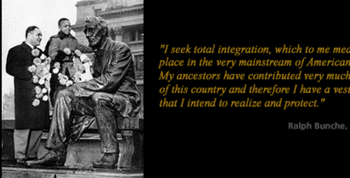
Ralph Bunche: Nobel Peace Prize–winning academic and U.N. diplomat

From Biography.com:

BuncheBorn on August 7, 1903 or '04 in Detroit, Ralph Bunche excelled at academics to become a professor and federal officer specializing in international work. He joined the United Nations in 1947 and oversaw a heralded armistice in the Arab-Israeli conflict. He was awarded the 1950 Nobel Peace Prize and later oversaw peacekeeping efforts in the Congo, Cyprus and Bahrain. He died on December 9, 1971.

…One of Bunche's major achievements was his efforts from 1947 to 1949 to bring peace to the region of Palestine, the site of major conflict between Arab and Israeli forces. After his supervisor, mediator Count Folke Bernadotte, was killed in a terrorist attack, Bunche was called upon to helm the talks on the island of Rhodes. The long negotiation process was defined by the diplomat's willingness to meet with both sides and be meticulous, calm and patient about getting parties to sit with each other and get used to signing off on smaller matters. The Armistice Agreements were signed in 1949. Bunche won the Nobel Peace Prize the following year, becoming the first African American and person of color in the world to receive the award. Though President Harry Truman subsequently wished for Bunche to become the U.S. assistant secretary of state, Bunche turned down the offer, citing the segregationist policies that still ruled the nation's capital and saying he did not want to subject his children to them.

More here. (Note: One post throughout February will be dedicated to Black History Month.)

Saturday Poem

since feeling is first

since feeling is first
who pays any attention
to the syntax of things
will never wholly kiss you;

wholly to be a fool
while Spring is in the world

my blood approves,
and kisses are better fate
than wisdom
lady i swear by all flowers. Don't cry
—the best gesture of my brain is less than
your eyelids' flutter which says

we are for each other: then
laugh, leaning back in my arms
for life's not a paragraph

And death i think is no parenthesis

by e.e. cummings
from 100 selected poems
Grove Weidenfeld.

What Is the Best Portrayal of a Marriage in Literature?

Charles McGrath in The New York Times:

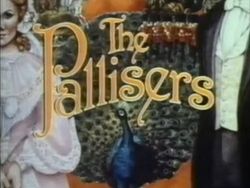
The_Pallisers_tv_series_titlecardBut there are exceptions to the unhappy marriage rule, the union of Kitty and Levin in “Anna Karenina,” for one, and to me even more satisfying, the marriage of Plantagenet Palliser and Lady Glencora in Trollope’s Palliser novels. Not the least of the appeal of this fictional marriage is that it takes place over some 20 years or so in six different novels (seven if you count “The Small House at Allington,” though it’s strictly speaking one of Trollope’s Barsetshire novels, not a Palliser book), in which Plantagenet and Glencora are sometimes major characters, sometimes minor ones. The books are like a mini-series (and, indeed, became a famous BBC 26-parter in the early ’70s): We get to watch the characters evolve, grow old and surprise themselves. Blond, clever, charming, witty, Glencora is easily the most beguiling of Trollope’s heroines. Trollope as much as admitted that he was in love with her himself. But except for his tremendous fortune, there’s nothing lovable about Plantagenet, who actually prides himself on being dull. All he cares for is politics and a mind-numbing scheme for switching British currency to the decimal system. Glencora is bullied into marrying him by her guardians, who fear that she is about to run away with a handsome scapegrace named Burgo Fitzgerald.

…And then, shockingly, it’s over. Too stiff-backed to compromise, Plantagenet loses an election and the premiership. He and Glencora leave for Europe to lick their wounds, and on the very first page of the next, and last, volume, Glencora is dead. Plantagenet, though in his way just as repressed and socially hidebound as Walter Bridge, finds himself even more in love. “He had at times been inclined to think that in the exuberance of her spirits she had been a trouble rather than a support to him,” Trollope writes. “But now it was as though all outside appliances were taken away from him. There was no one of whom he could ask a question.”

More here.

First Comes Love, Then Comes Chemo

Julia Felsenthal in Vogue:

Love-illustration-0213I am exiting the subway at Carroll Street on my way home from work when I run into my college boyfriend, G, who lives in California and, as far as I know, has no business appearing like a ghost on my commute.

“Hooli!” He exclaims, grinning, invoking a defunct nickname. He pulls me in for a hug, tells me he’s just passing through town, asks me how I’m doing.

Something lodged in my thorax breaks free, a release valve to the deep well of tears I draw from lately.

I am not doing well. A month earlier, at after-work drinks with friends, I touch my neck and discover, out of nowhere, a lump so comically large that it calls to mind the eggs that rise on the noggins of cartoon characters when they’ve been whomped with frying pans or bludgeoned by falling boulders. But there is no swinging wall of cast iron, no ill-balanced rock to blame, and morning after morning this lump does not subside. I am told by the specialists who palpitate, scan, needle, and cut, that I face a far more slippery enemy: my own blood, my lymph nodes, which are riddled with secret tumors. Lymph nodes? I think blankly, as I am reassured that this is the best possible horrible thing that could happen to a piece of anatomy I barely knew existed. Official diagnosis: Hodgkin’s lymphoma. Official remedy: surgery to biopsy the largest tumor, followed by three to six months of chemotherapy.

More here.