
Enjoying the content on 3QD? Help keep us going by donating now.
Category: Recommended Reading
The Moral Imagination of Zohran Mamdani
Corey Robin at his own website:
 In a way I’ve never experienced in my life, I feel in synch with a political turn, felt by millions of voters, that’s now being reflected in the voice of one of the most dynamic leaders we’ve seen in a long time.
Which leads me now to a bit of a personal/political memoir, which may resonate with other leftists of my age, with those of us who are part of lost generation of progressives, the Gen X leftists, who’ve mostly felt out of step for virtually every political development of our adult lives.
In the last few years, I’ve noticed a change in my political writing, prompted by the surge of enshittification, the rise of AI, and the concomitant erosion of academic and cultural standards. I found myself increasingly focusing my political writing on the importance of excellence for the left, on pushing for the highest standards of teaching and writing and work, not as a punishment for the poor or as an excuse for excluding subjugated groups, but as an aspiration of a genuinely democratic society, as something everybody wants for themselves and the people around them.
More here.
Enjoying the content on 3QD? Help keep us going by donating now.
Pepys Diary
Deborah Friedell at the LRB:
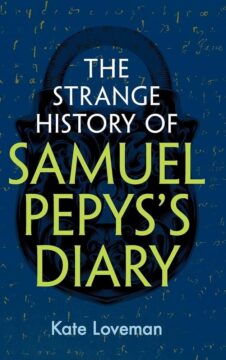 Pepys was a meticulous – some might say compulsive – record-keeper, and his talent for storing and retrieving vast amounts of information would be useful to him throughout his career. Loveman argues that the diary became his ‘catch-all’ for anything he couldn’t safely or conveniently note in his official or household accounts. Into its pages went social debts (who had given him dinner, who still owed him one), gossip, the music he heard and the plays he saw, and the most intimate aspects of his life, from bodily functions (including what has been called ‘one of the best documented attacks of flatulence in history’) to sex.
He had married Elizabeth de St Michel when he was 22 years old; she was 14, young even by the standard of the time. We don’t know how they met. Her father was French, and she had grown up in Paris and Devon. She was a Protestant, though when she was angry at her husband she would sometimes threaten to convert to Catholicism. He thought that he was in love with her, at least at the beginning of their marriage. When he hears an especially stirring piece of music, he writes that it did ‘wrap up my soul so that it made me really sick, just as I have formerly been when in love with my wife’.
more here.
Enjoying the content on 3QD? Help keep us going by donating now.
Why some women Are evolving faster Than the rest of society
Enjoying the content on 3QD? Help keep us going by donating now.
Science in 2050: the future breakthroughs that will shape our world — and beyond
David Adam in Nature:
 The Roman sage Marcus Aurelius said we should never let the future disturb us. But then he never had a conversation with the futurologist Nick Bostrom about the state of the world in 2050. “There’s a good likelihood that by 2050, all scientific research will be done by superintelligent AI rather than human researchers,” Bostrom said in an e-mail. “Some humans might do science as a hobby, but they wouldn’t be making any useful contributions.” Time to rethink your career options, Nature readers!
To adapt a cliché about computer models, predictions of the future are usually wrong, but some are interesting. And Nature has a long history of seeking stimulation in forecasts, projections and auguries about how research might unfold in the coming decades. Most notably, the journal marked the end of the twentieth century and the onset of the twenty-first with supplements dedicated to scientific soothsaying, and a bold prediction, from then-editor Philip Campbell, that life based on something other than DNA would be discovered by 2100. (It was a statement he called foolish then, but stands by today.)
More here.
Enjoying the content on 3QD? Help keep us going by donating now.
The Entangled Brain
Luiz Pessoa at Aeon Magazine:
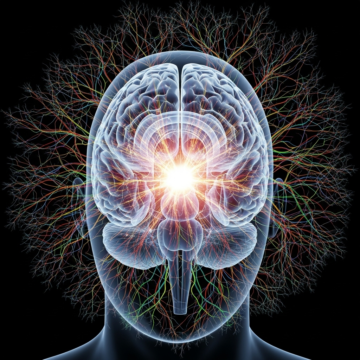 When we consider the highways traversing the brain and how signals establish behaviourally relevant relationships across the central nervous system, we come to an important insight. In a highly interconnected system, to understand function, we need to shift away from thinking in terms of individual brain regions. The functional unit is not to be found at the level of the brain area, as commonly proposed. Instead, we need to consider neuronal ensembles distributed across multiple brain regions, much like the murmuration of starlings forms a single pattern from the collective behaviour of individual birds.
There are many instances of distributed neuronal ensembles. Groups of neurons extending over cortical (say, prefrontal cortex and hippocampus) and subcortical (say, amygdala) regions form circuits that are important for learning what is threatening and what is safe. Such multiregion circuits are ubiquitous; fMRI studies in humans have shown that the brain is organised in terms of large-scale networks that stretch across the cortex as well as subcortical territories. For example, the so-called ‘salience network’ (suggested to be engaged when significant events are encountered) spans brain regions in the frontal and parietal lobes, among others, and can also be viewed as a neuronal ensemble.
more here.
Enjoying the content on 3QD? Help keep us going by donating now.
Friday Poem
New Year’s Eve Always Terrifies Me
At exactly twelve o’clock midnight
1973-74, Los Angeles
it began to rain on the
palm leaves outside my window
the horns and firecrackers
went off
and it thundered.
I’d gone to bed at 9 p.m.
turned out the lights
pulled up the covers –
their gaiety, their happiness
their screams, their paper hats,
their automobiles, their women,
their amateur drunks…
New Year’s Eve always terrifies me
life knows nothing of years.
now the horns have stopped and
the firecrackers and the thunder…
it’s all over in five minutes…
all I hear is the rain
on the palm leaves,
and I think,
I will never understand men,
but I have lived
it through.
.
it through.
.
Enjoying the content on 3QD? Help keep us going by donating now.
Cavell & Skepticism – Hilary Putnam
Enjoying the content on 3QD? Help keep us going by donating now.
Thursday, January 1, 2026
Carrie Courogen remembers the cross-genre brilliance of Rob Reiner’s filmmaking
Carrie Courogen in the Los Angeles Review of Books:
 “I don’t have a clear-cut film identity,” Rob Reiner told London’s Sunday Telegraph in 1989.
The late actor, writer, and director was on a promotional tour for When Harry Met Sally…, the fifth feature nestled in what would become an eight-year run of all-timers, including This Is Spinal Tap (1984), The Sure Thing (1985), Stand by Me (1986), The Princess Bride (1987), Misery (1990), and A Few Good Men (1992). With a quick, passing glance at his list of credits, it’s easy to take him at his word. Reiner’s films spanned the genre spectrum, from mockumentary to rom-com to thriller to courtroom drama, and his work as a filmmaker was often described as “versatile,” that of a journeyman: reliable, occasionally great, but never executed with the distinct stylistic flair of a true auteur.
Yet in spite of flash, what Reiner’s vastly differing films all share is the generous and empathetic heart of their director, a deep sense of humanity, and a relentless curiosity about and love of people, in all their imperfections and quirks. It seems a cliché to call a filmmaker’s work personal—what creative work isn’t?—but in Reiner’s case, filmmaking was deeply personal, taking the form not of statements but of questions. Taken all together, they shape the lifelong quest of a man searching for enlightenment on subjects both simple and profound.
More here.
Enjoying the content on 3QD? Help keep us going by donating now.
High-achieving adults rarely began as child prodigies
Christa Lesté-Lasserre at New Scientist:
 International chess masters, Olympic gold medallists and Nobel prize-winning scientists were rarely child prodigies, a review reveals. Likewise, early childhood successes and intense training programmes have rarely led to top achievement at a global level in the adult world.
The analysis – based on 19 studies involving nearly 35,000 high-performing people – shows that the vast majority of adults who lead worldwide rankings in their field of expertise grew up participating in a broad range of activities, only gradually developing their most proficient skill.
The findings contradict popular beliefs that achieving top international performance levels requires intensive, highly focused training during childhood, says Arne Güllich at RPTU Kaiserslautern in Germany.
More here.
Enjoying the content on 3QD? Help keep us going by donating now.
Fields Medalist Terence Tao on Math and AI, and more
Enjoying the content on 3QD? Help keep us going by donating now.
Flying Taxis? China Has Them
Keith Bradsher in the New York Times:
 As an American reporter living in Beijing, I’ve watched both China and the rest of the world flirt with cutting-edge technologies involving robots, drones and self-driving vehicles.
But China has now raced far beyond the flirtation stage. It’s rolling out fleets of autonomous delivery trucks, experimenting with flying cars and installing parking lot robots that can swap out your E.V.’s dying battery in just minutes. There are drones that deliver lunch by lowering it from the sky on a cable.
If all that sounds futuristic and perhaps bizarre, it also shows China’s ambition to dominate clean energy technologies of all kinds, not just solar panels or battery-powered cars, then sell them to the rest of the world. China has incurred huge debts to put trillions of dollars into efforts like these, along with the full force of its state-planned economy.
More here.
Enjoying the content on 3QD? Help keep us going by donating now.
Infinity, Paradoxes, Gödel Incompleteness & the Mathematical Multiverse
Enjoying the content on 3QD? Help keep us going by donating now.
Googoosh!
Dina Nayeri at The Guardian:
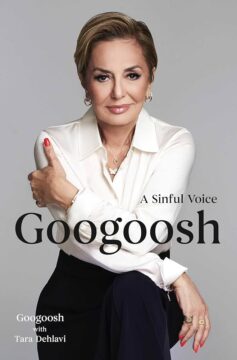 If you ask any Iranian to name the most important female pop star in our country’s history, they’ll say Googoosh. Nobody else comes close. Over six decades of revolution, suppression and exile, Googoosh has gone from singer to cultural icon, a symbol of a country’s grief for its murdered, imprisoned, and muzzled artists, and a living link between pre-revolutionary Iran and the diaspora.
Googoosh was just three years old when she started singing in small halls and cabaret venues where her father worked. By her teens she was a film actor and a fashion icon. In the 60s and 70s, when my mother was a teenager, Googoosh was everywhere: on television, in films, magazines, on the radio. She kept recreating herself – her style, her moves, her hair. (My mother and many of her university classmates copied Googosh’s famous wispy haircut.) For a while, this bold, creative young woman shaped how westerners saw Iran, and how a generation of Iranian women understood modernity, femininity and public life.
more here.
Enjoying the content on 3QD? Help keep us going by donating now.
Thursday Poem
“On Turning Ten”
The whole idea of it makes me feel
like I’m coming down with something,
something worse than any stomach ache
or the headaches I get from reading in bad light
a kind of measles of the spirit,
a mumps of the psyche,
a disfiguring chicken pox of the soul.
You tell me it is too early to be looking back,
but that is because you have forgotten
the perfect simplicity of being one
and the beautiful complexity introduced by two.
But I can lie on my bed and remember every digit.
At four I was an Arabian wizard.
I could make myself invisible
by drinking a glass of milk a certain way.
At seven I was a soldier, at nine a prince.
But now I am mostly at the window
watching the late afternoon light.
Back then it never fell so solemnly
against the side of my tree house,
and my bicycle never leaned against the garage
as it does today,
all the dark blue speed drained out of it.
This is the beginning of sadness, I say to myself,
as I walk through the universe in my sneakers.
It is time to say good-bye to my imaginary friends,
time to turn the first big number.
It seems only yesterday I used to believe
there was nothing under my skin but light.
If you cut me I would shine.
But now if I fall upon the sidewalks of life,
I skin my knees. I bleed.
by Billy Collins
from The Art of Drowning © 1995
Enjoying the content on 3QD? Help keep us going by donating now.
A Moving Fable Of Table Tennis
Nawal Arjini at the NYRB:
 The Hungarian poet Géza Röhrig, the Shark Tank shark Kevin O’Leary, and Timothée Chalamet walk into a bar. The bar is the restaurant of the London Ritz, and it’s 1952. Gwyneth Paltrow is also there, at another table. O’Leary, playing the part of the ink tycoon Milton Rockwell in Josh Safdie’s Marty Supreme, notices the tattoo on the arm of Röhrig’s character, Béla Kletzki. “He used to defuse bombs for the Nazis,” says Timothée, as the ping-pong ingenue Marty Mauser. “Tell ’em the story you told me.” “My guests are waiting,” Rockwell replies. “Wait,” says Marty, “you’re gonna love this.”
Kletzki tells him that, out of respect for his table tennis talent, guards at Auschwitz used to give him unexploded ordnance to defuse, a job that allowed him to leave the camp for a few hours. One day he noticed a beehive, smoked the bees out, and covered himself in honey to bring back to his fellow prisoners under his uniform: cut to a poundingly soundtracked shot of starving men licking honey off Kletzki’s bare chest. While he’s telling this story the unibrowed, mustachioed Marty has been making grotesque faces over his shoulder to the fading actress Kay Strong (Paltrow), Rockwell’s wife; later that night she shows up at his room.
more here.
Enjoying the content on 3QD? Help keep us going by donating now.
NYC has a new Mayor

Our guide to the (literally) biggest novels of the season
From The Washington Post:
 Traditionally, autumn is when publishers bring out their most ambitious novels: the buzziest debuts, the most hotly anticipated returns, the heaviest hitters. This year, many of them were also physically heavy, with page counts that climbed, dizzyingly, into the high hundreds and even four digits. (One independent press told us that producing these books broke their printer.)
What’s a reader to do? Even with the promise of holiday downtime ahead, there’s only so much room on your nightstand. And it can only hold so much weight. The author of one hulking title quipped that while his book had been compared to “a brick,” that wasn’t quite right, because bricks start around four pounds and his tome came in at less than that. Only slightly, it turned out.
More here.
Enjoying the content on 3QD? Help keep us going by donating now.
Wednesday, December 31, 2026
10 Fitness Tips to Help You Get Moving in 2026
Erik Vance in the New York Times:
 On the Well desk, we see a lot of exercise fads. And while all movement is good, plenty of trending workouts aren’t worth your time. “Japanese walking,” a form of interval walking that took over social media this summer, was a rare exception.
The idea is simple: Walk fast for three minutes, then walk slow for three minutes, alternating back and forth for at least 30 minutes. Some research suggests that varying your walking intensity in this way may improve blood pressure, cardiovascular health and leg strength more than keeping the same pace.
If you feel comfortable walking fast for a few intervals, consider increasing the challenge by mixing in some running. Or, if you are a runner looking to go even longer distances, the run-walk method can help you get there.
More here.
Enjoying the content on 3QD? Help keep us going by donating now.
2025 LLM Year in Review
Andrej Karpathy at his own blog:
2025 has been a strong and eventful year of progress in LLMs. The following is a list of personally notable and mildly surprising “paradigm changes” – things that altered the landscape and stood out to me conceptually.
1. Reinforcement Learning from Verifiable Rewards (RLVR)
At the start of 2025, the LLM production stack in all labs looked something like this:
- Pretraining (GPT-2/3 of ~2020)
- Supervised Finetuning (InstructGPT ~2022) and
- Reinforcement Learning from Human Feedback (RLHF ~2022)
This was the stable and proven recipe for training a production-grade LLM for a while. In 2025, Reinforcement Learning from Verifiable Rewards (RLVR) emerged as the de facto new major stage to add to this mix. By training LLMs against automatically verifiable rewards across a number of environments (e.g. think math/code puzzles), the LLMs spontaneously develop strategies that look like “reasoning” to humans – they learn to break down problem solving into intermediate calculations and they learn a number of problem solving strategies for going back and forth to figure things out (see DeepSeek R1 paper for examples). These strategies would have been very difficult to achieve in the previous paradigms because it’s not clear what the optimal reasoning traces and recoveries look like for the LLM – it has to find what works for it, via the optimization against rewards.
More here.
Enjoying the content on 3QD? Help keep us going by donating now.