
[Thanks to David Schneider.]
Category: Recommended Reading
Kant, Peter Pan and why Generation Y won’t grow up
Tom Slater in Spiked:

Instead, Neiman presents adulthood as a process of coming to terms with the circumstances you find yourself in and then committing to changing them – reconciling the ‘is’ and the ‘ought’. She situates this in the history of Enlightenment thought, in which the doomy realism of Hume clashed with the rugged idealism of Rousseau. ‘It would take Kant’, Neiman writes, ‘to appreciate the fact that we must take both seriously – if we are ever to arrive at an adulthood we need not merely acquiesce in but actively claim as [our] own’. Kant’s concept of ‘the Unconditioned’, a point at which the world makes perfect sense, is central here. In order to develop into intellectual and moral maturity we must never lose sight of the idea of perfectible society – even as we come to recognise that the world is far from perfect. This rests, Neiman argues, on a refusal to rest in teeny cynicism, to be like Trasymachus – the indignant yoof of Plato’s Republic who rejects Socrates’ concept of justice as a prop for the powerful. ‘He is convinced that he’s seen through everything. It takes a grown up to know that this doesn’t mean he’s seen it’, she writes.
More here.
Friday Poem
Chorus of Cells
Every morning,
even being very old,
(or perhaps because of it),
I like to make my bed.
In fact, the starting of each day
unhelplessly,
is the biggest thing I ever do.
I smooth away the dreams disclosed by tangled sheets,
I smack the dented pillow’s revelations to oblivion,
I finish with the pattern of the spread exactly centered.
The night is won.
And now the day can open.
All this I like to do,
mastering the making of my bed
with hands that trust beginnings,
All this I need to do,
directed by the silent message
of the luxury of my breathing.
And every night,
I like to fold the covers back,
and get in bed,
and live the dark, wise poetry of the night’s dreaming,
dreading the extent of its probabilities,
but surrendering to the truth it knows and I do not;
even though its technicolor cruelties,
or the music of its myths,
feels like someone else’s experience,
not mine.
I know that I could no more cease
to want to make my bed each morning,
and fold the covers back at night,
than I could cease
to want to put one foot before the other.
Being very old and so because of it,
all this I am compelled to do,
day after day,
night after night,
directed by the silent message
of the constancy of my breathing,
that bears the news that I am alive.
.
by Peggy Freydberg
from Poems from the Pond
publisher: Hybrid Nation, 2015
Horizontal transfer of mitochondria in sickness and in health
From PhysOrg:
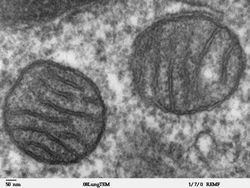
Of particular note Berridge found that the apparent need and ability of mitochondria-free primary tumor lines to re-assemble functional respirasomes, the supercomplexes responsible for respiration, differed according to cancer type. For example, breast cancer cells were found to have a unique 'threshold' level of respiration that was different from melanoma cells. Nover anticancer agents could in theory be designed to target specific components in more respiration-dependant cancer cells while leaving other cell types unscathed.
More here.
Thursday, August 20, 2015
The Disconnect Between Religion and Culture
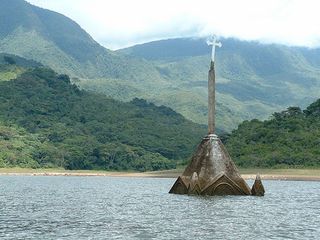
Olivier Roy in Eurozine:
We Europeans live in secular societies and not in pre- or post-secular societies. Secularization has prevailed globally, even in Muslim countries. Of course, that does not mean that people have become irreligious. A society can consist of a majority of believers and still be secular, as in the United States.
In order to explain this assertion, which might sound paradoxical when the world is being shaken by the rise of the “Islamic State”, it will be necessary to discuss the changing nature of the link between culture and religion, and particularly the “de-culturation” of religion.
There are many different ways to define secularization. As a social phenomenon, it is not an abstract process; it is always the secularization of a given religion, whose nature changes as secularization unfolds. Common definitions of secularization include three elements.
The first is the separation of state and religion, of politics and confession, without necessarily entailing a secularization of society. The United States is a good example: although there is a strong separation of church and state, levels of religiosity among the population are still high. The First Amendment of the American Constitution stresses both secularity and religious freedom. The second element in definitions of secularization is the decline in the influence of religious institutions in societies. Activities such as healthcare and education are now managed by the state or the private sector. In Europe, the churches have clearly withdrawn from the “management of society”.
The third element in definitions of secularization is what Max Weber called Entzauberung – the disenchantment of the world. This does not mean that people become atheists, but that they care less about religion. Religion no longer plays a major role in our everyday lives, even if we still consider ourselves part of a religious community. In this sense, secularization corresponds to the marginalization of religion in society, rather than its exclusion.
More here.
What Donald Trump gets about the electorate

Lee Drutman in Vox:
As the punditry attempts to make sense of the continued popularity of Donald Trump, the prevailing establishment narrative has been simple: He's an anti-establishment buffoon; he's channeling an angry mood; his moment will pass. But as Ezra Klein argued on Monday, this narrative may be wrong. What if Trump actually represents a sizable electorate that Beltway elites have marginalized?
The data on this is pretty clear. Put simply: While most elite-funded and elite-supported Republicans want to increase immigration and decrease Social Security, a significant number of voters (across both parties) want precisely the opposite — to increase Social Security and decrease immigration. So when Trump speaks out both against immigration and against fellow Republicans who want to cut Social Security, he's speaking out for a lot people.
By my count of National Election Studies (NES) data, 24 percent of the US population holds this position (increase Social Security, decrease immigration). If we add in the folks who want to maintain (not cut) Social Security and decrease immigration, we are now at 40 percent of the total electorate, which I'll call “populist.” No wonder folks are flocking to Trump — and to Bernie Sanders, who holds similar positions, though with more emphasis on the expanding Social Security part and less aggression on immigration.
More here.
Over at Resurgent Dictatorship:
The Asian Infrastructure Investment Bank. The BRICS Bank. The Shanghai Cooperation Organization. What do these organizations have in common? For starters, China is a major player in each of them. And in their own way, each of them indicate how China—and other authoritarian governments, including Russia, Saudi Arabia, and Venezuela—have tired of playing by the rules of existing international institutions.
A recent panel discussion organized by the International Forum for Democratic Studies with a group of leading experts assessed how authoritarian regimes are creating new illiberal norms and institutions as part of their efforts to reshape global governance toward their own preferences. The speakers described how illiberal regimes in Eurasia, the Middle East and North Africa, and Latin America are attempting to reforge global institutional frameworks by prioritizing state sovereignty, security, and mutual non-interference over democratic accountability, government transparency, and respect for human rights.
Alexander Cooley—who analyzes the emergence of authoritarian counternorms in his July 2015 Journal of Democracy article (further discussed here on the blog)—warned that autocrats have become surprisingly adept at neutralizing and subverting the institutions that have traditionally upheld democratic norms. By introducing antidemocratic norms into regional rules-based bodies, creating alternative institutions, and cracking down on NGOs, Cooley argued that authoritarian regimes are challenging scholarly assumptions that regional integration would contribute to the proliferation of democratic norms. Instead, illiberal regimes have discovered that these tactics can be used with particular effect at the regional level as a buffer against international criticism and to silence local voices who once played a key role in bringing human rights violations to the attention of regional organizations.
More here.
Researchers have designed a simple fusion reactor that could be running in 10 years
Fiona MacDonald in Science Alert:

For decades, scientists have been trying to find a way to harness nuclear fusion – the reaction that powers stars – because of its ability to produce almost-unlimited energy supplies using little more than seawater, and without emitting greenhouse gasses. But despite many promising designs, finding a way to contain and commercialise the reaction on Earth has proven far more challenging than imagined. In fact it's a long-running joke among scientists that practical nuclear fusion power plants are just 30 years away – and always will be.
But not only does the new MIT design promise to be cheaper and smaller than current reactors, it also provides hope that commercial nuclear fusion reactors could become a reality in our lifetime, with the team explaining that similar devices in size and complexity have taken just five years to build.
“Fusion energy is certain to be the most important source of electricity on Earth in the 22nd century, but we need it much sooner than that to avoid catastrophic global warming,” David Kingham, a UK-based nuclear fusion expert who wasn't involved in the research, told David L. Chandler from the MIT news office. “This paper shows a good way to make quicker progress.”
To explain it very simply, nuclear fusion relies on fusing hydrogen atoms together at super-high temperatures to release enormous amounts of energy. This is different to the nuclear fission used in nuclear power plants, which is where scientists split atoms to generate electricity – a process that's less stable and also produces large amounts of nuclear waste.
So why aren't we already using nuclear fusion to generate ridiculous amounts of clean energy?
More here.
Jared Diamond: How societies can grow old better
reading THE OXFORD COMPANION TO SUGAR AND SWEETS

We are, it seems, pre-determined to love the taste of all things sweet. Evolutionary biologists argue that survival once depended on our ability to take in quickly high amounts of nutritional energy, a major source of such energy being found in carbohydrates, which include sugar. As frugivores, we generally prefer our fruit as ripe as possible, its degree of edibility being signalled by sweetness, too. While sweetness signals calories, bitterness in contrast may indicate the presence of toxins. It appears that our predilection for sweetness is, like the incest taboo, a cross-cultural phenomenon, and that it is ubiquitous and, in all likelihood, innate: the facial expressions of new-borns, for example, display unambiguous pleasure when sugar is placed on their tongues. We appear, moreover, to have raided beehives for millennia: there is evidence in Mesolithic cave paintings that feeding on honey has always been part of our primate nature. We share our love of sweetness with most other mammals, the sole exception being felines.
Psychoanalysts would mobilize a different model to explain our affection for candies, cakes and chocolates, pointing to the sweetness of mother’s milk, and to the fact that, colic notwithstanding, this earliest of our encounters with nourishment tends to be firmly aligned with comfort and pleasure. Another core function of the consumption of sweets is thus also to provide solace, by transporting us back into the domain of the oral stage where the sensory responses of the mouth and taste buds reigned supreme. As Proust has shown, madeleines and their equivalents can also be the vehicles of memory, taking us back to childhood.
more here.
an encounter with yeats

It is impossible, at this space of time, to record all that he said, but his voice, his gesture, his appearance and some of his very words, are indelibly printed on my memory. Looking back, I think now as I thought then, that his greatness lay in his simplicity, that direct simplicity only possessed by the truly great. And this simplicity shone out now in two special ways – in his quietness and dignity. I might even say beauty, in that noisy, ugly room, and in his direct sincerity of speech with me, who was, after all, an unknown stranger. And I was a woman. Do not mistake me; this is no self-deprecation! The point is, and to me it is vital, that I am acutely aware that there are many men with alleged claims to greatness, sex equality creeds, and intimate friendships with women, who, nevertheless, cannot, in their inner being, accept women as fellow humans, and are therefore, in my eyes, completely damned. Some, of course, are better than their creed: what Yeats’s creed was, whether he ever formulated one, I do not know. I do know that he accepted me now as one with himself. Obviously, I am not speaking of personal achievement but of human existence. From the sex point of view, or from any other, as I saw him, there was no trace of patronage in him. Fame had left him unspoilt.
more here.
problems with object-oriented ontology
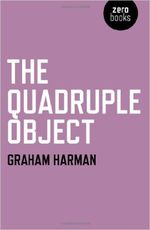
Amid all the excitement about object-oriented philosophy, no one has paused to work out how talk about these new terms for relation is supposed to improve radically on the concept of “relation” in the history of philosophy. The problem is that the original sins of “relation” are not rendered entirely clear in Harman’s and his followers’ writing, apart from glib remarks about poststructuralist relationality, systems theory, and human observation. There’s really no need to overturn the concept of relation in the cursory manner of the object-oriented ontologists, because there’s already plenty in the history of philosophy since Aristotle to instruct us that relation is not always human or correlational, reciprocal, or even fixed or permanent, or anything more than a “moment” of relating that’s always vanishing by dint of becoming and decay. That’s why philosophers in the late Middle Ages commonly distinguished between relationes reales, relations among all entities apart from human perception, and relationes rationis, those relations we’ve reasoned out in our inspection of the world. Kant, for his part, knew that relation is not only aesthetic (what Aristotle derided as the “said-of” of relation; i.e., that relation is what we make of it). Rather, he understood that the problem of relation is exactly the same as the problem of the thing-in-itself: There are relations in the noumenal world, but we cannot think them directly because we have access only to phenomenal relations, the imperfect representations of noumenal relations. The human version of relation, in other words, isn’t the same as noumenal relation, and isn’t the only kind of relation. This idea is all over Kant’s lectures in metaphysics, which none of the object-oriented ontologists seem to know.
more here.
Scientists discover atomic-resolution secret of high-speed brain signaling
From Kurzweil AI:
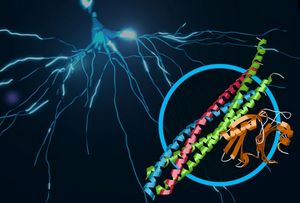
Explains rapid triggering of brain signaling
In this latest research, the scientists found that when the SNAREs and synaptotagmin-1 join up, they act as an amplifier for a slight increase in calcium concentration, triggering a gunshot-like release of neurotransmitters from one neuron to another. They also learned that the proteins join together before they arrive at a neuron’s membrane, which helps to explain how they trigger brain signaling so rapidly. The team speculates that several of the joined protein complexes may group together and simultaneously interact with the same vesicle to efficiently trigger neurotransmitter release, an exciting area for further studies.
More here.
Islam and the “Cold War baroque”
Raza Rumi in The Friday Times:
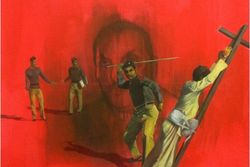
This new representation of “Islam” started to take shape in the late 1980s when Salman Rushdie’s book, The Satanic Verses, invoked violent passions among some Muslims and thereby delineated a marker – between the “civilised” and the “violent”. This was also when the Berlin Wall was demolished (1989) and the first Iraq war (1991) was waged to “liberate” Kuwait. However, these brewing forms found a new shape and discourse after the events of 11 September 2001 when this imaginary notion of Islam found a whole new meaning and “changed” the world. According to Abbas, the key elements of this new conception of Islam comprise debates around the veiled or “pious” Muslim woman, the militant and the Muslim “injured” by “free speech” in the West. A central argument she presents is that “freedom”, as used in mainstream parlance – and particularly in popular culture – is one that is imagined as modern and Western, thereby reverting to a peculiar imposition of “Enlightenment”. Abbas unpacks a plethora of such Eurocentric terms and critiques their application as expressions of imperial discourse creation. For instance, the “pious Muslim” outraged at the West and injured by its “values” may, in effect, be wishing for enslavement and is, therefore, envisioned as freedom’s “other”. ? Taking this critique of the contemporary view of “Islam” in anthropological terms, Abbas undertakes a sweeping overview of cultural production, employing references from television, cinema and novels. Interestingly, the book ends up showing how the most nuanced contestations of Islam today are contained in the works of Muslim intellectuals and artists.
More here.
Thursday Poem
The Miner
I dig, I dig beneath the ground.
I dig boulders that shimmer like snake skin.
I dig beneath Ostrava above.
My lamp is blown out, and my hair has fallen
sweaty and matted across my forehead.
Bitterness wells up in my eyes.
The veins in my skull fill with smoke,
and from under my fingernails red blood flows.
I dig, I dig beneath the ground.
Hefting a massive hammer in the pits,
I dig at Salmovec.
I dig at Rychvald and at Petřvald.
While my wife, at Godula, freezes and whimpers
hungry whelps weep in her lap,
and I dig, I dig beneath the ground.
Sparks shoot from the tunnel and my eyes,
as I dig at Dombrová, and at Orlová,
at Poremba and beneath Lazy.
Above me, overhead, the rumble of hooves,
the count riding through the village. His dainty lady,
rosy cheeked and smiling, urges the horses on.
I dig, I wield the pickaxe.
My ashen wife begs at the castle
wanting bread as her own breast is dry of milk.
Such a kind-hearted master,
with a castle made of yellow stone, while
under lock and key Ostravice groans and breaks.
Before the gate two black curs growl.
Why did she go to beg and scrounge at the castle?
Does rye grow in the manor fields for miners' mouths?
I dig at Hrušov and at Michálkovice.
What of my sons, what of my daughters,
when they pull me dead from the pit?
My sons will go on digging and digging,
digging at Karviná, and my daughters—
what fate awaits the daughters of miners?
What if one day I flung this accursed lamp into the pit,
straightened up my crooked neck?
Made a fist of my left hand and strode intently.
Traced an arc from the ground to the sky,
my hammer raised and my eyes a-flash.
There, beneath the sun of god.
.
by Petr Bezruč
from Silesian Songs
translated from the Czech by Jacob A. Bennett
Wednesday, August 19, 2015
Art, anxiety, and the Greek crisis
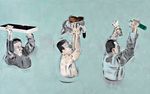
It’s early July, and the Greek painter Apostolos Georgiou is wondering where else in Europe he might be able to live. Galleries can barely survive in Athens, he says, and the collectors have disappeared or are only buying abroad. The long-delayed project for a permanent museum of contemporary art in Athens seems more chimerical than ever. So where to go: Germany? Italy? England? “London is too expensive,” he figures, but then asks, “Would I be able to find an affordable place an hour’s journey outside the city?” It depends, I reply. Most areas near the city are stockbroker territory; he’d need to settle beyond the commuter zones in one of those shabby, forlorn seaside towns like Margate, Ramsgate, or Whitstable, if they’re still affordable.
I’m ostensibly visiting Apostolos to choose some of his works for a group show I’m organizing for a London gallery this fall. In fact, we could have made the arrangements by e-mail, but I had a further reason for coming: I wanted to understand how and why one continues to make art in a crisis—how one endeavors to create something, like poetry, that “makes nothing happen” while being (to borrow a few more of Auden’s words) “punished under a foreign code of conscience.”
more here.
On the new Whitney Museum, designed by Renzo Piano

What’s a museum? This is the question I asked in these pages some years ago, and one that museums now seem compelled to answer with ever more emphatic declarations. It is said that museums have gone from “being about something” to “being for somebody,” racing to shed their old skins and remaking themselves in our image. So all museums must now become revisions, articulated interventions and reinterpretations of their former selves and their place in the cultural world—a compulsion now embraced by the new Whitney.
We have heard the modern museum referred to as a “white box.” Here is the museum as sky-box, an institution built as much to be looked out of as looked in to, a place where see-and-be-seen has moved from the periphery to the main event. The difference between these two experiences, between the outside looking in and the inside looking out, defines the design. Indeed, the dichotomy reflects, reverses, and luxuriates in a quality of outsiderness that has always pervaded this particular institution.
The new Whitney Museum, designed by Renzo Piano and Renzo Piano Building Workshop, along with Cooper Robertson, at a cost of $422 million, opened to much fanfare on May 1.
more here.
We Dance On: On Reading Roethke

At the time of Roethke’s death in 1963 from a heart attack in a swimming pool on Bainbridge Island, which lies directly across Puget Sound from Seattle, he was regarded as one the preeminent living American poets, rivaled only in his generation by Robert Lowell. If you take a look at his place on the shelf of any large university library, you’ll find a hefty swath of scholarship on him dating from the late-’50s well into the early-’70s. In the early-’80s, though, scholarly work on Roethke dried up. Though his poetry was much lauded during the final decade of his life — he won the Pulitzer Prize in 1954 for The Waking, and received both the Bollingen and the National Book Award for 1959’s Words for the Wind — he regarded himself principally as a failure. In comparison to other of his contemporaries whose places in literary history have for the most part solidified, Elizabeth Bishop being but one example, his star has fallen. This despite winning another National Book Award posthumously for The Far Field, released two years after his death, despite nearly winning another for his Collected Poems the next year, and though his work was a tremendous influence on both Sylvia Plath and, as poet August Kleinzahler pointed out recently in the London Review of Books, John Berryman. In an interview with The Paris Review in 1976, at what was probably the peak of Roethke’s posthumous fame, the poet James Dickey referred to him as “the greatest American poet,” even going so far as to say Walt Whitman was “no competition” for him. Yet in the years since, Roethke’s work has rusted into oblivion, largely unread and unremarked-upon.
more here.
WE ARE NOW AT THE POINT IN THIS ARGUMENT WHERE I REALIZE I AM WRONG
Jacob Rosenberg in McSweeney's:
Damn. That was a really good point. When I started this discussion, which quickly turned into an argument that I keep demanding be called a “discussion,” I had no idea that you felt so passionately or had such a well-reasoned stance. Not only have you been calm throughout this ordeal, but you have skillfully dealt with my flailing attempts to “win” by concocting straw men of your points. You also seem to be putting forth a genuine effort to understand my position while explaining yours. And, can I just say (well, not so much say but rather think to myself as you make another well-reasoned point), that you are doing an excellent job. It’s been, maybe, 15 minutes that we’ve been talk-yelling, with you mainly talking and me mainly yelling, and not only do I agree with you, but I’ve come to the conclusion I have sounded like an idiot for years about this subject.
Upon realizing that I am totally wrong and you are totally right, I guess I only have one option: double the fuck down.
More here.