
Transcript here.
Category: Recommended Reading
Over half of psychology studies fail reproducibility test
Monya Baker in Nature:

According to the replicators' qualitative assessments, as previously reported by Nature, only 39 of the 100 replication attempts were successful. (There were 100 completed replication attempts on the 98 papers, as in two cases replication efforts were duplicated by separate teams.) But whether a replication attempt is considered successful is not straightforward. Today in Science, the team report the multiple different measures they used to answer this question.
More here.
The revival of powerful literature about the Levant

In English, the word “Levantine” has long been a pejorative, and at a certain colonial point referred to those upwardly mobile non-Muslim Middle Easterners considered contemptible by commentators of various stripes for being neither here nor there, whether socially or ethically. “Among this minority are to be found individuals who are tainted with a remarkable degree of moral obliquity,” sniffed onetime consul general of Egypt Evelyn Baring back in 1908. Yet for those more recent writers and thinkers who have set out to reclaim the term, such hybridity is the key to what has made the region vital. In his groundbreaking 1993 book After Jews and Arabs: Remaking Levantine Culture, for instance, Ammiel Alcalay writes of the “fertile symbiosis” and “dense and intricate interconnectedness” of the “old” Levantine world.
Which brings us back to the irony of that L in ISIL: Whether muttlike menace or commendable cosmopolitan, the classic, shape-shifting “Levantine” seems the very opposite of the rigid young zealot now being enlisted to behead captives, rape slaves, and smash ancient statuary in the name of Abu Bakr al-Baghdadi’s viciously monolithic caliphate.
more here.
Maxine Kumin 1925–2014: A Life in Poetry

Hers was the world of presence, of the actual: she spoke always in the language of the body; the choice of words is a diction decidedly Anglo-Saxon—the Germanic-descended language of peasants and pig farmers in England, not the Latin of Church and university, or the Romance-language French of the court. The Latinate words in English, more elevated, more distanced from the sweat of bodily life, are seldom found in her poems, whose diction, over time, grew ever more plain. “My work,” she said in an interview when she was in her 80s, “has gotten bonier over the last ten years. I’ve always had a narrative thread, but my poems are tougher, more focused . . . they use fewer adjectives. The poet’s investment in the material is what makes a poem memorable.”
Max always lived actively in her body—a competition swimmer and water ballet adept in her youth, swimming remained a constant of her life, as did riding the horses she rescued and bred; both activities make the body a part of another, larger body—of water, of the horse—and both, like writing, require discipline, form, pacing and endurance. Body and mind were so conjoined in her that her life on the farm always provided imaginative fodder: the metaphors for her inner life, dreams and musings. She was impatient of abstractions, and forbade them to her students.
more here.
On New York Hardcore

ONE OF THE INEXHAUSTIBLE sources of conversation among fans of hardcore punk is the attempt to identify the onset of a band’s (or scene’s, or label’s) irremediable decline. For example: When did Black Flag lapse into long-haired, noodling weirdness? One connoisseur might offer a contrarian’s apology for the freak-outs of their late album My War, another will insist that it was all over once barrel-chested Henry Rollins joined the band. When did the robust Washington DC scene collapse into the self-flagellating exhibitionism of emo? My own position here is that Minor Threat’s Out of Step from 1983 was already a hopeless case, the veritable death throes of the DC sound, while others are more forgiving, straining to single out modest achievements in what had become mere competency.
Knowledge of hardcore among its partisans easily organizes itself into these canned teleologies. But in the case of New York’s hardcore scene, thoroughly documented in Tony Rettman’s oral history, the reliable trajectory of most scenes—an initial monolithic “sound” ultimately and inexorably giving way to decadence and exhaustion—doesn’t apply. One is dealing instead with something more mysterious, like the enigmatic collapse of the Mayan or Khmer empires. Regrettable trends and eccentricities, which ought to have been lethal, instead became defining and enduring aspects of the scene.
more here.
Thursday, August 27, 2015
Against Charity
Mathew Snow in Jacobin:

Over 17,000 people have pledged to give at least 1 percent of their income annually to such endorsed causes, and over 1,000 have pledged to give at least 10 percent. It is particularly popular among millennials, leading some to laud it as “the new social movement of our generation.”
Although the argument is over forty years old, most of the movement’s growth has taken place in the past half decade, and this year saw the publication of numerous books on the subject — How to Be Great at Doing Good, Doing Good Better, Strangers Drowning, and Singer’s latest, The Most Good You Can Do — along with extensive,positive coverage in popular media.
Not everyone is convinced.
More here.
Cancer cells programmed back to normal by US scientists
Sara Knapton in The Telegraph:
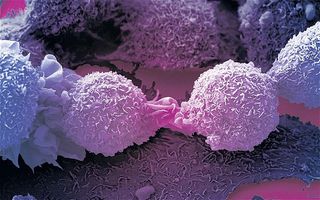
Scientists at the Mayo Clinic in Florida, US, said it was like applying the brakes to a speeding car.
So far it has only been tested on human cells in the lab, but the researchers are hopeful that the technique could one day be used to target tumours so that cancer could be ‘switched off’ without the need for harsh chemotherapy or surgery.
“We should be able to re-establish the brakes and restore normal cell function,” said Profesor Panos Anastasiadis, of the Department for Cancer Biology.
“Initial experiments in some aggressive types of cancer are indeed very promising.
“It represents an unexpected new biology that provides the code, the software for turning off cancer.”
More here.
Why does this Harvard law professor want to run for president?
From Fusion:

“In this presidential race, 400 families have given half the money that has been raised in the election cycle so far,” Lessig told Fusion’s Alicia Menendez. “This tiny, tiny number have an extraordinary influence in our political system because every politician knows if they don’t keep them happy, they have no shot at getting elected.”
Lessig compares the 220 fundraisers Obama attended during his 2012 campaign for reelection, to the 8 fundraisers Ronald Reagan attended when he ran for reelection in 1985.
“How do you run the free world? How are you President of the United States and who are those fundraisers with? The most wealthy, powerful people in our society.”
The academic says that if he’s able to raise $1 million by Labor Day this year, he will make his bid for the presidency official as a single-issue candidate, and join the 2016 democratic presidential primary.
Lessig specifically wants to pass the Citizen Equality Act of 2017 which is made up of three major key points: an equal right to vote, which includes making Election Day a national holiday, equal representation, and citizen-funded elections.
More here.
are they charlie?

The French are not given to outbursts of patriotic fervour. This makes the reaction to the carnage at Charlie Hebdo magazine and a kosher supermarket in Paris in January all the more extraordinary. In the biggest wave of demonstrations the country has ever seen, more than 4 million people marched to honour the victims. For the first time since Armistice Day 1918, the Marseillaise was sung at the National Assembly. “Je suis Charlie” became the rallying cry of a nation seemingly united around the basic “republican” values of secularism, tolerance and free expression.
It soon emerged, however, that not everyone in France was Charlie. In areas with large Muslim populations, few mourned journalists who had insulted the Prophet. Many supporters of the far-right Front National (FN) also begged to differ. To them, the fact that the political establishment, Left and Right, rallied in support of an offensive magazine run by leftovers from the 1960s epitomized everything that was wrong with the country.
The pro-Charlie camp was unsettled by these cracks in the consensus. They appeared at a time when radical Islam is on the rise in immigrantbanlieues and the FN is threatening the pro-EU order. But in a way, the naysayers helped galvanize the “Je suis Charlie” mainstream. They could be dismissed as Islamists or fascists. Either way, they had no place in a modern, secular, liberal country. The true people of France had to strike an even stronger blow for the République.
more here.
as much nabokov as you need
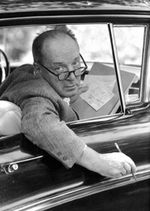
For all those keen quivering Nabokovians out there with infinitely deep pockets – are there any other kind? – or perhaps with access to a university library, these are undoubtedly the years of plenty. In 2014 alone, even the most casual short-trousered amateur Nabokovterist armed with a basic butterfly net would have been able to catch Maurice Couturier'sNabokov's Eros and the Poetics of Desire, Yuri Leving's Shades of Laura: Vladimir Nabokov's Last Novel, Samuel Schuman's Nabokov's Shakespeare, and the paperback reissues of Gerard de Vries and D Barton Johnson's Nabokov and the Art of Paintingand Vladimir E Alexandrov's Nabokov's Otherworld. Almost forty years after his death there is, it seems, much good Nabokov-hunting still to be had. In a lecture on 'The Art of Literature and Commonsense', collected in his Lectures on Literature – which remains the perfect entry point into the vast, prodigious kingdom of the Great Nabob – Nabokov remarks, 'In a sense, we are all crashing to our death from the top story of our birth … and wondering with an immortal Alice at the patterns of the passing wall. This capacity to wonder at trifles – no matter the imminent peril – these asides of the spirit … are the highest form of consciousness.'
So as we go crashing to our death, let us continue, like Alice, to wonder at trifles. This year has already seen a reprint of Galya Diment's excellent and eccentric Pniniad, an utterly thorough study of the relationship between Nabokov and the much-thwarted Marc Szeftel, his colleague at Cornell and the model for poor Timofey Pnin, hapless 'assistant professor emeritus' in Pnin. And now comes Robert Roper's perfectly usefulNabokov in America.
more here.
Summer Is Over: On John Cheever’s “The Swimmer”

John Cheever’s “The Swimmer” is the perfect read for the waning days of summer, when early evening thunderstorms break the heat, and when children play under moonlight — knowing their freedom will soon end. In the more than 50 years since it was originally published in The New Yorker, Cheever’s tale has become an undergraduate rite-of-passage, a staple of graduate writing programs, and a favorite of readers long out of the classroom. In the same way that James Baldwin’s “Sonny’s Blues” and Flannery O’Connor’s “A Good Man is Hard to Find” are often relegated to shorthand, Cheever’s tale has its own summary: a man’s decision to swim home is not what it seems. The genius of Cheever’s narrative is how it courts, but ultimately resists, myth. The story gestures toward The Odyssey, but remains painfully provincial and absolutely suburban.
When a story reaches iconic status, we trade the actual text for its themes. Granted, the thematic considerations of “The Swimmer” are nearly endless. It is a love letter to youth and sport; document of mid-century Protestant despair; a metaphor for our seemingly perpetual American economic downturn. “The Swimmer” could be put into conversation with Rick Moody’s The Ice Storm, contrasted with the Lisbon family’s superstitious suburban Catholicism in Jeffrey Eugenides’s The Virgin Suicides, or perhaps best paired with Laurie Colwin’s fine story “Wet,” another tale of secrecy and swimming. It is also a quite teachable tale: no other work of short fiction better examples John Gardner’s potamological concept of fictional profluence than a story the main character of which travels by water.
more here.
Dear Hillary Supporters Wary of Sanders’ Electability
Mothers of Invention: possibilities in parenthood
Parul Sehgal in Bookforum:

…The issue of attention burns at the core of all these books—Rachel Cusk examines how it contracts after the birth of a child, Anne Enright how it expands. Sarah Ruhl makes an aesthetic out of how it fractures. Ben Lerner asks if the uniquely intense quality of attention specific to the domestic can be coaxed out of familial bonds and into the public, Maggie Nelson how language helps or hinders our abilities to attend to each other. They all invite us to try to hold a little more in our eye, to define families broadly—out of necessity and joy—to remember, as Eula Biss might say, that they are continuous with everything on earth. “Everything is relevant,” wrote the poet James Tate. “I call it loving.”
More here.
treating psychopaths
Kent A. Kiehl and Joshua W. Buckholtz in Delancey Place:
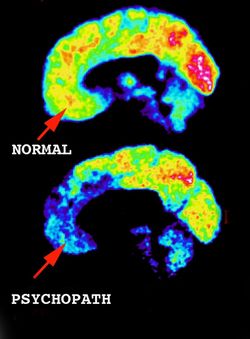
…”A man we will call Brad was in prison for a particularly heinous crime. In an interview he described how he had kidnapped a young woman, tied her to a tree, [abused] her for two days, then slit her throat and left her for dead. He told the story, then concluded with an unforgettable non sequitur. 'Do you have a girl?' he asked. 'Because I think it's really important to practice the three C's — caring, communication and compassion. That's the secret to a good relationship. I try to practice the three C's in all my relationships.' He spoke without hesitation, clearly unaware how bizarre this self-help platitude sounded after his awful confession. “Thanks to technology that captures brain activity in real time, experts are no longer limited to examining psychopaths' aberrant behavior. We can investigate what is happening inside them as they think, make decisions and react to the world around them. And what we find is that far from being merely selfish, psychopaths suffer from a serious biological defect. Their brains process information differently from those of other people. It's as if they have a learning disability that impairs emotional development.
More here.
Thursday Poem
Roy Orbison and John Milton
Are Still Dreaming
.
You know what I mean: In the instant
of waking in bliss, the whole body smiles—
He’s still alive—She came back—They didn’t mean it—
We forgive and are forgiven—It all turned out—
And then the hand claws the duvet,
seized by the real, as all that’s warm just drops.
I know you know. But I seek a potion
to make me dream of the actual with the same fervor,
so I’ll wake to happy facts: It’s spring! It’s raining! Robins!
Someone will return a phone call today! My son
has watched the clock and let me nap for 35 minutes!—
and does not notice my face smacked wet
by the snap of the delusion, unmatched in sweetness,
that you promised to hold me always.
.
by April Bernard
from Romanticism
W.W. Norton & Company
Wednesday, August 26, 2015
julian barnes on van gogh

No one did colour more blatantly and more unexpectedly than Van Gogh. Its blatancy gives his pictures their roaring charm. Colour, he seems to be saying: you haven’t seen colour before, look at this deep blue, this yellow, this black; watch me put them screechingly side by side. Colour for Van Gogh was a kind of noise. At the same time, it couldn’t have seemed more unexpected, coming from the dark, serious, socially concerned young Dutchman who for so many years of his early career had drawn and painted dark, serious, socially concerned images of peasants and proletarians, of weavers and potato-pickers, of sowers and hoers. This emergence, this explosion from darkness, has no parallel except for that of Odilon Redon (who was prompted into colour more by internal forces, whereas Van Gogh was prompted into it externally – first in Paris by the Impressionists, and then by the light of the South). Yet there are always continuities in even the most style-changing of artists. Van Gogh’s subject matter, after all, remained much the same: the soil, and those who tend it; the poor, and their stubborn heroism. His aesthetic credo did not change either: he wanted an art for everyone, which might be complicated in means but simple to appreciate, an art that uplifted and consoled. And so even his conversion to colour had a logic to it. In his youth, reacting against the stolid piety and conformity of the Dutch Reformed Church, he had lurched not into atheism but its opposite, evangelism. His notion of working as a priest among the downtrodden was to end no more successfully than most of his other youthful schemes; but the fundamentalist, all-or-nothing streak in human beings, once aroused, never entirely goes away. So the striving painter who, in the most successful of his schemes, took himself off to Arles, first working alone, then alongside Gauguin, then alone again, then in the mental hospital in Saint-Rémy, was continuous with that violently principled younger man: he had grown up to become an evangelist for colour.
more here.
Jim Al-Khalili: How quantum biology might explain life’s biggest questions
melancholy

Melancholy is a word that has fallen out of favor for describing the condition we now call depression. The fact that our language has changed, without the earlier word disappearing completely, indicates that we are still able to make use of both. Like most synonyms, melancholy and depression are not in fact synonymous, but slips of the tongue in a language we’re still learning. We keep trying to specify our experience of mental suffering, but all our new words constellate instead of consolidate meaning. In the essay collectionUnder the Sign of Saturn, Susan Sontag writes about her intellectual heroes, who all suffer solitude, ill temper, existential distress and creative block. They all breathe black air. According to her diagnostic model, they are all “melancholics.” Sontag doesn’t use the word depression in the company of her role models, but elsewhere she draws what seems like an easy distinction: “Depression is melancholy minus its charms.” But what are the charms of melancholy?
There is a long history in Western thought associating melancholy and genius. We have van Gogh with his severed ear. We have Montaigne confessing, “It was a melancholy humor … which first put into my head this raving concern with writing.” We have Nina Simone and Kurt Cobain, Thelonious Monk and David Foster Wallace.
more here.
‘The Body Where I Was Born’ by Guadalupe Nettel
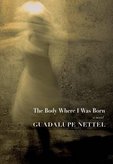
“I was born with a white beauty mark, or what others call a birthmark, covering the cornea of my right eye,” an unnamed female narrator states at the outset of Guadalupe Nettel’s autobiographical novel, The Body Where I Was Born. The spot, she describes, “stretched across my iris and over the pupil through which light must pass to reach the back of the brain.” And so, “in the same way an unventilated tunnel slowly fills with mold, the pupillary blockage led to the growth of a cataract.”
Thus begins a remarkable exploration into sight and the perceptions of childhood. Nettel, a talented Mexican writer who has been named one of the Bogota 39—one of the most promising young Latin-American writers under the age of thirty-nine—has called the novel’s narrator “I, myself.”
From the vantage of adulthood, on a psychoanalyst’s couch, she peers into her past, relitigating the bounds of normativity, the expectations of family, and the limits of medical science. She recounts how doctors, unable to repair the cataract, prescribed a torturous treatment that her parents took up with a passion, which involved subjecting her “to a series of annoying exercises to develop, as much as possible, the defective eye.” To strengthen it, a patch—a piece of flesh-colored cloth with sticky, adhesive edges—was placed over her other eye, making the world a mess of sounds and smells. Wearing the patch, she had to insert her head daily into a small black box with moving images of animals, a process she describes as agonizing.
more here.
Monarchy, Imperialism and Modernity: Munshi Premchand’s Unblinking Eye For Truth
Aseem Shrivastava in Caravan:
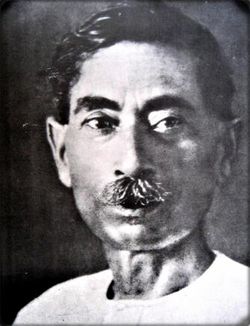
…In a few vernacular paragraphs, penned 87 years ago, Premchand depicted the modern world to be, above all, a system of power. He felt that this system was so deep and insidious that everyone was already a devotee of power and domination, and that the subjugation of countless others lower in the hierarchy was a corollary of this contagious habit. Premchand concluded his prescient essay with this paragraph: “In the time of monarchies only one individual was drunk on power. Under imperialism an entire community is consumed with this headiness, and they are capable of anything. All the affluence, all the knowledge and science, all religions and philosophies of the West are narrowed down today to one word: ‘selfishness’, and justice, truth, compassion, grace, rationality—everything is sacrificed at the altar of ‘selfishness.’”
More here.