
Category: Recommended Reading
coleen gray (1922 – 2015)
Ilona Eibenschütz talks and plays: Reminiscences of Brahms (1952)
Soylent Tastes Better Without the Utopian Rhetoric

Navneet Alang in TNR:
Soylent—a pale, powdery drink that is meant to satisfy all of a person’s nutritional needs—is perhaps the perfect symbol of the Silicon Valley mentality: efficient, soulless, and naïve. Of late, it’s been a lightning rod for criticizing “solutionism,” that term coined by tech critic Evgeny Mozorov to connote the tech industry’s habit of finding a technological answer to every question, even the unasked ones. Soylent seems to starkly reject the recent, almost religious fervor around food and gourmet culture—particularly its turn to the artisanal and the organic. If you have the slightest feeling that solutionism robs us of our sensual connection to the world, Soylent and its robotic creator, Rob Rhinehart1, are the perfect symbols to prove the sentiment true.
It is easy to gently mock Rhinehart’s idealistic, odd proselytizing, and, in turn, Valley culture itself. Soylent and other solutionist ideas are hyper-efficient in ethos, but also joyless and self-righteous in their asceticism. Yet the scorn laid upon both Soylent and Silicon Valley in particular might better be aimed at those creating the products, rather than the actual products themselves.
It is important to keep in mind that there is a disparity between the rhetoric of certain, powerful actors—Rhinehart included—and how their ideas are eventually implemented. Consider: Soylent isn’t actually that bad. When you divorce the product from the ideology of its creator, what you end up with is actually something rather useful and benign—a relatively cheap, durable, and increasingly sustainable source of nutrition for those times that a leisurely al fresco meal with a crisp Riesling just isn’t feasible.
If it were Rhinehart alone hawking an odd product, a crackpot technological voice crying out in the wilderness, that would be one thing. Unfortunately, he isn’t alone in speaking and acting in a manner that reveals a fundamental shakiness in his grasp of ethical and existential concerns: such obliviousness is endemic to the tech industry.
More here.
Trump This!

Over at Radio Open Source:
If Jeb Bush were caught, on a secret recording, dissing John McCain for getting captured by the North Vietnamese, he’d be denounced by every Republican living, even his dad. If Ted Cruz told a female staffer she’d look better on her knees, he’d be sent back to Canada.
So why is that from the billionaire candidate Donald Trump, wide-open narcissism, sexism, and anti-Mexican racism are accepted, even applauded? Maybe because Trump fits so comfortably into a mood of malcontent skepticism. Think George Wallace and Curtis LeMay before him: crazy or cynical, maybe, but in a familiar, American way.
So this week we’re looking for the many meanings in the Donald’s for-now popularity, and asking what his long candidacy might mean a new understanding of what America’s looking forward after Obama. So with historians Rick Perlstein and Heather Cox Richardson, and a chorus of voices, let us count the ways.
1. Trump’s a TV brand.
Trump has brought a certain televisual atmosphere with him — the look of entertainment news, The Apprentice and advertising, roasts and resort vacations — into an otherwise stale and overcrowded horse race. Our guest Jeet Heer says the Trump candidacy works like professional wrestling — it becomes scripted battle, and spectacularly vulgar. (We shouldn’t forget Trump himself has thrown a few punches at Wrestlemania.)
More here.
Saturday, August 15, 2015
The Neoliberal Arts
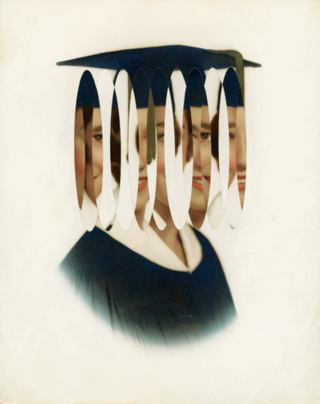
William Deresiewicz in Harper's:
I recently spent a semester teaching writing at an elite liberal-arts college. At strategic points around the campus, in shades of yellow and green, banners displayed the following pair of texts. The first was attributed to the college’s founder, which dates it to the 1920s. The second was extracted from the latest version of the institution’s mission statement:
The paramount obligation of a college is to develop in its students the ability to think clearly and independently, and the ability to live confidently, courageously, and hopefully.
leadership
service
integrity
creativity
Let us take a moment to compare these texts. The first thing to observe about the older one is that it is a sentence. It expresses an idea by placing concepts in relation to one another within the kind of structure that we call a syntax. It is, moreover, highly wrought: a parallel structure underscored by repetition, five adverbs balanced two against three.
A spatial structure, the sentence also suggests a temporal sequence. Thinking clearly, it wants us to recognize, leads to thinking independently. Thinking independently leads to living confidently. Living confidently leads to living courageously. Living courageously leads to living hopefully. And the entire chain begins with a college that recognizes it has an obligation to its students, an obligation to develop their abilities to think and live.
Finally, the sentence is attributed to an individual. It expresses her convictions and ideals. It announces that she is prepared to hold herself accountable for certain responsibilities.
The second text is not a sentence. It is four words floating in space, unconnected to one another or to any other concept. Four words — four slogans, really — whose meaning and function are left undefined, open to whatever interpretation the reader cares to project on them.
More here.
The Mastery of Non-Mastery

Michael Taussig in Public Seminar:
As I write, the plug is being pulled on the steady-state.
Violence and tragedy take revenge on humanity through routinization. Sooner or later we become immune.
But is there a reverse process, such as Freud writes about in Beyond the Pleasure Principle, where the nightmare recurs so as to provide the anxiety that would have defended you against the worst excesses of shock?
Talking in Istanbul in the Kurdish restaurant (where I was never allowed to pay), where once he knew I was born in Sydney, the waiter showed me his cell phone photo of Ashley Johnston, a young Australian who had died fighting in the siege of Kobane; or dining with Nazan and Deniz outside at night with a sea breeze in my face; or in the seminar room in the anthropology and sociology department of Bogazici university, I was de-immunized — not only by the recurrence of the nightmare but by its counter-wave of sensitivity and friendship, and by what I discerned as a specific warp to Turkish culture provided by Kurdish Being, that ever-desired enemy within. It was as if Turkish culture, or at least its Stately essence, was utterly dependent on that which it had to deny and destroy and thus make spectral, every day more powerful.
This warp is a sick state of affairs, predisposed to surreal twists — as with Nazan’s story of the drone and the black umbrellas. A PKK woman combatant in the mountains in eastern Turkey unfurled her umbrella when a drone passed overhead. All the other women were killed. So the guerrillas ordered black umbrellas from Russia. But the trucks were intercepted by the Turkish army expecting arms, only to find . . . black umbrellas.
Then there was the video of a woman dancing in the ruins of Kobane. As the film stopped, lo and behold, that same woman emerged from the darkness to dance in the audience there in Istanbul. Kobane is everywhere! And we are dancing. Right?
Like the ships in the Bosphorous that from my window seemed to be passing through the forest I was being re-scaled, alive with the turbulence of internal relations; of the Other within.
More here.
Free speech in an age of identity politics
Kenan Malik in Pandaemonium:
This is a transcript of my TB Davie Memorial lecture that I gave at the University of Cape Town on Thursday 13 August.
To appreciate why the debate about academic freedom is not yet exhausted, and probably never will be exhausted, we need to understand two points. First, that while there is something special about the academy that requires freedom of speech, there is nothing that should make us privilege academic freedom above other forms of freedom of expression. Freedom of expression is a right, not a privilege. We need to defend academic freedom. But we need to recognize, too, that freedom of expression in the academy is intimately related to freedom of expression more widely in society. Our ability to defend academic freedom is intimately linked to our ability and willingness to defend freedom of expression more widely. So, I will talk today about the academy and academic freedom. But I will talk much more about the wider social context of free speech and the assault upon it.
And second, to defend free speech, whether in the academy or in society more widely, we need to know not simply why freedom of expression is important but also in what ways that freedom is being threatened.
More here.
US Energy Secretary Ernest Moniz on the Iran deal
In the wake of the Iran nuclear deal announced last month, US Energy Secretary Ernest Moniz has become a prominent figure in the Obama administration's wide-ranging efforts to convince Congress and the American people to support the deal. In the process, the physicist and longtime MIT professor—who was a key advisor on the US team during negotiations with Iran—has been praised for his ability to translate complex science into language accessible to laymen (and lay-congressmen) and has at the same time become something of a media favorite.
John Mecklin in Bulletin of the Atomic Scientists:
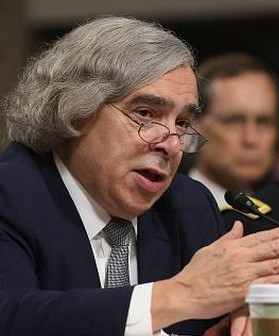
Moniz: No, I don’t think so surprised. What I’m finding is, I think, that when all is said and done, the strengths of the nuclear dimensions of the agreement are being quite well appreciated. The two major issues that I think are on people’s minds are, number one, this idea that—of course it was part of the construct of the negotiation following the President’s strategic choice years ago—that the agreement is focused specifically on the nuclear weapons issue in Iran and is not, at the same time, addressing other regional issues that we have with Iran. But again, that was a choice made years ago.
Secondly, while the agreement very clearly is very restrictive on Iran’s nuclear program, say for 15 years, there’s a concern that okay, after 15 years they become a threshold state. But of course, we point out that they are today a threshold state. The difference is whether one is going to be confronted with a very large Iranian nuclear program essentially tomorrow, with little verification and, if the agreement is undermined, very little international unity, versus an Iran that could rebuild a substantial program after 15 years, but with considerable enhanced verification and international unity. So that’s kind of the reality.
More here.
Attack on the pentagon results in discovery of new mathematical tile
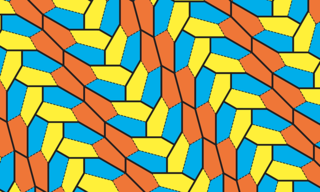
Joy as mathematicians discover a new type of pentagon that can cover the plane leaving no gaps and with no overlaps. It becomes only the 15th type of pentagon known that can do this, and the first discovered in 30 years.
Alex Bellos in The Guardian:
In the world of bathroom tiling – I bet they’re interested too.
If you can cover a flat surface using only identical copies of the same shape leaving neither gaps nor overlaps, then that shape is said to tile the plane.
Every triangle can tile the plane. Every four-sided shape can also tile the plane.
Things get interesting with pentagons. The regular pentagon cannot tile the plane. (A regular pentagon has equal side lengths and equal angles between sides, like, say, a cross section of okra, or, erm, the Pentagon). But some non-regular pentagons can.
The hunt to find and classify the pentagons that can tile the plane has been a century-long mathematical quest, begun by the German mathematician Karl Reinhardt, who in 1918 discovered five types of pentagon that do tile the plane.
(To clarify, he did not find five single pentagons. He discovered five classes of pentagon that can each be described by an equation. For the curious, the equations are here. And for further clarification, we are talking about convex pentagons, which are most people’s understanding of a pentagon in that every corner sticks out.)
Most people assumed Reinhardt had the complete list until half a century later in 1968 when R. B. Kershner found three more. Richard James brought the number of types of pentagonal tile up to nine in 1975.
More here.
President Jimmy Carter: The United States is an Oligarchy
Don’t Hate the Phone Call, Hate the Phone
Ian Bogost in The Atlantic:

The distaste for telephony is especially acute among Millennials, who have come of age in a world of AIM and texting, then gchat and iMessage, but it’s hardly limited to young people. When asked, people with a distaste for phone calls argue that they are presumptuous and intrusive, especially given alternative methods of contact that don’t make unbidden demands for someone’s undivided attention. In response, some have diagnosed a kind of telephoniphobia among this set. When even initiating phone calls is a problem—and even innocuous ones, like phoning the local Thai place to order takeout—then anxiety rather than habit may be to blame: When asynchronous, textual media like email or WhatsApp allow you to intricately craft every exchange, the improvisational nature of ordinary, live conversation can feel like an unfamiliar burden. Those in power sometimes think that this unease is a defect in need of remediation, while those supposedly afflicted by it say they are actually just fine, thanks very much.
But when it comes to taking phone calls and not making them, nobody seems to have admitted that using the telephone today is a different material experience than it was 20 or 30 (or 50) years ago, not just a different social experience. That’s not just because our phones have also become fancy two-way pagers with keyboards, but also because they’ve become much crappier phones. It’s no wonder that a bad version of telephony would be far less desirable than a good one. And the telephone used to be truly great, partly because of the situation of its use, and partly because of the nature of the apparatus we used to refer to as the “telephone”—especially the handset.
More here.
Bhimsen Joshi sings Miyan ki Todi
Note: Thanks to Siddhartha Mukherjee.
How to think about Islamic State
Pankaj Mishra in The Guardian:
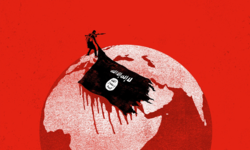
In the lengthening spiral of mutinies from Charleston to central India, the insurgents of Iraq and Syria have monopolised our attention by their swift military victories; their exhibitionistic brutality, especially towards women and minorities; and, most significantly, their brisk seduction of young people from the cities of Europe and the US. Globalisation has everywhere rapidly weakened older forms of authority, in Europe’s social democracies as well as Arab despotisms, and thrown up an array of unpredictable new international actors, from Chinese irredentists and cyberhackers to Syriza and Boko Haram. But the sudden appearance of Islamic State (Isis) in Mosul last year, and the continuing failure to stem its expansion or check its appeal, is the clearest sign of a general perplexity, especially among political elites, who do not seem to know what they are doing and what they are bringing about.
More here.
Saturday Poem
Bethel
A clear light, at all hours,
A girl at reception. And the evangelised
Stepping heavenward, up the wooden stairs,
Each with his version of Christ,
Showing the world a clean pair of heels
For Bible, drying out and three square meals –
And you, who sank your lance in Moby Dick,
Blissed-out, by the Skaggerak.
Nyhavn, Christianshavn
Mingling, splitting their cabin-lights –
Oil on water . . . Rustbuckets
In from Greenland, off the north Atlantic route,
Stinking tubs from Rekyavik, the Faroes.
Was it only yesterday
She Saved you, by a warehouse
Of flensed whales – the unadulterated joy
Of the first woman in years
On your skin, an Ishmael giving thanks
For a few words of English, the lingua franca
Of the homeless everywhere,
Knowing Bethel, ‘heavenly place’,
Brought back to yourself, in the after-trance,
By women in lights along the quays,
A laying on of hands?
.
by Harry Clifton
from The Winter Sleep of Captain Lemass
publisher: Bloodaxe, Newcastle, 2012
from The Winter Sleep of Captain Lemass
publisher: Bloodaxe, Newcastle, 2012
Friday, August 14, 2015
Violence is an unavoidable part of being human
Rowan Williams in the New Statesman:
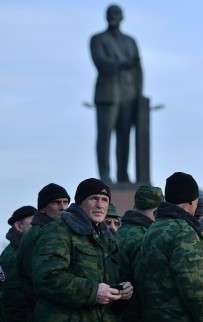
Richard Bessel begins his lucid and well-documented book with a round-up of contemporary views, from those who think first of the astronomical statistics of humanly devised injury and death in the 20th century to those (like Steven Pinker in a much-discussed recent book) for whom what matters is the gradual change in sensibility that has made us simply more sensitive to the suffering of others – as well as the relative absence of major international conflict in the past half-century or so. As Bessel observes, Pinker’s statistics will seem a little academic if you happen to live in South Sudan or Syria (or Baltimore or Johannesburg).
The paradox of our era in the modern North Atlantic world is that while we are probably objectively more secure against the casual daily risk of violence than our ancestors, we are more anxious and more outraged by the prospect as well as the reality of violence, and more prone to extend its meaning to forms of offensive or menacing speech and action that would not have registered for those ancestors. We are, in a word, more preoccupied with violence; hence the subtitle, A Modern Obsession.
More here.
Earthworks, new and ancient, and the art of disappearance
On the day we went to see the Great Serpent Mound, the rain plunged from the sky. Lightning shot down to the cornfields and made the cornfields roar. Everything was dark. Guides recommend that you come to the Serpent early or late in the day, when shadows alongside it are deep and the winding shape becomes bolder. But on the day we visited, the whole of Ohio was shadow, save the neat green grass of the Serpent’s skin, which was oddly bright.
When the first European settlers came to farm southwestern Ohio, they found earthen lumps scattered all around the land. They did not know what these lumps could be — some farmers went about flattening them, others farmed around them. In the 1840s, a local doctor and a newspaper editor from the town of Chillicothe investigated the mounds. They discovered wooden structures inside, built to house the dead of Native tribes whose names are lost to us now. Jewelry and effigies were placed around the cremated remains to keep the spirits company. Then the Mound Builders covered over the structures with layers of soil and sand. As the generations passed, new dead were buried on top of the old, and more earth was put on top, until the mounds grew higher and higher and the little wooden structure collapsed within.
more here.
Welcome to the nerve-wracking reality of being Finland
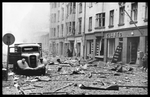
A year ago, Sofi Oksanen, Finland’s preeminent contemporary writer, took the podium at the PEN World Voices Festival in New York City. “Good evening, everyone,” she said, failing to smile. “I bring greetings from the bordering countries to Russia.” She paused to let the gravity of her nation’s geographic location sink in. She would devote the rest of her allotted seven minutes to a single, grim topic: the danger Russia poses to Western civilization. Other writers speaking that evening at Cooper Union’s Great Hall addressed societal and personal ills, some of staggering dimensions. But only Oksanen sounded genuinely scared. Indeed, she sounded like someone bringing a message from a country at war.
Three weeks later, Alexander Dugin, a once marginal philosopher whose ideas now seem to form the core of Putin’s politics, addressed a large crowd in Helsinki. He spoke of the threat that Western civilization poses to humanity and argued that Finland had a choice to make. It could stay with the West, which would increasingly pressure it to accept what he called a “posthuman,” and “postgender” reality, or it could side with Russia, which alone among the world’s powers was working to protect the traditional way of life. Dugin, whose long gray beard and dome-shaped forehead suggest a Russian Orthodox priest in civvies, stressed repeatedly that the choice would be Finland’s to make. “I am not advocating the annexation of Finland,” he said over and over again. “If I were, I would tell you.” If such a reassurance has ever calmed anyone, this was not the occasion.
more here.
thinking about the country

One of the first big splashes in American fiction this year was Ben Metcalf’s Against the Country, a three-hundred-plus-page tirade against the rural South by the former literary editor of Harper’s. In this novel, a narrator who happens to write exactly like Ben Metcalf recounts his childhood and adolescence in Goochland County, a real county in Virginia that almost every reviewer of the book has assumed is fictional. In fire-and-brimstone sentences that go on for hundreds of words, the narrator rages against those who glorify life in the countryside. Targets include Thomas Jefferson, Daniel Boone and Henry David Thoreau, but most importantly the pseudo-Metcalf’s own parents, who move the family to Goochland with the hope that living close to nature will be enriching. As Metcalf shows, the move proves to be just the opposite: Goochland, he tells us, is the land “in whose dirt our national evil was gestated, and out of whose grass it sprung, and on whose stock it immediately fed” (the sentence goes on for four more clauses). Nature, which Metcalf sees as malevolent, sets the stage for the ignorance that many Northerners see at the heart of Southern culture. Goochland provides “annoyance and lack and trepidation,” Metcalf says, “and what more is asked for our violence to germinate and grow?”
more here.
Rescuing Wildlife Is Futile, and Necessary
Helen MacDonald in the New York Times Magazine:
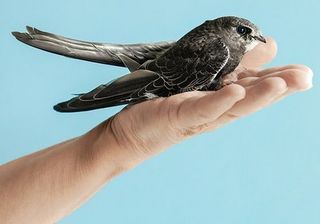
More here. [For my sister Sughra Raza who is on a quest to save the wild elephants of the world.]