Biohackers gear up for genome editing

Heidi Ledford in Nature:

CRISPR_logoA complete lack of formal scientific training has not kept Johan Sosa from dabbling with one of the most powerful molecular-biology tools to come along in decades. Sosa has already used CRISPR, a three-year-old technology that makes targeted modifications to DNA, in test-tube experiments. Next week, he hopes to try the method in yeast and, later, in the model plant Arabidopsis thaliana. Hailed for its simplicity and versatility, CRISPR allows scientists to make specific changes to a gene’s sequence more easily than ever before. Researchers have used CRISPR to edit genes in everything from bacteria to human embryos; the technique holds the potential to erase genetic defects from family pedigrees plagued by inherited disease, treat cancer in unprecedented ways or grow human organs in pigs. One researcher has even proposed modifying the elephant genome to produce a cold-adapted replica of the long-extinct woolly mammoth. Such feats are beyond the reach of do-it-yourself (DIY) ‘biohackers’, a growing community of amateur biologists who often work in community laboratories, which typically charge a recurring fee for access to equipment and supplies. But CRISPR itself is not. Driven by an inventive spirit that inspires them to fiddle with yeast to alter the flavour of beer, build art installations out of bacteria or pursue serious basic-research questions, these amateurs cannot wait to try the technique. “It’s, like, the most amazing tool ever,” says Andreas Stürmer, a biohacker and entrepreneur who lives in Dublin. “You could do it in your own home.”

Sosa is an IT consultant from San Jose, California, who took up biohacking as a hobby about three years ago, when he decided that he would like to grow organs — or maybe other body parts — in the lab. At first, he had no idea how unrealistic that goal was. “I just thought you take a bunch of stem cells and add stuff to them,” he says. The challenge of manipulating living cells sank in as he began to read molecular-biology textbooks, attend seminars and teach himself laboratory techniques. He joined the BioCurious community lab in Sunnyvale, California.

More here.

“The Paradox Is Where the Piece Starts”

Walters-credit-Dan-Charnas-816x1024

An interview with the poet and writer Wendy S. Walters over at Vol. 1 Brooklyn:

I wanted to talk about your introduction to Multiply/Divide. When I first saw it, I initially talked about it as an essay collection, but then I saw that you divided the pieces into essays, lyric essays, and fiction. Do you generally know, when you sit down to write a piece, what approach you’re going to take?

The thing for me is, the paradox is where the piece starts. You’ll come across something, and you’ll go, “Hmm. Why are these red berries growing on this bush that always produces blueberries?” I think that’s interesting–is it the soil, is it the season, is it pollution? What’s the trigger? The inciting incident often tells me a lot about the form. I tend to think of written works in kind of an architectural way. That comes from writing songs or writing plays. There’s certainly a visual cue from the subject that’s going to suggest to me how I might put a piece together. I’m usually pretty clear on how long the piece is going to be before I start it. I used to teach at the Rhode Island School of Design; I taught there for many years. I think the art students I worked with definitely influenced my process; I’ve also worked with musicians for many years. I had a sculpture student who told me one thing that I thought was brilliant, about carving in stone. He said that his approach to carving in stone was, he picked the piece of stone, and he asked it what was inside of it. His job was to cut away the parts of the stone that were not essential to reveal what was always inside of it. I think of my composition process as pretty similar to that.

More here.

Wednesday Poem

Pumpkin Flower
.
For thirty-three years as a poet
I merrily defined what beauty was.
Each time, without hesitation
I would declare: beauty is like this, or:
this is a betrayal of beauty.
I went crazy over several different kinds
of aesthetic theory.
But beauty was never
in those aesthetic theories.
I was falling asleep
with the light on.
What fear in the days gone by!
From now on I will strictly refrain
from any definitions of beauty!
Define away!
Define away!
As if beauty can ever be defined!
All through the weeks of summer rain
no flowers bloomed on the pumpkin creepers.
Now the rains are over
and at long long last a flower has bloomed,
inside it a bee is quivering,
outside it I am quivering.
Pumpkin flower brimming full of life:
you are true beauty!

by Ko Un
from The Sound of My Waves
Cornell East Asia Series, 1996

Ta-Nehisi Coates: Three Not-So-Easy Pieces

Corey Robin over at Crooked Timber:

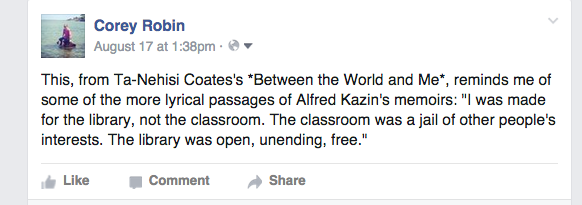
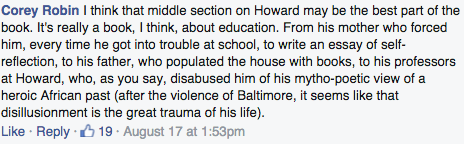
I’ve spent the past few days reading Ta-Nehisi Coates’s Between the World and Me and posting about it on Facebook. Rather than rewriting those posts as a single piece here, I thought I’d take some screen shots, and share them with some additional commentary. A shout-out to my friend Lizzie Donahue, whose queries to me on our daily walk this morning prompted the last and lengthiest post.

Here’s the first post.

Post 1

And here’s a short addendum to this post, where I comment further on the theme of education and Coates’s discussion of his time at Howard University.

Addendum 1

I say here that breaking with the mytho-poetic view of a heroic African past was the second great trauma of Coates’s life. I should be more precise. I mean disillusionment. But it was a disillusionment that was immensely productive. More than the loss of a specific view of things, the break with black nationalism made Coates suspicious of all master narratives, all collective platforms of totality. As an alternative, he turned to the specificity and concreteness of poetry, “of small hard things,” as he says: “aunts and uncles, smoke breaks after sex, girls on stoops drinking from mason jars.” And in that specificity “I began to see discord, argument, chaos, perhaps even fear, as a kind of power.” The “gnawing discomfort, the chaos, the intellectual vertigo was not an alarm. It was a beacon.” This is a writer for whom the struggle to see what is in front of his nose is a lifelong effort, a hard-won right to see things as they are, without mediation or adornment or chastising authority.

More here.

Why Neuroscience Needs Hackers

B434CC4D-8043-4FF8-8310952D69182C56_article

Daniel Goodwin in Scientific American [h/t: Marko Ahtisaari]:

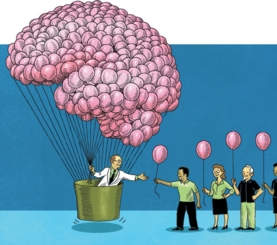
Science urgently needs hackers—hackers in the original, Tech Model Railroad Club of the Massachusetts Institute of Technology sense of the word. Their engineering and design skills will be useful, but what is most desirable is the true hacker's resourcefulness, curiosity and appetite for fresh challenges. Particularly in a field like neuroscience, helpers could be invaluable in exploring the daunting wilderness of newly revealed neural networks.

A few pioneers are leading the way. One is H. Sebastian Seung, a professor at the Neuroscience Institute and in the department of computer science at Princeton University. A few years ago he and his collaborators set out to map the retina's neural connections. As they collected an overwhelming mass of electron microscopy data, the question was how they would ever manage to interpret it all. Seung's familiarity with state-of-the-art computing told him that no artificial-intelligence algorithm in existence could possibly handle the task alone.

The solution—then almost unheard of in lab science—was to enlist thousands of human volunteers alongside a state-of-the art AI and harness their collective brainpower. On December 10, 2012, Seung and his team launched the online game EyeWire, in which players score points by helping to improve a neural map.

More here.

Tuesday, August 25, 2015

Allen Ginsberg, a Calcutta Story

Allen-Ginsberg

Deborah Baker in The Wire:

A year before the first Gulf war, I felt that the pro Soviet/anti Americanism of the Bengalis was more of a salutary practice than a firm conviction, not unlike choosing low fat milk over whole. To someone’s proposition that the CIA had orchestrated the rise of Solidarity and the more recent fall of the Berlin wall, I once replied “you can’t be serious.” This was a mistake. On occasion some inane remark of mine at what I imagined was a friendly dinner party would end up in the society pages accompanied by a snarky comment. This happened more than once. It took me awhile to catch on that I was a subject of suspicion.

During one of these evenings at Tarapada’s house, he suddenly turned and spoke directly to me. He told me that he had known the American poet Allen Ginsberg, that he and his fellow poets had met him in the famed College Street coffeehouse in North Calcutta. Again, the tail end of the thought was lost in an explosion of incomprehensible and fearful sounds finishing in a deadly quiet. I smiled and Tarapada glared.

I had met Allen Ginsberg just once, several years before. He was smaller than I had imagined; his stature further undermined by the folds and cushions of an off white sectional sofa at an upper west side cocktail party. The once rabbinical beard was then trim and graying and there were suede patches on the elbows of his jacket befitting his new position as a professor at Brooklyn College. He carried the weight of his legend lightly, with none of the affectations the young are so quick to discover and disparage. He had kind eyes—one slightly drooping from an illness we had all heard about—behind thick spectacles.

Nearly everyone at the party had a claim on him but any direct approach was made somewhat awkward by the arrangement of furniture. The party took place in one of those storied pre-war classic six apartments, with a book lined hallway running its length, the kitchen at one end and a living room and its sofa at the other. Just being in an owner occupied apartment back then gave me an outsider’s sense of belonging, a sense of having cracked New York City in some essential way.

More here.

Dan Sperber on “The Argumentative Theory of reason”

Url

Over at Rationally Speaking:

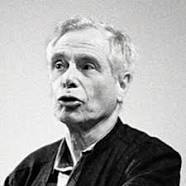
Dan SpeberThe traditional story about reason is that it evolved to help humans see the world more clearly and (thereby) make better decisions. But on that view, some mysteries remain: why is the human brain so biased? Why are we so much better at defending our pre-existing views than at evaluating new ideas objectively?

In this episode of Rationally Speaking, Julia talks with guest Dan Sperber, professor of cognitive and social sciences, who is famous for advancing an alternate view of reason: that it evolved to help us argue with our fellow humans and convince them that we're right.

Dan Sperber is a social and cognitive scientist. His most influential work has been in the fields of cognitive anthropology and linguistic pragmatics. Sperber currently holds the positions of Directeur de Recherche émérite at the Centre National de la Recherche Scientifique and Director of the International Cognition and Culture Institute.

More here.

You want to argue about wine? Screw it. Let’s argue about wine

Ben Dreyfuss in Mother Jones:

ScreenHunter_1332 Aug. 25 16.31Wine is a joke. Whether it's in a bottle, a box, or a boot, it's a stupid drink. Since time immemorial people have consumed wine, but for most of that time people were backwards and lived in fields and didn't know anything. Now we live in the 21st century and drink wine? Lol.

It doesn't even taste good! It tastes ok sometimes, but it's really sugary! It gives you terrible hangovers! It doesn't get you drunk! It ruins your teeth! You know who drinks wine? Europeans.

Americans who drink wine do so because they think they are living in a BBC adaptation of a Jane Austen novel. It feels rich and smart to have thoughts about wine and to order fancy, expensive bottles of wine. You are not smart. You are not fancy. You are not rich—or at least you won't be if you keep pissing your money away on wine.

You drink alcohol because your life is hard and you need a respite from the pain. You drink wine because you have been tricked by society into thinking it is a shibboleth of class and taste.

More here.

CIA Funded Literary Magazines, Ranked

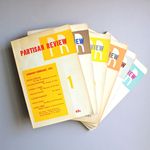
PartisanreviewPatrick Iber at The Awl:

Through the CCF, as well as by more direct means, the CIA became a major player in intellectual life during the Cold War—the closest thing that the U.S. government had to a Ministry of Culture. This left a complex legacy. During the Cold War, it was commonplace to draw the distinction between “totalitarian” and “free” societies by noting that only in the free ones could groups self-organize independently of the state. But many of the groups that made that argument—including the magazines on this left—were often covertly-sponsored instruments of state power, at least in part. Whether or not art and artists would have been more “revolutionary” in the absence of the CIA’s cultural work is a vexed question; what is clear is that that possibility was not a risk they were willing to run. And the magazines remain, giving off an occasional glitter amid the murk left behind by the intersection of power and self-interest. Here are seven of the best, ranked by an opaque and arbitrary combination of quality, impact, and level of CIA involvement.

more here.

The Pope and the Planet

Mckibben_1-081315_jpg_600x596_q85Bill McKibben at The New York Review of Books:

It is, therefore, remarkable to actually read the whole document and realize that it is far more important even than that. In fact, it is entirely different from what the media reports might lead one to believe. Instead of a narrow and focused contribution to the climate debate, it turns out to be nothing less than a sweeping, radical, and highly persuasive critique of how we inhabit this planet—an ecological critique, yes, but also a moral, social, economic, and spiritual commentary. In scope and tone it reminded me instantly of E.F. Schumacher’s Small Is Beautiful (1973), and of the essays of the great American writer Wendell Berry.1 As with those writers, it’s no use trying to categorize the text as liberal or conservative; there’s some of each, but it goes far deeper than our political labels allow. It’s both caustic and tender, and it should unsettle every nonpoor reader who opens its pages.

The ecological problems we face are not, in their origin, technological, says Francis. Instead, “a certain way of understanding human life and activity has gone awry, to the serious detriment of the world around us.” He is no Luddite (“who can deny the beauty of an aircraft or a skyscraper?”) but he insists that we have succumbed to a “technocratic paradigm,” which leads us to believe that “every increase in power means ‘an increase of “progress” itself’…as if reality, goodness and truth automatically flow from technological and economic power as such.”

more here.

The mysteries of “Whistler’s Mother.”

150831_r26901-320-240-19173714Peter Schjeldahl at The New Yorker:

The chromatic subtleties contribute to an unsettled feeling. A more substantial jolt occurs when you register an over-all spatial distortion: the forms stretch horizontally, so that the length of Anna’s concealed legs, angled and descending to an upholstered footstool, suggests the anatomy of an N.B.A. draft pick. The more you notice of the composition’s economies—such as the cavalier indication of the bentwood chair legs, at the lower right, and, at the lower left, three perfunctory diagonal strokes that do for establishing the plane of the floor—the more happily manipulated you may feel, in ways that, like the camera tricks of a great movie director, excite a sense of the scene as truer to life than truth itself. It took me an hour of inspection to take in an inconspicuous, brownish strip across the bottom of the canvas. Anna’s dress falls smoothly past it and out of the picture. It is the edge of a stage or a platform. Whistler is looking up at his mom.

“Yes, one does like to make one’s mummy just as nice as possible,” Whistler allowed years later, answering friends who praised the speaking likeness of the portrayal. But he was exasperated by sentimental responses to the work. He regularly preached that subject matter should be regarded merely as a pretext for adventures in aestheticism. He said, “To me it is interesting as a picture of my mother; but what can or ought the public to care about the identity of the portrait?”

more here.

Business for the Other Billions: Addressing human needs at the base of the economic pyramid

John S. Rosenberg in Harvard Magazine:

BillionImagine a simple triangle diagram of the planet’s population. A fortunate couple of billion upper-income people—in the United States and Canada, much of Europe, Japan, Australia, and prospering urban centers in parts of Asia and Latin America—occupy the apex. The invisible hand of market capitalism supplies this prominent minority with bountiful goods and services. But that leaves a lot of people out. At the very bottom of the pyramid, a billion or more humans live in poverty (on less than $1.25 per person per day), often depending on government programs and charitable aid to subsist.

In between, pointed out V. Kasturi (universally, “Kash”) Rangan, live the low- and low-middle-income majority of mankind: perhaps four billion people who are entering or are already in the cash economy—but barely, with incomes of up to $15 per day. In a conversation, he compared the lives of these people, the base of the pyramid, with those at the top. Because they likely do not own property, and lack rent or tax receipts, they are not bankable, so they turn to exploitative money lenders for credit to stock a shop or start a small business. For medical care, they choose among local healers, vendors of patent nostrums, or queues at public clinics (where it may take a bribe to advance in line). Their labor, often interrupted by those queues or long bus trips to remit cash to a rural family, may be seasonal, itinerant, and legally unprotected. Functioning markets, he noted, imply a level playing field between consumers and producers, but most of these people aren’t getting a remotely fair deal. It is as if the broad base of the pyramid were an alternate universe where familiar rules don’t apply.

More here.

Square Root of Kids’ Math Anxiety: Their Parents’ Help

Jan Hoffman in The New York Times:

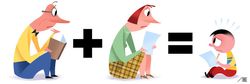
MATH-tmagArticleA common impairment with lifelong consequences turns out to be highly contagious between parent and child, a new study shows. The impairment? Math anxiety. Means of transmission? Homework help. Children of highly math-anxious parents learned less math and were more likely to develop math anxiety themselves, but only when their parents provided frequent help on math homework, according to a study of first- and second-graders, published in Psychological Science. Researchers tested 438 children from 29 public and private schools in three Midwestern states for math ability as well as math anxiety, at the beginning and end of the school year. Their parents completed questionnaires about math anxiety, and about how often they helped their children with homework.

So much for good intentions. The more the math-anxious parents tried to work with their children, the worse their children did in math, slipping more than a third of a grade level behind their peers. And the children’s weaker math achievements increased their nascent math anxiety. “The parents are not out to sabotage their kids,” said Sian L. Beilock, a cognitive psychologist at the University of Chicago and the author of “Choke,” about anxiety and performance. “But we have to ensure their input is productive. They need to have an awareness of their own math anxiety and that what you say is important.” For example, she said, comforting a homework-distressed child, by saying, “ ‘I’m not a math person either, and that’s O.K.,’ is not a good message to convey.”

More here.

Tuesday Poem

From a Balcony

The sun is an orange from the Peloponnese
staining clouds and stuccoed walls,

sailboats tacking out to sea.
Damson shapes chase light from under vines;

shadows grope their way,
thick arabesques of lace furrowed at the frame.

Hills are a smoke-stained fresco flaking,
rooftops shrill as pomegranate seeds.

Poplars are the spears of long-dead warriors
sprouted from a rill of dragon’s teeth.

Rising from that faded terracotta dome
come the curling throaty notes

of evening mass below, swelling in
and out of polyphony like a weaver’s skilful woof

their path the disappearing smoke
dragged from a censer’s golden arc.

Far across this dim intaglio
a white cat pads along a cooling lintel stone.

Only the distant thrum of a scooter
navigating narrow roads.
.

by Sarah Howe
from A Certain Chinese Encyclopedia
Tall-lighthouse, Luton, 2009

Monday, August 24, 2015

Sunday, August 23, 2015

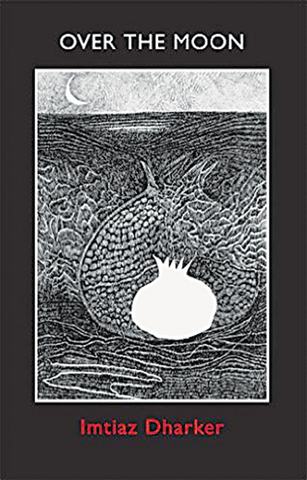
REVIEW: Song of love and loss: Over the Moon by Imtiaz Dharker

Muneeza Shamsie in Dawn:

55d6e13e1eaebLast winter, the Lahore-born poet Imtiaz Dharker consolidated her reputation as a mainstream British poet with her powerful and moving sixth collection, Over The Moon, which won her the Queen’s Gold Medal for Poetry. The award, which was established in 1934 for Commonwealth writers, has been given to eminent poets ranging from Robert Graves and Derek Walcott to Ted Hughes and Fleur Adcock, but Dharker is the first recipient of South Asian origin.

Over the Moon is a spellbinding work, dedicated to Dharker’s late husband, Simon Powell, with the words “not because you died, but how you live”. Her collection is a poetic communication with him in which absence and memory are enriched and intertwined by an interplay of music, light and sound to convey both life and loss and worlds beyond the corporeal: Powell permeates the book as an ever-present, beloved, living spirit. Dharker grew up in Glasgow, with a strong awareness of Pakistan which she visited with her family and later spent several years in Bombay. Her book begins with a sequence rooted in Dharker’s subcontinental heritage and the cultural symbiosis so intrinsic to her poetry, and indeed her sense of self. ‘Taal’ captures the movements of time through the whirling imagery of music and dance.

More here.

In America, only the rich can afford to write about poverty

Barbara Ehrenreich in The Guardian:

3000Back in the fat years – two or three decades ago, when the “mainstream” media were booming – I was able to earn a living as a freelance writer. My income was meager and I had to hustle to get it, turning out about four articles – essays, reported pieces, reviews – a month at $1 or $2 a word. What I wanted to write about, in part for obvious personal reasons, was poverty and inequality, but I’d do just about anything – like, I cringe to say, “The Heartbreak Diet” for a major fashion magazine – to pay the rent.

It wasn’t easy to interest glossy magazines in poverty in the 1980s and 90s. I once spent two hours over an expensive lunch – paid for, of course, by a major publication – trying to pitch to a clearly indifferent editor who finally conceded, over decaf espresso and crème brulee, “OK, do your thing on poverty. But can you make it upscale?” Then there was the editor of a nationwide, and quite liberal, magazine who responded to my pitch for a story involving blue-collar men by asking, “Hmm, but can they talk?”

I finally got lucky at Harper’s, where fabled editor Lewis Lapham gave me an assignment that turned into a book, which in turn became a bestseller, Nickel and Dimed: On (Not) Getting By in America. Thanks to the royalties and subsequent speaking fees, at last I could begin to undertake projects without concern for the pay, just because they seemed important or to me. This was the writing life I had always dreamed of – adventurous, obsessively fascinating and sufficiently remunerative that I could help support less affluent members of my family.

Meanwhile, though I didn’t see it at first, the world of journalism as I had known it was beginning to crumble around me.

More here.

No Occupation Without Representation: Artists in Palestine

HG Masters in Arts Asia Pacific:

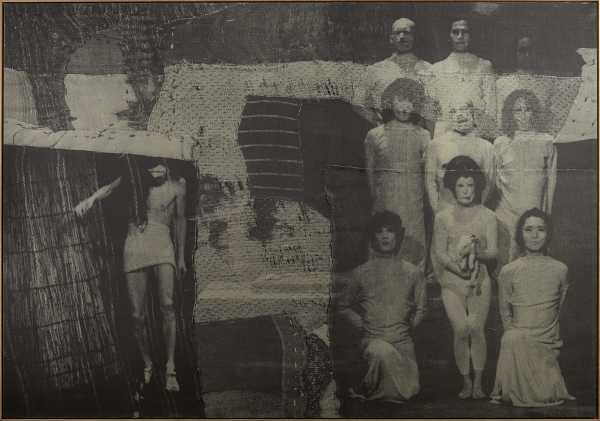
Feature_palestine_hourani_1000So much depends upon the acceptance of a few facts. This is what Edward Said was lamenting when, in August 2001, he wrote in the Cairo newspaper al-Ahram Weekly: “The appallingly unbroken history of Israel’s 34-year-old military occupation (the second longest in modern history) of illegally conquered Palestinian land has been obliterated from public memory nearly everywhere, as has the destruction of Palestinian society in 1948 and the expulsion of 68 percent of its native people, of whom 4.5 million remain refugees today.”

In the decade since, and as the occupation marked its 44th year in June, the struggle over the future of Palestine and the status of the Palestinian people remains one of representation, of the past and the present. Nearly everything about the Israeli occupation of the Palestinian territories is contested on the factual and semantic levels—how many people are wounded or killed by whom at any given demonstration, whether it is a “wall,” “barrier” or a “fence” that now runs through the West Bank, whether Israeli policies constitute “discrimination,” “apartheid” or “ethnic cleansing,” and even whether the 1947–48 Nakba happened at all. They are debates played out by politicians and activists, Israeli and Palestinian, on the international level for their respective strategic interests, as well as in the media, in proxy wars of propaganda and disinformation by factions competing to write the historical narrative of post-Mandate Palestine. As storytellers and emissaries of Palestinian culture, Palestinian artists across disciplines have been caught up in or have willingly participated in this struggle, as they address the urgent subjects of modern Palestinian culture: dispossession, nostalgia, exile and resistance.

More here.