John Lanchester in The New Yorker:
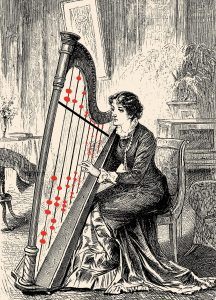 What are you doing? I don’t mean what are you doing with your life, or in general, but what are you doing right now? The answer, in one respect, is simple enough: you’re reading this magazine. Obviously. From a certain economic perspective, however, you’re doing something else, something you don’t realize, something with a sneaky motive that you aren’t admitting to yourself: you are signalling. You are sending signals about the kind of person you are, or want to be. What’s that you say—you’re reading this in the bath, or on your phone in bed, or otherwise in private? Well, the same argument applies. You are acquiring the tools for a “fitness display.” This, the economist Robin Hanson and the writer-programmer Kevin Simler argue in their new book, “The Elephant in the Brain: Hidden Motives in Everyday Life” (Oxford), is an advertisement of “health, energy, vigor, coordination, and overall fitness.” Fitness displays “can be used to woo mates, of course, but they also serve other purposes like attracting allies or intimidating rivals.” So there you go: that’s what you’re doing, there in the bath with the magazine. Your rivals are right to feel intimidated.
Wait, though—surely signalling doesn’t account for everything? Hanson, in a recent podcast interview with Tyler Cowen, a colleague at George Mason University, was asked to give a “short, quick and dirty” answer to the question of how much human behavior “ultimately can be traced back to some kind of signalling.” His answer: “In a rich society like ours, well over ninety per cent.” He was then asked to cite a few voluntary human activities that “have the least amount to do with signalling.” The example Hanson came up with was “scratching your butt.”
That made me laugh, and also shake my head. Economists often do. I started reading up on economics twelve years ago. I was in the early stages of writing a novel about contemporary London, and had come to the realization that frequently hits you when you are writing fiction, which is that there is a story behind the apparent story.
More here.

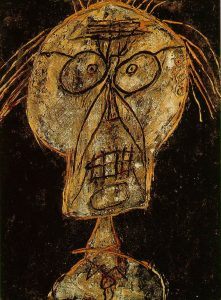 By conceiving the notion of art brutin a Europe devastated by the Second World War, French artist Jean Dubuffet questioned the underlying pretense behind the processes of artistic legitimization, dispossessing those authorities empowered to legislate in the art world. He also insisted on the flexible nature of definitions, maintaining that art brutcould incessantly evolve depending on the context of its emergence, knowing that the norm and the margins are perpetually reassessed. Without an art movement or identifiable style, art brut is not a category, but an evolving critical concept. Above all, as observed Céline Delavaux, Dubuffet likely proposed a singular, even poetic and literary way of thinking about art, “It is in the absence of the voice of the madman, the excluded, the uneducated, that his radically subjective art discourse was invented.”
 H
H Imagine you’re the president of a European country. You’re slated to take in 50,000 refugees from the Middle East this year. Most of them are very religious, while most of your population is very secular. You want to integrate the newcomers seamlessly, minimizing the risk of economic malaise or violence, but you have limited resources. One of your advisers tells you to invest in the refugees’ education; another says providing jobs is the key; yet another insists the most important thing is giving the youth opportunities to socialize with local kids. What do you do? Well, you make your best guess and hope the policy you chose works out. But it might not. Even a policy that yielded great results in another place or time may fail miserably in your particular country under its present circumstances. If that happens, you might find yourself wishing you could hit a giant reset button and run the whole experiment over again, this time choosing a different policy. But of course, you can’t experiment like that, not with real people.
 In the largest genetics study ever published in a scientific journal, an international team of scientists on Monday
 Spectator sports can reflect a society’s worst inclinations by promoting pure partisanship.
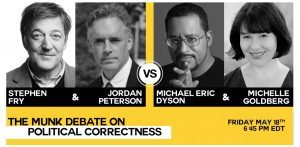 Although some may be heralding the end of free speech, 2018 has been a year of far-reaching debate and discussion. In the coming months, we can anticipate attending or streaming discussions ranging from such topics as the role of race in American politics to the nature of truth, from existential threats posed by artificial intelligence to the value of religion.
 The priest quickly sliced into the captive’s torso and removed his still-beating heart. That sacrifice, one among thousands performed in the sacred city of Tenochtitlan, would feed the gods and ensure the continued existence of the world.
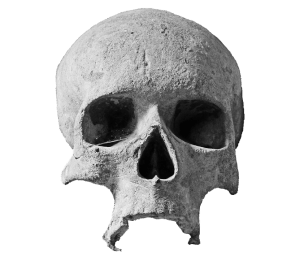 Some time back I took a group of students to the Galerie d’Anatomie Comparée at the Jardin des Plantes. This is the famous collection of skeletons laid out according to one version of the order of nature by Georges Cuvier at the turn of the 19th century. We were looking at a display case (added long after Cuvier’s death) that consisted in four rows, one above the other, with five skulls in each row representing five developmental stages of three species of great ape –gorillas, chimpanzees, and orangutans–, plus Homo sapiens.
 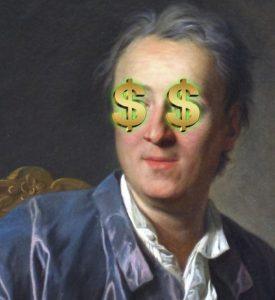 In 1765, Russian Empress Catherine the Great heard that the philosopher Dennis Diderot was in dire need of money. As a well-known patron of the arts, sciences, and Enlightenment philosophers, she immediately purchased his entire library. She directed him to keep it at his home and hired him as her librarian with 25 years of salary upfront.
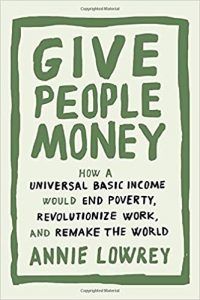 If climate change, nuclear standoffs, Russian trolls, terrorist threats and Donald Trump in the White House don’t cause you feelings of impending doom, you might think about artificial intelligence. I’m not just referring to big-brained robots taking over civilization from us smaller-brained humans, but the more imminent possibility they’ll
 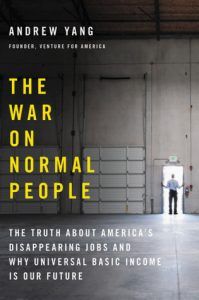 It’s already happening. Robots and related forms of artificial intelligence are rapidly supplanting what remain of factory workers, call-center operators and clerical staff. Amazon and other online platforms are booting out retail workers. We’ll soon be saying goodbye to truck drivers, warehouse personnel and professionals who do whatever can be replicated, including pharmacists, accountants, attorneys, diagnosticians, translators and financial advisers. Machines may soon do a
 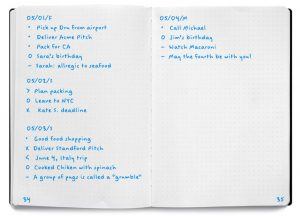 So it is with organising my life. I have tried paper diaries, Google Calendar and to-do apps. No matter the form, what they all have in common is a rigid structure imposed from above. You have a certain number of lines for each day or a finite number of categories into which your plans must fit, or a small palette of colours to highlight or distinguish between events. It drives me insane. So I made my own system: a Google spreadsheet with columns titled “today”, “tomorrow”, “this week”, “weekend”, “this month” and “three months”, and tabs to keep track of expenses, books I’ve read, travel plans, story ideas, and general note-keeping. It’s messy and entirely manual: there are no shortcuts, no functions, no add-ons.