
by Michael Liss
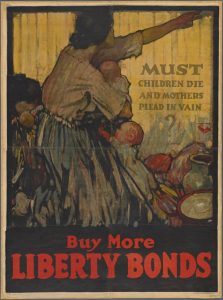 This past Sunday, November 11, marked the Centennial of Armistice Day, the European commemoration of the agreement to end World War I. Representatives from more than 60 countries attended carefully choreographed ceremonies to honor the sacrifice of those who fought.
The Europeans take the Great War seriously. Americans really don’t. It just doesn’t feel like our war. To us, it’s an old chest filled with musty, tattered maps and the remains of broken monarchies and shattered ambitions. Even the early film footage, jerky and grainy in black and white, looks more like a silent movie than something real. We know we participated, and naturally we were heroic. Our boys saved the Allied powers from the Huns, all the while singing “Over There” and wooing the local pulchritude. It’s what we broad-shouldered, brave, optimistic, can-do Americans do.
But, if you want to contextualize our actual contribution, consider the following:
The United States committed 2.8 million servicemen to the war, and suffered 53,402 killed in action, 63,114 deaths from disease and other causes, and about 205,000 wounded. On an absolute level, that’s a lot of lives. But, by contrast, in just one extended, insane battle, the Europeans fought the Somme Offensive, with more than 3 million men engaged and 1 million casualties. Then there was Gallipoli, the infamous, disastrous push by then-First Lord of the Admiralty Winston Churchill in the Dardanelles, which provided the Ottoman Empire with its last meaningful military victory, and included a horrific sacrifice by ANZAC (Australian and New Zealand combined forces) and half a million casualties. And Verdun (between the French and the Germans), which lasted close to 11 months in 1916, and yielded nearly 700,000 casualties and more than 300,000 dead. And Passchendaele (3rd Battle of Ypres, Flanders Fields), between Great Britain, France, Belgium and Germany, in July to November 1917, in which the dead and wounded may have been as high as 700,000. And Operation Michael, the last major German offensive in the West (Germany, the UK, France, and, finally, the United States), which had almost 500,000 casualties. That, of course, skips every battle between the Germans and the Russians. Read more »


 In a recent study, data scientists based in Japan found that classical music over the past several centuries has followed laws of evolution. How can non-living cultural expression adhere to these rules?
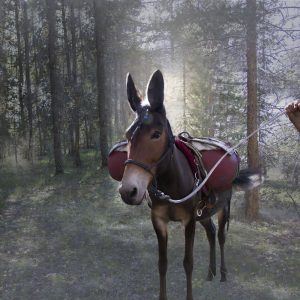
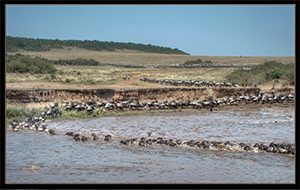 The crocodiles know. They form pincers on either side of the crossing point. Richard says they feel the vibration of all those hooves along the riverbank above them.


 The Pioneer Valley in western Massachusetts is a cradle of social progress — a place where L.G.B.T.Q. is often followed by I.A. (for intersex and asexual), there’s a Stonewall Center (now 33 years old), and gender-nonconforming parents have a nickname of choice (it’s “Baba”).
 In a publication
 On the evening of 28 October, as they absorbed the election of far-right Brazilian president Jair Bolsonaro, British leftists declared “socialism or barbarism”. The slogan was assumed by some to be a Corbynite coinage. But it was first popularised more than a century ago in war-ravaged Europe.
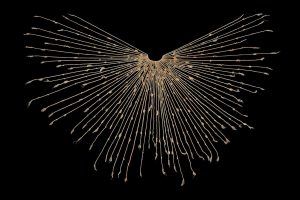 The Incas left no doubt that theirs was a sophisticated, technologically savvy civilisation. At its height in the 15th century, it was the largest empire in the Americas, extending almost 5000 kilometres from modern-day Ecuador to Chile. These were the people who built Machu Picchu, a royal estate perched in the clouds, and an extensive network of paved roads complete with suspension bridges crafted from woven grass. But the paradox of the Incas is that despite all this sophistication they never learned to write.
 Before ancient humans
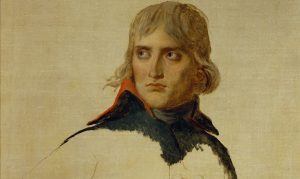 Men of action present a problem for decent modern democrats. For the very term “men of action” is a euphemism for men accomplished in war, and no public figure is more suspect these days than the warlike man. When Winston Churchill called Napoleon Bonaparte (1769-1821) “the greatest man of action born in Europe since Julius Caesar,” he meant to praise Napoleon in the highest terms, but for many, such praise is fraught with peril. After all, Julius Caesar, named dictator in perpetuity, placed the Roman Republic in mortal danger and died a tyrant’s death; the most famous of his assassins, Marcus Junius Brutus, is remembered as a paragon of republican virtue, though it proved impossible to restore the Republic after Caesar’s day.
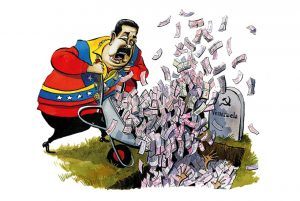 Paul Krugman, blogger, fiat-currency enthusiast and winner of the Nobel Prize in Economics earlier this year justified his scepticism about cryptocurrencies in the New York Times. He asked readers to give him a clear answer to the question: what is the problem cryptocurrency solves? He wrote: ‘Governments have occasionally abused the privilege of creating fiat money, but for the most part governments and central banks exercise restraint.’ He added that, unlike bitcoin, ‘fiat currencies have underlying value because men with guns say they do. And this means that their value isn’t a bubble that can collapse if people lose faith.’
 It’s a huge day for archaeologists and anyone interested in the history of America’s first settlers. Findings from three new genetics studies—all released today—are presenting a fascinating, yet complex, picture of the first people in North and South America, and how they spread and diversified across two continents.