
by Thomas R. Wells
Suppose a company wants to fill a job. They would advertise it together with the requirements for any successful candidate. HR would screen out all the applicants not good enough to do the job and everyone else’s name would go into a lottery.
 Do you find this prospect upsetting? Perhaps you think it is unfair for someone to get a job without a good reason for why they deserve it rather than anyone else. Perhaps you think such a system would decrease your chances of getting the job you want. If so then you may be under the influence of the cult of excellence.
Excellence is the false religion of our time. Like all cults it fosters unhealthy and delusional behaviour, and benefits only a handful of insiders. We need to throw it out, reconcile ourselves to the essential truth that none of us is particularly special, and build a society fit for that.
The first problem with excellence is that we use it in a purely relative sense, to rank ourselves against each other to decide for who gets what. This turns society into a race in which we are trained to see each other as competitors for scarce resources rather than as fellows in a community of equals. Over time the race to the top takes over more institutions and more of our lives. In education, for example, cramming schools appear to help kids get into the right preschools, while a whole industry of consultants exists to help rich high-schoolers write their Ivy League application essays. In such a toxic meritocracy no one has the time or compassion to help the less fortunate. Winners congratulate themselves on their wonderfulness, as proven by their salaries, but retain an existential anxiety about their position. Losers blame themselves for not running faster. Inequality rockets. Read more »

 When the father of your child is in jail, pray even if you don’t believe in God. Pray even though in your head of heads you know it won’t do shit. Stop staring at the walls, at the clock, at the phone. At your baby, now eight, sleeping next to you, his sneakers, caked with mud, still tied to his feet. Pray because it will distract you from what’s coming, from a conversation millions of mothers have already had with their sons. You are not different, not an exception to some rule. Start praying instead of feeling sorry for yourself. Buck the fuck up because he will need you.
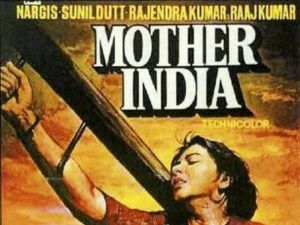 Actors come to each role in a new film bearing the stamp of their old ones so they are richer and more interesting in the new incarnation—the whole more than the sum of the parts. Just last week one saw Nargis as the innocent and naive mountain girl pining away for the love of the ‘shehri babu’, and today she is the femme fatale, all hell and brimstone, plotting the downfall of her rival. Or, as Mother India, upholding principles of honesty and justice, shooting her favorite son dead for raping a village girl.
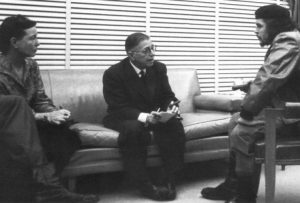 Nearly forty years after his death in 1980, the French philosopher Jean-Paul Sartre is best remembered as the father of existentialism. We are most familiar with him as the theorist of freedom, authenticity, and bad faith in philosophical treatises such as Being and Nothingness (1943) and literary works such as Nausea (1938) and No Exit (1944). But eclipsed in this popular image is an appreciation of the staggering range of his dozens of volumes of published work, especially the fruit of his political activity from the end of World War II until his death—a period marked most notably by a rich and sustained engagement with Marxism.
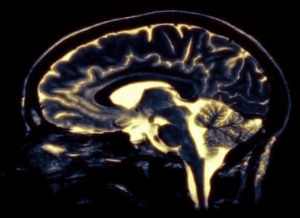 History records many examples of some person, tribe or nation taking an advantage based on better information than their rivals. Whether it is war, economic activity, love and romance or career the competitive edge leading to victory is enjoyed by those who possess the ability to extract and use information to increase the probability of their predicted outcomes. Use the word probability, forecasting, and prediction and thoughts start to wander, your mind has trouble gaining traction. Why is that?
 In November 2018, the world’s measurement experts are expected to revise the SI, this time approving a system that does not depend on physical objects. Instead, it’ll be based entirely on the speed of light and other “constants” of physical science, resulting in a measurement system that might truly and finally be for all times and for all people.
 Imagine a case involving the most sensitive issues of national security possible. Imagine that Pakistan wins a conclusive victory in that case. Now imagine that Pakistan wastes that victory and spends 5 years blundering about in a dead end. Kishanganga is that case.
 Debates over the extent to which racial attitudes and economic distress explain voting behavior in the 2016 election have tended to be limited in scope, focusing on the extent to which each factor explains white voters’ two-party vote choice. This limited scope obscures important ways in which these factors could have been related to voting behavior among other racial sub-groups of the electorate, as well as participation in the two-party contest in the first place. Using the vote-validated 2016 Cooperative Congressional Election Survey, merged with economic data at the ZIP code and county levels, we find that racial attitudes strongly explain two-party vote choice among white voters—in line with a growing body of literature. However, we also find that local economic distress was strongly associated with non-voting among people of color, complicating direct comparisons between racial and economic explanations of the 2016 election and cautioning against generalizations regarding causal emphasis.
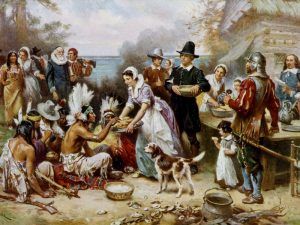 Native Americans are only one percent of the population, but their images are on our boxes of butter and cornstarch. Their names are used to sell motorcycles and cars. And one of their brief encounters with English colonists is the basis of one of our biggest holidays. The story of Thanksgiving definitely evolved over time. The First Thanksgiving of 1621 happened but with little notice or attention. Curators at the Smithsonian’s National Museum of the American Indian like to call it “a brunch in the forest.” Yes, it took place between Native Americans and Pilgrims. But the event was not exempt from history’s subjectivity. “What historians have had trouble explaining to civilians is that history is always a narrative. It always has a level of fiction in it,” says the Smithsonian’s Paul Chaat Smith. “That’s why the term ‘revisionist’ never really works,” he adds. “Because all history changes over time.” Smith is a co-curator of the National Museum of the American Indian’s highly acclaimed exhibition
 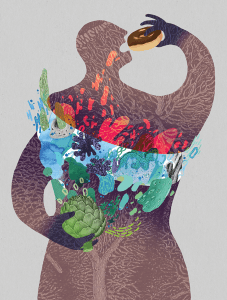 For the microbiologist Justin Sonnenburg, that career-defining moment—the discovery that changed the trajectory of his research, inspiring him to study how diet and native microbes shape our risk for disease—came from a village in the African hinterlands. A group of Italian microbiologists had compared the intestinal microbes of young villagers in Burkina Faso with those of children in Florence, Italy. The villagers, who subsisted on a diet of mostly millet and sorghum, harbored far more microbial diversity than the Florentines, who ate a variant of the refined, Western diet. Where the Florentine microbial community was adapted to protein, fats, and simple sugars, the Burkina Faso microbiome was oriented toward degrading the complex plant carbohydrates we call fiber.
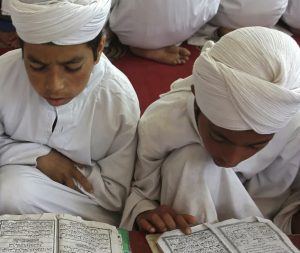 The discussion of Islam in world politics in recent years has tended to focus on how religion inspires or is used by a wide range of social movements, political parties, and militant groups. Less attention has been paid, however, to the question of how governments—particularly those in the Middle East—have incorporated Islam into their broader foreign policy conduct. Whether it is state support for transnational religious propagation, the promotion of religious interpretations that ensure regime survival, or competing visions of global religious leadership; these all embody what we term in this new report the “geopolitics of religious soft power.”
 The share of Americans who say sex between unmarried adults is “not wrong at all” is at an all-time high. New cases of HIV are at an all-time low. Most women can—at last—get birth control for free, and the morning-after pill without a prescription.
 At the chilling climax of William S. Lind’s 2014 novel “Victoria,” knights wearing crusader’s crosses and singing Christian hymns brutally slay the politically correct faculty at Dartmouth College, the main character’s (and Mr. Lind’s) alma mater. “The work of slaughter went quickly,” the narrator says. “In less than five minutes of screams, shrieks and howls, it was all over. The floor ran deep with the bowels of cultural Marxism.”