
by Thomas O’Dwyer
When a plane lands at Larnaca in Cyprus, as it rolls past the control tower one can glimpse on a misty horizon the lone pyramid of Stavrovouni mountain. The ugly airport tower then obscures the steep mountain and the ancient monastery on its summit. It could be a metaphor for modernity obliterating the spirit of places that once seemed mysterious and eternal.
It’s an hour’s drive from the airport to the sprawling concrete capital Nicosia and up and over the green passes of the Kyrenia mountain range. Then it’s a right turn east along the northern Mediterranean coast to the hillside village of Bellapais. A remarkable 12th-century Gothic abbey dominates the village and a couple of Crusader castles brood on the mountain ridge high above it. Even the names carry a whiff of ancient Gothic Europe – Buffavento, Hilarion, Bellapais. Carob, mulberry and cypress trees crowd around the ruins as they did when knights roamed the hills.
A few hundred metres up a steep path from the abbey is a small house, once traditional, now modernised. The abbey and the cottage are responsible for the tawdry trinket shops and banal tourist cafes that have all but wiped out the old village tavernas. The splendid abbey is an obvious attraction, but the unremarkable cottage? For the literary-minded, it has an equal fascination. In it was written one of the great portraits of a city in 20th-century English literature. Here in the early 1950s Lawrence Durrell reimagined and immortalised Alexandria of Egypt. It joined the Dublin of James Joyce and the Paris of Marcel Proust in literary legend. Read more »

 It could almost be a question on a very meta personality quiz: Do you prefer the Myers-Briggs typology or the Big Five personality traits? The Myers-Brigg Type Inventory is a popular tool that was developed outside of the scientific establishment by two women who did not have credentials in psychology. It’s qualitative rather than quantitative, and in the past decade or so, it’s been criticized as meaningless or unscientific. The Big Five taxonomy is widely accepted in academia and is the basis of much current personality research. It’s quantitative; in fact, it’s based on statistical analysis. Am I rejecting science if I continue to prefer the Myers-Briggs system as a key to understanding my own personality and those of others?
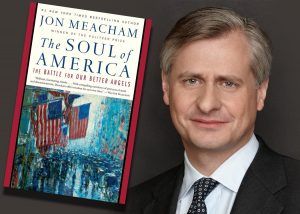 It is difficult to remember a time over recent decades when a president of the United States (US) has created so much controversy and division within the US and challenged its credibility and standing in international relations as has the incumbent president, Donald Trump. Indeed, so bewildering to many is the election of a former reality TV star and dubious businessman without experience in government, to the high office of president of the US and ‘leader’ of the ‘free’ world, a plethora of literature to account for such a phenomenon has emerged. Similarly, commentaries on evaluations of Trump’s calibre and character, and just how far he is fit for such high office and powerful position in global politics, are plentiful. Jon Meacham’s The Soul of America: The Battle for Our Better Angels can be viewed as a contribution to the literature on those issues.
 Last fall, after a day spent hiking around the neighborhood, I ended up back on my porch with my buddy, Chef Mike. We were drinking beers and chatting about life.
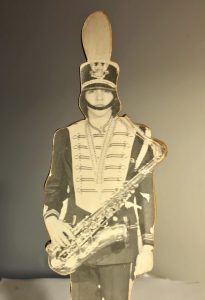 The William Penn High School Marching band was a juggernaut, the coolest team in school. Its director, Holman F James, strode the football field, unzipped windbreaker, cigarette dangling, the Greatest Generation’s bandmaster. A sterling musician, he played trumpet and piano, wrote or arranged all the music and choreographed our field shows. He was also a solider, avid outdoorsman and master craftsman, everything Hugh Hefner should have been.
 In the early 1790s, the London intellectual scene was convulsed with the fervor of the ongoing French Revolution. Sympathizers and counter-revolutionaries engaged in a ferocious pamphlet war, initiated by the Unitarian minister Richard Price, rejoined by Edmund Burke in his masterpiece of reactionary rhetoric, Reflections on the Revolution in France, and rejoined again by such writers as Mary Wollstonecraft and Thomas Paine. Political organizations arguing for electoral reform, including the London Corresponding Society and the Society for Constitutional Information, flourished. The resulting conservative backlash culminated in government suspension of habeas corpus and suppression of the free press and free assembly. The decade following the revolution was, all told, a time of tremendous political creativity and turbulence in the Anglophone world.
 JAMES ALLISON LOOKS
  When French President Emmanuel Macron declared during a visit to the Vatican this past summer that, “We have, anthropologically, ontologically, metaphysically, need of religion” (Nous avons, anthropologiquement, ontologiquement, métaphysiquement, besoin de la religion), there was little critical analysis in the press, much less by philosophers and scientists, of the moral, historical, or evidentiary basis of such a sweeping claim by the
 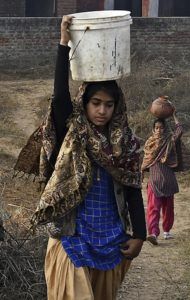 In recent years, a debate has raged in India on what is the level of poverty in the country and whether it has changed, either to reflect the arrival of a new India or the persistence of an old one. Prime Minister Narendra Modi’s government stopped producing official estimates of poverty when it abolished the storied 65-year-old Planning Commission.
 The killing of other human beings in war makes graphic an abiding moral dilemma: You might try to make an evil less outrageous, or you might try to get rid of it altogether—but it is not clear that it is possible to do both at the same time. In one of her Twenty-One Love Poems, Adrienne Rich
  In a recent speech at the United Nations, President Trump
 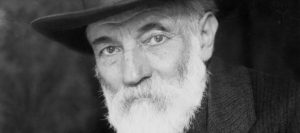 All women become like their mothers,” says Algernon in The Importance of Being Earnest. “That is their tragedy. No man does, and that is his.” Left hanging there, of course, is the implication that the son’s tragedy is that he becomes like his father instead. In Oscar Wilde’s own case, that might not have been such a terrible thing, at least for his creative productivity. Colm Tóibín’s sparkling little book on Sir William Wilde, WB Yeats’s father John and James Joyce’s father John Stanislaus, seems originally to have been called “Prodigal Fathers” – the phantom title appears on the inside flap of the cover. It may have been dropped because of Sir William, for whom the word – with its implications of wasted talent – is a poor fit. But it certainly works for John Butler Yeats and John Stanislaus Joyce. And yet the joy of Tóibín’s erudite, subtle, witty and often deeply moving biographical essays is that one generation’s paternal prodigality can become the next generation’s powerhouse of neurotic energy.
 This year’s broiling summer made us Brits climate-change enthusiasts and environmental doom-mongers in quick succession. First came delight at the disappearance of the traditional rhythms of the English summer. Barbecues no longer sputtered out with the advent of a tensely awaited shower. Sogginess, the traditional texture of the British family trying to enjoy itself outdoors, dried out. Tedium followed, as the parks, which at the start of the season had seemed so welcoming, began to resemble a desolate dustbowl from “The Grapes of Wrath”. And then came despair. It wasn’t the days that were so bad. Most offices have serviceable air-conditioning. But the nights were stagnant, breezeless hellscapes as British homes, whose cavity walls had been obediently filled with mineral fibre and formaldehyde foam to retain every last whisper of heat during the winter, turned into bakeries. Sleep evaporated along with everything else and the simplest tasks became cryptic. I stood in front of my front door flummoxed when faced with two locks that need opening with different keys. Anxiety levels rose and tempers frayed.
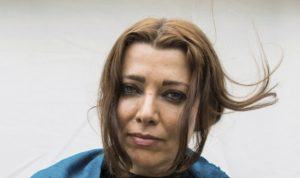 I was an only child raised by a divorced, working, well-educated, secularist, Westernised mother and an uneducated, spiritual, Eastern grandmother. Born in France, I moved to Turkey with my mother when my parents’ marriage came to an end. Although I was small when I left Strasbourg, I often think about our little flat and remember it as a place full of French, Italian, Turkish, Algerian, Lebanese leftist students who passionately discussed the Marxist philosopher Louis Althusser, read poems by Vladimir Mayakovsky and collectively dreamt about the Revolution. From there I was zoomed to my Grandma’s neighbourhood in Ankara – a very patriarchal and very conservative-Muslim environment. Back then, in the late 1970s, there was increasing political violence and turmoil in Turkey. Every day a bomb exploded somewhere, people got killed on the streets, there were shootings on university campuses. But inside Grandma’s house what prevailed were superstitions, evil eye beads, coffee cup readings and the oral culture of the Middle East. In all my novels there has been a continuous interest in both: the world of stories, magic and mysticism inside the house, and the world of politics, conflict, inequality and discrimination outside the window.
 Mohammed Hanif’s critically acclaimed, Booker Prize-longlisted debut novel A Case of Exploding Mangoes managed to be both a riotous thriller and a merciless political satire. Running like a red thread through its cat’s-cradle makeup of plot arcs and narrative tangents, key exploits and attendant conspiracy theories, was one main strand concerning the mysterious plane crash that killed Pakistan’s military dictator General Zia-ul-Haq.
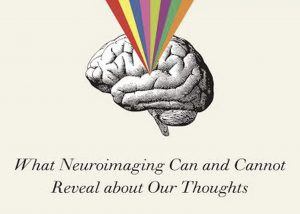 In 2007, The New York Times published an op-ed titled “