
Daniel M. Davis in Nautilus:
 Every time Jim meets a patient, he cries,” Padmanee said to The New York Times in 2016. “Well not every time,” Jim added. Jim Allison and Padmanee Sharma work together at the MD Anderson Cancer Center in Houston, Texas, having met in 2005 and married in 2014. A decade before they met, Allison and his lab team made a seminal discovery that led to a revolution in cancer medicine. The hype is deserved; cancer physicians agree that Allison’s idea is a game-changer, and it now sits alongside surgery, radiation, and chemotherapy as a mainstream option for the treatment of some types of cancer.
Take one example. In 2004, 22-year-old Sharon Belvin was diagnosed with stage IV melanoma—skin cancer that had already spread to her lungs—and was given a 50/50 chance of surviving the next six months. Chemotherapy didn’t work for her and her prospects looked bleak. “I’ve never felt that kind of pain,” she later recalled, “ … you are lost, I mean you’re lost, you’re absolutely out of control, lost.” All other options exhausted, she signed up to an experimental clinical trial testing a new drug based on Allison’s idea. After just four injections over three months the tumor in her left lung shrunk by over 60 percent. Over the next few months, her tumors kept shrinking and eventually, after two and a half years of living with an intense fear of dying, she was told that she was in remission—her cancer could no longer be detected. The treatment doesn’t work for everyone but, Allison says, “We’re going to cure certain types of cancers. We’ve got a shot at it now.”
More here.
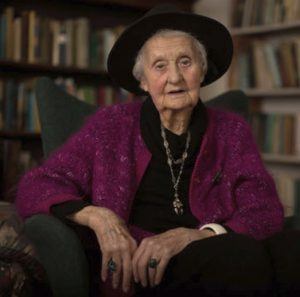 Just a few weeks before her death in October, Mary Midgley agreed to meet and discuss her new book, What Is Philosophy For? It seemed astonishing that someone about to celebrate her 99th birthday had a new book out, but I was less in awe of that than the reputation of one of the most important British philosophers of the 20th century and beyond.
 In 2016, a series of unassuming stone shapes rocked the paleobiology world when they were
 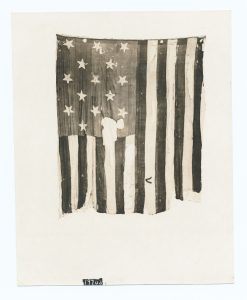 What was America? The question is nearly as old as the republic itself. In 1789, the year George Washington began his first term, the South Carolina doctor and statesman David Ramsay set out to understand the new nation by looking to its short past. America’s histories at the time were local, stories of states or scattered tales of colonial lore; nations were tied together by bloodline, or religion, or ancestral soil. “The Americans knew but little of one another,” Ramsay wrote, delivering an accounting that both presented his contemporaries as a single people, despite their differences, and tossed aside the assumptions of what would be needed to hold them together. “When the war began, the Americans were a mass of husbandmen, merchants, mechanics and fishermen; but the necessities of the country gave a spring to the active powers of the inhabitants, and set them on thinking, speaking and acting in a line far beyond that to which they had been accustomed.” The Constitution had just been ratified at the time of Ramsay’s writing, the first system of national government submitted to its people for approval. “A vast expansion of the human mind speedily followed,” he wrote. It hashed out the nation as a set of principles. America was an idea. America was an argument.
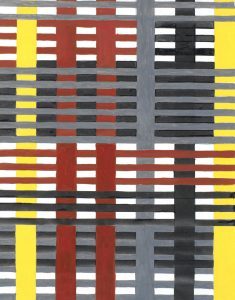 IN A 1985 INTERVIEW, Anni Albers remarked, “I find that, when the work is made with threads, it’s considered a craft; when it’s on paper, it’s considered art.” This was her somewhat oblique explanation of why she hadn’t received “the longed-for pat on the shoulder,” i.e., recognition as an artist, until after she gave up weaving and immersed herself in printmaking—a transition that occurred when she was in her sixties. It’s hard to judge whether Albers’s tone was wry or rueful or (as one critic alleged) “some-what bitter,” and therefore it’s unclear what her comment might indicate about the belatedness of this acknowledgment relative to her own sense of her achievement. After all, she had been making “pictorial weavings”—textiles designed expressly as art—since the late 1940s. Though the question might now seem moot, it isn’t, given the enduring debates about the hierarchical distinctions that separate fine art from craft, and given the still contested status of self-identified fiber artists who followed in Albers’s footsteps and claimed their woven forms as fine art, tout court.
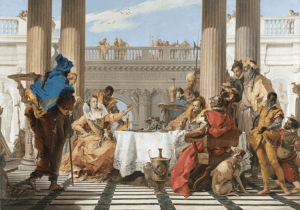 When George Frideric Handel arrived in London in 1710—he was in his mid-20s at the time and would reside in the capital for the duration of his life, becoming a naturalized British subject—he made his reputation composing operas, their librettos written not in his native German but in Italian, as was the fashion of the day. Working tirelessly and continuously, Handel produced an astonishing succession of operatic masterpieces: Giulio Cesare, Tamerlano, Rodelinda, Orlando, and Alcina, to name just a few. Eventually, however, he turned to the language of his adopted land, and it was in his English oratorios—Esther, Saul, Israel in Egypt, Samson, Judas Maccabaeus, Jephtha, and most famously of all, Messiah—that he arguably made his most striking contributions to Western music. Handel was attracted not only to the Bible but also to secular poetry, his subjects inspired by the likes of Milton, Pope, and Dryden. The composer’s command of English was never stellar (he was hardly a fluent exophone in the manner of Voltaire, Conrad, or Beckett), which makes his facility with the cadences, imagery, rhythms, and rhymes of English verse all the more remarkable.
 When people learn that I meditate every day, they often sheepishly admit that they wish they could, but that they just aren’t suited for it, or their mind is too active, or they don’t have the time. This always reminds me of Anne Lamott’s iconic gem of an essay, “
 Schadenfreude, the sense of pleasure people derive from the misfortune of others, is a familiar feeling to many—perhaps especially during these times of pervasive social media. This common, yet poorly understood, emotion may provide a valuable window into the darker side of humanity, finds a review article by psychologists at Emory University. New Ideas in Psychology published the review, which drew upon evidence from three decades of social, developmental, personality and clinical research to devise a novel framework to systematically explain schadenfreude. The authors propose that schadenfreude comprises three separable but interrelated subforms—aggression, rivalry and justice—which have distinct developmental origins and personality correlates. They also singled out a commonality underlying these subforms.
 In 1717, Voltaire was arrested, some might say, for giving offence. He had published a ‘satirical’ verse that opens by calling the Duc d’Orleans, the then Regent of France, ‘an inhuman tyrant, famous for poison, atheism, and incest’. This pungent personal attack became so popular it was sung on the streets of Paris. In response, the Duc had Voltaire arrested without accusation or trial. The author spent 11 months in the Bastille.
 Economics, like other sciences (social and otherwise), is about what the world does; but it’s natural for economists to occasionally wander out into the question of what we should do as we live in the world. A very good example of this is a new book by economist Tyler Cowen,
  Was Sharmila Sen “happy” on the first morning she woke up in the United States to the strange smell of bacon frying? That’s what her young son wants to know when, near the end of Not Quite Not White—Sen’s powerful memoir and meditation on race and migration—he interviews her for a school project on immigration. It turns out we already know the answer. “It was a complex animal smell,” we read earlier of the odor she ever after associates with her 1982 arrival in Boston from Calcutta, “making my mouth water and my stomach churn in revulsion at the same time.”
 Princess Mononoke inaugurated a new chapter in Miyazakiworld. Ambitious and angry, it expressed the director’s increasingly complex worldview, putting on film the tight intermixture of frustration, brutality, animistic spirituality, and cautious hope that he had honed in his manga Nausicaä of the Valley of the Wind. The film offers a mythic scope, unprecedented depictions of violence and environmental collapse, and a powerful vision of the sublime, all within the director’s first-ever attempt at a jidaigeki, or historical film. It also moves further away from the family fare that had made him a treasured household name in Japan.
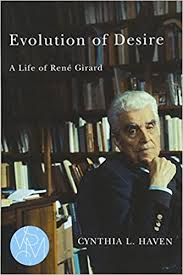 The publication of Cynthia Haven’s full-dress biography of René Girard, a major figure in the “French invasion” that stormed the beaches of American academe across the final decades of the last millennium, marks a notable event on many fronts: academic, professional, literary, philosophical; and for some individuals among generations of students world-wide, deeply personal. In my case, that means religious.
 It is unpleasant to feel alone. Loneliness can be a source of desolation and anguish. That is why it is understandable that many of us look for ways to fix it. Some seek out therapy, others join social clubs and attempt to forge new relationships and contacts. The refusal to accept social isolation and the search for solidarity shapes who we are and influences community life. Loneliness is not just a condition that we must suffer. It also provides people with an opportunity to gain an understanding of themselves and of their world. The theologian Paul Tillich exhorted people to embrace their loneliness, because it forces us to engage with life’s two most fundamental questions: what is the meaning of life and how should we understand ourselves?
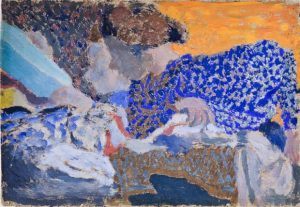 Édouard Vuillard was 60 when his mother died in 1928. He had never lived with anybody else. “My mother is my muse,” he confessed to a friend, and the truth of that is apparent in more than 500 images of this small, stout widow with her tight bun and patterned dresses running a sewing business in the various Paris apartments they shared. She is there from first to last.