Emre Kazim in Maydan:
 Edward Said’s Orientalism (1978) is second to none in terms of its scope and impact upon Area Studies. Indeed, 2018 marks the fortieth anniversary of this monumental text and it is debatable as to whether it is possible to say something new and meaningful on it, given the abundance of commentary it received over the decades. Such commentary has focused on the theoretical structure of Said’s thesis (its roots in Foucauldian archaeology), the reappraisal of seminal European texts (from Kipling to Conrad), and, perhaps most importantly, how Orientalism still dominates the discourse on the Other (by academic scholarship, popular media, and politicians).
Briefly, the thesis that the Orient is defined in opposition to the Occident; essentially as a means of self-defining the Occident and legitimizing the domination of the latter upon the former. This understanding of the Orient manifests in numerous cultural, academic, military and popular phenomena. Accordingly the Orient is always presented as mystical, feminine, despotic and liable to domination, in diametric opposition to the Occident, which is rational, masculine, enlightened and destined to dominate. This thesis is drawn from the exegesis of various texts, and can be followed in multiple contexts, from novels and encyclopedias to other forms of scholarly and literary production. As a result, Said makes the point that when the non-European is taken as a subject, it is always read in terms of a negation vis-à-vis the European.
Many texts written in the past two centuries that touch upon this relationship, have been accused of essentialism and reductionism; they have been charged with being “Orientalist.”
More here.
 When I was seven, my parents bought me and my brother an Atari 2600, the first mass game console. The game it came with was “Asteroids.” We played that game an awful lot. One night, we snuck down in the middle of the night only to discover my Dad already playing.
 Thomas Piketty, the French economist whose 2013 bestseller
 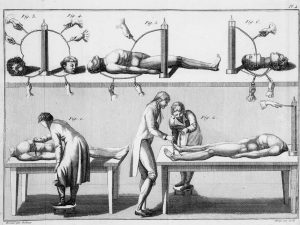 On 17 January 1803, a young man named George Forster was hanged for murder at Newgate prison in London. After his execution, as often happened, his body was carried ceremoniously across the city to the Royal College of Surgeons, where it would be publicly dissected. What actually happened was rather more shocking than simple dissection though. Forster was going to be electrified. The experiments were to be carried out by the Italian natural philosopher Giovanni Aldini, the nephew of Luigi Galvani, who discovered “animal electricity” in 1780, and for whom the field of galvanism is named. With Forster on the slab before him, Aldini and his assistants started to experiment. The Timesnewspaper reported: “On the first application of the process to the face, the jaw of the deceased criminal began to quiver, the adjoining muscles were horribly contorted, and one eye was actually opened. In the subsequent part of the process, the right hand was raised and clenched, and the legs and thighs were set in motion.”
 He scanned my medical history, and the answer was there in black and white: a body mass index of 24, blood pressure a shade lower than the normal range, total cholesterol below 120, and no chronic disorders or ailments to speak of. There was just one outlier in this picture of good health: I recently turned 67. Which is why, when I saw a new doctor for my annual checkup, he had a hard time believing I wasn’t taking an arsenal of drugs simply to remain upright. There is plenty of alarm about the unprecedented aging of humanity. Since 1950, the median age in developed countries has jumped from 28 to 40, and is expected to reach 44 by mid-century. The percentage of citizens age 65 and older is expanding accordingly, from less than 10 percent in 1950 in the United States, Western Europe, and Japan to a respective 20, 30, and 40 percent by 2050. The fear is that, as baby boomers like me march lockstep into “retirement age” (the first of us crested that hill in 2011), there will be fewer young workers to support us old folk, which will curb spending, strain the healthcare system, and drain Social Security and Medicare benefits.
 Can we, after all these months, find it within ourselves to manage a teeny-tiny, eensie-weensie, little itty-bitty smidgen of sympathy for Donald Trump? It doesn’t have to be much. Something about the size of the period at the end of this sentence would do. I mean, all the man did was run for president and accidentally win, and now it’s all over Twitter and everywhere else that he could end up in jail! C’mon folks, just look at the guy. It all started out so innocently back in the summer of 2015. He started out the only way he knew how: by running a reality TV show of a campaign. Remember that so-called “rally” in the lobby of Trump Tower when he announced? I mean, he and Melania coming down that escalator like a political Gloria Swanson descending the staircase of her mansion in “Sunset Boulevard.” He may as well have turned to the camera and said, “I’m ready for my close-up.” Even the crowd was mostly extras hired from an open casting call.
 I. GARY SNYDER SAID that we know our minds are wild because of the difficulty of making ourselves think what we think we ought to think.
 ‘I am glad,’ wrote the acclaimed American philosopher Susan Wolf, ‘that neither I nor those about whom I care most’ are ‘moral saints’. This declaration is one of the opening remarks of a landmark essay in which Wolf imagines what it would be like to be morally perfect. If you engage with Wolf’s thought experiment, and the conclusions she draws from it, then you will find that it offers liberation from the trap of moral perfection.
 David Duvenaud was collaborating on a project involving medical data when he ran up against a major shortcoming in AI.
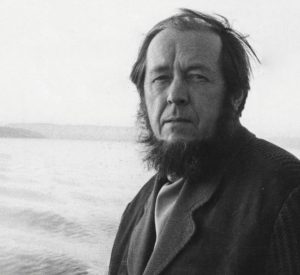 When the Soviet Union collapsed in 1991, pundits offered a variety of reasons for its failure: economic, political, military. Few thought to add a fourth, more elusive cause: the regime’s total loss of credibility.
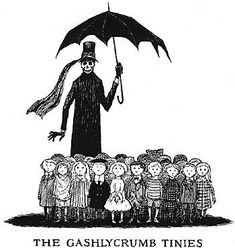 Gorey has here and there been described as ‘Dr Seuss for Tim Burton fans’ and ‘the Charles Schulz of the macabre’, but he was in every way more wayward and interesting than that. He wrote almost impossible to classify little books — crunched-down Victorian novels — that seemed to belong in the children’s sections of bookshops but were quite unsuited to children, in whom he took little or no interest. He found a public only very slowly, and over many years — thanks, in large part, to till-point placement and Hello-Kitty-scale merchandising efforts by the Gotham Book Mart in New York.
 E
E
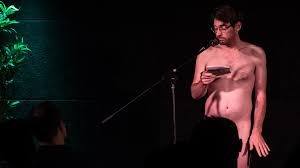 Minutes before stepping out into the spotlight on a stage – totally naked – I am wondering whether to wear socks. “It’s cold,” shivers another performer. A friend counsels, “If you’re going out naked, do it in full.” The matter of the sock is a distraction from the fact that we’re about to show our willies to the masses. This might not be Wembley Arena, but the trendy basement bar in east London I’m performing in is packed with people – mainly men. Anticipation crackles among them. They giggle about picking seats with a good view of the stage. There are twice as many eyeballs as people. And each one of them is about to see all I have.
 Brain conditions such as schizophrenia and autism spectrum disorder have long been known to have an inherited component, but pinpointing