
Anakana Schofield in The Guardian:
 The latest TV series by charming, tidy-up guru Marie Kondo has landed on Netflix and while we are all in love with the vibrant folk featured in her show, last week I accidentally entered the damning territory of disagreeing with Kondo’s philosophy – in a tweet that went viral. For while I’d heed Kondo’s “Konmari method” for habits such as folding T-shirts, she is woefully misguided when she says we should get rid of books that don’t give us “joy”. Present tally among the 25,000-plus tweets replying to mine: 65% agree with me, 20% disagree, 3% think we are fighting over a football team and 5% insist Kondo’s position is way more nuanced than I give credit for. The rest insist I am a joyless frump. But be assured that this joyless frump will not be following Kondo’s advice, to essentially hold my books against my teats and left ventricle to see if they spark joy. If my own novels are anything to go by, I should be slightly concerned if the most recent, Martin John, sparked joy in anyone other than a convicted sex offender or a forensic psychiatrist.
…I read in a variety of ways – ebooks, audiobooks – and never mind donating or sharing books. But I can’t imagine what a blank collection of physical books I’d be left with if they had to spark joy. (Goodbye Jelinek, Bernhard and Kafka, hello books with photos of hippo feet.) When I look at my shelves, I marvel at how random books have ended up beside each other. Some are on my shelf on the strength of just one line or a paragraph. Some are gifts, others I found discarded in the street. But every purchase of a book is a gesture of faith in the writer who wrote it. Writers are nothing without readers. Rather than following Kondo’s rules, I’d like to suggest another: it should be obligatory that all living spaces come with built-in bookshelves. (And a hammock.)
More here.
 A deep-learning algorithm is helping doctors and researchers to pinpoint a range of rare genetic disorders by analysing pictures of people’s faces. In a paper

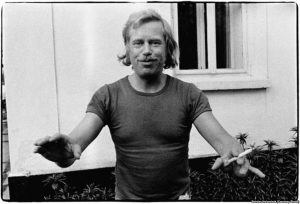 On the morning of August 20, 1968, the Czech playwright Vaclav Havel had a serious hangover. He was at his country home in Liberec after a night of boozing it up with his actor friend
  My wife and I took a peek into the interior of Papua New Guinea twenty years ago.

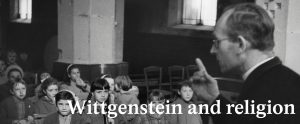 When contemporary atheists criticise religious beliefs, they usually criticise beliefs that only crude religious thinkers embrace. Or so some people claim. The beliefs of the sophisticated religious believer, it’s suggested, are immune to such assaults.
 Recently I’ve been experimenting with mood-modification through temperature extremes (like
  The state in polities broadly described as ‘liberal democracies’ with political economies broadly described as ‘capitalist’ are characterised by a feature that Gramsci called ‘hegemony’. This is a technical term, not to be confused with the loose use of that term to connote ‘power and domination over another’. In Gramsci’s special sense, hegemony means that a class gets to be the ruling class by convincing all other classes that its interests are the interests of all other classes. It is because of this feature that such states avoid being authoritarian. Authoritarian states need to be authoritarian precisely because they lack Gramscian hegemony. It would follow from this that if a state that does possess hegemony in this sense is authoritarian, there is something compulsive about its authoritarianism. Now, what is interesting is that the present government in India keeps boastfully proclaiming that it possesses hegemony in this sense, that it has all the classes convinced that its policies are to their benefit. If so, one can only conclude that its widely recorded authoritarianism, therefore, is pathological.
 So it’s 2018, and we’re at a pivotal point in the world of cancer. A breakthrough has been made, is this the revolution we’ve all been waiting for. Is the cut and burn era over?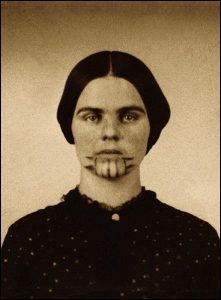
 IN MARCH
 According to the UK’s
 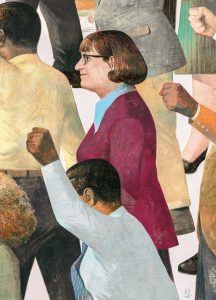 American stories trace the sweep of history, but their details are definingly particular. In the summer of 1979, Elizabeth Anderson, then a rising junior at Swarthmore College, got a job as a bookkeeper at a bank in Harvard Square. Every morning, she and the other bookkeepers would process a large stack of bounced checks. Businesses usually had two accounts, one for payroll and the other for costs and supplies. When companies were short of funds, Anderson noticed, they would always bounce their payroll checks. It made a cynical kind of sense: a worker who was owed money wouldn’t go anywhere, or could be replaced, while an unpaid supplier would stop supplying. Still, Anderson found it disturbing that businesses would write employees phony checks, burdening them with bounce fees. It appeared to happen all the time.