
Elie Dolgin in Nature:
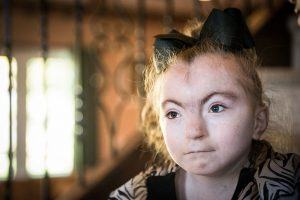 A deep-learning algorithm is helping doctors and researchers to pinpoint a range of rare genetic disorders by analysing pictures of people’s faces. In a paper1 published on 7 January in Nature Medicine, researchers describe the technology behind the diagnostic aid, a smartphone app called Face2Gene. It relies on machine-learning algorithms and brain-like neural networks to classify distinctive facial features in photos of people with congenital and neurodevelopmental disorders. Using the patterns that it infers from the pictures, the model homes in on possible diagnoses and provides a list of likely options.
Doctors have been using the technology as an aid, even though it’s not intended to provide definitive diagnoses. But it does raise a number of ethical and legal concerns, say researchers. These include ethnic bias in training data sets and the commercial fragmentation of databases, both of which could limit the reach of the diagnostic tool. Researchers at FDNA, a digital-health company in Boston, Massachusetts, first trained the artificial intelligence (AI) system to distinguish Cornelia de Lange syndrome and Angelman syndrome — two conditions with distinct facial features — from other similar conditions. They also taught the model to classify different genetic forms of a third disorder known as Noonan syndrome. Then the researchers, led by FDNA chief technology officer Yaron Gurovich, fed the algorithm more than 17,000 images of diagnosed cases spanning 216 distinct syndromes. When presented with new images of people’s faces, the app’s best diagnostic guess was correct in about 65% of cases. And when considering multiple predictions, Face2Gene’s top-ten list contained the right diagnosis about 90% of the time.
More here.


 On the morning of August 20, 1968, the Czech playwright Vaclav Havel had a serious hangover. He was at his country home in Liberec after a night of boozing it up with his actor friend
  My wife and I took a peek into the interior of Papua New Guinea twenty years ago.

 When contemporary atheists criticise religious beliefs, they usually criticise beliefs that only crude religious thinkers embrace. Or so some people claim. The beliefs of the sophisticated religious believer, it’s suggested, are immune to such assaults.
 Recently I’ve been experimenting with mood-modification through temperature extremes (like
  The state in polities broadly described as ‘liberal democracies’ with political economies broadly described as ‘capitalist’ are characterised by a feature that Gramsci called ‘hegemony’. This is a technical term, not to be confused with the loose use of that term to connote ‘power and domination over another’. In Gramsci’s special sense, hegemony means that a class gets to be the ruling class by convincing all other classes that its interests are the interests of all other classes. It is because of this feature that such states avoid being authoritarian. Authoritarian states need to be authoritarian precisely because they lack Gramscian hegemony. It would follow from this that if a state that does possess hegemony in this sense is authoritarian, there is something compulsive about its authoritarianism. Now, what is interesting is that the present government in India keeps boastfully proclaiming that it possesses hegemony in this sense, that it has all the classes convinced that its policies are to their benefit. If so, one can only conclude that its widely recorded authoritarianism, therefore, is pathological.
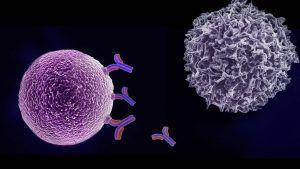 So it’s 2018, and we’re at a pivotal point in the world of cancer. A breakthrough has been made, is this the revolution we’ve all been waiting for. Is the cut and burn era over?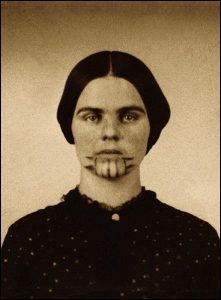
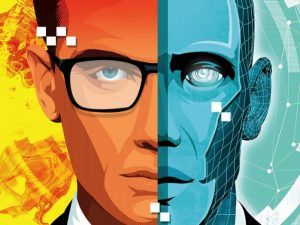 IN MARCH
 According to the UK’s
 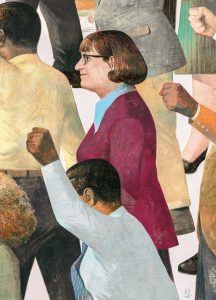 American stories trace the sweep of history, but their details are definingly particular. In the summer of 1979, Elizabeth Anderson, then a rising junior at Swarthmore College, got a job as a bookkeeper at a bank in Harvard Square. Every morning, she and the other bookkeepers would process a large stack of bounced checks. Businesses usually had two accounts, one for payroll and the other for costs and supplies. When companies were short of funds, Anderson noticed, they would always bounce their payroll checks. It made a cynical kind of sense: a worker who was owed money wouldn’t go anywhere, or could be replaced, while an unpaid supplier would stop supplying. Still, Anderson found it disturbing that businesses would write employees phony checks, burdening them with bounce fees. It appeared to happen all the time.
 This past week, Dr. Mark Green, M.D., who was recently elected to the U.S. House of Representatives from the state of Tennessee declared: “Let me say this about
  The demand that we