
by Dave Maier
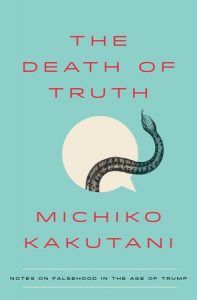 A contemporary truism, ironically enough, is that we now live in a “post-truth” era, as attested by a number of recent books with that or similar titles, related by their authors with varying degrees of chagrin. We all know the ultimate, or at least proximate, source of this concern: that fount of untruth which is Donald Trump’s Twitter feed (with a side of Brexitmania for those across the pond). Even among his supporters – and this is indeed, I think, the most charitable interpretation of the phenomenon in question – Mr. Trump is, as his aide Ms. Conway has put it, best taken “seriously but not literally.” That is, he is not particularly concerned with whether what he says is true, but instead with its effect on his readers and listeners, friendly or hostile.
I’m not going to defend this attitude toward truth-telling, which has become known, thanks to philosopher Harry Frankfurt, as “bullshitting,” and in fact dates back to the ancients, when Plato’s Socrates criticized what were called “sophists” for similar attitudes. However, it does seem that some of today’s self-appointed defenders of truth can paint their targets with an excessively broad brush. Naturally there is a lot of complaining about “postmodernist skepticism about truth,” but since most of our writers are not philosophers, their somewhat vague griping is hard to evaluate. (Michiko Kakutani, for example, clearly doesn’t like Derrida; but that’s just about all I got out of what she said.) But I’m not here to defend postmodernism any more than I am to defend “alternative facts.” Read more »
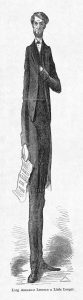 In October of 1859, Abraham Lincoln received an invitation to come to New York to deliver a lecture at the Abolitionist minster Henry Ward Beecher’s Plymouth Congregational Church in Brooklyn.
 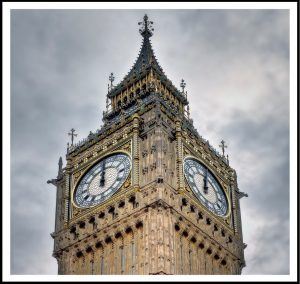 47-year old Teburoro Tito stood at the head of his delegation on an island way out in the Pacific Ocean. At the stroke of midnight on January 1

 Of all the internet’s uses, attractions and conveniences, the foremost is that it involves us immediately with an indefinite number of others. Its decisive edge over television and the printed word is just this: its participatory, social character. To the extent that it is becoming our chief means of private and public discourse, it is therefore acquiring exceptional political significance. To someone who understood nothing of the internet, much of contemporary American political life would be inscrutable. It is now our primary way of dealing with each other, our most important organ of collective speech and self-knowledge. The internet is, in this way, inherently recasting our wider notions of what to say, who to be, what to count as authoritative, and how to govern and be governed. What follows are some lines of thought sketching each of these transformations in turn.
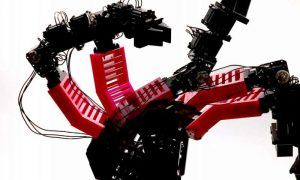 Robots that are self-aware have been science fiction fodder for decades, and now we may finally be getting closer. Humans are unique in being able to imagine themselves—to picture themselves in future scenarios, such as walking along the beach on a warm sunny day. Humans can also learn by revisiting past experiences and reflecting on what went right or wrong. While humans and animals acquire and adapt their self-image over their lifetime, most robots still learn using human-provided simulators and models, or by laborious, time-consuming trial and error. Robots have not learned simulate themselves the way humans do.
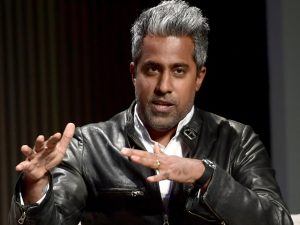 Richard Feloni: What does Davos stand for in your view? Do you have any particular thoughts on this year’s, specifically?
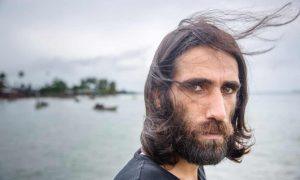 The winner of Australia’s richest literary prize did not attend the ceremony.
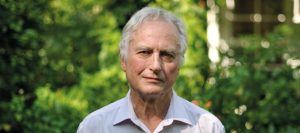 In the digital age, reputations made over decades can be lost in minutes. Richard Dawkins first achieved renown as a pioneering evolutionary biologist (through his 1976 bestseller, The Selfish Gene) and, later, as a polemical foe of religion (through 2006’s The God Delusion). Yet he is now increasingly defined by his incendiary tweets, which have been plausibly denounced as Islamophobic.
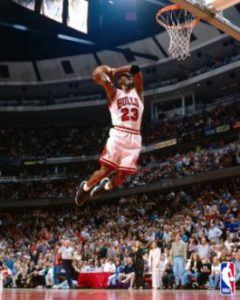 Michael Jordan,
 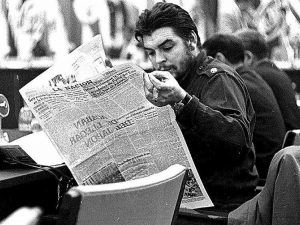 Even Che Guevara, the poster boy for the Cuban Revolution, was forced to admit that endlessly trudging the Sierra Maestra mountains had its downsides. “There are periods of boredom in the life of the guerrilla fighter,” he warns future revolutionaries in his classic handbook, Guerrilla Warfare. The best way to combat the dangers of ennui, he helpfully suggests, is reading. Many of the rebels were college educated—Che was a doctor, Fidel a lawyer, others fine art majors—and visitors to the rebels’ jungle camps were often struck by their literary leanings. Even the most macho fighters, it seems, would be seen hunched over books.