
Geoff Dyer at the New Statesman:
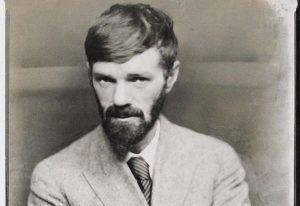 The best parts of “Art and Morality” (1925) are not about art or morality but – via an extraordinary speculative detour into the lives of ancient Egyptians – about how the “Kodak” habit of photographing oneself all the time has fundamentally changed our sense of ourselves: a prophetic diagnosis of a defining malaise of the iPhone era. In an editorial note to “Introduction to Pictures” the scholar James T Boulton rightly points out that the essay “does not once refer to pictures”. This tendency to stray from stated intentions was best expressed by Lawrence himself on 5 September 1914. “Out of sheer rage I’ve begun my book about Thomas Hardy. It will be about anything but Thomas Hardy I am afraid – queer stuff – but not bad.”
Intended as part of a series called “Writers of the Day”, the manuscript, which had veered far from any template, was not accepted for publication. Lawrence wanted it to leave the original brief still further behind and began recasting something that had been “mostly philosophicalish, slightly about Hardy” into a more explicit statement of his “‘philosophy’ (forgive the word)”.
more here.
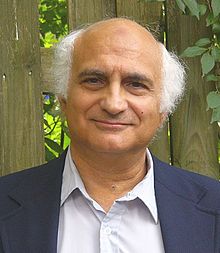 The history of Islam’s relation to science has largely been one of harmony. It offers no real parallel to the occasional bouts of suspicion toward science that the Christian world experienced. Today, many Muslims can be found in the fields of medicine and engineering. Even the ultraconservative Muslims who long for a return to the ethical norms of the seventh century see no need to abandon cell phones to do so, and even the most extreme of Islamic extremists envies the high-tech oil-extraction techniques and the weaponry of the West. Muslims, both conservative and liberal, issue fatwas (legal opinions) over the Internet without any hesitation over the technology they employ and with no fear that it may be haram (prohibited).
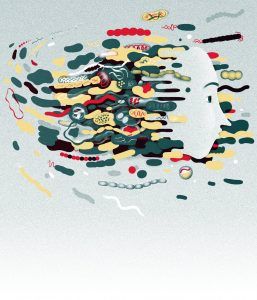 In 2014 John Cryan, a professor at University College Cork in Ireland, attended a meeting in California about Alzheimer’s disease. He wasn’t an expert on dementia. Instead, he studied the microbiome, the trillions of microbes inside the healthy human body. Dr. Cryan and other scientists were beginning to find hints that these microbes could influence the brain and behavior. Perhaps, he told the scientific gathering, the microbiome has a role in the development of Alzheimer’s disease. The idea was not well received. “I’ve never given a talk to so many people who didn’t believe what I was saying,” Dr. Cryan recalled. A lot has changed since then: Research continues to turn up remarkable links between the microbiome and the brain. Scientists are finding evidence that microbiome may play a role not just in Alzheimer’s disease, but Parkinson’s disease, depression, schizophrenia, autism and other conditions.
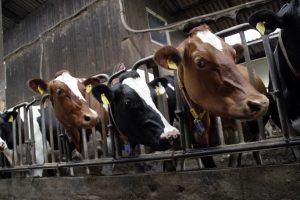 Lab-grown beef may very well be the path forward. In 2008, it was estimated that just half a pound of lab-grown beef would cost
  The main political beneficiaries of the social and economic fractures wrought by globalization and technological change, it is fair to say, have so far been right-wing populists. Politicians like Donald Trump in the United States, Viktor Orbán in Hungary, and Jair Bolsonaro in Brazil have ridden to power by capitalizing on the growing animus against established political elites and exploiting latent nativist sentiment.
 For around a decade, people who think critically about the media have worried about filter bubbles—algorithmic or social structures of information flow that help us see only the news that we want to see. Filter bubbles make it easy to ignore information that could change our views. But the Covington story is an example of a different problem. It’s a story that’s disproportionately talked about and hard to avoid. It’s relatively inconsequential, but also inescapable. There is no bubble strong enough to keep it out.
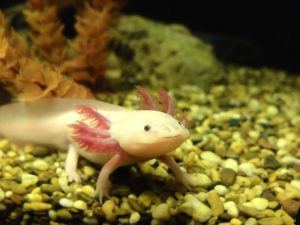 When Lake Xochimilco near Mexico City was Lake Texcoco, and the Aztecs founded their island capital city of Tenochtitlan in 1325, a large aquatic salamander thrived in the surrounding lake. The
 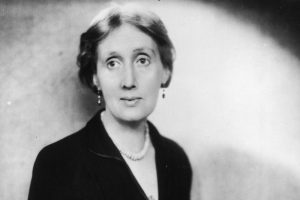 Every so often a book comes along and changes the way you see a classic of literature. The Diary of Virginia Woolf, published between 1977 and 1984, came out decades after Woolf’s death in 1941, and added a stunning lens through which to view her long and dynamic career. Her husband Leonard had carefully edited a volume initially in 1953, one that focused entirely on Woolf’s writing process and avoided personal details, but it was only when Woolf’s diaries were released in their totality that readers gained a precious glimpse inside a complicated mind at work.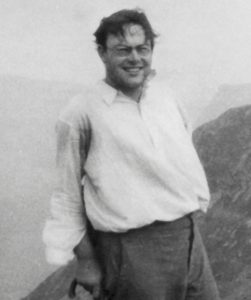

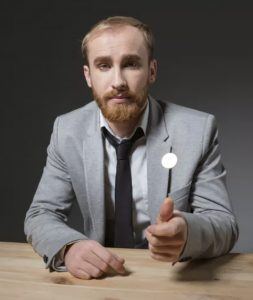 Rationality has long been an important concept in the study of judgement and decision making. The highly
 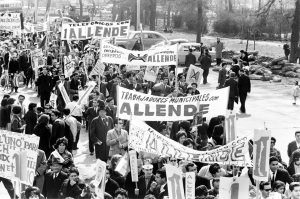 Discussions about the state of democracy are suddenly all the rage. And it’s not hard to see why: Bolsonaro in Brazil, Trump in the US, Erdoğan in Turkey, Orbán in Hungary — all point to a resurgent authoritarianism and a diminution of democratic forms. But we can’t understand the current retrenchment without understanding how mass democracy came about in the first place.
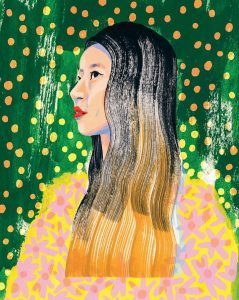 Sally Wen Mao’s new book of poems, “
 I
I