
Rafia Zakaria in The Baffler:
 NOW THAT SHE IS NO LONGER presiding over the East Wing in the White House, Michelle Obama is grateful for the little things. One of them is toast, or rather toast she makes herself. As she recounts in her mega best-selling memoir, Becoming, nothing feels more liberating than tiptoeing to the kitchen of her own home and making toast, specifically cheese toast. It is a relief, she notes, to not have someone offer to make it for her, and a delight to walk to her back porch and eat it, alone and in shorts and with the Secret Service a hundred yards away.
It is an endearing story, with its Oprah-endorsed (she told the story on Oprah’s “SuperSoul Conversations” podcast) appeal underscoring the everyone-loves-her charisma of the most admired woman in America. There is lots more of the same in Becoming; it is laden with curated-for-cuteness interludes. Indeed, sometimes you can almost hear the collective gasps of an invisible Oprah audience rise up from the page: they’re there when she tells of Barack staring at the ceiling one night in bed during their courtship and admitting he was thinking about “income inequality”; they cheer, too, when Michelle recounts how the couple was applauded by diners at a restaurant in New York when they went on a presidential date night; and they hem with smug approval when Michelle talks of laying down the law over family dinnertime at the East Wing regardless of what was going down at the West Wing.
More here.
 Neanderthals disappeared from Europe roughly 40,000 years ago, and scientists are still trying to figure out why. Did disease, climate change or competition with modern humans — or maybe a combination of all three — do them in? In a recent
 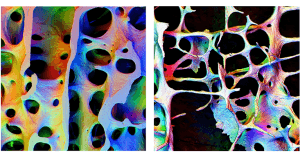 Simplicity, simplicity, simplicity!” Henry David Thoreau exhorted in his 1854 memoir Walden, in which he extolled the virtues of a “Spartan-like” life. Saint Thomas Aquinas preached that simplicity brings one closer to God. Isaac Newton believed it leads to truth. The process of simplification, we’re told, can illuminate beauty, strip away needless clutter and stress, and help us focus on what really matters. It can also be a sign of aging. Youthful health and vigor depend, in many ways, on complexity. Bones get strength from elaborate scaffolds of connective tissue. Mental acuity arises from interconnected webs of neurons. Even seemingly simple bodily functions like heartbeat rely on interacting networks of metabolic controls, signaling pathways, genetic switches, and circadian rhythms. As our bodies age, these anatomic structures and physiologic processes lose complexity, making them less resilient and ultimately leading to frailty and disease.
 Today, cars with semi-autonomous features are already on the road. Automatic parallel parking has been commercially available since 2003. Cadillac allows drivers to go hands-free on pre-approved routes. Some B.M.W. S.U.V.s can be equipped with, for an additional seventeen-hundred dollars, a system that takes over during “monotonous traffic situations”—more colloquially known as traffic jams. But a mass-produced driverless car remains elusive. In 2013, the U.S. Department of Transportation’s National Highway Traffic Safety Administration published a sliding scale that ranked cars on their level of autonomy. The vast majority of vehicles are still at level zero. A car at level four would be highly autonomous in basic situations, like highways, but would need a human operator. Cars at level five would drive as well as or better than humans, smoothly adapting to rapid changes in their environments, like swerving cars or stray pedestrians. This would require the vehicles to make value judgments, including in versions of a classic philosophy thought experiment called the trolley problem: if a car detects a sudden obstacle—say, a jackknifed truck—should it hit the truck and kill its own driver, or should it swerve onto a crowded sidewalk and kill pedestrians? A human driver might react randomly (if she has time to react at all), but the response of an autonomous vehicle would have to be programmed ahead of time. What should we tell the car to do?
 Last week, as world leaders and business elites arrived in Davos for the
  A new report from the
  In 1966, Robert “Bob” Taylor, an employee at the U.S. government’s Advanced Research Projects Agency, had an insight that led to the creation of the internet: “[Bob Taylor’s] most enduring legacy, however, was … a leap of intuition that tied together everything else he had done. This was the ARPANET, the precursor of today’s Internet.
 Donald Trump has been hot for Venezuela for some time now. In the summer of 2017, Trump, citing George H.W. Bush’s 1989–90 invasion of Panama as a positive precedent, repeatedly
  Political veterans such as Pelosi and Israel think that the cornerstones of the emerging left platform—housing as a human right, criminal justice reform, Medicare for all, tuition-free public colleges and trade schools, a federal jobs guarantee, abolition of U.S. Immigration and Customs Enforcement and for-profit prisons, campaign finance reform, and a Green New Deal—might perform well in urban centers but not so much elsewhere. Appalachia has become symbolic of the forces that gave us Trump. After all, his pandering to white racial anxiety did find purchase here. His fantasies to make America great again center on our dying coal industry. And the region’s conservative voters, who have been profiled endlessly, have been a reliable stand-in for all Trump voters, absorbing the outrage of progressive readers. But what Pelosi and Israel see as common sense and pragmatism can also be interpreted as tired oversimplifications and a failure of imagination.
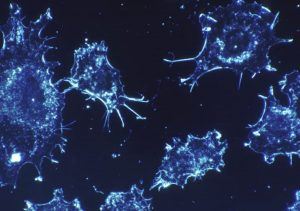 The potentially game-changing anti-cancer drug is based on SoAP technology, which belongs to the phage display group of technologies. It involves the introduction of DNA coding for a protein, such as an antibody, into a bacteriophage – a virus that infects bacteria. That protein is then displayed on the surface of the phage. Researchers can use these protein-displaying phages to screen for interactions with other proteins, DNA sequences and small molecules.
 With support from
 How do you recommend an experience you never want to have again? How does a film critic say, for instance, that Requiem for a Dream is a must-watch, when it’s infused with such ugliness and despair? When a piece of art is unapologetically dark and unpleasant but of objectively excellent quality, finding a way to push audiences toward it is a challenge.