
Andrew Brown in The Guardian:
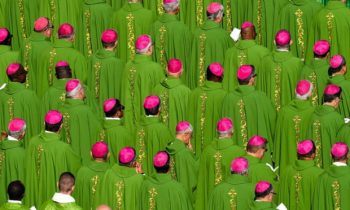 Some years ago a well-placed German Catholic priest sent me a long letter denouncing a network of gay clergy supposedly centred around Pope Benedict XVI’s private secretary, Archbishop Georg Gänswein. In official Catholic teaching it is not a sin to be gay, although the inclination is “an objective moral disorder”; but it is sinful to act on this inclination. How sinful depends on your confessor. The result is that gay clergy are officially innocent until guilty but in gossip guilty until proven innocent – which of course they never quite can be. Most of the men cited were identified only by their initials, and the sender himself hoped to remain anonymous. But with patience and the help of friends, I worked out who all the initials belonged to and tracked the author to his cathedral. He denied everything and expressed surprise that a reputable newspaper should be interested in such gossip. I will not easily forget his smirk as he said this.
It was a glimpse of the poisonous world that Frédéric Martel, himself gay, has spent five years researching for this book. In this place of make-believe, guilt and constant innuendo the prelates live in a tension between the dreadful fear of being outed and the loneliness of not being recognised for who and what they are. So they out each other instead, compulsively. Martel’s rule of thumb is that the most publicly homophobic prelates are those most likely to be homosexually inclined themselves; the only ones who feel they can afford to be sympathetic to gay people are celibate straight people, who do exist in the Vatican. Martel quotes the estimate of the pope’s former chief Latinist that up to 80% of the Vatican staff could be gay even if obviously most of them are buttoned up. The real figure is unknowable but 80% is not entirely incredible.
One of the most impressive, and saddening, parts of Martel’s research is his exploration of the world of migrant sex workers in Rome. Elsewhere in Europe there are fewer gay sex workers on the streets, he says, but in Rome they still thrive, in part because of the concentration of priests, who seek out migrants for the anonymity their encounters offer.
More here.
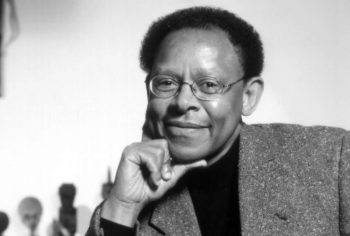 My dear brother, James Cone. Words fail. Any language falls short. Yes, he was a world-historical figure in contemporary theology, no doubt about that. A towering prophetic figure engaging in his mighty critiques and indictment of contemporary Christendom from the vantage point of the least of these, no doubt about that. But I think he would want us to view him through the lens of the Cross and the blood at the foot of that cross. So, I want to begin with an acknowledgement that James Cone was an exemplary figure in a tradition of a people who have been traumatized for 400 years but taught the world so much about healing; terrorized for 400 years and taught the world so much about freedom; hated for 400 years and taught the world so much about love and how to love. James Cone was a love warrior with an intellectual twist, rooted in gutbucket Jim Crow Arkansas, ended up in the top of the theological world but was never seduced by the idles of the world.
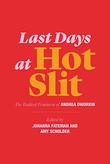 Last Days at Hot Slit, a collection of Dworkin’s writing edited by Johanna Fateman and Amy Scholder, is an invitation “to consider what was lost in the fray,” as Fateman writes in her moving introduction. Hot Slit contains excerpts from all of Dworkin’s major books as well as previously unpublished material, including letters to her parents, university lectures, and a portion of an unfinished end-of-life autobiographical manuscript called My Suicide. The style is strident, enraged, and the conclusions are often stark, bluntly phrased, and difficult to read. Dworkin had reason to be angry: Her life was marked by the kind of male violence that is disturbingly common yet consistently goes unacknowledged. In 1965, when she was eighteen and a student at Bennington College, Dworkin took part in an anti-war demonstration in Manhattan and was arrested. In jail, she was subjected to a violent gynecological exam that I have no word for other than rape. Her decision to write and testify about it caused enormous distress for her parents, who were upset not only at what had happened to their daughter, but by her choice, incomprehensible to them, to talk about it publicly.
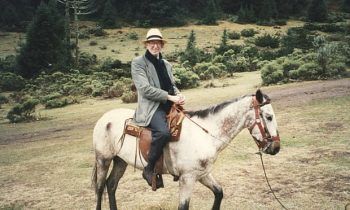 He had not set out to become a professional historian; indeed, at one point he considered becoming a full-time organiser for the party. And although his early work fell in the academic sub-field of economic history, its inspiration was primarily political. For Hobsbawm, as for so many on the left in his generation, the question that needed addressing was the rise and dominance of capitalism: he later reflected that he chose economic history as his field largely because it was the only intellectual space in the academic world at the time where he could pursue his real interests in relations between “base” and “superstructure” in explaining social change. Emotionally, his sympathies were with capitalism’s victims and opponents. One of his early rejected books described industrialism as “almost certainly the most catastrophic historical change which has overwhelmed the common people of the world”, and he began to cultivate his interest in the forms of often unorganised or disguised resistance to it, especially forms of “social banditry” in the countryside.
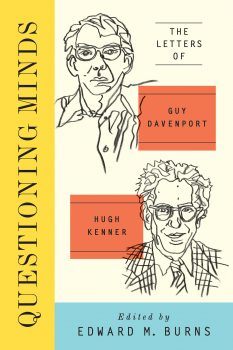 Questioning Minds deserves an audience because it allows readers the privilege of immersion in examinations of Modernist writing, in witnessing earnest and, at times, witty or humorous exchanges, and in seeing how academic (Kenner) and creative (Davenport) projects arise from chance remarks, are worked out (or abandoned), and, now and then, collaborated on, as with Kenner’s book on Flaubert, Joyce and Beckett, The Stoic Comedians(1962), that features Davenport’s illustrations. Both writers urge or hector the other to read, or write, this or that article or book. Kenner encourages Davenport to do extensive translations of the poetry of a particular Greek lyric poet, and this later became Carmina Archilochi: The Fragments of Archilochos (1964). Both interceded to help the other give paid talks or find university positions.
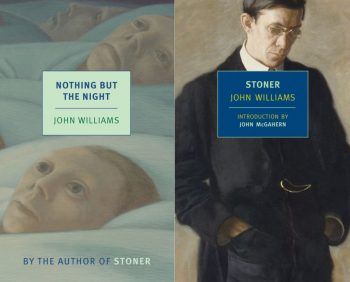 Nancy Gardner Williams, John Williams’s widow, lives in a small bungalow in Pueblo, Colorado, close to the desert. This town near the Rocky Mountains was once known for its steel industry. Nancy, a tall woman who holds herself straight, is attentive and observant, friendly yet somewhat reserved. She is not decisively talkative, but you realize immediately that she and her husband must have been on equal terms. “No bluster, no fashion, no pomp,” as Dan Wakefield once remarked about John Williams. That seems to be true for her as well. Nancy studied English literature at the University of Denver. One of her lecturers was John Williams.
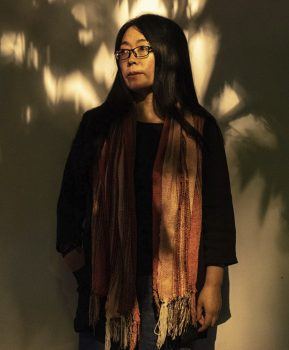 The forty-five-year-old investigative journalist Jiang Xue is one of the most influential members of a group of journalists who came of age in the early 2000s, taking advantage of new—if temporary—freedoms created by the Internet to investigate pressing social issues. She worked at Chinese Business View (Huashangbao) until 2014, when she quit as its opinion-page editor over censorship. Since then, she has kept writing to an ever-shrinking audience on social media, most notably
 In the spring of 1890, Albion Tourgée, who had fought for the Union in the United States Army and then against the Ku Klux Klan as a Reconstruction judge, received an invitation to address a conference in upstate New York on the “Negro Question” hosted by the Quaker philanthropist Albert Smiley. Tourgée was an ideal choice: He had remained engaged in the struggle for equality long after many white people had lost interest. But as Steve Luxenberg shows in “Separate: The Story of Plessy v. Ferguson, and America’s Journey From Slavery to Segregation,” Tourgée was tempted to stay home. Longtime allies were boycotting the conference, with the encouragement of black newspaper editors and activists. Their complaint was simple: Not a single “Negro” had been invited. Yet in response to the protest, organizers doubled down. “A patient is not invited to the consultation of the doctors on his case,” Lyman Abbott wrote in The Christian Union.
 POPULISM AND DEMOCRACY are an odd couple. The first, populism, rejects the pejorative connotation that its name represents for the second, democracy, which it in turn criticizes for being hypocritical. The second declares itself the sole form of legitimate existence. Both of them claim to be supremely popular. Their virulent opposition in the current discourse is matched only by the indecision that hangs over their respective meanings. What “people” are they talking about, both together and separately?
 On February 19, 1855, Charles Sumner, the Massachusetts senator, wrote his supporters about an enslaved 7-year-old girl whose freedom he had helped to secure. She would be joining him onstage at an abolitionist lecture that spring. “I think her presence among us (in Boston) will be a great deal more effective than any speech I could make,” the noted orator wrote. He said her name was Mary, but he also referred to her, significantly, as “another Ida May.” Sumner enclosed a daguerreotype of Mary standing next to a small table with a notebook at her elbow. She is neatly outfitted in a plaid dress, with a solemn expression on her face, and looks for all the world like a white girl from a well-to-do family.
 In 1985, the chemist Steven A. Benner sat down with some colleagues and a notebook and sketched out a way to expand the alphabet of DNA. He has been trying to make those sketches real ever since.
 One evening in 2016, a twenty-five-year-old community-college student named Alex Gutiérrez was waiting tables at La Piazza Ristorante Italiano, an upscale restaurant in Tulare, in California’s San Joaquin Valley. Gutiérrez spotted Yorai Benzeevi, a physician who ran the local hospital, sitting at a table with Parmod Kumar, a member of the hospital board. They seemed to be in a celebratory mood, drinking expensive bottles of wine and laughing. This irritated Gutiérrez. The kingpins, he thought with disgust.
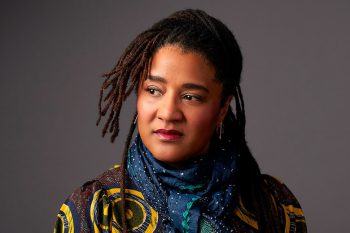 Lynn Nottage is the only living American playwright to have won the Pulitzer Prize multiple times. Her first one came in 2009 for Ruined, a drama about a small bar in a mining town in the Congo that serves soldiers from both sides of that country’s civil war. She received her second Pulitzer in 2017 for Sweat, a drama about the downfall of Reading, Pennsylvania, that largely takes place in a bar frequented by union workers as they find themselves caught between solidarity and trying to make rent.
 The
The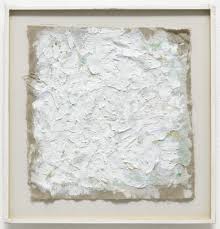 Over the course of the more than half-century of relentless experimentation that followed, Ryman radically expanded the possibilities of abstract painting, continuously rethinking how it could be made and what it could look like, even while seeming to confine himself to a single color: white. His death on Friday, in New York, at the age of 88, brings to a close one of the singular careers in postwar America art.
 Yet one cluster of texts never entered public discourse in the same way. For eight months after these texts were released online — an eon, in internet time — no one wrote about them. The sleaziest gossip outlets, which enthusiastically published other dirty details about Manafort (including his membership in BDSM sex clubs), wouldn’t touch it. Deep transparency conspiracy theorists didn’t Tweet about it. A