
Sam Jordison in The Guardian:
 Today James Baldwin is most frequently encountered as a “trailblazer of the civil rights movement”; a magnificent prophet who declared that “ignorance, allied with power, is the most ferocious enemy justice can have”. His contemporary relevance is so obvious it hardly needs to be stated – although it’s always good to be reminded. To watch him in the recent documentary I Am Not Your Negro is exhilarating, showing just what an unstoppable moral and intellectual force he was. It’s not just that it’s hard to disagree with him; it’s impossible to argue with him. Representatives of the old order charge towards his machine-gun rhetoric like sword-waving cavalrymen and they are mown down.
He was politely devastating when Professor Paul Weiss tried to tell him on the Dick Cavett TV chatshow that he shouldn’t be so concerned about “colour”, when his life has been threatened, and his friends have been killed, precisely because of colour. Meanwhile, the footage of Baldwin shredding the rightwing commentator William F Buckley at the Cambridge Union is one of the most impressive rhetorical performances of the modern age. “It is a terrible thing for an entire people to surrender to the notion that one ninth of its population is beneath them,” he said toward the end of his speech. “Until the moment comes when we, the Americans, are able to accept the fact that my ancestors are both black and white, that on that continent we are trying to forge a new identity, that we need each other, that I am not a ward of America, I am not an object of missionary charity, I am one of the people who built the country – until this moment comes there is scarcely any hope for the American dream.” At his conclusion, the room erupted in a standing ovation. Baldwin’s words were forged in injustice and tragedy, making his delivery all the more remarkable. It feels impossible to imagine anyone who could ever take him on.
More here.
 Relics have the power to galvanize and unify people for diverse ideological ends. A broad category of objects, relics can be anything from the body parts of holy figures to objects intimately associated with their lives. They have long been central to many religions, prized for their ability to transmit the aura and sanctity of those to whom they belonged. Relics of Saint Teresa of Avila were so valued, for example, that when her body was exhumed for canonization in 1622, clerics smuggled away her fingers and toes, sometimes in their mouths. But there are secular relics as well, from clippings of Marie Antoinette’s hair to the preserved corpse of Vladimir Lenin. Through sheer proximity to these relics, the faithful feel the full solemnity of the deceased’s presence and their greater impact on history.
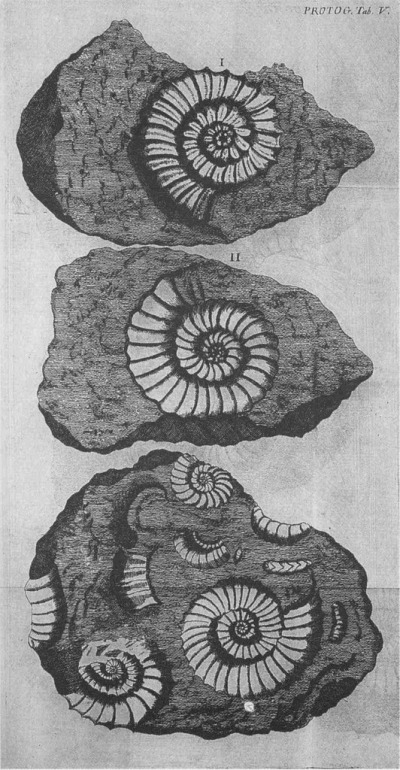 Gottfried Wilhelm Leibniz never finished the principal task assigned to him by his boss, Georg Ludwig, Elector of Hanover. When the latter became King of England in 1704 –the beginning of the ‘Hanoverian usurpation’ that still enjoys some sort of power in the United Kingdom and some of its former possessions–, Leibniz, the delinquent court genealogist, was not invited to join him, as he had hoped. Instead he was made to stay behind, in the expectation that he would finally complete his long overdue history of the medieval origins of Georg Ludwig’s own Guelf family, and of their distant union with the Italian Este dynasty: a forgotten alliance that, once reestablished, might yield up validation for new territorial claims.
 Within every person’s mind there is on ongoing battle between reason and emotion. It’s not always a battle, of course; very often the two can work together. But at other times, our emotions push us toward actions that our reason would counsel against. Paul Bloom is a well-known psychologist and author who wrote the provocatively-titled book Against Empathy: The Case for Rational Compassion, and is currently writing a book about the nature of cruelty. While I sympathize with parts of his anti-empathy stance, I try to stick up for the importance of empathy in the right circumstances. We have a great discussion about the relationship between reason and emotion.
 It was not an overt incident of racism that prompted Edray Goins, an African-American mathematician in the prime of his career, to abandon his tenured position on the faculty of a major research university last year.
 I met
I met 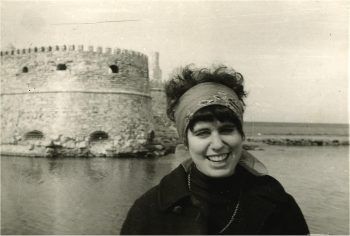 In her work, rage is authority; her imperious voice and dirty mouth make for a feminist literature empty of caveats and equivocation. And reading her now, beyond the anti-porn intransigence she’s both reviled and revered for, one feels a prescient apocalyptic urgency, one perfectly calibrated, it seems, to the high stakes of our time. In the #MeToo era, women’s unsparing public testimony—in granular detail and dizzying quantity—is at the heart of a mainstream cultural reckoning with sexual violence and harassment. Such frank accounts were not at the forefront, though, or even in the picture, of early second-wave feminism. Dworkin’s emergence as a militant figure of the women’s movement in New York was part of a turn: she was one of the first writers to use her own experiences of rape and battery in a revolutionary analysis of male supremacy. This is not to say that Dworkin’s books are all autobiographical, but in all of her work—from her frequently cited polemics to her desolate, little-known works of autofiction—she boldly identifies herself with victims, unafraid to brand herself with an image of female abjection and sexual shame in the name of justice.
 One afternoon in June 1999, more than three million Chinese schoolchildren took their seats for the Gaokao, the country’s national college entrance exam. Essay subjects in previous years had been patriotic – “the most touching scene from the Great Leap Forward” (1958) – or prosaic –“trying new things” (1994) – but the final essay question of the millennium was a vision of the future: “what if memories could be transplanted?”
 ELY, Nev. — A crew of five wildlife biologists wearing overalls, helmets and headlamps walked up the flanks of a juniper-studded mountain and climbed through stout steel bars to enter an abandoned mine that serves as a bat hibernaculum.
 More than fifty years after his death, Malcolm X remains a polarizing and misunderstood figure. Not unlike the leader he is too often contrasted with—Martin Luther King, Jr.—he has been a symbol to mobilize around, a foil to abjure, or a commodity to sell, rather than a thinker to engage. As political philosopher Brandon Terry reminded us
  Most people see understanding as a fundamental characteristic of intelligence. One of the main critiques directed at AI is that, well, computers may be able to “calculate” and “compute”, but they don’t really “understand”. What, then, is understanding? And is this critique of AI justified?
 Blossom Dearie: incredibly, it was her legal name. The pianist and jazz singer was born Margrethe Blossom Dearie in 1924; all she had to do to get her stage name was to drop the Margrethe. The name perhaps overdetermines the voice. But you’ve got to hear the voice. Light and slim, with little to no vibrato, Dearie’s voice is ingenuous to such a degree that you begin to wonder whether it isn’t, in fact, the least ingenuous thing you have ever heard. It echoes with the four-square court—or was that the tomb? Imagine a sphinx posing her fatal riddle to Oedipus. Then ditch the immortal growl and try hearing, instead, a girl. That’s Dearie, singing her riddles of love and disaster. But unlike the sphinx, she wagers her own life, not other people’s. She knows the stakes, and still, that light, slim voice, with no vibrato, comes floating onto the air.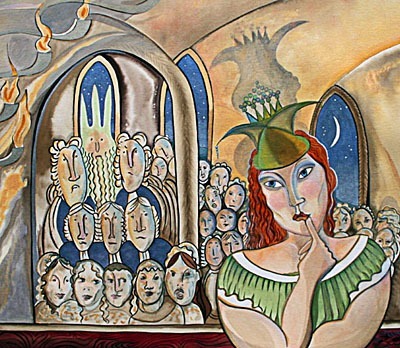
 History has not always been fair to women: their contributions to history have been either marginalised or, not infrequently, unacknowledged. However, the three books, Nadine Akkerman’s (2018) Invisible Agents: Women and Espionage in Seventeenth Century Britain, Nan Sloane’s (2018) The Women in the Room: Labour’s Forgotten History, and Cathy Newman’s (2018) Bloody Brilliant Women, are examples of excellent research and scholarship that documents many women’s contributions to historical events.
 A friend asked me to write a column about Russian cursing a few months ago. I do try to be accommodating, so I looked at several sites to get a better handle on it. In case you were not familiar, cursing in Russian is rich, much more calorically dense than most of what we have in English, except in the rarest cases of accomplished cussers. The problem for me is the translation; it would be so much more gratifying for you to read and imagine the vile torrents of insults than to read a lumpen approximation in English. Therefore, I decided to open up this column to the more universal topic of cursing.
 Step-by-step, breath-by-breath, thought-by-thought, our feet carry us toward our future. (How Things Find Us, Kevin Dann)
 impermanence, I think anything I buy should last forever. (See this shirt?