
Andrew Lanham in Boston Review:
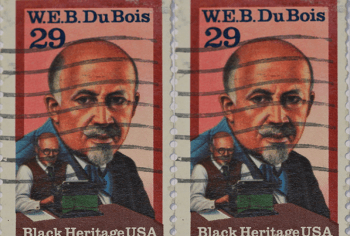 February 1951 was a busy month for W. E. B. Du Bois, who turned eighty-three and threw himself a huge birthday party to raise funds for African decolonization. He also married his second wife, the leftist writer Shirley Graham, in what the Baltimore Afro-American newspaper called the wedding of the year. And he was indicted, arrested, and arraigned in federal court as an agent of the Soviet Union because he had circulated a petition protesting nuclear weapons. The Justice Department saw Du Bois’s petition as a threat to national security. They thought it was communist propaganda meant to encourage American pacifism in the face of Soviet aggression. They put Du Bois on trial in order to brand him as “un-American,” to use the language of Joe McCarthy’s House Un-American Activities Committee. Du Bois was not in fact a Soviet agent. He was an American citizen using his First Amendment rights to protest nuclear weapons on his own behalf. A federal judge acquitted him because prosecutors failed to present any evidence.
Nevertheless, the trial and the publicity around it ruined his career. He was left scrabbling to earn enough money just to buy groceries. And the trial hardly ended the state persecution. In 1952 the State Department illegally revoked Du Bois’s passport to stop him from traveling to a peace conference in Canada (and, implicitly, to prevent him from moving to a friendlier country where he was not blacklisted). The Supreme Court restored passport rights for suspected communists in 1958, and three years later Du Bois used his regained freedom of travel to become an expat in newly postcolonial Ghana. But while he was there, the State Department refused to renew his passport, effectively annulling his United States citizenship. The American civil rights icon became a Ghanaian citizen and died there in 1963.
More here. (Note: Throughout February, we will publish at least one post dedicated to Black History Month)
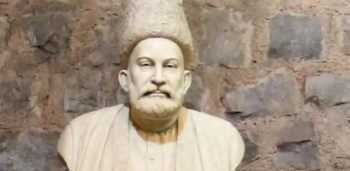 One thing is common among all the good and great writers: a deep sympathy with man; an ability to view and understand the various aspects of his character and the complex situations of his psychology; and a desire to see life as elegant, pure and pretty, fruit-laden and blooming. Humans do work of various kinds to maintain their personal and social life and for the satisfaction of their desires and instincts; and establish mutual bonds and relationships. They make things, provisions and tools, different laws for their use, ownership and distribution, and principles and codes of conduct.
 I remember One Hundred Years of Solitude on my parents’ bookshelf when I was a child: it was the “one hundred years” that put me off: it sounded like it must be something to do with history, very boring history; “solitude” didn’t sound like much fun either. I imagined it was about a man being alone for a hundred years, talking endlessly to himself in the manner of “To be or not to be?” There was also Love in the Time of Cholera, which I assumed must be about cholera. (There were many medical textbooks in the house, both my parents being doctors. I had often leafed through The Handbook of Tropical Infectious Diseases, and knew all about cholera.)
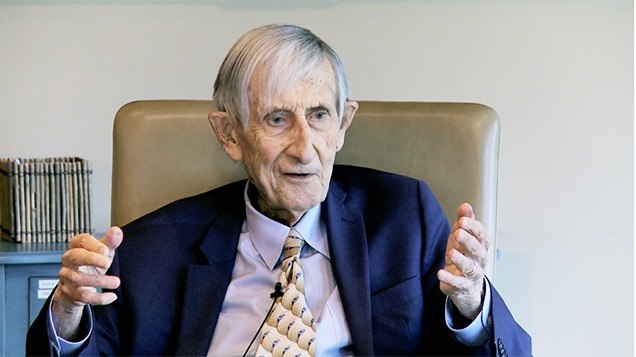 In the near future, we will be in possession of genetic engineering technology which allows us to move genes precisely and massively from one species to another. Careless or commercially driven use of this technology could make the concept of species meaningless, mixing up populations and mating systems so that much of the individuality of species would be lost. Cultural evolution gave us the power to do this. To preserve our wildlife as nature evolved it, the machinery of biological evolution must be protected from the homogenizing effects of cultural evolution.
 Ever since the election of Donald Trump, pundits and scholars have been sounding the alarm over the
  Religious fictionalists hold that the contentious claims of religion, such as “God exists” or “Jesus rose from the dead” are all, strictly speaking, false. They nonetheless think that religious discourse, as part of the practice in which such discourse is embedded, has a pragmatic value that justifies its use. To put it simply: God is a useful fiction. In fact, fictionalism is popular in many areas of philosophy. There are, for example, moral fictionalists and mathematical fictionalists, who think that there are pragmatic benefits to using moral/mathematical language even though such discourse fails to correspond to a genuine reality (there are, on these views, no such things as goodness or the number 9, any more than there are dragons or witches). Religious fictionalists merely extend this approach to the statements of religion.
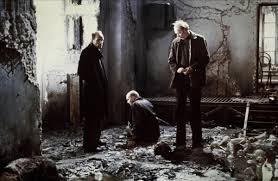 For me, Eastern Europe is a continent of ruins, a relic of a fallen empire.
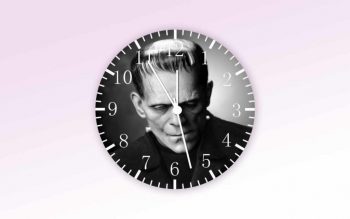 I wondered whether Shelley’s misfortunes in the 1820s were also responsible for the novel’s obsession with loneliness. Everyone in the story, in particular the three men who take control of the narrative in turn—if the monster can be called a man—longs desperately for companionship. Walton writes, in his second letter posted from Archangel, a Russian port on the White Sea: “I have one want which I have never yet been able to satisfy, and the absence of the object of which I now feel as a most severe evil, I have no friend, Margaret … You may deem me romantic, my dear sister, but I bitterly feel the want of a friend.” He does not expect to find one on the ocean, but he does, in Victor Frankenstein. Frankenstein left his lifelong friends behind to attend university; it may be his isolation that leads him astray. The monster’s loneliness is especially keen. He calls the poor cottagers, who are ignorant of his existence, his friends: “When they were unhappy, I felt depressed; when they rejoiced, I sympathized in their joys. I saw few human beings besides them, and if any other happened to enter the cottage, their harsh manners and rude gait only enhanced to me the superior accomplishments of my friends.”
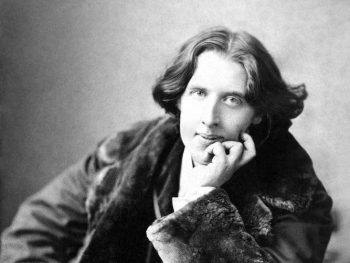 Oscar Wilde, the famed Irish essayist and playwright, had a gift, among other things, for counterintuitive aphorisms. In “The Soul of Man Under Socialism,” an 1891 article, he wrote, “Charity creates a multitude of sins.”
 During her long and contentious life that spanned much of the twentieth century, Pauli Murray (1910–1985) involved herself in nearly every progressive cause she could find. Yet the contributions of this black woman writer, activist, civil rights lawyer, feminist theorist, and Episcopal priest have largely escaped public attention. Murray earned a reputation as an idealist who saw the world differently from many of the activists who surrounded her. She also walked away from several important organizations and movements when they were at the height of their influence. At the same time, her actions have seemed prescient to those involved in many of the social movements that have subsequently claimed a piece of her legacy. Through her friendships and writings, Murray left a long list of people deeply influenced by her, including Eleanor Roosevelt, Representative Eleanor Holmes Norton, social activist Marian Wright Edelman, and Justice Ruth Bader Ginsburg. Murray’s life story deserves to be made available to the larger public, but how does one do so in a way that honors her own obdurate unwillingness to be reduced to any clear set of vectors—to be, in effect, agreeable?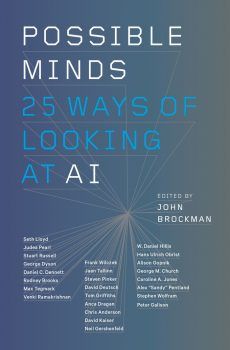
 The Large Synoptic Survey Telescope—scheduled to come online in the early 2020s—will use a 3.2-gigapixel camera to photograph a giant swath of the heavens. It’ll keep it up for 10 years, every night with a clear sky, creating the
  Reclaiming national sovereignty has been a mantra of Brexiteers. Yet one of the many ironies of Brexit is that Britain actually enjoys a special status within the EU. In fact, the many exemptions and concessions secured by the UK – from constraints on sovereignty imposed by EU membership – brings to mind Carl Schmitt’s
 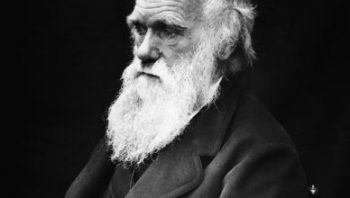 Darwin is recognized as a great scientist, but he was also a profound, and sometimes poetic, writer. His style of striking images, suggestive metaphors, and apt concision becomes apparent in Gregory Brown’s Missa Charles Darwin, which sets Darwin’s words to sacred music. Brown’s “Missa” (Latin for mass) adapts the genre of sacred music and liturgy to give expression to some of Darwin’s most important ideas – which are also the most theologically disturbing ones. The result is a strangely beautiful piece of music, made even more intriguing by
  But in fact what is remarkable about the opprobrium heaped on Franzen by the online literati is that it seems to have very little to do with his actual work. The author of the Medium essay I quoted above clearly has not read Franzen’s fiction (or if she has she has failed to understand it). But she knows how she feels about the man. And this is typical. Successive waves of online Franzen-hatred have generally taken the form of ad hominem responses to essays, or to remarks made in interviews, or to his occasional appearances on television. That Franzen’s opinions – expressed in forms, very much including the essay, that he has not mastered and that tend to serve him poorly – so often go against the contemporary grain (for instance his distrust of social media) or situate him squarely in a trainspotterish cul de sac of hobbyism (all that birdwatching) mean that he is, from the point of view of the virtue-signalling culture warriors of Twitter, a soft target. Here, once again, Franzen may have to take some of the blame. It’s difficult to think of another contemporary novelist who is served so poorly by out-of-context quotation, or by his own inability to craft acceptable soundbites.
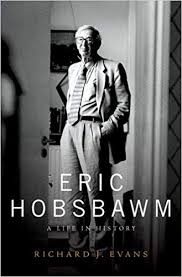 Although he admired Marxist historical materialism and applied a version of it to his study of the past in his work, the roots of Hobsbawm’s attachment to communism were emotional rather than theoretical. As Richard Evans writes, ‘The ecstatic feeling of being part of a great mass movement whose members were closely bound together by their common ideals engendered a lifelong, viscerally emotional sense of belonging.’ Early in his life, Evans tells us, Hobsbawm experienced a similar emotion in the boy scouts. His need to belong may have reflected his insecure family life (he became an orphan at the age of fourteen when his mother died of tuberculosis). He remained a member of the British Communist Party until shortly before its dissolution in 1991. But British communism was more like a marginal sect than a mass movement, and he seems to have felt a certain distance from its activists, never becoming one himself.