
by Max Sirak
 Step-by-step, breath-by-breath, thought-by-thought, our feet carry us toward our future. (How Things Find Us, Kevin Dann)
All of our contact with the world starts with our feet… (Yoga Ranger Studio, Aprille Walker)
They are our vehicle. They move us in any direction we choose. They are the first impression we make. They are our calling card, hug, and handshake with the world.
They are our feet.
It Was A Day Like Any Other
I needed a new pair of shoes. Need is the appropriate word. Despite my intellectual acceptance of 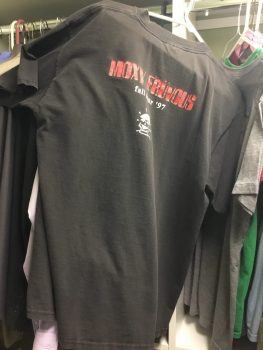 impermanence, I think anything I buy should last forever. (See this shirt? I bought it at a concert in high school.)
It’s also fair to note – sartorial excess isn’t a vice I embrace. For example, I own a single pair of jeans. When they begin to fall apart, I’ll get a new pair. This is the general way I approach my wardrobe.
So, as I was trying to tape my left shoe back together, it became apparent the time for patchwork fixes had come and gone. There was no re-attaching my sole.
It was time to discard the old that I might regard new.
My first instinct was to go online. It is, after all, 2019. I have the power to click buttons and make things appear, as if by magic, at my door. However, having been burnt once or twice (three times a lady?), I’m wary when it comes to ordering online the wears I wear. Read more »

 Michael E Mann is one of two climate scientists who have been awarded the 2019
  One thing that should be said about Representative Ilhan Omar’s tweet about the power of the American Israel Public Affairs Committee (more commonly known as AIPAC, or the “Israel lobby”) is that the hysterical reaction to it proved her main point: The power of AIPAC over members of Congress is literally awesome, although not in a good way. Has anyone ever seen so many members of Congress, of both parties, running to the microphones and sending out press releases to denounce one first-termer for criticizing the power of… a lobby?
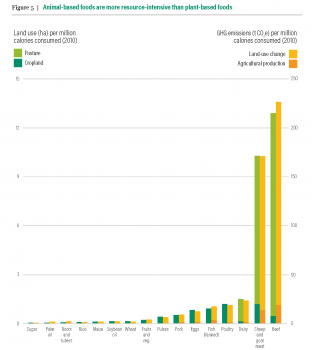 For decades, environmentalists have been rightly concerned about the environmental impact of humanity’s food systems. Often, this has meant advocating for shifting diets — in particular, away from meat, given its outsized environmental impact.
 SATIRES OF THE ART WORLD
 And during the few moments that we have left, we want to have just an off-the-cuff chat between you and me — us. We want to talk right down to earth in a language that everybody here can easily understand. We all agree tonight, all of the speakers have agreed, that America has a very serious problem. Not only does America have a very serious problem, but our people have a very serious problem. America’s problem is us. We’re her problem. The only reason she has a problem is she doesn’t want us here. And every time you look at yourself, be you black, brown, red, or yellow — a so-called Negro — you represent a person who poses such a serious problem for America because you’re not wanted. Once you face this as a fact, then you can start plotting a course that will make you appear intelligent, instead of unintelligent.
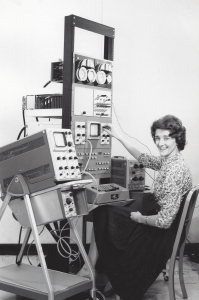 As a teenager in Maryland in the 1950s, Mary Allen Wilkes had no plans to become a software pioneer — she dreamed of being a litigator. One day in junior high in 1950, though, her geography teacher surprised her with a comment: “Mary Allen, when you grow up, you should be a computer programmer!” Wilkes had no idea what a programmer was; she wasn’t even sure what a computer was. Relatively few Americans were. The first digital computers had been built barely a decade earlier at universities and in government labs.
 In keeping with a mathematical concept known as the pigeonhole principle, roosting pigeons have to cram together if there are more pigeons than spots available, with some birds sharing holes. But
  How would you describe 2018?
 NOW THAT SHE IS NO LONGER
  The history of the Frankfurt School in America is usually told as a story of one-way traffic. The question being: What did America get from the Frankfurt School? The answer usually offered: a lot! We got Marcuse, Neumann, Lowenthal, Fromm, and, for a time, Horkheimer and Adorno (who ultimately went back to Germany after the war)—the whole array of émigré culture that helped transform the United States from a provincial outpost of arts and letters into a polyglot Parnassus of the world.
 Imagine if Don Mclean’s song American Pie was written about Christian mysticism instead of rock-n-roll. That’s my elevator pitch/description of the Portuguese writer, Maria Gabriela Llansol’s, English language debut: The Geography of Rebels Trilogy. Originally published as three separate books—The Book of Communities, The Remaining Life, and In the House of July and August—it has been painstakingly translated by Audrey Young and released by the Texas indie publisher Deep Vellum in a single volume.