Robin Douglass in iai:
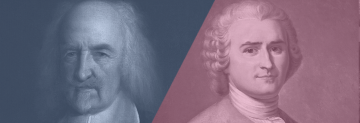 In 1651, Thomas Hobbes famously wrote that life in the state of nature – that is, our natural condition outside the authority of a political state – is ‘solitary, poore, nasty brutish, and short.’ Just over a century later, Jean-Jacques Rousseau countered that human nature is essentially good, and that we could have lived peaceful and happy lives well before the development of anything like the modern state. At first glance, then, Hobbes and Rousseau represent opposing poles in answer to one of the age-old questions of human nature: are we naturally good or evil? In fact, their actual positions are both more complicated and interesting than this stark dichotomy suggests. But why, if at all, should we even think about human nature in these terms, and what can returning to this philosophical debate tell us about how to evaluate the political world we inhabit today?
The question of whether humans are inherently good or evil might seem like a throwback to theological controversies about Original Sin, perhaps one that serious philosophers should leave aside. After all, humans are complex creatures capable of both good and evil. To come down unequivocally on one side of this debate might seem rather naïve, the mark of someone who has failed to grasp the messy reality of the human condition. Maybe so. But what Hobbes and Rousseau saw very clearly is that our judgements about the societies in which we live are greatly shaped by underlying visions of human nature and the political possibilities that these visions entail.
As it happens, Hobbes didn’t really think that we’re naturally evil. His point, rather, is that we’re not hardwired to live together in large scale political societies. We’re not naturally political animals like bees or ants, who instinctively cooperate and work together for the common good. Instead, we’re naturally self-interested and look out for ourselves first and foremost. We care about our reputation, as well as our material wellbeing, and our desire for social standing drives us into conflict as much as competition over scarce resources.
More here.

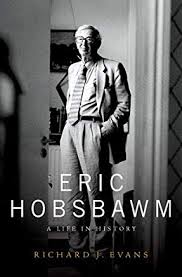 In the last weeks of 1954, Eric Hobsbawm and a small group of British historians set out on a goodwill trip to Moscow. It was a strange time to be visiting the Soviet Union, even stranger for a communist eager to see the achievements of actually existing socialism. Stalin had died the year before, and his corpse lay embalmed in a glass box in Red Square. After a vicious power struggle, Khrushchev had gained control of the government, but intrigue abounded. Beria, the longtime head of the security services, had been tried and executed in secret. Molotov and Malenkov, stalwarts of the old regime, were on their way out. Tens of thousands of prisoners, released after Stalin’s death, were returning from the gulag with horror stories of starvation and torture.
 In her first chapter, “The Case for Nothing,” Odell recounts the near-daily visits she began making in 2016 to the Morcom Amphitheatre of Roses (a.k.a. the Rose Garden) in Oakland, California. Seeking post-election consolation, she sat in the public park, whose fragrant bushes are meticulously tended by volunteers, whose branching paths invite meandering, and whose architecture “holds open a contemplative space against the pressures of habit, familiarity, and distraction that constantly threaten to close it.” The difficulty of holding open space in the mind is mirrored by the difficulty of holding open space in public. Built by the Works Progress Administration, the Rose Garden was almost turned into condos in the 1970s. Local residents had to work together to block construction. The parallel Odell draws between the two struggles—for private, mental space and public, communal space—is characteristic of her method. She routinely finds formal similarities among seemingly disparate phenomena, thereby bringing them onto the same plane. In this case, the individual’s time to think and the public good become two bright points in the same constellation. “’Doing nothing’—in the sense of refusing productivity” entails both enjoyment of roses and birds, and “an active process of listening that seeks out the effects of racial, environmental, and economic injustice and brings about real change.”
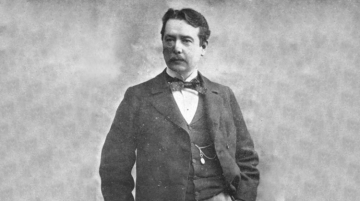 By turns dreamy, rollicking, and dramatic, Rip van Winkle shows just how well Chadwick absorbed the lessons of his German teachers, in that it marries 19th-century European symphonic technique to a quintessentially American subject. In 1880, the year Chadwick returned to Boston, he was invited to conduct the work with the city’s prestigious Handel and Haydn Society. This early compositional period produced, among other pieces, a comic opera called Tabasco, which was so popular in its day that, in the words of the conductor Karl Krueger, “some of its tunes were whistled from one end of the country to the other.”
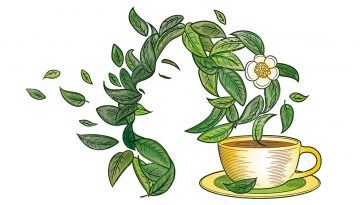 For centuries, people across the globe have testified to the relaxing and invigorating qualities of tea. The traditional calming effects of the plant Camellia sinensis have elevated the drink, which is produced from its leaves, to a role beyond quenching thirst — it is drunk as an aid for meditation, to help soothe the nerves or simply to unwind. But although the mental-health benefits of C. sinensis are common knowledge among tea drinkers, scientists are only now beginning to examine how tea exerts its effects on mood and cognition.
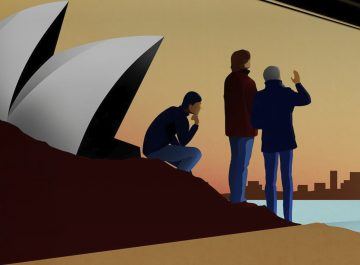 Australia has had an outsized influence on philosophy, especially in the middle and late-20th century. The field still shows a broad Australian footprint. For many years, Princeton University in New Jersey, perennially one of the highest-ranked philosophy departments, has had three or four Australians on its faculty (depending on when you look and on how you count Australians). Princeton has always been an especially clear case, but the influence is all over, an ongoing export of both people and ideas. Given the modest size of Australia (with a population of about 25 million now, but under 17 million until the end of the 1980s), and the popular image of the country’s intellectual life, this is a bit surprising. What is going on? How did this happen?
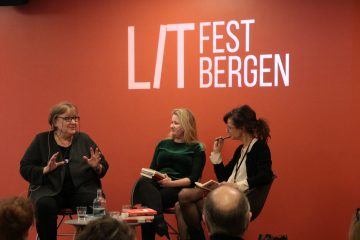 Cynthia Haven: Violence has been a theme of this conference: Juan Gabriel Vásquez on the Colombian drug wars, three sessions for the Nigerian journalist and author Helon Habila, who spoke about the kidnapped Boko Haram girls and the ongoing terrorism in Nigeria—even the French writer and critic Raphaëlle Leyris from Le Monde noted that several books a month are still coming out on the Charlie Hebdo massacre in Paris. And today’s session on literature and evil. You, too, have written about unspeakable violence going on in the middle of Europe, at the beginning of the twenty-first century. Several have commented in Bergen on how the cataclysms of mid-century Europe seem to be revisiting us today, and they wish they could shake that feeling.
 Psychologists have lots of evidence that implicit social biases—our unconscious, knee-jerk attitudes associated with specific races, sexes and other categories—are widespread, and many assumed they do not evolve. The feelings are just too deep. But a new study finds that over roughly the past decade, both implicit and explicit, or conscious, attitudes toward several social groups have grown warmer.
 As young people rightly demand real solutions to climate change, the question is not what to do — eliminate fossil fuels by 2050 — but how. Beyond decarbonizing today’s electric grid, we must use clean electricity to replace fossil fuels in transportation, industry and heating. We must provide for the fast-growing energy needs of poorer countries and extend the grid to a billion people who now lack electricity. And still more electricity will be needed to remove excess carbon dioxide from the atmosphere by midcentury.
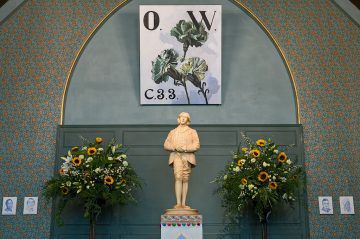 The light is dim, the air richly scented. Little purple tea lights flicker in the votive candle rack and the walls are decorated with twining sunflowers, exuberant passionflowers and several canvases of blousy green carnations monogrammed with Oscar Wilde’s prisoner ID number C.3.3. The Temple is a deconsecrated church with an attractive dark wood ceiling and matching antique chairs. A half-size marble statue of Wilde presides. The artists, McDermott and McGough, have painted various icons spelling out pejoratives such as ‘pansy’, ‘faggot’ and ‘cocksucker’, adorned with gold leaf and richly-coloured paint. Towards the back are intricate woodcut-style depictions of massacres with titles like ‘Nun Cutting Rope of Dead Homeric’, black canvases with cut-out fatality statistics, and monochrome portraits of individuals more recently killed by homophobia and transphobia, such as Justin Fashanu, Brandon Teena and Marsha P. Johnson. A placard in the hallway spells out all of the bigotries the temple stands against, ending with the instruction ‘only love here’. Opposite is a purpose-built offertory box ‘For the Sons and Daughters of Oscar Wilde’.
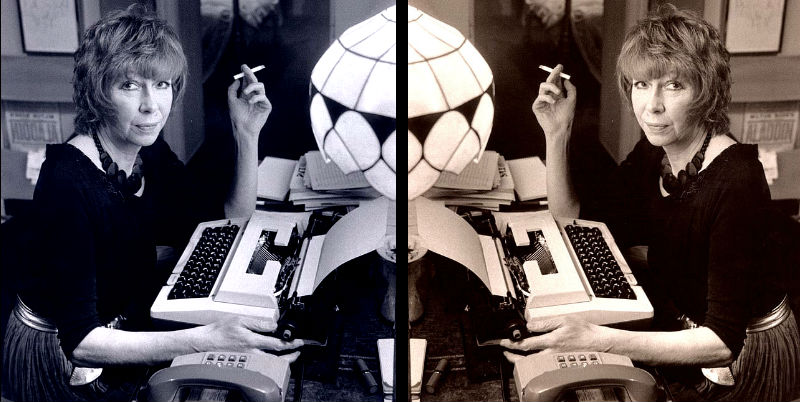 Sandy Fawkes landed in Atlanta on the night of November 7, 1974. She’d spent the day in Washington on a fruitless quest to interview former Vice President Spiro Agnew, part of a one-month tryout with an American weekly newspaper that paid her extraordinarily well, including travel and hotel—far more than her usual employer, the Daily Express, could afford thanks to the country’s current economic crisis.
 In
In  The debate over the effects of artificial intelligence has been dominated by two themes. One is the fear of a
  A
A María Sonia Cristoff has often recounted one of her formative reading experiences. Hired to translate the diaries of Thomas Bridges—a nineteenth-century Anglican missionary in Argentina—she traveled from Buenos Aires to his family’s farm outside of Ushaia, which sits at the southern edge of Patagonia in the Tierra del Fuego province. There she was given a room with a window overlooking the Beagle Channel and a stack of papers with a pencil mark indicating where she should begin. She lacked any access to the rest of the diary since Bridges’ heirs, insisting on a neutral voice for the new rendering of his work, replaced translators every two months, assigning each one a single section of the work.
 I’ve chosen the fox as a symbolic representation of a writer. The fox is rich with meaning. In the Western cultural tradition, the fox is mainly a male creature. In Eastern cultures, the fox is mostly a female creature. In Slavic folk culture, the fox is also predominantly female. The fox is not a superior creature: she is a loser and a loner, wild and vulnerable. The fox is one of the most popular hunting targets: her skin, her fur, has a commercial value, a detail which makes the fox a deeply tragic figure. The fox is betrayed more often then it betrays. Representations of the fox differ from culture to culture. I was raised on the fox’s representation in Aesop’s fables and Western European medieval novels. In Chinese, Korean, and Japanese mythology, the fox is a semi-divine creature, a god’s messenger, a demonic shape-shifter that passes the borders between realms—human, animal, demonic. The fox is also seen as a cheap entertainer, a liar, a cheater, a little thief with a risky appetite for the “metaphysical bite,” a thief with a constant desire to grab a “heavenly chicken.”