
Louisa Hall in The New York Times:
 “Lost and Wanted” is a novel of female friendship without the furious intimacy of, say, Elena Ferrante’s Neapolitan novels. It’s a novel about female friendship begun in America in the 1990s, when women didn’t talk about sexual harassment and friends didn’t talk about race. When women (and especially women of color) were trying to build careers for themselves and no one was acknowledging how much harder it would be for them than it would be for white men in their position, and trying to do so while having children, either with partners or on their own, and trying to balance all of that striving without ever giving anyone reason to believe that they were more emotional or less stable than any of their peers.
If this, then, is a somewhat remote female friendship, no wonder: Under such strain, the book seems to say, it’s incredible that women sustain any friendships at all. And yet, in this startling novel, even that distance between Charlie and Helen is moving. The space that opens between them reverberates with what might have been, if Charlie’s thesis adviser hadn’t been such a measly and repugnant predator, if Charlie hadn’t moved to Los Angeles, if Helen weren’t raising a child alone, if they’d both had more time, if Helen had understood Charlie’s illness, if she’d asked her all the questions she didn’t.
In this novel, which teems with lives, the versions of their friendship in which those errors didn’t occur seem to exist alongside the versions that did, and these alongside relationships with various partners, children, siblings, parents and colleagues. Reading it, I was moved by intimacies near and far, real and imagined, lost and found in all the echoing corners of the expanding universe.
More here.
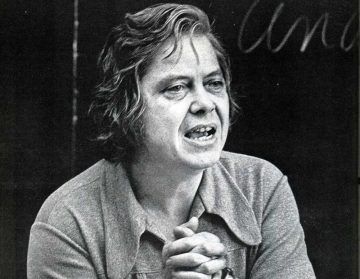 In some late month of 1995, William H. Gass attempted a flight from New York to Saint Louis but was stalled by fog at the flight boards. He repaired to a small table at an airport bar, his socks pulped and moaning, and spent the night with a galley of Robert Musil’s The Man without Qualities. Gass ordered a glass of rosé, began reading, and observed the ways that the characters in the novel seemed to come and go like people in an airport bar. Time passes, and eventually civil servants and industrialists of 1913 Vienna wander into the bar itself, right alongside the airport castaways—or so Gass tells us in the essay he went on to write about Musil.
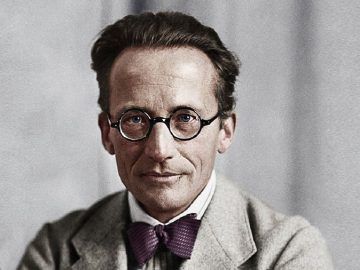 Despite devising both the defining equation and the defining thought experiment of quantum physics, Erwin Schrödinger was never comfortable with what he helped to create. His “Schrödinger’s Cat” paradox, published in 1935, was an attempt to expose the flaws in the physics that flowed from his eponymous equation. And yet, that cat – both dead and alive – has become an icon of quantum physics rather than a warning against its shortcomings.
 Visit the African savannas in Zimbabwe or Namibia, and you might notice large, towering termite mounds dotted about the landscape—nature’s skyscrapers, if you will. And nature is quite the engineer: those mounds are self-cooling, self-ventilating, and self-draining. New 3D X-ray images
  In the past few years, when far-right nationalists are banned from social media, violent extremists face boycotts, or institutions refuse to give a platform to racists, a faux-outraged moan has gone up: “So much for the tolerant left!” “So much for liberal tolerance!” The complaint became so hackneyed it turned into an already-hackneyed
 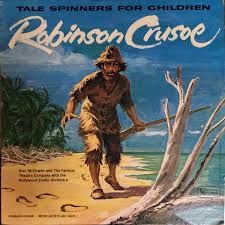 So what was it that made Robinson Crusoe different from previous English fiction? First, Defoe was the first major writer in English literature who did not take a plot from mythology, history, legend or prior literature. The next was to be Samuel Richardson (1689-1761) whose immensely important novel Pamela(1740) it will be relevant to mention a little later. In the plots of these two writers we see the difference, for example, from Chaucer, Spenser, Shakespeare and Milton. Second, Defoe was the first to convey the reality of time, to portray a life in the bigger picture of a historical process, and in terms of day-to-day thoughts and activities. Although his timings are inconsistent, his narrative convinces us that the action is occurring at a particular time. Third, Defoe was the first to produce a whole narrative as if it took place in a physical environment to which a character was attached by means of vivid detail: the description of objects, for example, such as clothing and implements. Previously and traditionally, place was treated in a vague and generalised way, with only incidental physical description. Fourth, the use of figurative language, previously a prominent feature of romances, was noticeably reduced; it was much rarer in Defoe and Richardson than in any writer before.
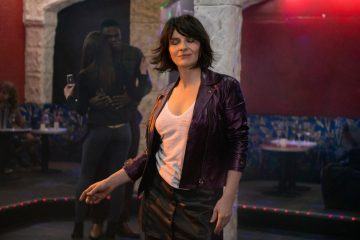 Before I knew who Claire Denis was, she taught me how to dance. When I was eighteen, it was easier to stay in with a movie than to go to a party and be surrounded by strangers. One night, I watched Denis’s film “Beau Travail,” from 1999. Afterward, I couldn’t sleep. I kept replaying the ending, transfixed by a man with a battered face, Galoup. For ninety minutes, Galoup (Denis Lavant) is small and hunched, a military officer who, after being ejected from the French Foreign Legion, can’t find meaning in civilian life. In a closing scene, he makes his bed, carefully tucking in the corners, and lies down, clasping a gun. Then we hear the pulse of Corona’s disco hit “The Rhythm of the Night.” We cut to Galoup smoking in a night club, leaning against a panelled mirror. He bobs his head to the music, tracing loose arcs in the air with his cigarette. He snarls. He spins in a tight circle, smoke trailing him like a cape. Then, at the chorus, unsmiling and intent, he lets himself go, flying into the air, fingers splayed like a gecko’s. I can’t describe what it felt like watching him for the first time, more blur than human. But I remember what it did to me. I got up and I began to wave my hands above my head, alone in the dark.
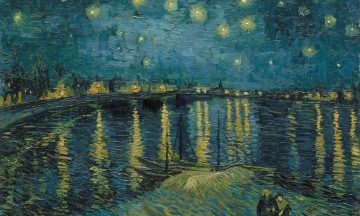 As Vincent van Gogh’s Starry Night Over the Rhône goes on show at
  Cancer immunotherapy drugs, which spur the body’s own immune system to attack tumors, hold great promise but still fail many patients.

 The modern world is full of technology, and also with anxiety about technology. We worry about robot uprisings and artificial intelligence taking over, and we contemplate what it would mean for a computer to be conscious or truly human. It should probably come as no surprise that these ideas aren’t new to modern society — they go way back, at least to the stories and mythologies of ancient Greece. Today’s guest, Adrienne Mayor, is a folklorist and historian of science, whose recent work has been on robots and artificial humans in ancient mythology. From the bronze warrior Talos to the evil fembot Pandora, mythology is rife with stories of artificial beings. It’s both fun and useful to think about our contemporary concerns in light of these ancient tales.
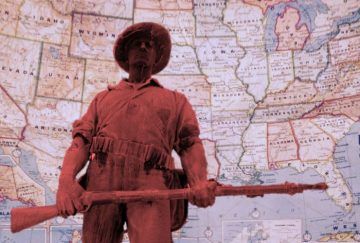 I recently stumbled across a statue in Baltimore that celebrates the young men of the city who fought in the “Spanish War.” On a narrow triangle in a residential neighborhood, this lone soldier stands at ease, holding a rifle across his body and staring into the distance, unperturbed by the city buses screeching past or the litter that collects below his feet. The pedestal records the years, from 1898 to 1902, when these brave Americans fought against Spain’s weak imperialist hold on the Philippines, Cuba, and Puerto Rico. Known as “The Hiker,” fifty or so versions of this statue still quietly dot city streets and parks across the United States. The bulk were erected in the 1920s in northern states, with Baltimore’s in 1943, and the last in 1965 near Arlington Cemetery.
 Last year saw the publication of a book that could well turn out to be a future classic of art writing. Jack Whitten’s Notes From the Woodshed was released just a few months after the painter’s death in New York at the age of 78. More than 500 pages of journal entries, written between March 24, 1962, and December 27, 2017, Notes From the Woodshed gives as true a sense of how the life of an artist is lived, and how it’s lived for the sake of his work, as any I’ve read. The book’s hallmarks are a kinetic energy of thought and immediacy of expression that trump literary style or even good spelling. By the end of his life, Whitten knew that his notes would be published—he wrote a prefatory essay in September 2015, more than two years before his last journal entry—but he didn’t gussy them up. They have been abridged, though, partly because he could be as critical of his fellow artists as he could be generously enthusiastic about them, and “a few of his writings have been redacted here to protect the living,” notes the book’s editor, Katy Siegel, who also curated last year’s exhibition, “Odyssey: Jack Whitten Sculpture, 1963–2017,” at the Baltimore Museum of Art and the Met Breuer.
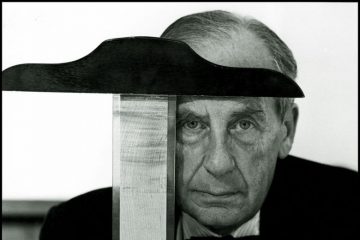 The subsequent outpouring of creativity at the Bauhaus has since become the stuff of legend. Yet despite its popularity among teachers and students, the school and its methods were consistently controversial. As the clouds of nationalism gathered over Germany, many in Weimar were troubled by the blatant internationalism of the Bauhaus. Others attacked the emphasis on freedom and experimentation as inappropriately indulgent for a state-funded school. The economic uncertainties of the early 1920s only increased the pressure on Gropius. In 1925, the authorities in Weimar closed the school, forcing its relocation to Dessau, about 100 miles to the northeast.
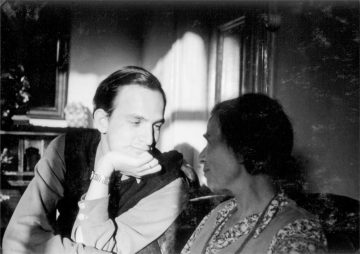 This familiar Strindbergian theme is underscored in The Best Intentions by an ingenious device to which the author turns more than once: the juxtaposition of some ostensibly documentary evidence from the “real life” that he’s fictionalizing—a photograph he has found of this or that relative or an entry in someone’s diary—with his novelistic reconstruction of the person or incident in question. This technique can shed ironic light on the characters. A passage, for instance, when Bergman quotes a diary entry by Henrik’s mother, Alma, after she meets her future daughter-in-law for the first time: “Henrik came with his fiancée. She is surprisingly beautiful and he seems happy. Fredrik Paulin called in the evening. He talked about tedious things from the past. That was inappropriate and made Henrik sad.”