
Stacy Schiff in The New York Times:
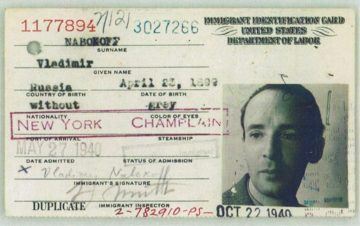 Amid frantic, last-minute negotiations, under a spray of machine-gun fire, Vladimir Nabokov fled Russia 100 years ago this week. His family had sought refuge from the Bolsheviks in the Crimean peninsula; those forces now made a vicious descent from the north. The chaos on the pier at Sebastopol could not match the scene that met the last of the Russian imperial family, evacuated the same week: In Yalta, terrified families mobbed a quay littered with abandoned cars. Nor were the Nabokovs’ accommodations as good. The Romanovs made their escape on a British man-of-war. The Nabokovs crowded into a filthy Greek cargo ship. Overrun by refugees, Constantinople turned them away. For several days they lurched about on a rough sea, subsisting on dog biscuits, sleeping on benches. Only the family jewelry traveled comfortably, nestled in a tin of talcum powder. On his 20th birthday, Nabokov disembarked finally in Athens. He would never again set eyes on Russia.
At the time of the evacuation he had spent 16 quiet months in the Crimea, the last speck of Russia in White hands. Already the Bolsheviks had murdered any number of harmless people; Nabokov’s jurist father, as his son would later note, was anything but harmless. In February 1917 riots had delivered a revolution. The czar abdicated, replaced by a liberal government, swept into power on a tide of popular support. Nabokov’s father, Vladimir Dmitrievich, played a prominent role in that administration. Months afterward Lenin returned from exile, disembarking at St. Petersburg’s Finland Station. Within the year, what had begun as an idealistic, progressive uprising would end — like Iran’s, like Egypt’s — in totalitarianism. With Lenin arrived another 20th-century staple: a one-party system in which hacks and henchmen replaced the competent and qualified.
The terror began immediately.
More here.
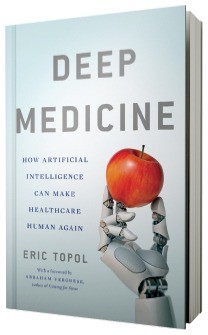 In 1970 in The New England Journal of Medicine, William Schwartz predicted that by the year 2000, much of the intellectual function of medicine could be either taken over or at least substantially augmented by “expert systems”—a branch of artificial intelligence (AI). Schwartz hoped that the medical school curriculum would be “redirected toward the social and psychologic aspects of health care” and that medical schools would attract applicants interested in “behavioral and social sciences and … the information sciences and their application to medicine.” But Schwartz’s dream of smart medical technologies, for the most part, remains just that. Eric Topol, however, is optimistic about the future of health care. In Deep Medicine, he anticipates that new machine learning technologies will improve the precision and accuracy of disease diagnosis, thus providing a better way to identify the best therapies. Like Schwartz, he hopes that the time freed up by these approaches will be devoted to reviving humane medical practices.
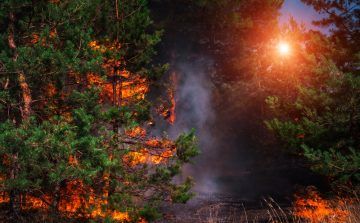 Insurers have warned that climate change could make coverage for ordinary people unaffordable, after one of the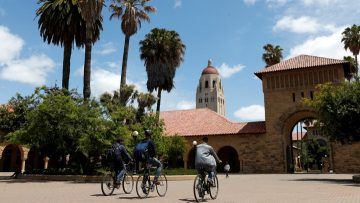
 N
N My first encounter with him is a case in point. It was during the installation of his retrospective at the Centre Pompidou in 1981. Ryman sat on top of a large unopened crate, alone in the vast Galeries Contemporaines on the ground floor. Many works were resting against the walls; others were in chariots. Crates and wrapping material were strewn everywhere. After introducing myself I asked him what he was doing. “Waiting,” he said calmly. “Waiting for the electricians to fix the lighting.” Finding out that he had been doing so for a good half hour, I concluded that something was wrong, perhaps lost in translation—surely the electricians’ coffee or cigarette break was not supposed to take that long—and I rushed upstairs to the curatorial office. (At the time, it was located on the third floor.) It turned out that the electricians were waiting elsewhere for Ryman’s call, to be transmitted via the guard in attendance, that he was ready for them to come. They were waiting for his signal that he had determined where the paintings should hang; he was waiting for them to provide absolutely evenly lit walls so that he could start experimenting with the placement of his works.
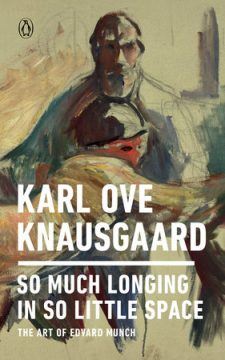 Knausgaard has perfected the confessional, ‘speaking’ style of writing that his fellow countryman Knut Hamsun introduced into modern Western literature in the 1890s with novels like Hunger and Mysteries. The style was adopted with great success by Henry Miller, and Miller is probably the confessional novelist with whom Knausgaard can most profitably be compared. Writing in Inside the Whale in 1940 about Miller’s Tropic of Cancer, George Orwell described the experience of feeling that ‘he knows all about me, he wrote this specifically for me’. Orwell praised the healthy and liberating effect of reading Miller during the politically tense 1930s, when it seemed to him that people had begun to censor their own thoughts (‘Ought I to be thinking this?’). Knausgaard’s bold self-acceptance performs a similar function for our own nervous times. His prose is direct. It darts forward. Suddenly he finds himself making a massive assertion. He stops, doubles back on himself, examines the assertion, and either qualifies or reinforces it before moving on. His artistic credo, which he believes he shares with Munch, is senk lista (‘lower the bar’): the important thing is just to keep on writing, in the same way that for Munch all that mattered was to keep on painting. The quality can take care of itself.
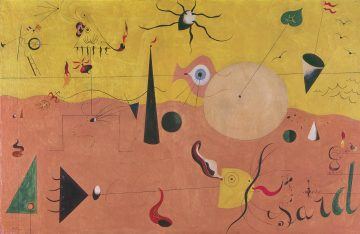 At first glance Joan Miró’s painting from 1924, “The Hunter, Catalan Landscape”, looks like a doodle. Imagine it in biro rather than oil paints, and it’s something you might have scribbled during a particularly boring meeting. More than that, it is what people scrawl when they can’t draw: a stick-man, wobbly waves and V-shaped birds, surrounded by blobs, geometric shapes, a bit of lettering. Miró paints these things better than we might, but it remains a doodly mess. But there is method – a story of sorts – in his mess. Miró helpfully drew up an explanatory list of all 58 items in his picture. Gallery blurbs will tell you that they include the hunter (the stick-man), with his rifle (black cone), heading off to cook his rabbit (red-and-yellow whiskered creature), on his grill (squiggly thing with the little flame on the right-hand side). That lettering – sard – at the bottom is for “sardine”, because there’s a sardine skeleton there too, which the hunter has just eaten. And that blob with an eyeball is a carob tree, naturally.
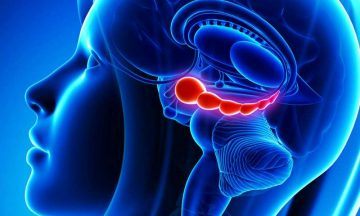 Neuroscientists at The University of Texas at Austin have discovered a group of cells in the brain that are responsible when a frightening memory re-emerges unexpectedly, like Michael Myers in every “Halloween” movie. The finding could lead to new recommendations about when and how often certain therapies are deployed for the treatment of anxiety, phobias and post-traumatic stress disorder (PTSD). In the new paper, out today in the journal Nature Neuroscience, researchers describe identifying “extinction neurons,” which suppress fearful memories when they are activated or allow fearful memories to return when they are not. Since the time of Pavlov and his dogs, scientists have known that memories we thought we had put behind us can pop up at inconvenient times, triggering what is known as spontaneous recovery, a form of relapse. What they didn’t know was why it happened. “There is frequently a relapse of the original fear, but we knew very little about the mechanisms,” said Michael Drew, associate professor of neuroscience and the senior author of the study. “These kinds of studies can help us understand the potential cause of disorders, like anxiety and PTSD, and they can also help us understand potential treatments.”
 “
“
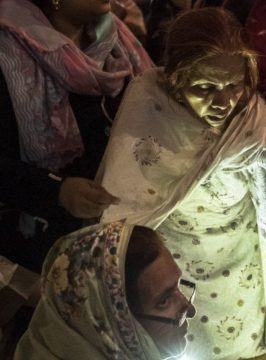 On 6 January, 2011, the world watched aghast as sections of Pakistan’s modern legal fraternity took to the streets of the country’s capital, Islamabad, to shower petals on the self-confessed killer,
 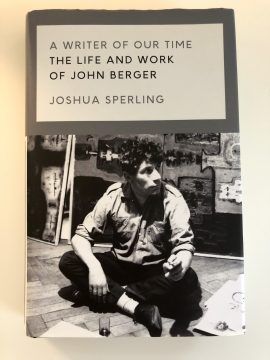 As early as the mid-1950s, the art critic
 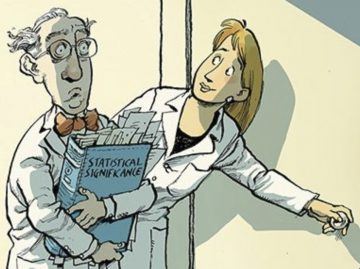 When was the last time you heard a seminar speaker claim there was ‘no difference’ between two groups because the difference was ‘statistically non-significant’?
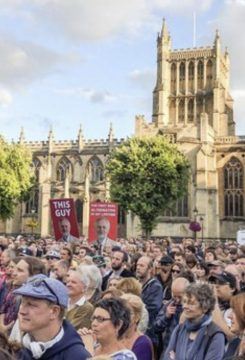 There is a wonderful metaphor in Alastair Macintyre’s After Virtue, in which the philosopher asks us to imagine a world hit by some terrible calamity that caused scientific and technical knowledge to be almost destroyed. What was left was smashed into thousands upon thousands of disconnected pieces, and the inhabitants of this world had to piece together their understanding of science and technology from what was lost, trying to line up the remnants of the earlier age as best they could.