Career Counseling
You can be whatever you set your mind to,
my teachers were fond of saying.
Sit down, son.
The counselor pointed to a chair,
pulling out brochures like a travel agent.
Where are you headed?
As if no destination were outside the realm of possibility;
we just had to plug it into the computer,
check flights,
book tickets far enough in advance.
You can be whatever you wish,
my father said — meaning, lawyer, teacher, engineer, MD,
RN, CPA — speaking in that voice
parents use, knowing
they’re being more understanding
than their parents were. Tell me,
what do you really want to do?
What could I say? I want to be a boy
adopted by vultures. Or a blind girl
who lives in a cave.
Or a hermit who speaks to lizards.
I wanted to be washed up,
a castaway searching
for the crew I’d been separated from,
shipwrecked on this planet,
marooned in a human body.
Maybe that was why I touched myself so often —
to see if I could feel a fragment
of who I really was, a piece of light
buried in me, broken off from the star
I spent so much energy trying to get back to.
Maybe that’s why I lit matches
and pressed the flames into my palms,
as if pain held the answer
folded up in its petals.
Maybe the only way back
was to hurt, to rub against broken glass.
What’s on your mind?
asked the doctor. Don’t be afraid. You can
tell me anything. I was thinking
of what I’d have to give up,
what every young man or woman
serious about making a living has to give up:
gazing at leaves, those elegant distractions,
or the creek’s long, run-on sentences,
its exclamations, its
parentheses, its tireless questions.
What if we made graduation a little more honest,
held a ceremony
where every eighteen-year-old dragged onto the field
all he’d hidden in his closets,
all that could prove embarrassing,
all she loved but had no excuse to hold on to anymore?
Final exams would require every student
to write down the idle thoughts
she’d promised never
to think again, every word
it excited a boy just to write:
wastrel, changeling, maelstrom, cataclysm, galaxy,
alien, naked, vampire, crucible, relic.
Fire would grade the papers,
and everybody would get the same mark,
flames correcting the notebooks
filled with spaceships
or Greek gods
or the names of sweethearts written over
and over in different scripts
or drawings of horses —
all a girl had to do was look at them, then close her eyes,
to feel the power ripping
under her, carrying her into the sky —
or pictures of dogs too important to die,
of movie stars or rock bands
into whose faces a young man or woman gazes
till afternoons open like doors
they’d thought shut tight.
You can be whatever you set your mind to.
But at what cost?
Sit down, son.
Tell me what you want to do with the rest of your life.
by Chris Bursk
from The Sun Magazine
September 1996

 As Nicholas Money puts it in Mushrooms: A Natural and Cultural History, thinking of the mushroom in place of the whole mushroom-forming organism is ‘a bit like using a photograph of a large pair of testicles to represent an elephant’. (The flaw in this memorable comparison is that the spore inside a mushroom is ready to grow into next-generation fungus, so long as it’s launched into congenial conditions, whereas an elephant sperm cell only contains half the chromosomes needed to begin a baby elephant.) Like the testicle, the mushroom is just one component of an organism, relatively peripheral to the organism’s viability, if essential to the continuation of its species. Unlike the elephant testicle (and hence the force of Money’s comparison), it is the part of the organism to which human cultures have in general paid the most attention. It’s this spore-disperser, not the hard-working mycelium, that we might consider dining on, illustrating, ingesting for hallucinatory or medicinal purposes, founding a taxonomic system around, deploying in the assassination of an unlikeable Roman emperor, or photographing on our nature rambles. It’s what appears in the field guides, the cookbooks, and the mythologies.
 Yet Coltrane’s commercial clout, transient or permanent, should not detract from his huge artistic stature. Next to Miles Davis, he is the post-war jazz musician most likely to be on the radar of those who do not consider themselves jazz fans. His allure as a figure entirely dedicated to, if not consumed by, his work (to the point where he was often seen in public with theory books such as Nicolas Slonimsky’s Thesaurus Of Scales And Melodic Patterns), makes him a role model for all students of “serious” music. Coltrane is the archetypal creative obsessive intent on finding unheard approaches to the building blocks of music, from the arc of his melodies to the rhythmic drive of his solos to the harmonic framework for his songs.
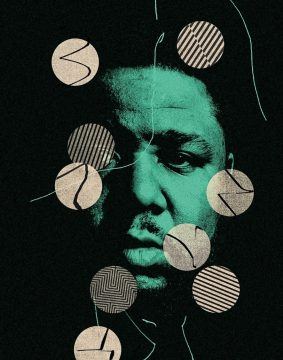 There is something awesomely confounding about the music of Tyshawn Sorey, the thirty-eight-year-old Newark-born composer, percussionist, pianist, and trombonist. As a critic, I feel obliged to describe what I hear, and description usually begins with categorization. Sorey’s work eludes the pinging radar of genre and style. Is it jazz? New classical music? Composition? Improvisation? Tonal? Atonal? Minimal? Maximal? Each term captures a part of what Sorey does, but far from all of it. At the same time, he is not one of those crossover artists who indiscriminately mash genres together. Even as his music shifts shape, it retains an obdurate purity of voice. T. S. Eliot’s advice seems apt: “Oh, do not ask, ‘What is it?’ / Let us go and make our visit.”
 “I’ve never cried for a building, until now,” I wrote to my aunt Lou Ann. Then I had a moment’s hesitation. Did I not cry for the World Trade Center back in 2001? I was living in New York, after all. We watched the Towers fall from a roof in Williamsburg, Brooklyn. I know that I shed some tears that day. Tears of shock and grief and loss. But I was not, in truth, crying for the Towers themselves. I don’t think anyone cried for the Towers themselves. Because they were not loved. I remember a Greek friend of mine once commenting that he found the Towers ridiculous in their doubleness. He put it like this: “It is absurd that there are two of them.” One giant monstrous imposing monolith would have been enough. But to make two of them? It is like, my friend said, a couple of guys who are bragging and competing about who has the largest schlong. And then a third guy walks up and says, “I’ve got you both beat. I’ve got two of them.” But has he really won? Did he even understand the game? The Twin Towers were like that. They won the giant building game. But at what cost?
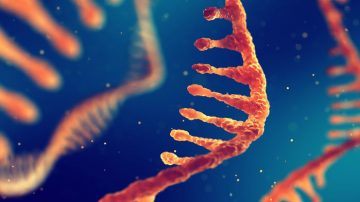
 A creature that does perceive the external world to any significant degree can be called a conscious being. Could there be conscious beings other than those of earth’s animal kingdom? Perhaps there are some outside our solar system. Could a robot be a conscious being, just in this modest sense of perceiving its environment? I don’t see why not. Despite appearances, a robot can amass information through its sensors and build a representation of the external world. Granted, there are plenty of arguments purporting to show that no mere robot could be conscious in any much stronger sense.
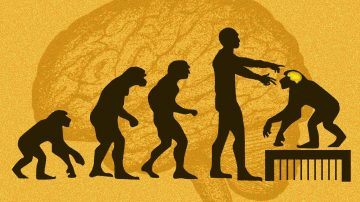 Now scientists in southern China report that they’ve tried to narrow the evolutionary gap, creating several transgenic macaque monkeys with extra copies of a human gene suspected of playing a role in shaping human intelligence.
 The space age officially began in 1957 with the launch of the Sputnik 1 satellite. But recent years have seen the beginning of a boom in the number of objects orbiting Earth, as satellite tracking and communications have assumed enormous importance in the modern world. This raises obvious concerns for the control and eventual fate of these orbiting artifacts. Natalya Bailey is pioneering a novel approach to satellite propulsion, building tiny ion engines at her company Accion Systems. We talk about how satellite technology is rapidly changing, and what that means for the future of space travel inside and outside the Solar System.
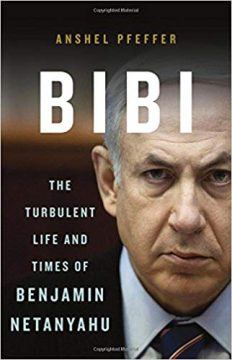 ‘The problem
 Bernie is in
 When Brenda Hurwood was in her thirties, she had an accident that left her with a partial disability: She worked in home care support with elderly patients, and she injured her shoulder and neck while helping a client get out of a chair. The injury left her with decreased stamina and constant pain, Hurwood says, and she found it difficult to continue working. “It eroded away my self-confidence as a person,” she says. Hurwood, 63, who lives in Nova Scotia, Canada, says she developed generalized anxiety disorder, which persisted for decades. She tried different forms of therapy and various medications, but nothing worked — until 15 years ago, when a therapist introduced her to acceptance and commitment therapy.
 As the
 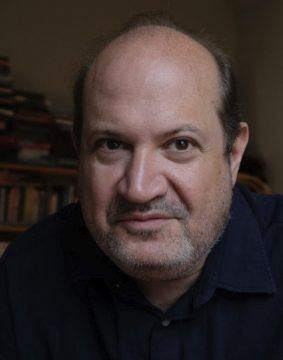 For many writers, Sam Lipsyte’s readerly eyes are the most coveted. Hordes flock to the Columbia MFA Writing Program for the chance to take his fiction workshop, where he and I first met. On campus, revved up egos struggled under the weight of our grandiose dreams. We students all crossed our fingers in hopes that we’d be one of the lucky ones to gain access to The Great Lipsyte’s secrets.
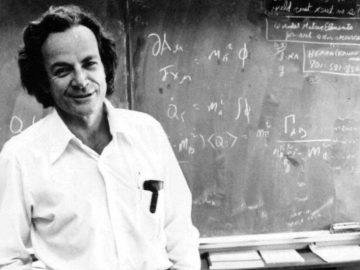 One day at lunch in the Caltech cafeteria, I was with two graduate students, Bill Press and Saul Teukolsky, and Feynman. Bill and Saul were talking about a calculation they had just done. It was a theoretical calculation, purely mathematical, where they looked at what happens if you shine light on a rotating black hole. If you shine it at the right angle, the light will bounce off the black hole with more energy than it came in with. The classical analogue is a spinning top. If you throw a marble at the top at the right angle, the marble will bounce off the top with more velocity than it came in with. The top slows down and the energy, the increased energy of the marble, comes from the spin of the top. As Bill and Saul were talking, Feynman was listening.
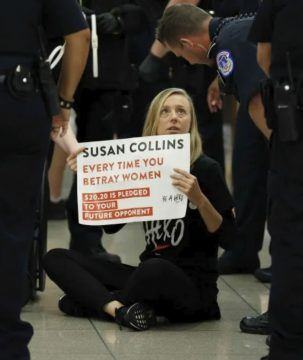 What are you looking for in a presidential candidate? I want someone with fresh proposals on health care or the environment, you might say. A track record that testifies to experience and effectiveness. Or you might say: Listen, I’m just looking for anyone who can defeat Donald Trump in 2020. Whatever your position, you’re likely to have already gotten into spirited conversations about it with family and friends. And as the race for the Democratic nomination heats up, the debate has become increasingly acrimonious. In fact, it’s threatening to turn into a search for a savior.
 Attempting to “transport” Emily Dickinson’s poems into Portuguese is a still harder task, because Dickinson’s poetry is notable for its peculiar agrammaticality: unexpected plurals, inverted syntax, and an often complete disregard for gender, person, or agreement between nouns and verbs. As for form, Dickinson uses the structure of hymns, though, as Mutlu Konuk Blasing says, “the metric norm so severely limits the verse it empowers that the verse grows cryptic, crabbed, and idiosyncratic and resists communication itself, thus undermining the religious and social function of hymns that the form alludes to as authorization for her ‘dialect,’ her ‘New Englandly’ tune.” The result is a compact, cryptic language full of ellipses, which translates into texts that challenge the tradition of poetry as communication and gives literary language an autonomy more akin to the aesthetics of modern poetry.
 Shaich is not only a self-described conscious capitalist, but a board member of Mackey’s Conscious Capitalism, Inc. He and other conscious capitalists operate under the assumption that consumers will prefer their businesses because they are doing good. They assert that by publicly taking on charitable initiatives that benefit people beyond their shareholders, they will lower marketing costs and raise profits—because customers will like them and thus be more loyal. But conscious capitalism is a young, largely untested business theory, and its efficacy claims haven’t been well studied. With Eckhardt and Dobscha’s research, that’s beginning to change. Over the course of a few months in 2017, they cased the Panera Cares in Boston and reviewed every single Yelp review of all five Panera Cares locations. They found that the food secure and insecure both had profound “physical, psychological, and philosophical” problems with the restaurant.