by Eric J. Weiner
 In 1940, at the height of Hitler’s invasion of Western Europe, Walter Benjamin, from Vichy France wrote, “The tradition of the oppressed teaches us that the ‘emergency situation’ in which we live is the rule. We must arrive at a conception of history that is in keeping with this insight.”[1] In our current historical context, his words are instructive for two reasons. First, they were written in the context of Nazi occupation with death breathing down his neck. In spite of these extreme conditions, Benjamin refused to see the emergency situation he was in as historically exceptional; his refusal to turn his back on the dialectic under these circumstances was extraordinary and, as we know now, at least in terms of ideology, prescient. Second, his theses about the concept of history, 80 years after he first conceived them, still resonate today. From the mismanaged pandemic and Trump’s fascistic incitement of a white supremacist insurrection at the Capitol to the continuing systemic assault and murder of African Americans by police, the failure of capitalism to eradicate poverty, growing economic inequality, deepening home and food insecurity, and the broken promise of public education to become the “great equalizer” of opportunity, the United States is struggling through what many people have mischaracterized as an unprecedented national crisis of existential proportions. It appears we have not learned what Benjamin suggested the tradition of the oppressed ought to have taught us: We have still not arrived at a conception of history that allows us to see the web of current crises as the rule, not the exception. Read more »
 Mourning is in season. Newspapers of record these days publish interactive mass obituaries, images of “ordinary” people fallen to “the opioid crisis” or to Covid-19 (the front page of the Sunday New York Times was recently riven down the middle by a monolith composed of thousands of dots, growing denser towards the base, each representing a victim of the virus: the whole reminiscent of the graphic tributes to 9/11). The inauguration of the US president in January featured, in lieu of most spectators, ranks of flags, symbolizing the past year’s losses. The annual observation of International Holocaust Remembrance Day in Germany, held this year as for the past quarter century on January 27 at the Reichstag in Berlin, featured a remarkable ceremony marrying reconciliation with the starkest grief. In his latest book, the memoir-cum-poetics Inside Story, Martin Amis eschews his characteristic charades in a sincere and extended eulogy for Saul Bellow, Philip Larkin, and Christopher Hitchens, three of the central figures in the author’s professional and affective life. And, 15 years after it first appeared, The Year of Magical Thinking, Joan Didion’s essay on death and bereavement, persists on various bestseller lists.
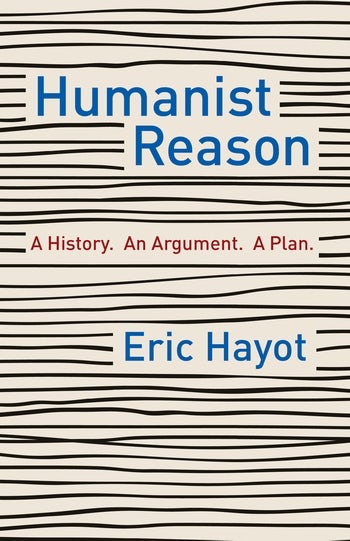 Unfortunately, it is always worth your time to read a book in praise of the humanities. Given the unenviable position of the humanities in public education and in contemporary cultural and (especially) political discourse about valuable expertise, any author that comes to their defense has to find a strategy to shift the narrative, and will thereby almost invariably do something interesting.
 Former Finnish President and
  I just spent two months living on the Caribbean island of Grenada. It’s a wonderful place with a somewhat antiquated healthcare system. To visit Grenada, I had to have a negative PCR test within 72 hours of flying. I was planning to go to a clinic and wait in line, which I’d done for a previous PCR test. I’d waited in line in the freezing cold for almost 3 hours. But a couple of weeks before my flight in January, Jet Blue let me know that Grenada was accepting PCR tests through a company called Vault who would mail me an at-home test. I signed up, they sent me the test, and three days before my flight, I logged onto a Zoom call with Vault from the comfort of my own living room. My test kit had a barcode and I had to show that to the technician on the Zoom. She then watched me spit into the vial with the barcode and instructed me how to package up the kit appropriately to send it back. I walked it over to UPS 30 minutes later, and within 48 hours, I received my results by email.
 The Machine has me in its tentacles. Some algorithm thinks I really want to buy classical sheet music, and it is not going to be discouraged. Another (or, perhaps it is the same) insists that now is the time to invest in toner cartridges, running shoes, dress shirts, and incredibly expensive real estate.
 Two profound horrors have plagued the world in recent times: the Covid-19 pandemic and the Trump presidency. And after years of dread, their recent decline has brought me a brief respite of peace.
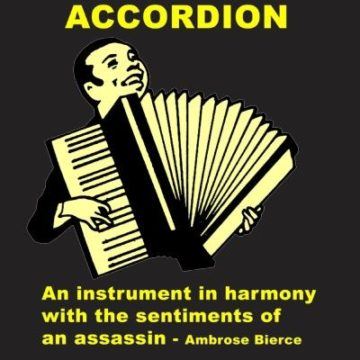 Whenever I discover a band that sports an accordion in the lineup, I’m ready to listen.
 An empty space sits where I once sat. I miss it. I miss the strangers I shared it with, and a few regulars with whom I achieved a nodding relationship. A couple of baristas I might greet and chat up. Very briefly.

 There is a story that Clemenceau, the Prime Minister of France, was in conversation with some German representatives during the Paris peace negations in 1919 that led to the Treaty of Versailles. One of the Germans said something to the effect that in a hundred years time historians would wonder what had really been the cause of the Great War and who had been really responsible. Clemenceau, so the story goes, retorted that one thing was certain: ‘the historians will not say that Belgium invaded Germany’.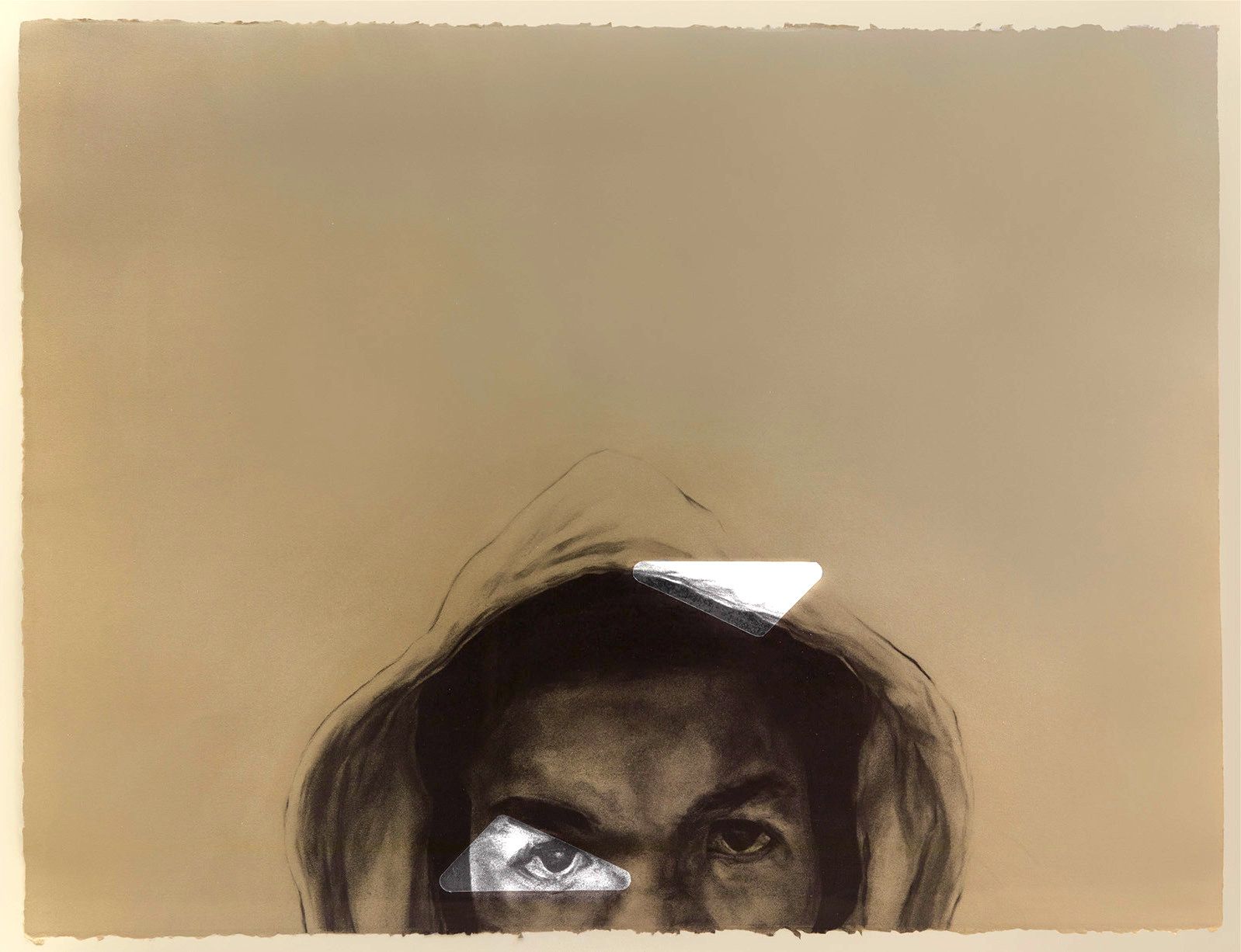
 We are not where we were one year ago—or have we just returned?
 In the part of my life when I was most actively trying to invent myself as a writer, I was working as a high school teacher and was desperately unhappy. (Notice the way that I put this: “I was working as a high school teacher,” not “I was a high school teacher”; the notion that a job defines a person still disgusts me.) In the evenings, I left work and wrote magazine pitches, not as many, I realize in retrospect, as could have brought me success, but enough to keep me talkative in the teacher’s lounge. I had the impression, back then, that a writer could make a name for himself on the basis of a single strong piece, and since my work was deeply derivative—I was, after all, inexperienced—I hatched a plan.