Choose the Axiom III

by Carl Pierer

In the first part of this essay, the axiom of choice was introduced and a rather counterintuitive consequence was shown: the Banach-Tarski Paradox. To recapitulate: the axiom of choice states that, given any collection of non-empty sets, it is possible to choose exactly one element from each of them. This is uncontroversial in the case where the collection is finite. Simply list all the sets and then pick an element from each. Yet, as soon as we consider infinite collections, matters get more complicated. We cannot explicitly write down which element to pick, so we need to give a principled method of choosing. In some cases, this might be straightforward. For example, take an infinite collection of non-empty subsets of the natural numbers. Any such set will contain a least element. Thus, if we pick the least element from each of these sets, we have given a principled method. However, with an infinite collection of non-empty subsets of the real numbers, this particular method does not work. Moreover, there is no obvious alternative principled method. The axiom of choice then states that nonetheless such a method exists, although we do not know it. The axiom of choice entails the Banach-Tarski Paradox, which states that we can break up a ball into 8 pieces, take 4 of them, rotate them around and put them back together to get back the original ball. We can do the same thing with the remaining 4 pieces and get another ball of exactly the same size. This allows us to duplicate the ball.

The second part of this essay demonstrated a useful consequence (or indeed, an equivalent) of the axiom of choice, known as Zorn’s Lemma and looked at a few applications of this Lemma. Two positions have been mapped out in the course of this essay. On the one hand, the axiom has very counterintuitive consequences, so much so that they’ve received the name of a paradox. On the other hand, the axiom proves to be very useful in deducing mathematical propositions. These considerations lead back to the question that had already been raised at the end of the first part: how are we to decide on the status of an axiom, on whether to accept it or reject it?

In this third and final part of the essay, we will take a more philosophical approach to this problem. In particular, we will look at a possible resolution offered by Penelope Maddy in her Defending the Axioms. The solution offered would lead onto further questions about the nature of mathematics: what is mathematics actually about? At the same time, Maddy’s view is based on a certain conception of proof that does not really reflect mathematical practice. The essay, due to limitations, only hints at a different perspective offered by looking at what mathematicians actually do and what role proofs play for them. Read more »


Clatsop County, Part Two: Kevin

by Tamuira Reid

It’s nearing lunchtime when I make it over to Kevin’s, and beautiful out, but his window shades are still drawn closed, outside light on. I notice the porch slopes ever so slightly to the right, where a few forgotten footballs and beer bottles have now collected. I knock. Wait. Hear some movement and bustling. Then silence. I knock again. Silver masking tape covers large rips in the screen door, big enough for a head to push through. More movement. Finally Kevin emerges, a cigarette hanging from his lips.

He doesn’t say hi, but rather ushers me in, a quick gesture of his skinny body, a bony hand-to-back motion that says hurry.

I am used to this with Kevin. The hurry up and go of it all. When you’ve made the conscious decision to hangout with crystal meth addicts, life becomes a constant hurry-up-and- go, even if you’re only going to the bathroom.

I like Kevin. He’s thoughtful and smart and ridiculously resourceful. He’s also one of the worst addicts I’ve come across during my time in Clatsop County – or in my personal life – which is saying a lot. He will likely never get clean. He might commit more than a few crimes. And he will probably die too young. His life is already pedal to the metal, as he’d tell you. Pedal to the fucking metal. Read more »

Sunday, September 23, 2018

A censorship less visible

Kenan Malik in Pandaemonium:

One of the problems in discussing censorship is that we often don’t recognize censorship for what it is. There is no longer the Lord Chamberlain marking scripts and cutting out the unacceptable. Instead, we, in effect, ourselves mark them. And that, ironically, makes censorship not more, but less, visible.
In all my years campaigning for free speech, I’ve rarely heard anyone say ‘I’m for censorship’. Rather what many say is ‘I’m for free speech. But…’ I’m for free speech… but speech must be used responsibly. I’m for free speech… but speech should not offend. I’m for free speech… but don’t appropriate from other cultures. And so on. What was once recognized as straightforward censorship has now become a combination of moral obligation and social etiquette.

Even those who openly call for censorship often dress it up in moral terms. Thirty years ago, back in the midst of the Rushdie affair, Shabbir Akhtar, spokesman for the Bradford Council of Mosques, insisted that the real debate was not about ‘freedom of speech versus censorship’ but about ‘legitimate criticism versus obscenity and slander’. Exactly the same point has been made by every opponent of offnsove talk, from those who shut down Gurpreet Kaur Bhatti’s Behzti to those who would have shut down Caryl Churchill’s Seven Jewish Children.

But who makes that judgment call? Who decides what is legitimate criticism and what is obscenity and slander? Half a century ago, the answer was: the Lord Chamberlain. Today, the answer is each of us.

More here.

A 558-Million-Year-Old Mystery Has Been Solved

Ed Yong in The Atlantic:

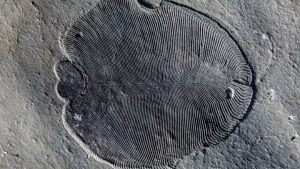
Around 558 million years ago, a strange … something dies on the floor of an ancient ocean. Its body, if you could call it that, is a two-inch-long oval with symmetric ribs running from its midline to its fringes. It is quickly buried in sediment, and gradually turns into a fossil.
While it sits in place, petrifying, waiting, the world around it changes. The Earth’s landmasses merge into a single supercontinent before going their separate ways. In the ocean, animal life explodes; for the first time, the world is home to eyes, shells, and mouths. Living things invade the land, coating it first in thin films of moss and lichens, and then covering it in huge forests. Insects rise, into existence, and then into the skies. A dinosaur empire rises and falls. Mammals finally take over, and one of them—a human by the name of Ilya Bobrovskiy—finally unearths the fossilized ribbed oval from its resting place.

All of which is to say: Five hundred fifty-eight million years is an incredibly long time.

But despite that almost unimaginable time span, and everything that happened within it, many of the simple molecules that once existed in the oval creature’s cells still persist. Bobrovskiy, a geochemist at Australian National University, has isolated, identified, and measured them. And they provide conclusive evidence that the creature, despite all appearances, is an animal. More specifically, it is the oldest animal ever discovered. It’s called Dickinsonia.

More here.

Why Growth Can’t Be Green

Jason Hickel in Foreign Policy:

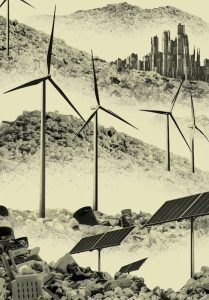
Warnings about ecological breakdown have become ubiquitous. Over the past few years, major newspapers, including the Guardian and the New York Times, have carried alarming stories on soil depletion, deforestation, and the collapse of fish stocks and insect populations. These crises are being driven by global economic growth, and its accompanying consumption, which is destroying the Earth’s biosphere and blowing past key planetary boundaries that scientists say must be respected to avoid triggering collapse.

Many policymakers have responded by pushing for what has come to be called “green growth.” All we need to do, they argue, is invest in more efficient technology and introduce the right incentives, and we’ll be able to keep growing while simultaneously reducing our impact on the natural world, which is already at an unsustainable level. In technical terms, the goal is to achieve “absolute decoupling” of GDP from the total use of natural resources, according to the U.N. definition.

It sounds like an elegant solution to an otherwise catastrophic problem. There’s just one hitch: New evidence suggests that green growth isn’t the panacea everyone has been hoping for. In fact, it isn’t even possible.

More here.

America, Land of Brutal Binaries

Andrew Sullivan in New York Magazine:

It was entirely a coincidence that I found myself reading Jonathan Haidt and Greg Lukianoff’s The Coddling of the American Mind in the same week that Brett Kavanaugh was credibly accused of sexual assault in his teens, and Ian Buruma lost his job as editor of The New York Review of Books, after publishing an essay by a man credibly accused of 23 separate instances of sexual abuse, but cleared of all criminal charges. And the book does not, of course, address the specifics of either case. But it’s a sharp analysis of the toxic atmosphere in which our current debates take place, a reminder that it is close to impossible, in this polarized climate, to deal with the specifics and complexities of each scandal from a non-tribal perspective.

And so it seems that Kavanaugh is either a perfect exemplar of judicial expertise and impeccable moral conduct, or he is a lying rapist determined to destroy and control the lives of all women. Ghomeshi is evil, and granting any space for such a monster to defend or account for himself is itself an act of oppression, which must be shamed and punished. Those appear to be our choices, ladies and gentlemen, in this particular polarization cycle. There is little nuance in these battles and absolutely no mercy for anyone unlucky enough to get caught up in their swirling vortex.

More here.

Why we should be wary of using animal behaviour in trying to explain our own

Adam Rutherford in New Statesman:

I have spent much of the last few days  destroying my own work. It turns out that obliterating it neatly is almost as difficult as making it. It’s publication week of my latest, The Book of Humans, and we’ve been running various competitions to draw people’s eyes in. I have great fondness for hiding secrets in my books. In one, I encoded a message in the letters of the genetic code – an email address that revealed the instructions for a treasure hunt. For The Book of Humans – surely conceived by me as an epic act of procrastination – I have dug out a hole in the middle of one copy, as if to hide a wad of cash, and inside this book-box I’ve stashed a small treasure, something mentioned in the book and of relevance to the story. So far, I’ve destroyed two practice copies with a multi-tool trying to carve and glue a neat rectangular box inside 250 pages of human evolution. I’ll push the button for this hunt to begin on Twitter this week. Let’s see how long it takes people to work out what’s in the box.

Schrödinger’s chat

I’m writing these words on a plane to London from Dublin, where a bunch of scientists were celebrating the 75th anniversary of one of the most influential series of lectures of the 20th century. You may have heard of the Nobel-winning physicist Erwin Schrödinger from his thought experiment – no real animals were harmed – in which a cat in a sealed box was simultaneously dead and alive until observed, whereon it chose one of those quantum states. I forget why this is important, because as a mere biologist, I am primarily concerned with organisms that are either alive or dead, but never both.

More here.

A Prescription for Forgetting

Diane Mehta in  Longreads:

“You’re dead,” said the meditation guide. “You’ve been dead a long time.” I start crying. “What do you see?” she asked. I whimpered, “My dad somewhere, cremated, maybe a river, gone for decades. My son is older. He has a family. He thinks of me sometimes. I can’t stand it.”
“They’ve been gone a long time. You’re fine. Part of the universe. The beginning of what you were meant to be. Does that beanbag chair in the house that you don’t like matter? What about your job and the argument you had with your boyfriend, that burger you had for dinner? Your dresses, your shoes, your jewelry, your house, your keys. Throw your keys away. Throw them into the magnetic sun. Whoosh. Do it again. Whoosh. How do you feel?” I wiped my tears and scanned my imagination. Exploding galaxies to explore, strange dimensions, star clusters, sunbursts, Earthrise over our moon, star-forming nebula, cosmic microwave background left over from the Big Bang. What does a black hole feel like when you’re disembodied and inside of it? My mind was clear. A cool mist like summer rain while scuba diving underwater but without equipment. She continued to encourage me to throw things away. “It gets easier. Throw it away. Nothing matters. Whoosh.” I winced, then felt relieved, then felt horrible and finally caved and decided to be dead, dead, dead. As shock left me, I imagined looking around at my new home out in space: stars blinked on and off like fireflies, nearby yet distant, planets with inconceivable colors of lilac-brown and red-rust that hadn’t been refracted through an atmosphere and the curve of the turning Earth. Everything gets easier according to everyone who believes that life is a positive cult. This guide said she used to have an argument with the world. She was angry at all corners of her soul. “I’m happier,” she said calmly. “You have a very open mind. You’ll do well here.” I panicked and came back to Earth. My feet reappeared, and my hands, which I’d watched burn away, per her instructions, grew back like a starfish regenerating its limbs. Whole again. Beanbag chair and teenager and dog and boyfriend, jobs and writing to do and the whole shebang of worries. I forced a breath out. She was wrong about me.

***

The goal of this style of meditation, which my boyfriend signed me up for (sigh — my anxiety is not fun for the people around me, either) and which, in the interest of being a good sport, I agreed to try for a month, was to achieve oneness with the universe. I had just finished a final draft of a novel that had sustained me for seven years, and felt utterly empty without it. Looking for a job felt dreary and anxiety-creating. What would I do for the rest of my life? What should I do from day to day? I couldn’t relax. From meditation I expected breathing exercises, which are scientifically proven to manage anxiety. Instead I stared at a reflective silver circle on the wall, a sticker about five inches in circumference that conceptually embodied the magnetic sun, and called one memory after another up, and threw it into that shiny gravity-sucking sun.

More here.

Sunday Poem

My Mother Worries About My Hat

Every spring my mother says I should buy a straw
hat so I won’t overheat in summer.
.
I always agree but the valley’s soon cold, and besides
my old Borsalino is nearly rain-proof.
.
She’s at it again, it’s August, the grapes are sugaring.
I say, Okay, and pluck a little spider from her hair—
.
hair so fine it can’t hold even one of her grandmother’s
tortoise shell combs.

.
by Richard Jarrette
from: A Hundred Million Years of Nectar Dances
Green Writers Press, 2015

Saturday, September 22, 2018

The Magic and Mystery of Literary Maps

Robert Macfarlane, Frances Hardinge and Miraphora Mina at The Guardian:

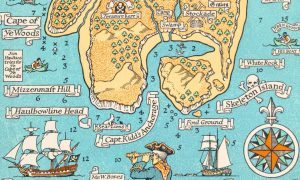
In the beginning was the map. Robert Louis Stevenson drew it in the summer of 1881 to entertain his 12-year-old stepson, Lloyd Osbourne, while on a rainy family holiday in Scotland. It depicts a rough-coasted island of woods, peaks, swamps and coves. A few place names are marked, which speak of adventure and disaster: Spyeglass Hill, Graves, Skeleton Island. The penmanship is deft, confident – at the island’s southern end is an intricate compass rose, and the sketch of a galleon at full sail. Figures signal the depth in fathoms of the surrounding sea, and there are warnings to mariners: “Strong tide here”, “Foul ground”. In the heart of the island is a blood-red cross, by which is scrawled the legend “Bulk of treasure here”.

Stevenson’s map was drawn to set a child dreaming, but it worked most powerfully on its grownup author, inspiring him to write his great pirate novel, Treasure Island.

more here.

‘Berlin Alexanderplatz’ by Alfred Döblin

Adrian Nathan West at The Quarterly Conversation:

In the tempest-plagued teapot of English translation, Michael Hofmann’s dust-ups are notorious: he compared Stefan Zweig’s suicide note to an Oscar acceptance speech, eviscerated James Reidel’s translations of Thomas Bernhard’s poems, brushed off George Konrad’s A Feast in the Garden as “dire… export-quality horseshit.” Critics seem generally pleased with his translations, but then, critics like Toril Moi, Tim Parks, or Hofmann himself—that is to say, those willing and able to scrutinize the changes a text in translation undergoes, and the details of what is gained and lost alone the way—are rare, and the newspaper reviewer’s “cleverly translated,” “serviceably translated,” and suchlike don’t count for too much. Readers I know are not of one mind about his work: some are unqualified fans, particularly of Angina Days, his selected poetry of Günter Eich. What seems to grate on the less enthusiastic are his translations’ motley surfaces, the “occasional rhinestones or bits of jet,” as he has it in one interview, which mark them, not as the pellucid transmigration of the author’s inspiration from source language into target, but as a patent contrivance in the latter.
Hofmann’s translation of Berlin Alexanderplatz, long rumored to be in the works, has the feel of a literary event.

more here.

How Laurence Sterne reinvented the novel

Lucinda Smyth in Prospect:

“The trouble with life (the novelist will feel) is its amorphousness, its ridiculous fluidity,” writes Martin Amis in his memoir Experience. “Look at it: thinly plotted, largely themeless, sentimental and ineluctably trite. The dialogue is poor, or at least violently uneven. The twists are predictable or sensationalist. And it’s always the same beginning; and the same ending…”
Amis’s words show the extent to which Laurence Sterne was an unorthodox writer, even by contemporary standards. For Amis, writing fiction ought to be a reaction against the incomprehensibility of life, the writer slotting fictional episodes into a sleek, coherent narrative. Useful in this process, says Amis, is “the novelist’s addiction to seeing parallels and making connections.”

But what is striking about Sterne—who died 250 years ago—is how much of his work retains the “amorphousness” and “ridiculous fluidity” of life. His masterpiece, The Life and Opinions of Tristram Shandy, Gentleman does not “organise” its ideas into something coherent, let alone digestible. Rather, it is a free-flowing stream of philosophical musing, character sketches and bawdy jokes. There is no consistent storyline whatsoever.

More here.

Stravinsky’s Late 12-tone Masterpiece

Sudip Bose at The American Scholar:

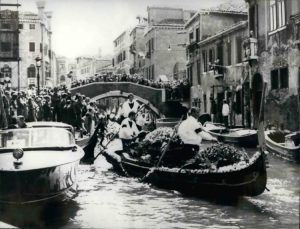
E0YRCE Apr. 04, 1971 – Igor Stravinsky Buried. The famous composer Igor Stravinsky, 88, was buried last Thursday, in the cemetery on the island of San Michele, in the Venice Lagoon. Stravinsky, who died in New York, was reported to have had a great affection for Venice. Photo Shows:- The rose-covered coffin of Igor Stravinsky is carried in a black gondola to the cemetery on the island of San Michele, in the Venice Lagoon.

The origins of this masterpiece can arguably be traced to 1948, the year Stravinsky met Robert Craft, who was then a 25-year-old musician schooled in the works of the Second Viennese School. Stravinsky employed the young man as his secretary, but over time, the two artists became colleagues as well as friends, with Stravinsky assuming the role of father figure and Craft taking up residence in the composer’s household. For Craft, the 12-tone music of Arnold Schoenberg and Anton Webern was gospel, and he was eager to nudge Stravinsky toward serial techniques. “I say in all candor,” Craft would later write, not without a touch of hubris, “that I provided the path and that I do not believe Stravinsky would ever have taken the direction that he did without me.”

Stravinsky may have initially found 12-tone music cold, clinical, and abstract, but he also feared being judged an anachronism were he not to, at the very least, explore this terrain. Craft was no doubt a guiding light, and Stravinsky’s 1952 Cantata incorporated several serial elements. Subsequent pieces, such as the Canticum sacrum (1955) and Movements for Piano and Orchestra(1959), are full-blooded serial works, though Stravinsky was never one to adhere dogmatically to any method, and he adapted 12-tone techniques into his own distinctive idioms.

more here.

The Brilliant, Playful, Bloodthirsty Raven

Helen Macdonald in The Atlantic:

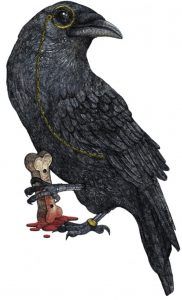
I can make a passable imitation of a raven’s low, guttural croak, and whenever I see a wild one flying overhead I have an irresistible urge to call up to it in the hope that it will answer back. Sometimes I do, and sometimes it does; it’s a moment of cross-species communication that never fails to thrill. Ravens are strangely magical birds. Partly that magic is made by us. They have been seen variously as gods, tricksters, protectors, messengers, and harbingers of death for thousands of years. But much of that magic emanates from the living birds themselves. Massive black corvids with ice-pick beaks, dark eyes, and shaggy-feathered necks, they have a distinctive presence and possess a fierce intelligence. Watching them for any length of time has the same effect as watching great apes: It’s hard not to start thinking of them as people. Nonhuman people, but people all the same.

The most celebrated ravens in the world live at the Tower of London, on the River Thames, an 11th-century walled enclosure of towers and buildings that houses the Crown Jewels and that over the ages has functioned as a royal palace, a zoo, a prison, and a place of execution. Today it is one of Britain’s most visited tourist attractions, and its ravens amble across its greens entirely unbothered by the crowds, walking with a gait that Charles Dickens—who kept ravens—described as resembling “a very particular gentleman with exceedingly tight boots on, trying to walk fast over loose pebbles.”

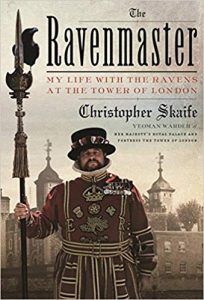
I met Christopher Skaife a few years ago while recording a radio program about Edgar Allan Poe’s “The Raven.” A jovial, bearded man, he’s one of the yeoman warders at the Tower of London. As such he is a member of an ancient and soldierly profession. For the past 13 years he has also been the site’s ravenmaster, which easily tops my list of favorite job titles (unicef’s “head of knowledge” comes in second). On Twitter, as @Ravenmaster1, he curates a much-loved feed packed with images of the birds in his care: raven beaks holding information leaflets, photos of the feathers on their broad backs, close-ups of their varied expressions, videos of their gentle interactions with him. A born storyteller with a gift for banter honed by years in the British army, Skaife has written a book that is far from a dry monograph about the species or a sentimental love letter to his birds.

More here.

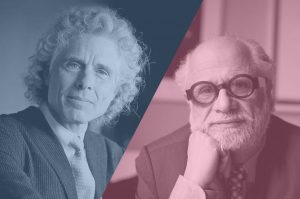
Steven Pinker and Homi Bhabha discuss the good, the bad and the ugly of the Enlightenment

From IAI News:

Homi Bhabha: Every serious writer should be taken at his word, and I want to start with the pith of Steven Pinker’s argument: “More than ever, the ideals of reason, science, humanism, and progress need a wholehearted defense”. A worthy cause that prompts the question: Who has put the Enlightenment in the dock? And who should be called to the witness box?  Steven’s wholehearted defense valiantly rounds up the usual suspects —fundamentalism, obscurantism, prejudice, irrationality—but the historical amalgam of Enlightenment ideas, ideals and values doesn’t set his prose racing. He hits his stride when he puts his finger on the pulse of the present—enlightenment, now!  

“Now” is more than a time signature that gives Steven’s title a sense of urgency; it is an important measure of our progress. Too often, those who take the long view, what historians call the longue durée, blow away the repetitive and rebarbative perils that have shadowed the modern age—slavery, imperialism, world wars, genocide, the holocaust, tyranny, inequality, poverty—which appear as mere glitches in the ascending graph of modern civility: aberrations in the forward march of enlightenment progress.

More here.

Yes, Government Creates Wealth

Mariana Mazzucato in Democracy:

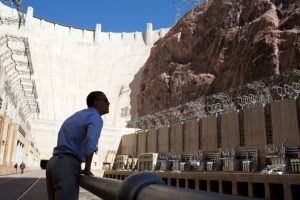
President Barack Obama views the Hoover Dam during an unannounced stop there Oct. 2, 2012.
(Official White House Photo by Pete Souza)

The January 2010 edition of The Economist was devoted to the dangers of big government. A large picture of a monster adorned the magazine’s cover. The editorial opined: “The rich world has a clear choice: learn from the mistakes of the past, or else watch Leviathan grow into a true monster.” In a more recent issue, dedicated to future technological revolutions, the magazine was explicit that government should stick to setting the rules of the game: Invest in basic goods like education and infrastructure, but then get out of the way so that revolutionary businesses can do their thing.

This, of course, is hardly a novel view. Throughout the history of economic thought, government has long been seen as necessary but unproductive, a spender and regulator, rather than a value creator. But government’s ability to produce value has been seriously underestimated, an error that has in effect enabled others to have a stronger claim on their wealth creation role.

More here.