Amazon is disrupting the publishing world….again

by Sarah Firisen

Books have always mattered to me. When I was single in my 20s, I mentioned to my then boss that whenever I first visited a date’s apartment I would look at his bookshelves. He didn’t get it. Why did it matter what books a person read? I tried to explain that for starters, it mattered to me that someone actually read at all. Soon after this, I met my now ex-husband. The circumstances of our meeting had a tangential connection to his love of the Thomas Pynchon novel, Gravity’s Rainbow (long story short, we connected over the Internet in its early days and his persona was Tyrone Slothrop). I’d never read it. For our second date, he brought me a copy of the book. To this day, that was the single most romantic gift a man has ever given me. When we moved into together a mere 6 weeks later, the merging of our books was a major undertaking – interestingly, while there were a lot of authors we didn’t share a love of, like Pynchon, we had a lot of books which completed each other’s sets of various authors. We gave away a fair number of duplicates. When we divorced 18 years later, the process of remembering whose books were whose was challenging. I actually left some behind by accident. He kindly returned them to me, or let me take them off his bookcase, when one, or both us realized. Books have always mattered to me. Read more »

The Evolution Of Music

by Anitra Pavlico

In a recent study, data scientists based in Japan found that classical music over the past several centuries has followed laws of evolution. How can non-living cultural expression adhere to these rules?
Evolution is an “algorithmic process applied to populations of individuals.” [1] Individuals vary, and certain individuals’ traits are passed on while others are culled. These steps are repeated many times. In biology, scientists can study the gene as a “unit of inheritance,” but an analogous unit of inheritance has to be selected in a study of a cultural practice. Eita Nakamura at Kyoto University and Kunihiko Kaneko at the University of Tokyo decided to look at unique musical features such as the tritone–a dissonant interval of three whole notes–and measure the number of occurrences in Western musical compositions over the centuries.

According to Nakamura and Kaneko, “The mean and standard deviation of the frequency (probability) of tritones steadily increased during the years 1500-1900.” Because this might have been just a function of individual composers’ preferences or “social communities” and not necessarily governed by statistical evolutionary laws, they developed a mathematical model of evolution to tell the difference. The tritone is a relatively rare musical event, but its use has spread over the centuries in a way that the study’s authors say follow precise statistical rules. [2] Read more »

“How Do You Feel about Being an American?” A Conversation with Patricia Thornley

by Andrea Scrima

Indian Scout

From November 17, Patricia Thornley’s work The Western, part of her series THIS IS US, is on view as part of the group exhibition “Empathy” at Smack Mellon Gallery in Brooklyn, New York. The project is the latest in a seven-year series of installation and single-channel video works consisting of interviews and performances. Previous videos of the series are An American in Bavaria (2011), Don’t Cry for Me (2013), and Sang Real (2015). As a whole, THIS IS US  formulates multiple parallel inquiries into the collaborative fantasies Americans enact through popular media. In the current political climate, as the escalation of social and economic forces impacting millions of lives is cast into increasingly sharp relief, these fantasies take on new urgency and, in many cases, a new absurdity.

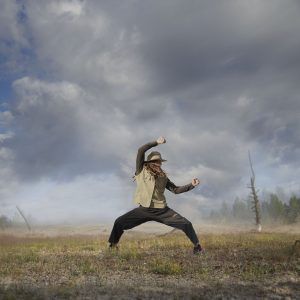
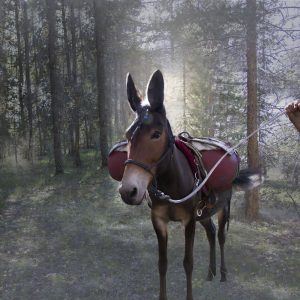
The Western’s cast of characters consists of these Civil War-era archetypes: Indian Scout, Beast of Burden, Frontiersman, Savage, Deserter, Justice, and Drifter. The work is conceived as a two-part installation in which the cinematic trope of the Western is used as a framework for inquiring into the American psyche. In the exhibition space, a projected “movie” is installed opposite a wall of screens playing a series of interviews with the seven participating characters.

Beast of Burden

Andrea Scrima: Patricia, a few years ago I conducted an interview with you about a previous work of yours, Sang Real (2015), for the online poetry magazine Lute & Drum. Now, with The Western, the overall structure of THIS IS US is coming more and more clearly into focus. The last time we spoke at length about your series was a year and a half before the last presidential election. How have recent changes on the political landscape affected your approach to the themes in your work?

Patricia Thornley: From the beginning in the THIS IS US series, one of the questions I asked in my interviews with the people who featured in the individual videos was “how do you feel about being an American?” Historically, there’s always been a certain political disconnect at play with Americans, due to less armed conflict on our own soil and a certain comfort level. Read more »

On the Road: Wildebeest Crossing

by Bill Murray

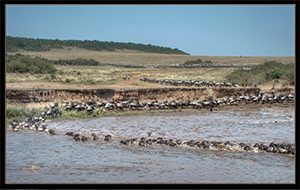
The crocodiles know. They form pincers on either side of the crossing point. Richard says they feel the vibration of all those hooves along the riverbank above them.


Waves of animals surge toward the river then fall away. If they all go we’ll witness a frightful, deadly crush of beasts in motion, mad energy, herd hysteria, dust and confusion, the cries of mortally wounded beasts rising to the heavens, birds of prey gaggling and swooping and squawking, kinetic intensity unbound.

We have come to see the sprawling, real life spectacle of wildebeests crossing the Mara River. It is the largest overland migration in the world. Read more »

Bergen Arches: Living for the City

by Bill Benzon

“We’re in one of those great historic periods…when people don’t understand the world anymore…when the past is not sufficient to explain the future.”
–Peter Drucker

Fasten your seatbelts, we’re going for a ride. We start over 300 million years ago and arrive at the present in a mere six paragraphs. We remain here for the rest of the tour, looking at pictures and talking about a strange urban paradise situated in the middle of one of the most densely populated areas on the planet.

From Pangea to Hurricane Sandy

Roughly 335 million years ago, during the late Paleozoic and early Mesozoic eras, the Earth’s existing continental masses formed themselves into the supercontinent Pangea. Pangea began to breakup roughly 175 million years ago giving rise to the Palisades Sill, most visible as a series of cliffs running 50 miles along the west bank of the Hudson River in New York and New Jersey. The Palisades tapers down to sea level in what is now Jersey City.

Roughly 14,000 years ago the first humans settled in North America, spreading quickly across the continent and south through Central to South America. In 1609 the Lenape greeted Henry Hudson when he set foot in that area on his search for a Northwest Passage to China. Two centuries later railroads began emerging in North America. In the second quarter of the 19th Century and Camden and Amboy Railroad became the first in New Jersey, completing its first line in 1834. In the middle of the century the Erie and the Delaware-Lackawanna railroads completed the Long Dock Tunnel in 1861. It conveyed freight trains from the Meadowlands through the Palisades Sill to freight terminals on the Hudson River. By the early 20th century Jersey City had become a bustling port.

In 1906 the Erie Railroad began blasting a cut through the Palisades less than a football field’s width south of the Long Dock Tunnel. The Erie Cut was completed in 1910. It is between, say, 50 and 80 feet deep and 70 to 100 feet wide at the bottom. In four places the cut becomes short tunnels so that roads and buildings could go atop it; short bridges cross the cut at three other points. Collectively these are the Bergen Arches, the name by which this feature is known today. Read more »

Not necessarily the best ambient and space music of 2018

by Dave Maier

No, it’s not that time of year just yet! However, since my yearly lists aren’t always exactly best-of-year lists anyway, I thought I might get the jump on everyone else, before we’re all best-of-year’ed out. (I should do sets more often anyway …) About half of these tracks are from 2018, and the rest are recent-ish, so that’s something.

Ethernet – Birds of Paradise (From Here to Tranquility Vol. 7 [Silent])

I don’t know a whole lot about Ethernet (I didn’t bother googling, because I bet you get a bazillion hits for, you know, Ethernet), but this track is a gloriously bubbly spacy ambient number of the sort Silent does very well (although there are all kinds of things on their samplers, of which they are up to Vol. 10 now, I see).

Fastus – Dream Within a Dream (Terra Incognito)

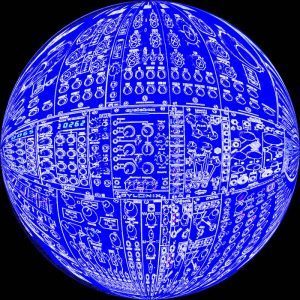
Fastus is a guy named Ian from Jersey City, NJ in the USA. He does great demos for particular synth modules, which is how I know about him. Most if not all of this track was done on a Eurorack modular system, perhaps the very one pictured in blue above. It can be difficult to make modular synths sound musical, so hats off to Ian for this compelling track. Check out the Bandcamp link for a sweet deal on all three of Ian’s records.

Erik Wollo – Traverse (Threshold Point [Projekt])

This is Erik’s 23rd album, some of which, he tells us, was composed “under special and tragic circumstances,” which he says make it “more ethereal and humble” than some of his other music. I haven’t heard all 22 of his other records, so I can’t really say, but this one sounds to me pretty much like the ones I know from his early days (classics like Traces and Images of Light). This particular track may also be an homage to fellow Norwegian guitarist Terje Rypdal, as the chord progression sounds a whole lot like that from the track “Avskjed” from Rypdal’s 1980 album Descendre. If I ever meet Erik again, I will ask him. Read more »

Sunday, November 11, 2018

The Coming of Age of Transgender Literature

Peter Haldeman in the New York Times:

The Pioneer Valley in western Massachusetts is a cradle of social progress — a place where L.G.B.T.Q. is often followed by I.A. (for intersex and asexual), there’s a Stonewall Center (now 33 years old), and gender-nonconforming parents have a nickname of choice (it’s “Baba”).
On a Maple-lined street here in Northampton, in a white gablefront house, lives one such Baba, a.k.a. Andrea Lawlor, a gender queer novelist and visiting lecturer at Mt. Holyoke College; Lawlor, who uses the pronoun they, shares the first floor rooms with their girlfriend, their 5-year-old child, and their child’s sprawling Lego constructions. The second floor is occupied by Lawlor’s best friend of 25 years, Jordy Rosenberg, a transgender novelist who teaches 18th century literature, gender and sexuality studies, and critical theory at the University of Massachusetts, Amherst. Sometimes they call their home a “queer commune.”

Lawlor’s debut novel, “Paul Takes the Form of a Mortal Girl,” set in the 1990s and featuring a shape-shifting (and sex-obsessed) protagonist, was published last year by Rescue Press — and received enough attention that Vintage/Anchor and Picador will reissue the book next spring.

More here.

Genes within Genes

Tyler Hampton in Inference Review:

In a publication titled “Russian Doll Genes and Complex Chromosome Rearrangements in Oxytricha trifallax,” Jasper Braun et al. explore what they describe as “architectures that transcend simple twists and turns of the DNA.” The paper is short, dry, clear, and interesting.

Oxytricha trifallax is a unicellular eukaryotic species and a ciliate, one widely known for beautiful, but bizarre, genetic acrobatics. Members of O. trifallax possess two nuclei within their single-cell frame. The two nuclei are analogous to the diploid somatic cells and the haploid reproductive cells found in multicellular eukaryotes. In ciliates, the physically larger nucleus is called the macronucleus; the smaller one, the micronucleus. Chromosomes in the macronucleus are accessed for ordinary biochemical affairs. DNA in the micronucleus is involved only in reproduction.

Under ordinary circumstances, O. trifallax reproduces asexually by cloning. Under conditions of stress, one cell meets another in sexual conjugation. What is odd is that, in O. trifallax, all conjugal events begin and end with exactly two individuals. Each cell exchanges 50 percent of its micronuclear DNA. Both leave transformed. After O. trifallax recombines and dissociates from its partner, it goes on increasing its numbers by cloning.

More here.

The afterlife of Rosa Luxemburg: how the German Marxist’s influence endures

George Eaton in New Statesman:

On the evening of 28 October, as they absorbed the election of far-right Brazilian president Jair Bolsonaro, British leftists declared “socialism or barbarism”. The slogan was assumed by some to be a Corbynite coinage. But it was first popularised more than a century ago in war-ravaged Europe.
In 1915, writing under the pseudonym Junius to evade prosecution, German Marxist leader Rosa Luxemburg warned: “Bourgeois society stands at the crossroads, either transition to socialism or regression into barbarism.”

To Luxemburg’s dismay, rather than uniting in opposition to the First World War, Europe’s left-wing parties rallied behind their national governments. “Workers of the world unite in peacetime – but in war slit one another’s throats,” she observed acidly.

Luxemburg and co-leader Karl Liebknecht responded in 1916 by founding the revolutionary Spartacist League (named after Spartacus, the leader of the largest Roman slave rebellion), a breakaway from Germany’s Social Democratic Party.

More here.

We thought the Incas couldn’t write but these knots change everything

Daniel Cossins in New Scientist:

The Incas left no doubt that theirs was a sophisticated, technologically savvy civilisation. At its height in the 15th century, it was the largest empire in the Americas, extending almost 5000 kilometres from modern-day Ecuador to Chile. These were the people who built Machu Picchu, a royal estate perched in the clouds, and an extensive network of paved roads complete with suspension bridges crafted from woven grass. But the paradox of the Incas is that despite all this sophistication they never learned to write.

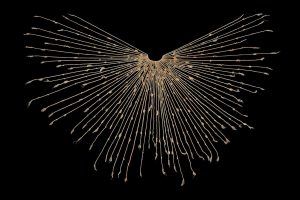
Or did they? The Incas may not have bequeathed any written records, but they did have colourful knotted cords. Each of these devices was called a khipu (pronounced key-poo). We know these intricate cords to be an abacus-like system for recording numbers. However, there have also been teasing hints that they might encode long-lost stories, myths and songs too.

In a century of study, no one has managed to make these knots talk. But recent breakthroughs have begun to unpick this tangled mystery of the Andes, revealing the first signs of phonetic symbolism within the strands. Now two anthropologists are closing in on the Inca equivalent of the Rosetta stone. That could finally crack the code and transform our understanding of a civilisation whose history has so far been told only through the eyes of the Europeans who sought to eviscerate it.

More here.

Genetics and the Human Revolution

Bennett McIntosh in Harvard Magazine:

Before ancient humans put pen to paper, stylus to tablet, or even brush to cave wall, their comings and goings were noted in another record, within their very cells. The human genome consists of chunks of DNA passed forward from countless ancestors, so by comparing modern humans’ genetic material with that gleaned from ancient remains, it’s possible to reach into prehistory and learn about where people came from, and who they were. David Reich, professor of genetics at Harvard Medical School, has spent the last decade extracting these stories from ancient DNA, using genetic evidence to overturn established theories and conventional wisdom about humanity’s past. But, so far, at least, the DNA has provided little clarity on the more fundamental question of our origin—what makes us human in the first place? In yesterday’s Distinguished Harvard Lecture in Mind Brain Behavior, Reich highlighted the transformative power—and tantalizing limitations—of ancient DNA in reshaping understanding of how Homo sapiens came to be and to act like modern humans.

The Mind Brain Behavior (MBB) interfaculty initiative, which celebrated its twenty-fifth birthday earlier this year, is one of several initiatives at Harvard that provide funding and programming for collaboration across the University’s different schools, with the aim of bringing researchers together to better understand an interdisciplinary research topic—in this case, the biology driving human behavior. The biannual Distinguished Harvard Lectures give students and researchers involved in the initiative a venue to hear about research in other fields that directly impacts their own. The room was packed with faculty members from different schools and departments, a reflection of the profound influence Reich’s research has had on many fields studying human behavior.

More here.

The longing that defined Napoleon, man of action

Adam Zamoyski in Weekly Standard:

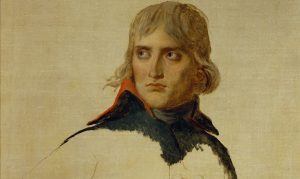
Men of action present a problem for decent modern democrats. For the very term “men of action” is a euphemism for men accomplished in war, and no public figure is more suspect these days than the warlike man. When Winston Churchill called Napoleon Bonaparte (1769-1821) “the greatest man of action born in Europe since Julius Caesar,” he meant to praise Napoleon in the highest terms, but for many, such praise is fraught with peril. After all, Julius Caesar, named dictator in perpetuity, placed the Roman Republic in mortal danger and died a tyrant’s death; the most famous of his assassins, Marcus Junius Brutus, is remembered as a paragon of republican virtue, though it proved impossible to restore the Republic after Caesar’s day.
Napoleon for his part extinguished all hope of a French republic by prudently measured gradations. Having won public adulation by heroic feats of generalship in Italy and Egypt, he knocked over the ruling Directory in the bloodless coup of 18 Brumaire in 1799 and as First Consul commanded power greater than that wielded by Louis XIV; he did what dictators often do and designated himself consul for life in 1802; then he took the obvious next step for a hero-worshipper of Julius Caesar and Alexander the Great and crowned himself emperor in 1804. And like Caesar and Alexander he ended badly, abdicating the throne in 1814 after disastrous military defeats, forced into exile on the Mediterranean islet of Elba, reclaiming imperial power a year later, only to meet decisive calamity at Waterloo and be condemned to the South Atlantic island fastness of Saint Helena, from which the sole escape was death, a mercy when at last it came, in 1821.

More here.

Sunday Poem

A Happy Birthday

This evening I sat by an open window
and read till the light was gone and the book
was no more than a part of the darkness.

I could easily have switched on a lamp,
but I wanted to ride this day down into night,
to sit alone and smooth the unreadable page
with the pale gray ghost of my hand.

From Delights & Shadows
Copper Canyon Press, 2004

Saturday, November 10, 2018

The problem bitcoin solves

Saifedean Ammous in The Spectator:

Paul Krugman, blogger, fiat-currency enthusiast and winner of the Nobel Prize in Economics earlier this year justified his scepticism about cryptocurrencies in the New York Times. He asked readers to give him a clear answer to the question: what is the problem cryptocurrency solves? He wrote: ‘Governments have occasionally abused the privilege of creating fiat money, but for the most part governments and central banks exercise restraint.’ He added that, unlike bitcoin, ‘fiat currencies have underlying value because men with guns say they do. And this means that their value isn’t a bubble that can collapse if people lose faith.’
Case closed, apparently. What he omitted to mention was that bitcoin has been operating successfully for almost ten years now, with no confirmed cases of fraudulent transactions. Every day, its traded volumes run to billions of dollars. In fact, bitcoin’s increasing reputation for security and the growth it is still undergoing suggests it is not about to go away. Could it be the market knows something about bitcoin and central banks that Krugman does not?

More here.

Three New DNA Studies Are Shaking Up the History of Humans in the Americas

George Dvorsky in Gizmodo:

It’s a huge day for archaeologists and anyone interested in the history of America’s first settlers. Findings from three new genetics studies—all released today—are presenting a fascinating, yet complex, picture of the first people in North and South America, and how they spread and diversified across two continents.
Our understanding of how the Americas were first settled used to be simple. Today, it’s not.

North America’s first migrants, we’ve been told, spilled into the continent at the tail end of the last Ice Age some 15,000 years ago, either by trekking along the West Coast and/or through an interior land route. Eventually, this population found itself south of a massive ice sheet covering North America from coast to coast. From here, scientists assumed that, as populations moved southward, some groups split off, never to meet again. Gradually, this pattern of southward migration and dispersal resulted in the peopling of the Americas.

But as the new research released today suggests, it’s considerably more complicated than that. Humans, as we’re all too aware, aren’t so predictable.

More here.

Sean Carroll’s Mindscape Podcast: Why Is There Something Rather than Nothing?

Sean Carroll in Preposterous Universe:

It’s fun to be in the exciting, chaotic, youthful days of the podcast, when anything goes and experimentation is the order of the day. So today’s show is something different: a solo effort, featuring just me talking without any guests to cramp my style. This won’t be the usual format, but I suspect it will happen from time to time. Feel free to chime in below on how often you think alternative formats should be part of the mix.

The topic today is “Why Is There Something Rather than Nothing?”, or equivalently “Why Does the Universe Exist at All?” Heady stuff, but we’re not going to back away from the challenge. What I have to say will roughly follow my recent paper on the subject, although in a more chatty and accessible style. It concerns ideas at the intersection of physics, philosophy, and theology, so tune in if you’re into that sort of thing.

More here.

Arnold Schwarzenegger’s War on Gerrymandering Is Just Beginning

Edward-Isaac Dovere in The Atlantic:

Tuesday brought wins for independent redistricting commissions that Schwarzenegger backed in three of the four states where they were on the ballot—Michigan, Missouri, and Colorado, with Utah still counting, but also trending toward yes. Now the former California governor has begun planning a summit for advocates, donors, and the people behind some of the successful campaigns to brainstorm and build to more wins.

It will be held at the Schwarzenegger Institute at the University of Southern California. Plans are being made to bring the group together within the next few months.

With Tuesday’s ballot questions, now nearly one-third of House districts will be drawn through independent redistricting according to a new report by the Schwarzenegger Institute, by commission or other methods. Schwarzenegger’s goal is to get that number to half by the end of 2020, and he already has his eyes on Virginia, among other states.

More here.