
From the website of the Harvard Kennedy School:
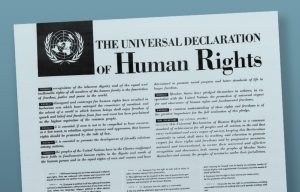 Q: In simple terms, what defines a human right?
A human right is a right that every human being has, regardless of the cultural and political context they belong to and regardless of the state where they live. It’s a right that they have independently of any such context.
Q: Where did the notion of universal human rights come from?
It goes back really thousands of years. Basically, once you have cultures where people are thinking about morality, you have people thinking about how to treat each other. Then at some point they come to the realization that the people who live on the other side of the river, or on the other side of the mountain, are really not that different from themselves. Their thinking then moves towards articulating some standards of universal morality.
The idea of universal rights is a more recent story and has a more specifically Western trajectory. There are corresponding versions in other cultures too, but the idea that individuals were protected in certain ways was a very strong cultural feature of Christian thinking in the Middle Ages. That way of thinking continued to evolve during the Enlightenment and found expression, for example, in the American Declaration of Independence and the French Declaration of the Rights of Man and Citizen. In the 1930s and the 1940s there was basically a merging of this ancient talk about universal morality with this more recent talk about individual rights and it culminated in the Universal Declaration of Human Rights in 1948.
More here.
 The clock says 3:30 am. Is that early or late? Wrapped in a blanket I go into the living room. I open the door and step onto the patio. It’s too warm for December. An almost full moon blurs into the clouds. In the distance, the highway hums.
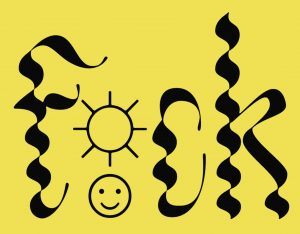 Ah, fuck! What an indispensable, multitasker of a word it has become! No longer relegated to that marginalized category once known as profanity, fuck now wears many syntactical hats and is a staple of Trump-era vocabulary. In addition to being a fun way to embed a little malediction into words that otherwise might be chalked up as run-of-the-mill resistance jargon (“inter-fucking-sectional,” “patri-fucking-archy”), fuck is enjoying a long tenure as a synonym for shit. Not giving a shit (which sounds downright 1980s) has now evolved into “not giving a fuck.” By extension, you can now describe something as “[adjective] as fuck” (abbreviated for tweeting purposes to “AF”) You can be tired as fuck, sick as fuck, angry as fuck, and so on. I guess if you find yourself in an especially tragic situation (for instance, banned from Twitter), you can be fucked as fuck.
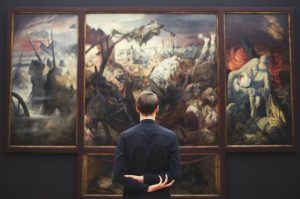 The English word ‘boredom’, the French ‘ennui’, and the German ‘Langeweile’ are hardly synonyms – the first possibly deriving from the activity of boring wood, the next having to do with a feeling of annoyance, the last, which means ‘long while’, referring to the slow passing of time. Then again, if we think someone is boring they will probably be annoying, and time spent with them will feel unpleasantly long, so the terms make related sense. The relationship to the world involved in each term is evidently negative. ‘Langeweile’ implies, for example, that the meaningfulness of time, which is structured by desires, intentions, hope, anticipation, etc., has been reduced to a sense of time as empty because it lacks these projective qualities. However, boredom may not be thought of as simply negative. Nietzsche, for example, contends that boredom has a dialectical counterpart: ‘For the thinker and for all inventive spirits boredom is that unpleasant “doldrums” of the soul which precedes the happy journey and merry winds; he has to bear it, has to wait for its effect on him’. Boredom can, therefore, be seen as necessary to the generation of new meaning.
 For the sociologist
  Frank kameny, the
  ON OCTOBER 2, 2018
 The first time Trump paid attention to any of this was when he read about it in the newspaper. The story revealed that Trump’s very own transition team had raised several million dollars to pay the staff. The moment he saw it, Trump called Steve Bannon, the chief executive of his campaign, from his office on the 26th floor of Trump Tower, and told him to come immediately to his residence, many floors above. Bannon stepped off the elevator to find Christie seated on a sofa, being hollered at. Trump was apoplectic, yelling: You’re stealing my money! You’re stealing my fucking money! What the fuck is this?
 In such circumstances, the “Guantánamo Blues” that the anonymous writer struggled with in the 1930s became all the more acute. Visiting journalists in the 1960s and 1970s reported on racial tensions, drug and alcohol problems, and occasional violence. According to a 1973 article in Esquire, “Guantánamo is a good place to become an alcoholic. During the last twelve months gin has been the leading seller at the base Mini-Mart, with vodka a close second.”
 Female pop geniuses who exercise their gifts in rampant, restless fashion over decades, writing, performing, and producing their own work, are as rare as black opals. Shape-shifting brilliance and an airy indifference to what’s expected of you are not the music industry’s favorite assets in any performer, but they are probably easier to accept in a man than in a woman. And such a musician, even today, is subject to the same pressures that have always hindered women’s artistic expression. Like the thwarted writers whom Virginia Woolf described in “
 Elaine Pagels, people say, is a heretic. It’s an ancient accusation, of course, and it hardly wields as much power as it used to, especially in the free-wheeling religious landscape of America. And Ms. Pagels is, in fact, one of the globe’s foremost experts in early Christian heresies. But as a woman who has been disrupting established orthodoxies for nearly half a century, her name still has the power to arouse disdain in certain religious circles. “You know, people have sometimes called me ‘Elaine Pagan’,” the Princeton University professor says during an interview with the Monitor, smiling as she reflects on the trajectory of her life’s work, her many orthodox critics, and
  Picture a creche with baby Jesus in a manger and shepherds and angels and three kings and a star over the stable roof. We think of this traditional scene as representing the Christmas story, but it actually mixes elements from
 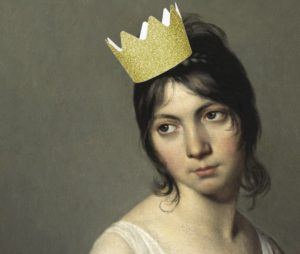 It’s mid-December, and likely you are sick and tired of best-of lists. I know, because I am too—especially after reading 52 of them and tracking their contents for the very piece you are reading—so trust me when I say that the monstrosity below is the last best-books-of-2018 list you’ll ever have to read.
 A lot of people don’t know this, but we once thought cyborg sex might be a bad idea. Back in the 2010s, serious concerns were raised by prominent scholars that sex robots were made by men, for men. The general consensus was that cyborg sex would further support the notion that women’s bodies were available for objectification, sexual gratification, and violence.
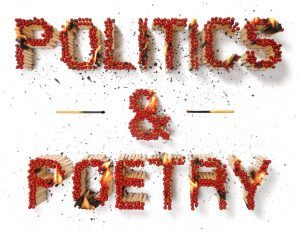 In the mid-1990s, when I was a student of creative writing, there prevailed a quiet but firm admonition to avoid composing political poems. It was too dangerous an undertaking, one likely to result in didacticism and slackened craft. No, in American poetry, politics was the domain of the few and the fearless, poets like Adrienne Rich or Denise Levertov, whose outsize conscience justified such risky behavior. Even so, theirs weren’t the voices being discussed in workshops and craft seminars.