
Regan Penaluna in Nautilus:
 Della DePaulo never fantasized about a dream wedding or being a bridesmaid. Instead, she saw herself as “single at heart,” pursuing intellectual refinement, friendship, and solitude as a young psychologist. Still, she had internalized the popular idea that married people were happier and healthier than the unmarried, and took her own pleasant experience to be exceptional. That is, until she looked into it, and found the claims about the “transformative power of marriage” to be, she says, either “grossly exaggerated or totally untrue.” From then on, she’s focused on how singles actually live.
Now at the University of California, Santa Barbara, DePaulo has written widely about how marriage and the nuclear family are making way for other social arrangements. (Read her Nautilus feature about these new kinds of families) She’s not fooled by shows such as The Bachelor or romantic comedies that end with a storybook wedding proposal. Those narratives exist, she says, “not because we as a society are so secure about the place of marriage in our lives, but because we’re so insecure.” At least one cause of that insecurity is the empowerment of single women, which she writes about in her book, Singled Out: How Singles Are Stereotyped, Stigmatized, and Ignored, and Still Live Happily Ever After. Nautilus caught up with DePaulo to discuss how single women are transforming social and political life, how they’re settling down, and what that says about living happily.
More here.
 Neve Gordon in the LA Review of Books:
 Benjamin Ivry in Forward:
 Sam Dresser in Aeon:
 Britt Rusert in The Boston Review:
 Is there a contemporary director who can match Terrence Malick for enigmatic genius? A summa cum laude philosophy major at Harvard, then a Rhodes Scholar, Malick was a philosophy professor at MIT before changing course and enrolling in film school. His long career—the filmmaker is seventy-six—has featured a sparse filmography, an abiding unconcern for critical or popular acclaim, and a mid-career hiatus, during which he disappeared from public life while reportedly laboring on a masterwork, to be called Q, exploring the origins of life on earth from the Big Bang onward. His first, short film, the twelve-minute Lanton Mills (1969), is essentially kept under lock-and-key at his behest by the AFI Conservatory, his alma mater, and only available for scholars to see. Malick is the Thomas Pynchon or J. D. Salinger of directors, and the dreamily elliptical quality of his movies has only added to the luster.
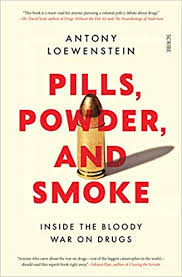 T
T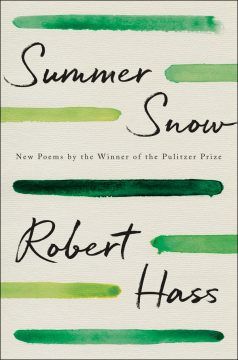 This notion of survival — and of death, its necessary analogue — sits at the center of “Summer Snow,” which offers no illusions about the bittersweet consolations of looking back. “Christmas in August” goes on to remember an older man, “a refugee Professor from another generation” — Hass’s UC Berkeley colleague Czeslaw Milosz. For many years before Milosz’s death in 2004, the two collaborated on translations, and his fellow poet’s presence lingers in these verses like a specter or a soul.
 A number of readers of my recent Chronicle Review essay,
  If there’s a fire, my husband and I know the plan: Grab the children and the red accordion file in the hall closet before fleeing the building. The file contains mostly what you would expect: passports, birth records, Social Security cards and my husband’s certificate of United States citizenship. Also included — more unusual but equally valuable — are the four letters I’ve written to myself over the course of my life. Three have been opened and read; one remains sealed. I wrote the first letter when I was 14, and I stole the idea from a novel. I was alone in my bedroom reading “Emily of New Moon,” a series by L. M. Montgomery, who also wrote the more famous series “Anne of Green Gables.” There are three Emily books, and although I loved Anne, I related more to Emily. Anne is a spunky extrovert, whereas Emily is more withdrawn, more serious. I was a serious, bookish child. I could, in fact, trace my childhood via the female literary characters I loved: Trixie Belden to Betsy and Tacy, Emily of New Moon to Morgaine in “The Mists of Avalon,” all the women in Doris Lessing’s “The Golden Notebook.”
 Today I’m headed to the
  The Florida Panther’s
 Senate Republicans, by and large, have reached an unspoken consensus about President Trump and Ukraine. He should not have put a temporary freeze on congressionally authorized aid to Ukraine, should not have dabbled with using the aid to get Ukraine to investigate Joe Biden or a nutty theory about Ukrainian hacking during the 2016 election, and should not have kept defending his “perfect call” as such. At the same time, his conduct does not merit his removal from office — especially since voters will get to pass judgment on that conduct in a few months.
 THE BEAUTY
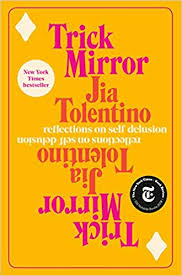 It’s always been fashionable to announce that what Sontag called ‘serious’ intellectual culture is dead or dying. Now, it’s supposed to be a result of what’s inaccurately referred to as ‘the algorithm’, but as Tolentino acknowledges, before she ploughs on with the analysis regardless, ‘people have been carping in this way for many centuries.’ What’s truly amazing about these times is that we have more access than ever before to material that demonstrates the continuity and repetitiveness of history, including evidence of the insistence by critics of all eras that this time is different, yet so many still buy into the pyramid scheme that we are special. It is both self-aggrandising and self-exonerating; it feels right. What seems self-evident to me is that public writing is always at least a little bit self-interested, demanding, controlling and delusional, and that it’s the writer’s responsibility to add enough of something else to tip the scales away from herself. For readers hoping to optimise the process of understanding their own lives, Tolentino’s book will seem ‘productive’. But those are her terms. No one has to accept
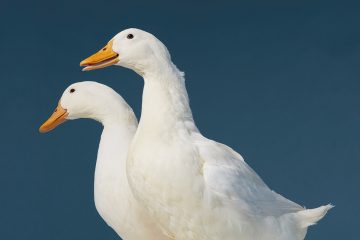 In the summer of 1922 two men called George took part in the first attempted ascent of Mount Everest. George Mallory was an establishment man. A Cambridge graduate and son of a Church of England rector, he dressed in the respectable climbing gear of the time, a jacket and tough, cotton plus-fours. George Finch, his fellow explorer, was an outsider, a moustachioed Australian with chiselled good looks and an independent streak who liked experimenting with new contraptions: he took bottled oxygen to use at high altitude, and wore a specially commissioned coat made from bright green hot-air balloon fabric stuffed with the down of eider ducks. Though climbers were already using sleeping bags filled with down, Finch’s fellow climbers initially mocked his bulky coat. That changed as they approached Everest. “Today has been bitterly cold with a gale of a wind to liven things up,” Finch wrote in his diary. “Everybody now envies my eiderdown coat and it is no longer laughed at.” The two Georges turned back after their third failed attempt on the summit. Two years later Mallory joined another expedition to Everest, but went missing close to the top; his climbing feats were then romanticised by a hero-hungry public. Finch never tried again and pursued a considerably less romantic career as a chemistry professor. Yet ultimately he had a greater impact than that of the better-known George. Today, climbers at high altitude routinely carry oxygen. His other innovation has been even more influential, extending far beyond mountaineering circles: on the 1922 expedition George Finch invented the puffer jacket.