
Julian Lucas and Tommie Shelby at The Point:
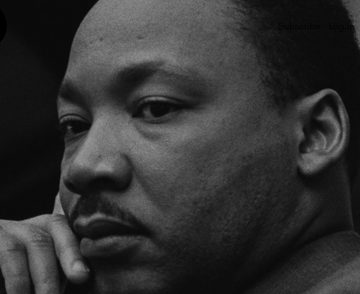 Julian Lucas: Your introductory essay suggests that when it comes to King, contemporary thought is held “captive by a picture.” Do you think that there can be a coexistence between King the political icon and King the serious philosophical thinker?
Tommie Shelby: Well, I suppose there’s not a lot we can do about his iconic status. But it’s possible to show a world-historical figure like him due respect without treating him like an infallible oracle. In philosophy as a field, we revere a small canon of figures. We also disagree with them, point out their limits, and take them down new avenues which might be more productive. One way of re-engaging King is to read him in the way we would thinkers like Immanuel Kant, John Stuart Mill, John Dewey—as interested in fundamental moral principles, what aspects of society deserve our allegiance and which do not.
He’s also engaged in a public discussion. No great thinker is just sitting in their study coming up with everything on their own. Everybody builds on what came before, and King is no different.
More here.
 Physics is simple; people are complicated. But even people are ultimately physical systems, made of particles and forces that follow the rules of the
  As the world’s business elites trek to Davos for their annual gathering, people should be asking a simple question: Have they overcome their infatuation with US President Donald Trump?
 Last week, my parents saw Little Women. My mother immediately phoned me. “I think Professor Bhaer is Jewish,” she said, her voice vibrating with barely suppressed excitement. I said I didn’t think the facts supported this theory. But several days later, I got an email from her with the subject line “FYI!!!” When I clicked on the link, I saw it was
 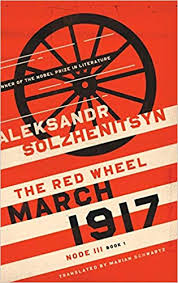 Aleksandr Solzhenitsyn’s multivolume historical novel about the Russian Revolution, The Red Wheel, is divided into four “nodes,” each a lengthy account of a short span of time. March 1917, the third node, is in turn divided into four volumes, the second of which is the book under review, translated into English for the first time. Combining nonfictional historical argument with novelistic accounts of the principal historical actors and a few fictional characters, March 1917 covers a mere three days of unrest and revolution, March 13–15, 1917, at the end of which Tsar Nicholas II abdicates, ending the Romanov dynasty in Russia. Marian Schwartz’s splendid translation captures the prose’s powerful pace and conveys, as few translators could, the author’s subtle use of tone.
 The last time we heard from Bombay Bicycle Club, they’d gone out on a high. 2014’s So Long, See You Tomorrow, their fourth album, was their first to reach number one. Their final show before they announced a hiatus in January 2016 was also the last ever gig at London’s 19,000-capacity Earl’s Court – a historic, confetti-fuelled moment before the bulldozers came in to flatten 40 years of rock history.
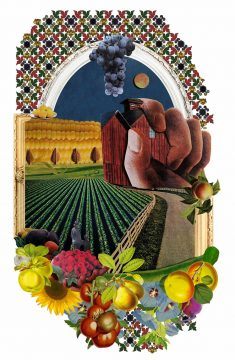 AN ANTIMODERNIST
 Earlier this month, the American Cancer Society announced its latest figures on cancer incidence and mortality
 I first met Roger Scruton almost 20 years ago at a symposium in Sweden. I admired the eloquence with which he could talk about Kant and the elegance of his writing on beauty. I learned from his conservatism, even as I disagreed with what he said. But although I got to know him quite well over the years, our relationship was always fraught. For there was another Roger Scruton, not the philosopher but the polemicist. For all his warmth and generosity, and for all the poise of his writing, his views were often ugly. “Whatever its defects,” Scruton wrote in his memoir
  TOURISTS VISITING
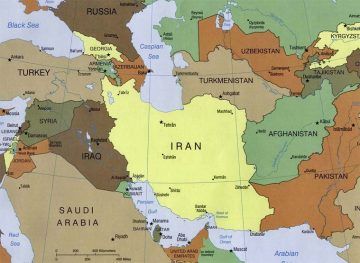 On September 24, 2019, in his UN address President Trump defended the United States’s economic sanctions against Iran by invoking language that has become so familiar to us we fail to hear its ruthless and genocidal resonances. After stating that it was his duty and priority to “defend America’s interests,” Trump cited “Iran’s blood-lust,” its “menacing behavior,” its “traffic in monstrous antisemitism,” and accused Iran of single-handedly destabilizing the Middle East. The use of abstract and degrading terminology to discuss Iran has a long history in American politics: in 1987, during a televised address in reference to the Iran–Contra Affair, Ronald Reagan innocently stated that “what began as a strategic opening to Iran deteriorated, in its implementation, into trading arms for hostages” (it’s important to note that Jimmy Carter had lost the reelection to Reagan because he was devoted to the Middle East Peace Process and unwilling, in his own words, to “wipe Iran off the map”); in 1989, George H.W. Bush claimed that “we can’t have normalized relations with a state that’s branded a terrorist state”; and, during his State of the Union address months after the ghastly and apocalyptic 9/11 attacks, George Bush stated that “Iran aggressively pursues weapons of mass destruction and exports terror,” and that “states like these [Iran, Iraq and North Korea] and their terrorist allies constitute an axis of evil arming to threaten the peace of the world by seeking weapons of mass destruction posing a grave and growing danger.” This appeal to nationalist discourse has served time and again to justify the imposition of American will over Iran.
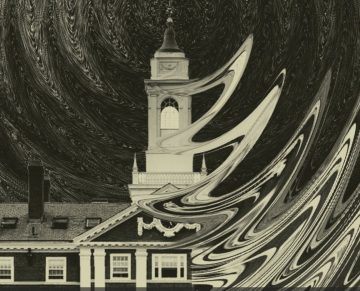 The campus upheavals of the 1960s brought a wave of responses from the professoriate, but one in particular stood out. Written by two economists, James M. Buchanan and Nicos E. Devletoglou, Academia in Anarchy (Basic Books, 1970) opened with a law-and-order quote from Richard Nixon and was dedicated to “the taxpayer.” The authors explained that they wrote with “indignation” after observing the bombing of the UCLA economics department, where Buchanan taught, and the “groveling of the UCLA administrative authorities” to a “handful of revolutionary terrorists.”
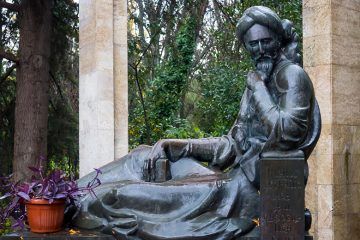 Nowadays, not many philosophers are prominent enough to get nicknames. In medieval times the practice was more popular. Every scholastic worth their salt had one: Bonaventure was the “seraphic doctor”, Aquinas the “angelic doctor”, Duns Scotus the “subtle doctor”, and so on. In the Islamic world, too, outstanding thinkers were honoured with such titles. Of these, none was more appropriate than al-shaykh al-raʾīs, which one might loosely translate as “the leading sage”. It was bestowed on Abū ʿAlī Ibn Sīnā (d.1037 AD), who was known to all those medieval scholastics by the Latinized name “Avicenna”. And not just known, but renowned. Avicenna is one of the few philosophers to have become a major influence on the development of a completely foreign philosophical culture. Once his works were translated into Latin he became second only to Aristotle as an inspiration for thirteenth-century medieval philosophy, and (thanks to his definitive medical summary the Canon, in Arabic Qānūn) second only to Galen as a source for medical knowledge in Europe.
 When Wellcome Sanger Institute geneticist