
Joel Whitney at the Poetry Foundation:
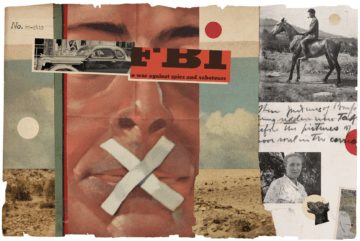 During the mad rush of leaving, they had to find homes for 60 animals, a menagerie of horses, snakes, turtles, and various other creatures. Only two made the cut to tag along with them: their blue budgie parakeet, Bird, who went eerily still as they crossed the Sonoran Desert, and their Doberman, Kinch, who panted in the scorching heat.
Traveling with their 10-year-old daughter Linda and their friend Raf in a red Dodge, George and Mary Oppen fled Redondo Beach, California, on June 11, 1950. They were in flight from the FBI. Special agents had visited their house days earlier to ask about the Oppens’ relief work during the Depression, and about a former roommate now suspected of espionage. Nationally, it was a tense time. North and South Korea would clash two weeks later, launching another war. Dissent was unpatriotic; a person’s past could send them to prison. Case in point: The Oppens’ friend Dalton Trumbo, a screenwriter who was blacklisted after he testified before the House Un-American Activities Committee, spent most of that year in a Kentucky prison for contempt of Congress. Having worked with the Communist Party USA during the Depression, the Oppens knew they were considered enemies of the state. They headed toward Tucson, and to the border beyond. They spent the next decade in Mexico City, under constant surveillance. They called themselves political refugees.
George famously stopped writing during this period. His silence lasted 25 years.
More here.
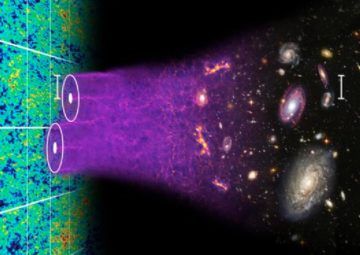 No matter how much we might try and hide it, there’s an enormous problem staring us all in the face when it comes to the Universe. If we understood just three things:
 A record-breaking 4,000 Americans are now dying each day from Covid-19, while the federal government fumbles vaccine production and distribution, testing and tracing. In the midst of the worst pandemic in 100 years, more than 90 million Americans are uninsured or underinsured and can’t afford to go to a doctor when they get sick. The isolation and anxiety caused by the pandemic has resulted in a huge increase in mental illness.
 “K
“K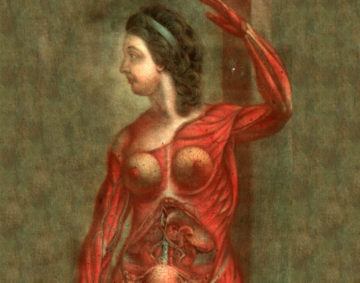 In all its varied symptomology, menopause put me on intimate terms with what Virginia Woolf, writing about the perspective-shifting properties of illness, called “the daily drama of the body.” Its histrionics demanded notice.
 Build a working coalition
  The
The 
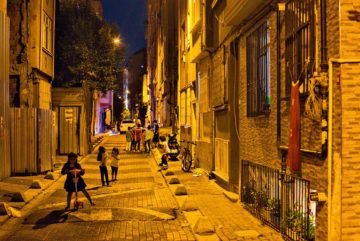 Like his many previous literary endeavors, Turkish novelist Orhan Pamuk’s new book Orange is about Istanbul, or rather how the city appears in his eyes. The book consists of color photographs of the city’s streets which Pamuk has been perpetually constantly taking for several years, always with the same technique and choice of motif. The result is a visual essay dedicated to the alleys and corners of his hometown. Over the author’s more than six decades living in Istanbul, Pamuk has witnessed the constant transformation of the city, notably from the gradual change from orange street lamps to white over the last ten years or so, not that the actual duration of the change matters. What does matter is the stark visible disappearance of the yellow-hued fluorescent lamps bringing a loss of the magical moments in a city landscape he dearly loves; the change is one he accepts only with some bitterness.
 The daily press conferences from Downing Street since March 2020 underline the prominence given to epidemiologists, behavioural scientists and the medical profession in driving policy reaction to the Covid-19 crisis. This may be evidence of a welcome return of scientific expertise to the heart of government after a period when much of the population and elements of the government had, in the words of
 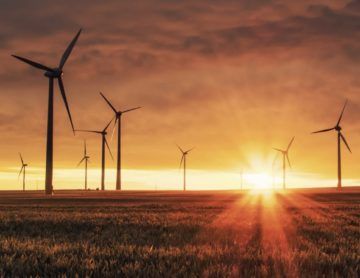 We still don’t have all the technologies we need to address climate change.
 L
L Hester Street contains no muckraking impulse to uncover the “truth” of How the Other Half Lives. She rejected any sort of outsider gaze in favor of an awareness to the cadences of Yiddish, the shimmering falling leaves as an immigrant son and his father learn how to play baseball in a sun-kissed park, the loving camera effect gotten out of Keats’s blindingly over-exposed white shirt. It’s a perceptiveness that doesn’t advertise how perceptive it is. Much of Hester Street is consumed with the ordinary problem of how Carol Kane should style her wild hair, what raiment she should cross Delancey Street in, which hat to wear. Nearly a century after the events of Hester Street, in Crossing Delancey (my favorite Silver film, a rom-com set in contemporary 1988 New York), Amy Irving is obsessed by the same problem: whether to wear a Diane Keaton-ish bowler hat that was gifted to her by the owner of a pickle shop (Peter Riegert). The past constantly revives in Silver; newer generations never forget where they came from; time ebbs and flows in and out of style.
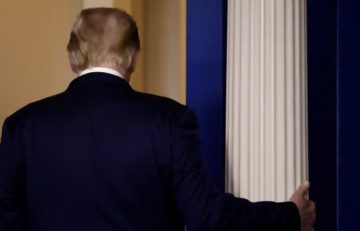 It could be considered a small thing that Trump can neither meet with Biden nor acknowledge that he has lost the election to him. But what if the refusal to acknowledge loss is bound up with the path of destruction we call Trump’s exit route? Why is it so hard to lose? The question has at least two meanings in these times. So many of us are losing people to Covid-19, or fearing death for ourselves or others. All of us are living in relation to ambient illness and death, whether or not we have a name for that sense of the atmosphere. Death and illness are quite literally in the air. And yet, it is unclear how to name or fathom these losses, and the resistance of Trump to public mourning has drawn from, and intensified, a masculinist refusal to mourn that is bound up with nationalist pride and even white supremacy. The Trumpists tend not to grieve openly pandemic deaths. They have conventionally rejected the numbers as exaggerated (“fake news!”) or defied the threat of death with their gatherings and maskless marauding through the public spaces, most recently in their spectacle of thuggery in the US Capitol in animal costumes. Trump never acknowledged the losses the US has suffered, and had no inclination or capacity to offer condolences. When the losses were referenced, they were not so bad, the curve was flattening, the pandemic would be short, it was not his fault, it was China’s fault. What people need, he claimed, was to get back to work because they were “dying” at home, by which he meant only that they were driven crazy by domestic confinement.