Summer reading: the 50 hottest new books everyone should read

From The Guardian:

Fiction:

No One Is Talking About This by Patricia Lockwood
What is the internet doing to our minds and hearts? The American comic memoirist’s first novel, shortlisted for the Women’s prize, begins as a savagely witty deep dive into the black hole of social media, then confronts real-life tragedy and transcendence.

Klara and the Sun by Kazuo Ishiguro
Klara, the “artificial friend” to sickly teenager Josie, is our naive guide through Ishiguro’s uneasy near-future, in which AI and genetic enhancement threaten to create a human underclass. Klara’s quest to understand the people and systems around her, and to protect Josie at all costs, illuminates what it means to love, to care – to be human.

Luster by Raven Leilani
This Dylan Thomas prize winner introduces a brilliant new voice. Edie is a young black woman in New York who starts a relationship with an older white man, and gets complicatedly close to his wife and adopted black daughter. The sentences crackle in a virtuosic skewering of race, precarious modern living and the generation gap.

More here.

Five science stars making their mark in China

From Nature:

In February, China more than doubled its number of protected species, with 517 additions, including the wolf, large-spotted civet and golden jackal. It was the first update since 1989, and to pioneering conservationist, Lu Zhi, it was a good sign. “I think the government is changing, especially the top leaders, who are sincerely into the environmental issues, not just [related to] wildlife, but also ecosystem restoration and pollution control,” she says. Attitudes towards conservation in China have shifted greatly in recent decades. In the mid-1980s, when Lu was an undergraduate student at Peking University in Beijing, she says the field of conservation biology was not yet recognized in China. Since then, local governments have been designating a growing number of protected areas and the state has announced a ‘red line’ initiative, which defines limits to human encroachment into ecologically sensitive and vulnerable areas totalling more than 2.4 million square kilometres — roughly one-quarter of the Chinese mainland. Such strategies have great potential. In the Beijing municipality, for example, forest cover has increased from 7% in the 1950s to 43% today, says Lu.

At the same time, the public has become increasingly attuned to the natural world. Since the 1990s, organized bird-watching has become a popular activity on the Chinese mainland, and it feeds valuable data collected by local community groups into population studies. Last year, Lu and her colleagues used data from the Bird Report, the largest nationwide project involving the submission of birdwatching records in China, to simulate changes in the range and habitat of 1,042 bird species through to the year 2070 and identify those most at risk (R. Hu et al. PLoS ONE 15, e0240225; 2020). Although the global trend of species loss and habitat destruction is desperate everywhere, says Lu, “in my own life history, in 30 years, I do see positive changes in China and in the world”.

More here.

Wednesday Poem

Inventory

closet

The shirts and shoes,
of course, the French cuffs,
double-buttoned cuffs.
The bowl of buttons,
spares that came
in little plastic baggies,
emptied and unused.
His first suit, his second suit,
all the suits he didn’t need
after losing the desk job
when I was twelve.
The sneakers. The lone pair
of oxfords I never
saw him wear. The holes
in the elbows of the flannels,
the patches patching the holes.
The shirts I’ll take with me,
the ties I’ll give away.
The ties with flowers,
with paisleys. The Tabasco ties,
the Looney Toons ties.
The too-big pants, bagged up
to send to Goodwill.
The fraying sweat shirt.
The new sweat shirt from
my college. The sweaters,
the wool and cotton sweaters,
the yarns in the sweaters,
the fibers spun and knitted
into the approximate shape
of a father. The yarns
that gradually return
to their original shape,
slowly forgetting his form.

by Jim Whiteside
from
Southern Review
Louisiana State University Press,
Volume 57, No. 1

Tuesday, June 22, 2021

Can Joe Biden get real about Russia?

Anatol Lieven in Spectator World:

To understand the strength of Putin’s position when it comes to defending Russian international interests (as opposed to domestic interests, where his deeply corrupt set-up is becoming increasingly unpopular), it is vital to understand that while Putin is obviously much more personally powerful than Western leaders, he is still the leader of the Russian foreign and security establishment — or as former Obama adviser Ben Rhodes dubbed the US equivalent, a blob.

Every major country has such a blob, which conducts national foreign and security policy on the basis of certain relatively fixed and enduring beliefs (often virtually dogmas) national interests and their country’s place in the world. These beliefs may seem strange and irrational to outsiders (including some of their own fellow citizens), but generally stem from deeply-held sentiments of national identity and historical experience. It can be a form of patriotism.

Russia’s blob is determined to maintain Russia’s role as a great power on the world stage (which may lead Russia into an even more dangerous dependence on China); to exclude potentially hostile foreign alliances over Ukraine, Belarus and Georgia, and to defend the minorities in those countries that look to Russia for support.

More here.

A commencement address by Kurt Vonnegut

From Lapham’s Quarterly:

Shortly after Kurt Vonnegut returned in 1945 from Dresden, where he had spent months as a German prisoner of war, he enrolled at the University of Chicago, hoping to earn a master’s degree in anthropology. He had dropped out of Cornell University before enlisting in 1943, and had to wait until 1971 to be awarded his degree after advisers had rejected his thesis, which he later declared was too elegantly simple and fun for academic tastes. (“They can take a flying fuck at the moooooooooooooooon,” he later rejoined in an essay.) After Vonnegut became a best-selling writer, his novel Cat’s Cradle was accepted as a thesis, and as a celebrity author he became a frequent giver of advice about postcollegiate life. “He was in such demand as a commencement speaker,” Charles J. Shields wrote in his biography of Vonnegut, “that when the Chicago Tribune columnist Mary Schmich wrote a humorous address to college graduates in June 1997 headlined advice, like youth, probably just wasted on the young, it was misattributed to Vonnegut. As a result, the ‘Wear Sunscreen Speech,’ as it came to be known, supposedly delivered by Vonnegut at MIT, has been credited to him for years.” Here is a speech that Vonnegut actually did deliver, at Syracuse University on May 8, 1994, titled “How I Learned from a Teacher What Artists Do.”

More here.

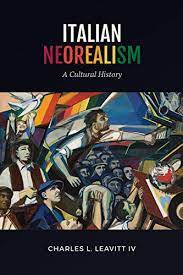
Italian Neorealism: A Cultural History

William Wall at The Dublin Review:

Some years ago a friend brought us to see the town of Acitrezza in Sicily where, arguably, the first great neorealist film was made. La Terra Trema (The Earth Trembles) was, according to its director, Luchino Visconti, filmed with actors “chosen from among the inhabitants of this town: fishermen, girls, labourers, stonemasons, fish wholesalers”. The dialogue was Sicilian, very much a language in itself and coeval with Italian. Our friend told us that the woman who played one of the sisters, Lucia, who is seduced by the marshal Don Salvatore in the film, was afterwards rejected by her community and never found a husband because they believed she had become a whore. The story may be a kind of urban legend, but there are so many layers to it that it’s worth unpacking a little.

First of all, the implication is that the citizens of what was then a tiny and remote fishing port interpreted what they saw on screen as a kind of reality; because the woman had been seduced on screen, and part of the seduction took place before their eyes, she had, in fact, been seduced.

more here.

Celebrating Juneteenth in Galveston

Clint Smith at The Paris Review:

The Emancipation Proclamation, some forget, was not the sweeping, all-encompassing document that it is often remembered as. It applied only to the eleven Confederate states and did not include the border states that had remained loyal to the U.S., where it was still legal to own enslaved people. Despite the order of the proclamation, Texas was one of the Confederate states that ignored what it demanded. And even though many enslaved people escaped behind Union lines and enlisted in the Federal Army themselves, enslavers throughout the Confederacy continued to hold Black people in bondage throughout the rest of the war. General Lee surrendered on April 9, 1865, in Appomattox County, Virginia, effectively signaling that the Confederacy had lost the war, but many enslavers in Texas did not share this news with their human property. It was on June 19, 1865, soon after arriving in Galveston, that Granger issued the announcement, known as Gen­eral Order Number 3, that all slaves were free and word began to spread throughout Texas, from plantation to plantation, farmstead to farmstead, person to person.

more here.

Remembering Janet Malcolm, Who Wrote and Lived with Bravery and Kindness

Ian Frazier in The New Yorker:

Janet Malcolm, who wrote for this magazine for fifty-eight years, died this week in New York City, just a half mile or so from the building on East Seventy-second Street where she spent most of her childhood. Her family came from Prague in 1939, when she was almost five and her sister, Marie, was two and a half. Starting kindergarten with very little English, she had to guess at what was going on; every day, at the end of class, the teacher would say, “Goodbye, children.” She knew what “goodbye” meant but thought “children” must be the name of one of her classmates, and she hoped that one day the teacher would choose her, and say, “Goodbye, Janet.” Her father, Joseph, who changed his name from Wiener to Winn, was a psychiatrist and a neurologist; she later described him as “the gentlest of men.” Joan, his wife, worked at Voice of America and other jobs and ran the house.

Janet acquired the language in no time, not knowing how she did it. For the rest of her life, she spoke in an un-showy New York accent, like a quieter, non-gangster Bogart. As a teen-ager, she sometimes fooled around with it, pulling out the stops on the vowels, going into full dems-and-dose mode, just to see people’s surprise—at this slim and elegant girl suddenly becoming as loud as a “Guys and Dolls” showstopper. She accepted her own brilliance as no big deal. The precision with which she saw the world must have kept the grownups on their toes. She went to the High School of Music & Art and then to the University of Michigan, where she edited Gargoyle, the college humor magazine. She appears at the top of its masthead as “Managing Editor: J. W. Malcolm.” She had married Donald Malcolm, a fellow U. of M. student two years older than she was. The magazine’s articles often ran without bylines. An anonymous piece in the “anti-arts issue” titled “The Bobsey Twins Meet Ezra Pound” shows equal familiarity with the girl-detective mystery genre and early modernist poetry. Like Chekhov, Janet started out writing humor.

More here.

Researchers question the cooperative eye hypothesis

From Phys.Org:

The sclera of the eye is devoid of pigment, which is why humans can easily follow where counterparts are looking. Researchers have long believed this facilitates glance-based communication. A team of zoologists based at the University of Duisburg-Essen (UDE) and the Anthropological Institute in Zurich is now challenging this traditional view in a new study. The researchers looked at communicative behavior and eye color in apes and question the proposed connection between the two phenomena. The results have just been published in Scientific Reports.

“Part of this hypothesis is based on the idea that among primates, only humans have white sclerae,” says study leader Kai Caspar (UDE). “However, only few comparative data have been available to back up this claim. Therefore, we assessed scleral pigmentation and measured eye contrast values in photos of more than 380 hominoids from 15 species. These included humans, great apes such as chimpanzees and orangutans, and gibbons, the small apes.” Although all hominoids are closely related, they communicate by different means. UDE zoologist Caspar says, “Different from us humans, glances play only a subordinate role in great ape communication, and for the gibbons they seem to have no communicative significance at all. So if the traditional assumption were true, differences in pigmentation should comply to differences in communicative behavior: the lighter the sclera, the more are the eyes used to convey information.”

More here.

Tuesday Poem

Expect Nothing

Expect nothing. Live frugally
On surprise.
Become a stranger
To need of pity
Or, if compassion be freely
Given out
Take only enough
Stop short of urge to plead
Then purge away the need.

Wish for nothing larger
Than your own small heart
Or greater than a star;
Tame wild disappointment
With caress unmoved and cold
Make of it a parka
For your soul.

Discover the reason why
So tiny human giant
Exists at all
So scared unwise
But expect nothing. Live frugally
By surprise.

by Alice Walker
from
Her Blue Body Everything We Know
Harcourt Brace, 1991

Sunday, June 20, 2021

Finding a deeper truth in irony

Alan Jacobs in The Hedgehog Review:

John Betjeman’s life at Oxford was complicated. He wrote poems and made friends, he discovered beauty and rejoiced in it, but he struggled academically, in part because of an impossible relationship with his tutor, who thought him an “idle prig” and did nothing to disguise his hostility. The tutor complained about Betjeman’s silly aestheticism in his diary, but didn’t confine himself to private musings: He treated Betjeman with open contempt, and when Betjeman needed a supportive letter from him, he wrote a rather obviously unsupportive one––which was one reason among several that Betjeman never managed to graduate. What the tutor did not realize was that Betjeman’s frivolous manner was a kind of protective carapace, a way to shield himself from suffering and emotional upheaval.

The tutor’s name was C.S. Lewis, and before you are too hard on him, please remember that he had just begun teaching, and moreover was not yet a Christian. Later on he and Betjeman had a partial mending of their relationship, but Betjeman never really got over the sting of rejection. He dedicated a book of his poems to Lewis, “whose jolly personality and encouragement to the author in his youth have remained an unfading memory for the author’s declining years.” (Betjeman was 27 at the time.) Later on he wrote a long, anguished, half-apologetic and half-accusatory letter to Lewis, but probably never sent it.

Ultimately they had a lot in common, more and more as years went by and Betjeman drew deeper from the wells of Christian faith and practice. But he never lost the frivolous manner.

More here.

Mathematicians Prove 2D Version of Quantum Gravity Really Works

Charlie Wood in Quanta:

Alexander Polyakov, a theoretical physicist now at Princeton University, caught a glimpse of the future of quantum theory in 1981. A range of mysteries, from the wiggling of strings to the binding of quarks into protons, demanded a new mathematical tool whose silhouette he could just make out.

“There are methods and formulae in science which serve as master keys to many apparently different problems,” he wrote in the introduction to a now famous four-page letter in Physics Letters B. “At the present time we have to develop an art of handling sums over random surfaces.”

Polyakov’s proposal proved powerful. In his paper he sketched out a formula that roughly described how to calculate averages of a wildly chaotic type of surface, the “Liouville field.” His work brought physicists into a new mathematical arena, one essential for unlocking the behavior of theoretical objects called strings and building a simplified model of quantum gravity.

Years of toil would lead Polyakov to breakthrough solutions for other theories in physics, but he never fully understood the mathematics behind the Liouville field.

Over the last seven years, however, a group of mathematicians has done what many researchers thought impossible.

More here.

Speaking Truth to Both the Right and the Left

Emily Bazelon in the New York Times:

Like many public intellectuals who are worth reading, George Packer and Jonathan Rauch don’t toe a predictable line in American political and intellectual debate. They despise Donald Trump and the disinformation-heavy discord he has spawned. But they don’t share all the views of progressives, either, as they’ve come to be defined in many left-leaning spaces. Packer and Rauch are here to defend the liberalism of the Enlightenment — equality and scientific rationality in an unapologetically Western-tradition sense. They see this belief system as the country’s great and unifying strength, and they’re worried about its future.

Packer’s slim book, “Last Best Hope,” begins with patriotic despair. “The world’s pity has taken the place of admiration, hostility, awe, envy, fear, affection and repulsion,” he writes of the perception of the United States abroad. This might have rung true in the throes of the attack on the U.S. Capitol on Jan. 6, which may also be when it was written, but it now sounds overwrought. So does Packer’s claim that “a lot of Americans have explored their options for expatriation.” (The number of expatriates is rising but small, and the cause of the uptick is likely a change in tax law, according to The Wall Street Journal.)

Once Packer gets going, however, he is forceful.

More here.

Worldbending

Akwaeke Emezi in The Paris Review:

In Akwaeke Emezi’s new book, Dear Senthuran: A Black Spirit Memoir, the writer traces their experience as an ọgbanje, an Igbo term that refers to a spirit born into a human body, through letters to friends, family, and lovers. In the below excerpt Emezi describes trying to find community within their M.F.A. program and their discovery that working fearlessly could be a form of worldbending. 

Dear Kathleen,

Sometimes, you remember me better than I remember myself. I think that’s important in a friendship—to hold reflections of people for them, be a mirror when they start fading in their own eyes. I hope I do the same thing for you, too. I can’t wait for you to get here for Christmas; I know Germany has been hard on you this fall.

The last time we texted, you wrote, I need you and our time this break. I know what you mean. The world can be a grit that sands away at us, and love can be a shelter from that. If this godhouse in the swamp is a wing, then I imagine you arriving and joining me underneath it, where we make syrup with the chocolate habaneros from my garden and sit out on the haint-blue porch. I wish the house was bigger, five or seven bedrooms instead of three, so I could fit more of us in here. We are safer with each other. We see the worlds we’re trying to make, and we lend our power to each other’s spells. I was steaming baos in my kitchen today and I got so excited to show you this house, my house. Just a year ago, you came down to the swamp for Christmas and we stayed in that sublet and cooked fish fresh from the lake. And now I have this house, this land, and the shock of what I made happen still makes me reel when I look at it fully. You think I’d be used to it by now, the way I can make things come true, but every year it expands. Every year I make bigger and bigger things happen—and it’s not just me, obviously. It’s my chi and the deityparents and God and so on, but I have to say yes first and I have to do the work and I can’t believe it works.

You know how people are so in awe of Octavia Butler’s journal, the way she wrote down what she wanted with her books? I think it’s because written worldbending resonates so widely.

More here.

QAnon and on: why the fight against extremist conspiracies is far from over

Tim Adams in The Guardian:

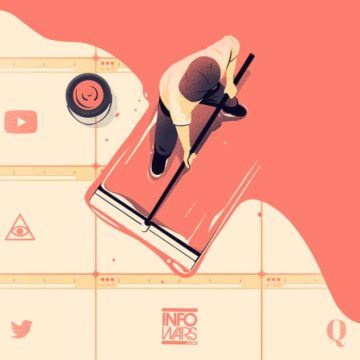
On 7 January this year, a day after the mob stormed the Capitol in Washington DC, a curious exchange occurred in the netherworld of global conspiracy. Alex Jones, the rasp-voiced mouthpiece of fake news for the past decade, was in conversation with the most visible leader of the previous day’s shocking events: Jacob Chansley, the self-styled “Q Shaman” who featured on the world’s front pages, in buffalo horns, animal skins and face paint. Jones, on his fake-news platform Infowars, with its million-plus viewers and sharers, had for years been the loudhailer of unhinged stories that included the belief that Hillary Clinton was the antichrist, that Michelle Obama was a man, that the Pentagon and George Soros had detonated a “homosexual bomb” that turned even frogs gay, that 9/11 had been a “false flag” operation and, most viciously, that the Sandy Hook school murders, in which 20 children and six teachers died, were staged by “crisis actors” to promote gun control. Jones had inevitably been among those who addressed the restive crowd at Donald Trump’s “Stop the Steal” march (having donated $50,000 for the staging of the rally) and calling for supporters to “get on a war footing” to defend the president. Two days later, however, when faced with the rhetoric of Chansley, whom he had invited on to his show to explain the insurrection, it seemed even he, America’s conspirator in chief, finally couldn’t take the lies any more.

As the Q Shaman launched into his justification of the mob violence that had left five people dead, a diatribe involving reference to the supposed QAnon revelations that the Democratic party was a front for a satanic paedophile ring that Trump was destined to expose and destroy, Jones repeatedly interrupted him. When Chansley asked plaintively why he wouldn’t listen (“you’re a hero to me, man”), Jones cut him off: “Because you’re full of crap!” he yelled. “That’s why! Because every goddamned thing out of you people’s mouths doesn’t come true. I knew what you were on day one and I know what you are now and I’m sick of it! I’m sick of all these witches and warlocks… I can’t talk to you any more. Jesus Christ! Lord help me. Aaargh!”

More here.