Dayna Tortorici in Bookforum:
 WHEN PEOPLE TALK ABOUT TRUTH OR DARE, the notorious 1991 documentary about Madonna’s Blond Ambition tour, they tend to mention the same handful of scenes. The gay kiss. Madonna deep-throating a bottle of Vichy Catalan (not Evian, as often misremembered). Kevin Costner calling the show “neat” and Madonna making a puking gesture. Are these the best scenes in the film? No, but they passed for scandal in 1991 and so they made an impression. In retrospect they feel a little try-hard, a little overhyped, but that’s because we’re watching from the world Madonna made. With the distance of thirty years, it’s easier to appreciate everything else. Her intense relationship with her dancers. The range of personality on display. Above all there’s the serendipity of timing and access. Few pop stars of Madonna’s magnitude would give a filmmaker the free hand she gave director Alek Keshishian in 1991, including the Madonna of 2021. Few documentarians would have as much as he did to show for it.
Truth or Dare caught Madonna at the height of her powers. She was thirty-two, divorced, and recently denounced by the Vatican for “Like a Prayer.” She was also in a new phase, marked by a blend of ambition and unguardedness that she would never quite experience again. When filming began, in 1990, she had just finished her performance in Warren Beatty’s Dick Tracy and recorded an album, I’m Breathless, tied to the film. Among the album’s tricky Sondheim numbers was a club track she cowrote with Shep Pettibone called “Vogue.” “Vogue” had little to do with Dick Tracy—it was inspired by the Harlem ballroom scene that Madonna had caught glimpses of in downtown clubs—but Beatty was now her boyfriend, and a single would give his movie a boost; the spoken-word interlude name-checking Hollywood icons (“Lauren, Katharine, Lana, too / Bette Davis we love you”) would suffice for thematic unity. One night at the Sound Factory, Madonna’s friend Debi Mazar introduced her to a young dancer from the House of Xtravaganza, Jose Gutierez, who was known to be a talented voguer. Madonna had him audition on the spot, persuading him to swap pants with her bodyguard so he could access his full range of motion. She then hired him and another young Xtrava, Luis Camacho, to choreograph and perform in the “Vogue” video and to join her as backup dancers on the Blond Ambition tour. At the time, Gutierez needed his mother’s written permission to go; he was still underage.
More here.

 “I have written about it and used it up,” says the narrator of “Home,” a story Munro published a few years after Lives of Girls and Women. In it she imagines returning to her hometown to care for her ailing father. But Munro never did—she never used it up, and Del also comes to understand she won’t have to leave home to find material. It is all around her, inexhaustible though latent, for what she must learn to do—the job of any writer—is to take the parochial and make it universal. “People’s lives, in Jubilee as elsewhere,” she says, “were dull, simple, amazing and unfathomable.”
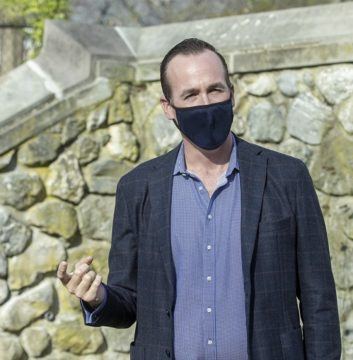 White men who had a Black neighbor when they were growing up are more likely to be Democrats and less likely to be Republican, an influence that can last several decades later.
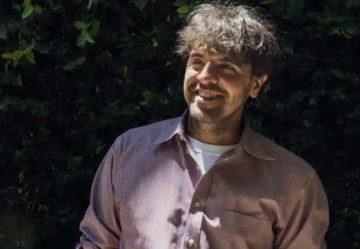 Deisseroth, 49, is talking in the lush, squirrel-filled garden of his house in Palo Alto, northern California, where he has spent much of the pandemic looking after his four young children. But he has had much else on his mind. He has been finishing his book, Connections: A Story of Human Feeling, an investigation into the nature of human emotions. He has been meeting with psychiatric patients over Zoom as well as putting in night shifts as an emergency hospital psychiatrist. And he has fitted all of this around his day job, which is using tiny fibre-optic cables to fire lasers into the brains of mice that he has infected with cells from light-sensitive algae and then observing what happens, millisecond by millisecond, when he turns individual neurons on or off.
 Many great books have been written in prison. The works that comprise this troubling genre draw together the horrors of incarceration and the state of the outside world, merging the two distinct but inextricably linked spheres. Despite this convergence, when Mohamedou Ould Slahi scrawled pages beneath the dingy half-light of a Guantánamo prison cell, he could not have envisioned the reception his writings would meet beyond those concrete walls. His words went on to circulate in a world that, over the course of the 14 years he was held without charge, he was unsure he would ever see again.
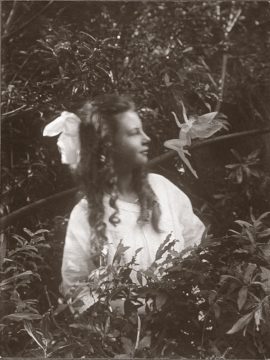 Conan Doyle was a true believer in ghosts, afterlives, psychics, magical beings, other worlds—a conviction strengthened by the deaths of his son, brother, two brothers-in-law, and two nephews in or shortly after World War I. He was fervent and evangelical, determined to use his eminent literary reputation to add credence to otherwise dismissed possibilities. Maybe he hoped that the almost mythical rationality of Sherlock Holmes could lend some excess coherency to the supernatural predilections of his creator. This is why the photographs were so urgent, why the private scenes of play between two Yorkshire girls became so central. The fundamental principle of Sherlock Holmes is that every problem can be solved if one only looks hard enough. There are no secrets, no mysteries, only missed details: everything you need to know is right in front of you. Pull out the magnifying glass. Zoom in. Enhance! And there they are. The fairies are right there.
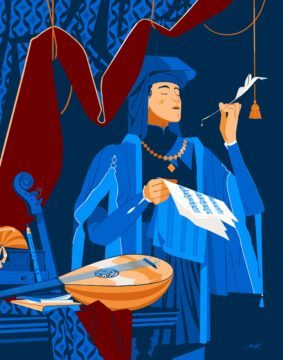 The singer and composer Josquin Desprez traversed his time like a diffident ghost, glimpsed here and there amid the splendor of the Renaissance. He is thought to have been born around 1450 in what is now western Belgium, the son of a policeman who was once jailed for using excessive force. In 1466, a boy named Gossequin completed a stint as a choirboy in the city of Cambrai. A decade later, the singer Jusquinus de Pratis turned up at the court of René of Anjou, in Aix. In the fourteen-eighties, in Milan, Judocus Despres was in the service of the House of Sforza, which also employed Leonardo da Vinci. At the end of the decade, Judo. de Prez joined the musical staff at the Vatican, remaining there into the reign of Alexander VI, of the House of Borgia. The name Josquin can be seen carved on a wall of the Sistine Chapel. In 1503, the maestro Juschino took a post in Ferrara, singing in the presence of Lucrezia Borgia. Not long afterward, Josse des Prez retired to Condé-sur-l’Escaut, near his presumed birthplace, serving as the provost of the local church. There he died, on August 27, 1521. His tomb was destroyed during the French Revolution.
 In the most basic sense, a coup is an illegal takeover of government power by an individual or faction. A coup can be attempted by members of the existing government and political system or those outside of it. A coup can also involve both groups working together towards the same goal of overthrowing the government. The connotative meaning, symbolism, and emotional valence of the word “coup” is something much broader:
 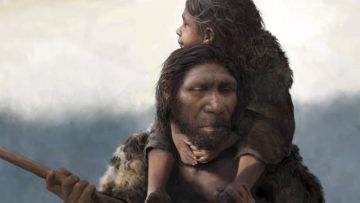 More than 49,000 years ago, a family of Neanderthals set up camp in a cave high in Siberia’s Altai Mountains, overlooking a river valley where bison, red deer, and wild horses roamed. In the cave’s main gallery, a teenage girl lost a tooth, perhaps while gnawing on bison that her father or his kin had hunted in the sweeping grasslands.
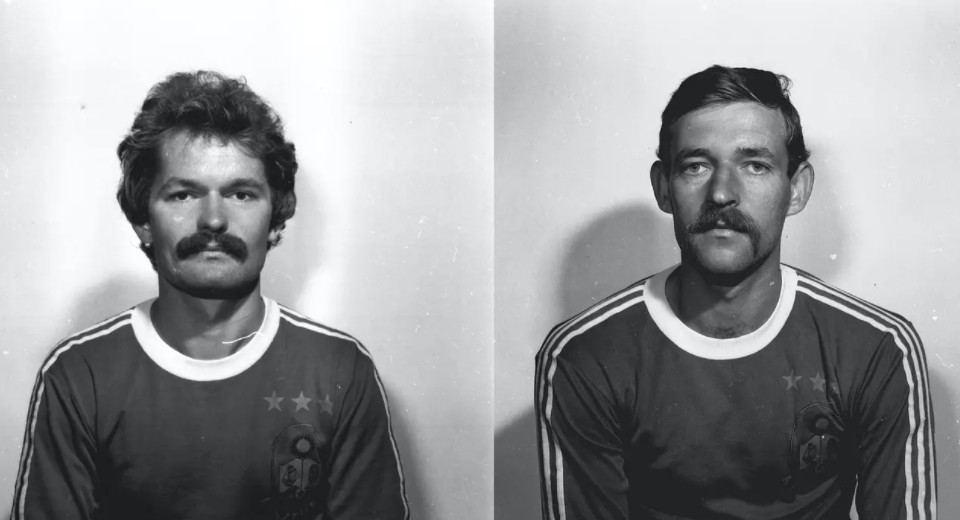 Before the 1990s, “football book” was considered an oxymoron. Down at the bottom of the literary totem pole, even below self-help books sold in airports, was football writing.
 In California, wildfire has always been a fact of existence. Every year, from June through September, some sky somewhere in the state fills with smoke. But since 2017, when the Tubbs Fire tore through Santa Rosa, fires have shifted from the periphery of collective attention into the burning spotlight. Unlike those in years before, the Tubbs Fire did not confine itself to wildland but cut its path through a city. And unlike fires in years before, it came so fast that people didn’t have time to get out. Some took shelter in swimming pools while the flames washed over them. Twenty-two people died. At the time, it was the most destructive wildfire in California history.
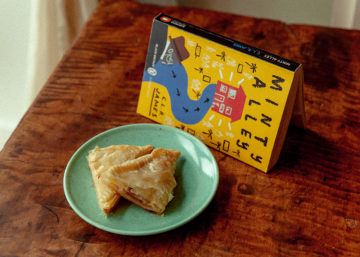 The strength and value of the ordinary man is a through line in James’s diverse body of work, and nowhere is this interest more evident than in Minty Alley, which eschews the world stage in favor of a single yard in a back alley in Port of Spain. In this book, Haynes, a young, passive middle-class intellectual, is forced after his mother’s death to rent lodgings in a working-class neighborhood, the kind of place where men kept mistresses and things that were improper to discuss occurred, according to the James documentary Every Cook Can Govern. Here, Haynes’s life is vastly, if temporarily, enriched by the people he meets and the relationships he develops. James himself was not from such a neighborhood, but while conducting research for the book, he interviewed local women about their lives. The results are, as Evaristo writes in her introduction, “a story about a Caribbean community in relationship with itself” and “a peek into a society of nearly one hundred years ago, which shows us that while the circumstances are different, our essential passions, preoccupations and ambitions remain the same.”
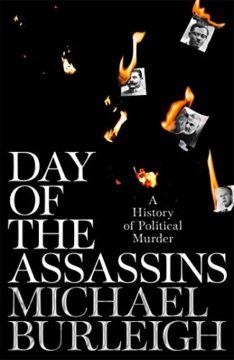 Assassination signifies the taking of life. So, obviously, does murder. They are not, however, synonymous. Assassination is planned. It most probably involves an ambush or trap, and before that high-level debates and decisions made in meetings, which typically are not minuted. Murder doesn’t generally involve such things. Assassinations are intended. They are tactical instruments and tools – if not also proxies – of war. They are, equally, evasions of war and bulwarks against tyranny. Michael Burleigh is dubious about the beneficial effects of governmentally sanctioned killing. However, a perhaps unforeseen outcome of his relentlessly sanguinary book is the implication that the planet, far from being sullied by opérations ponctuelles, might be a happier place were a few more tyrants to be treated to well-aimed headshots. There can, for instance, be no doubt that had Benito Mussolini been shot and strung up in Piazzale Loreto a few years earlier than he was, he would not have bought a road map to catastrophe from Adolf Hitler.
 Decades of research have revealed how mutations contribute to the evolution of malignant cells and to the ultimate characteristics of a given tumour. There is growing recognition that the surrounding tissue environment affects the natural selection of these mutation-driven characteristics. Less appreciated, however, have been the effects of interactions between malignant cells and their neighbouring wild-type cells — and how, through these interactions, malignant cells shape the surrounding environment to their advantage. Writing in Nature,