Paul Bloom in The New Yorker:
 The duration of felt experience is between two and three seconds—about as long as it takes, the psychologist Marc Wittmann points out, for Paul McCartney to sing the words “Hey Jude.” Everything before belongs to memory; everything after is anticipation. It’s a strange, barely fathomable fact that our lives are lived through this small, moving window. Practitioners of mindfulness meditation often strive to rest their consciousness within it. The rest of us might encounter something similar during certain present-tense moments—perhaps while rock climbing, improvising music, making love. Being in the moment is said to be a perk of sadomasochism; as a devotee of B.D.S.M. once explained, “A whip is a great way to get someone to be here now. They can’t look away from it, and they can’t think about anything else!”
In 1971, the book “Be Here Now,” by the spiritual leader Ram Dass, helped introduce yoga to the West. Much of the time, we are elsewhere. In 2010, the psychologists Matthew Killingsworth and Daniel Gilbert published a study in which they used an iPhone app to ask volunteers, at random points throughout the day, what they were doing, what they were thinking, and how happy they were. The researchers found that, in about half of their samples, people’s minds were wandering, often remembering the past or contemplating the future. These periods were, on average, less pleasant than ones spent being in the moment. Thoughts of the future are often associated with anxiety and dread, and thoughts of the past can be colored by regret, embarrassment, and shame.
Still, mental time travel is essential. In one of Aesop’s fables, ants chastise a grasshopper for not collecting food for the winter; the grasshopper, who lives in the moment, admits, “I was so busy singing that I hadn’t the time.” It’s important to find a proper balance between being in the moment and stepping out of it. We all know people who live too much in the past or worry too much about the future. At the end of their lives, people often regret most their failures to act, stemming from unrealistic worries about consequences. Others, indifferent to the future or disdainful of the past, become unwise risk-takers or jerks. Any functioning person has to live, to some extent, out of the moment. We might also think that it’s right for our consciousnesses to shift to other times—such inner mobility is part of a rich and meaningful life.
On a group level, too, we struggle to strike a balance.
More here.

 When critics write at length about the critics they admire, look out for self-portraiture. In a 2008 New Yorker essay, the critic and intellectual historian Louis Menand explored Lionel Trilling’s influence on the postwar era, during which Trilling was America’s preeminent literary critic and among its weightiest public intellectuals. One of the few aspects of Trilling’s career about which Menand had major reservations was the unfinished second novel Trilling began shortly after publishing his first, The Middle of the Journey, but abandoned about a third of the way through. This work, Menand found, “doesn’t have much literary interest, but it does have a lot of biographical interest, because it lets us see Trilling imagining his own world—the world of ambitious young critics, resentful middle-aged professors, pompous publishers and compromised foundation heads, intellectual femmes fatales, and the megalomaniacal editors of little magazines—as a nineteenth-century novel.”
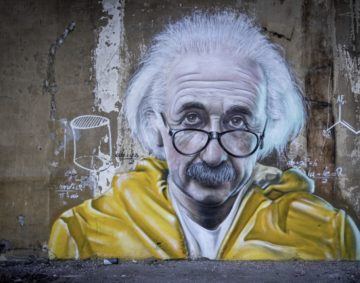 Einstein completed his Ph.D. thesis in 1905 with Professor
 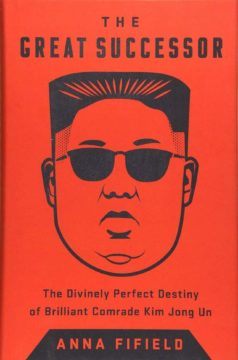 Not too many 38-years-olds deserve their own biography, let alone two. But ever since Kim Jong Un became the third ruler of North Korea in 2011, he has fascinated the American media. A Seth Rogen movie, The New Yorker covers, and South Park cartoons have all made Kim — and his haircut — the target of much lampooning. And in one of the strangest twists in recent international diplomacy, Donald Trump caused a sensation by announcing the two “fell in love” with each other. All this publicity has ultimately resulted in a cartoonish version of Kim, which, however good for a chuckle, obscures how this enigmatic dictator and his family have ruled over the course of three generations.
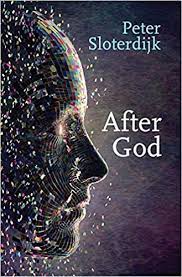 There is also a kind of ostentatious world-weariness in his writings that can be oddly enchanting. In one sense, his thought is burdened by that deep historical consciousness that seems to be the peculiar vocation of continental philosophy in its long post-Hegelian twilight. As a result, he possesses too keen a hermeneutical awareness of the fluidity, ambiguity, and cultural contingency of philosophy’s terms and concepts to mistake them for invariable properties that can be absorbed into some timeless propositional calculus in the way so much of Anglo-American philosophy imagines it can. But, in another sense, it is precisely this “burden” of historical consciousness that imparts a paradoxical levity to his project. Many of his books feel like expeditions in search of secrets from the past: forgotten cultural ancestries, effaced spiritual monuments, occult currents within the flow of social evolution. Whether one admires or deplores his thought—or has a distinctly mixed opinion of it, as I do—no one could plausibly claim that it is dull.
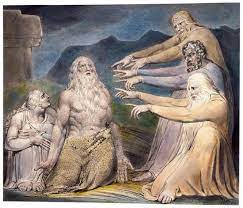 Weil’s essential contribution to the theory of complaint comes by way of her distinction between ordinary suffering and something she calls “affliction.” Suffering is pain one can bear, pain that does not imprint itself on the soul. Sometimes, we even choose suffering, as in strenuous exercise, unmedicated childbirth or getting one’s ears pierced. Getting beat up in an alleyway by strangers is not like any of those forms of suffering. A violent attack, even one that does minimum physical damage, hurts in a distinctive way—in a way that, as Weil would put it, raises a question.
 Two compendiums of data unite genetic profiling with drug testing to create the most complete picture yet of how mutations can shape a cancer’s response to therapy. The results, published today in Nature
 After her first novel, The God of Small Things (1997), Arundhati Roy did not publish another for twenty years, when The Ministry of Utmost Happiness was released in 2017. The intervening decades were nonetheless filled with writing: essays on dams, displacement, and democracy, which appeared in newspapers and magazines such as Outlook, Frontline, and the Guardian, and were collected in volumes that quickly came to outnumber the novels. Most of these essays were compiled in 2019 in My Seditious Heart, which, with footnotes, comes to nearly a thousand pages; less than a year later she published nine new essays in Azadi.
 The last week of June saw shocking temperatures in Oregon, Washington state, and British Columbia. Differentiating a forecast in Canada from a forecast in Phoenix is usually a breeze, but not in June. All-time high-temperature records—not just daily records—were smashed across the region. Portland International Airport broke its all-time record of 41.7°C (107°F) by a whopping 5°C (9°F). The small town of Lytton set a new record high for the entire country of Canada at 49.6°C (121.3°F) on June 29. In the days that followed,
  This is how capitalism ends: not with a revolutionary bang, but with an evolutionary whimper. Just as it displaced feudalism gradually, surreptitiously, until one day the bulk of human relations were market-based and feudalism was swept away, so capitalism today is being toppled by a new economic mode: techno-feudalism.
 Taja Cheek is walking through time. Facing the bustling intersection of Saint Marks and Nostrand Avenues in Crown Heights, Brooklyn, she points towards the former location of the Continental jazz club, which her grandfather owned in the 1950s. It’s walking distance from the apartment where Cheek has lived for the better part of a decade, and where she once booked her own basement shows, featuring the likes of TV on the Radio’s Kyp Malone and NYC noise fixture Dreamcrusher. And it’s not far from where Cheek grew up further down Eastern Parkway, practicing Debussy on piano when she wasn’t taking in the city’s sounds—jazz on the radio, Carribean music on the streets, and ’90s rap and R&B in the air. “That’s such a big part of the music I know and that matters to me: the music I absorbed just from being around it,” she says. “I have all these memories of playing Double Dutch on the street and hearing music playing from cars.”
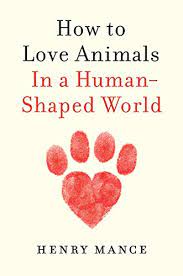 This is just the most egregious example of what the Financial Times’s chief features writer, Henry Mance, describes as ‘the meat paradox’: a state of affairs where ‘people who care about animals manage not to care about farm animals’. It’s not just omnivores who are in denial. Vegetarians are arguably just as self-deceived. The life of a typical dairy cow is worse than that of one destined to end up as steaks. In the United States, up to half of dairy cows suffer lameness, a problem also rife in the United Kingdom. Vegetarians can’t even claim that at least they are not responsible for the slaughter of cows, since the economics of the dairy industry means that most male calves are killed at birth, once they have served their only purpose as catalysts of lactation. ‘If you are really concerned about animal welfare,’ says Mance, ‘you should almost certainly stop eating dairy before you stop eating beef.’
 T
T In “All Eyes on Me,” a song from his new Netflix special Inside, the musician-comedian Bo Burnham pauses to ask, “You want to hear a funny story?” He tells us that, five years ago, he quit performing live because, while on stage, he’d experience severe panic attacks. He spent that time trying to improve himself mentally instead. “And you know what? I did,” Burnham says. He got better. “So much better, in fact, that in January of 2020, I thought, ‘You know what, I should start performing again.’” He’d been a kind of recluse. It was time to rectify that, he says. “And then, the funniest thing happened…”