
Elizabeth Currid-Halkett in The Hedgehog Review:
 You shall know them by their aspirations. Or so one might think, judging by the manifold ways in which Americans brand themselves by the things they seek to acquire and the ideals they seek to live by. Americans of all classes and identities aspire to various things, of course. The pursuit of happiness remains a central element of their national creed. But the meritocratic class has become the aspirational class par excellence. Aspiration connotes movement upward, and the meritocrat lives proudly and ostentatiously (some might even say overbearingly) in tireless pursuit of better. Little wonder that meritocrats come to think that what they and their offspring aspire to is manifestly and even morally superior to what others strive after.
For all of the well-intentioned idealism of today’s aspirational elite—their politically sensitive wokeness, their belief in hard work and education over birthright, their environmental awareness, their earnest suspicion of the excesses and injustices of capitalism—there is a dark side of meritocracy that is never fully concealed in the strivers’ displays and proclamations of goodwill. The simple fact is that most people—if we consider 90 percent of the country’s population “most”—do not learn piano from the age of five, do not attend private school, do not have SAT tutors (even if standardized tests are falling by the wayside), do not attend a “top twenty-five” school, or earn PhDs or MFAs. Laudable as these activities and achievements may be, they are underpinned by both wealth and cultural capital. While about 35 percent of Americans go to college, less than 0.5 percent graduate from Yale, Princeton, and their ilk. Harvard economist Raj Chetty and his colleagues have found that students whose parents are among the top one percent economically are seventy-seven times more likely to attend an Ivy League university than those with parents in the bottom quintile. In short, you have to have the money and, just as important, know what to spend it on.
More here.
 Now that Prometheus has basically granted every lowly lab tech superhuman powers, it’s like drinking from a data firehose if you love ancient DNA. And the more we know, the clearer it looks that genetically, all the humans on our planet group into basically three genetic types. You could think of them as 1. the very-diverse, 2. the not-very-diverse 3. the very-not-diverse (and if we’re being thorough: 4. a recent hybrid of 2 and 3.)
 As a refugee from the war-stricken Old World, where ethnic homogeneity had remained the defining principle of every citizenry, Arendt saw in the American republic the promise of a body politic, which absorbed newcomers without forcing them to adapt to a pre-determined homogeneity—even though she became increasingly critical of the cultural conformity of American “mass society.”
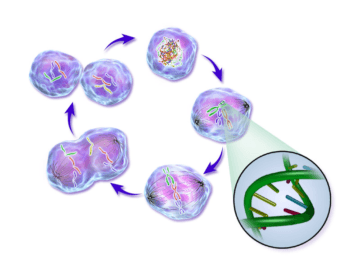 At the heart of all cancers is a fundamental problem: a cell—and eventually innumerable cells—that won’t stop dividing. This runaway growth is what forms a tumor, and the abnormal cellular processes that drive this growth can help tumors withstand the cancer treatments intended to kill them. Despite more than six decades of research into the mechanisms that cells use to divide, some of the nuts and bolts of the process remain a mystery. Scientists want to better understand these mechanisms in hopes of targeting them and potentially shutting down the uncontrolled growth of some tumors. New research from three collaborating teams of scientists in the United States and Europe appears to have found one of these mechanisms, uncovering a previously unknown check on dividing cells: a protein called AMBRA1. By limiting tumor growth, the researchers showed, AMBRA1 serves as an important
  For better or worse, genetic testing of embryos offers a potential gateway into a new era of human control over reproduction. Couples at risk of having a child with a severe or life-limiting disease such as cystic fibrosis or Duchenne muscular dystrophy have used preimplantation genetic testing (PGT) for decades to select among embryos created through in vitro fertilization (IVF) for those that do not carry the disease-causing gene. But what new iteration of genetic testing could tempt healthy, fertile couples to reject our traditional time-tested and wildly popular process of baby making in favor of hormone shots, egg extractions and DNA analysis?
 The systems featured in Morris’s designs often suggest conflict and attrition at the micro level along with harmony at the grander scale. Within the system of the design, principles of growth relate to his conception of the forces of nature and history. He constructed his designs to mirror and even exceed the powerful generative abilities of nature; he also intended them to be vectors for the energies of history.
 I kept looking at the recently infamous—now half-forgotten—picture of the Bidens visiting the Carters. The photo was taken and passed around feverishly almost two months ago, when I saw it repeatedly on my scroll and dragged the file onto my desktop, and I haven’t been able to forget it since. Everyone else moved on to Joyce Carol Oates negging Mad Men, Elon Musk going on SNL, Bennifer 2.0, and a bunch of other things I’m forgetting, but here I am, late at night, still staring at little Rosalynn, little Jimmy, big Jill, and big Joe. Also the armchairs, the blue-green walls, the blue-blue carpeting, the “unfinished” cameo-style paintings of the Carters, the blank canvas keyed to the off-white upholstery of their chairs. I’ve reviewed the institutional sheen on those cabinets, zoomed in on the trio of mask-like ceramics facing up to the ceiling on the side table, pondered the bulbous bronze bookends holding a three-volume set of something important on that same table. But mostly I’ve been staring at the little Carters and the big Bidens, trying to understand what is so transfixing to me there. And I think I finally have an answer. So at the risk of disrespecting the immutable orientation of our media universe, I want to return to the topic that was on everyone’s minds on May 3, 2021. I want to turn and watch the sunset.
 Society loves courtroom dramas – they allow the viewer to consume the uncertainty of someone else’s life as opposed to fixating on their own. (I am as guilty of this as anyone: I’ve watched courtroom dramas every week religiously in the past, especially Primal Fear and The Lincoln Lawyer.) We get hooked on the interrelations of characters, the impending catastrophe, the emotional mind games played by the press, lawyers, and bogeymen criminals. The allure of the genre, I believe, has to do with the hidden nature of the legal scenario. Films, television shows, and podcasts purport to expose the mystery of the courtroom, and the private lives of those tangled up in its web.
 “Creep” was subsequently excised from the band’s set list
  For more than a year now, scientists and clinicians have been trying to understand why some people develop severe COVID-19 whereas others barely show any symptoms. Risk factors such as age and underlying medical conditions
 Thirty years ago, Albert O Hirschman published a short book that infuriated conservatives called
  O
O My father, a neurologist, once had a patient who was tormented, in the most visceral sense, by a poem. Philip was 12 years old and a student at a prestigious boarding school in Princeton, New Jersey. One of his assignments was to recite Edgar Allan Poe’s The Raven. By the day of the presentation, he had rehearsed the poem dozens of times and could recall it with ease. But this time, as he stood before his classmates, something strange happened. Each time he delivered the poem’s famous haunting refrain—“Quoth the Raven ‘Nevermore’ ”—the right side of his mouth quivered. The tremor intensified until, about halfway through the recitation, he fell to the floor in convulsions, having lost all control of his body, including bladder and bowels, in front of an audience of merciless adolescents. His first seizure.